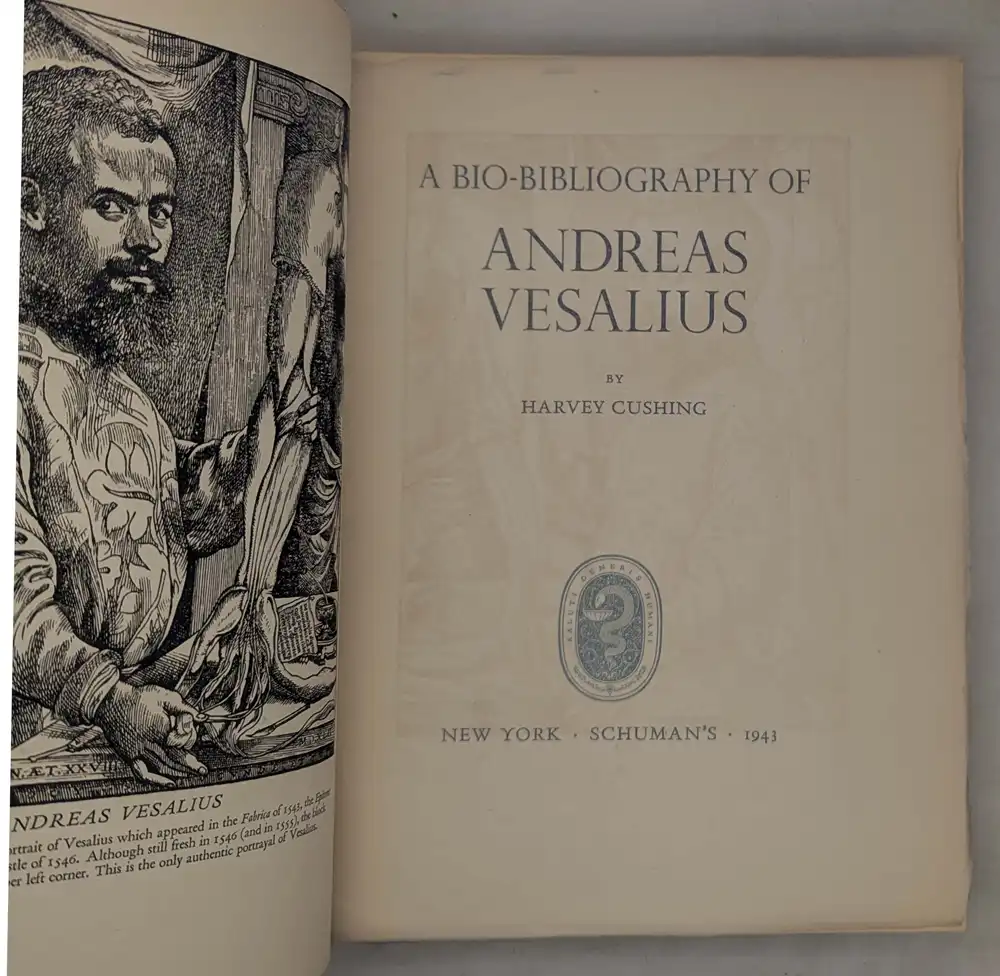
Harvey Cushing’s A Bio-Bibliography of Andreas Vesalius stands as a monumental achievement in both medical history and bibliographical scholarship. Published in 1943, this work represents the culmination of decades of passionate collecting and rigorous research by Cushing, a pioneering neurosurgeon who was also an ardent humanist. Far more than a simple list of books, the volume is a comprehensive reconstruction of the life and intellectual legacy of the Renaissance anatomist Andreas Vesalius, whose De Humani Corporis Fabrica revolutionized the study of the human body.
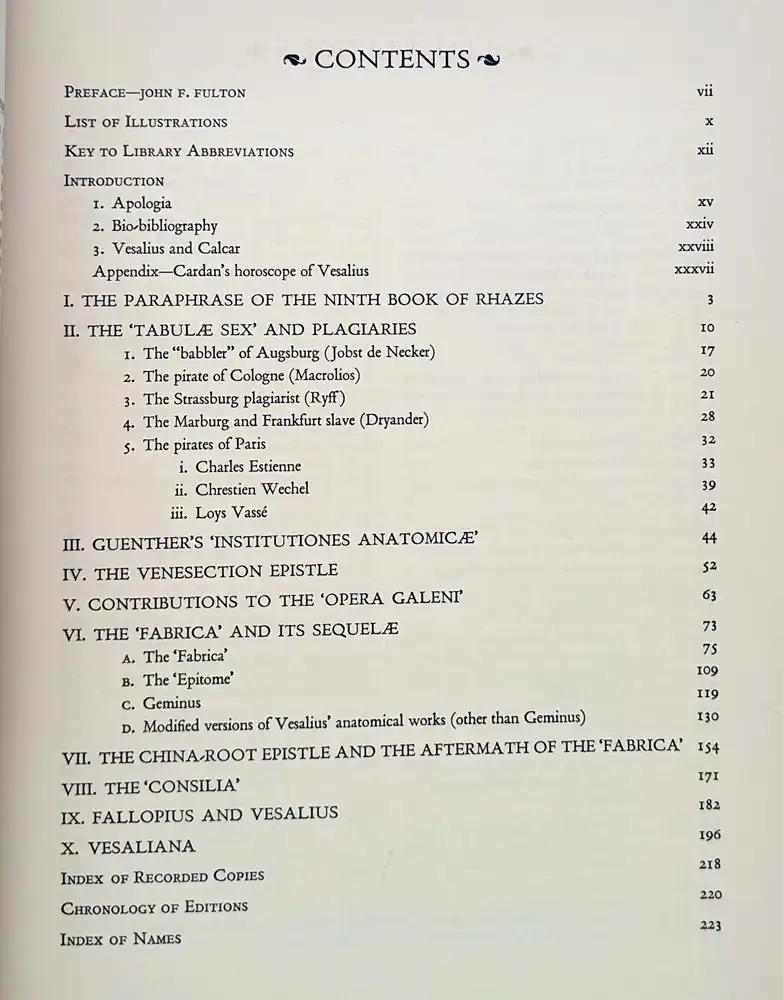
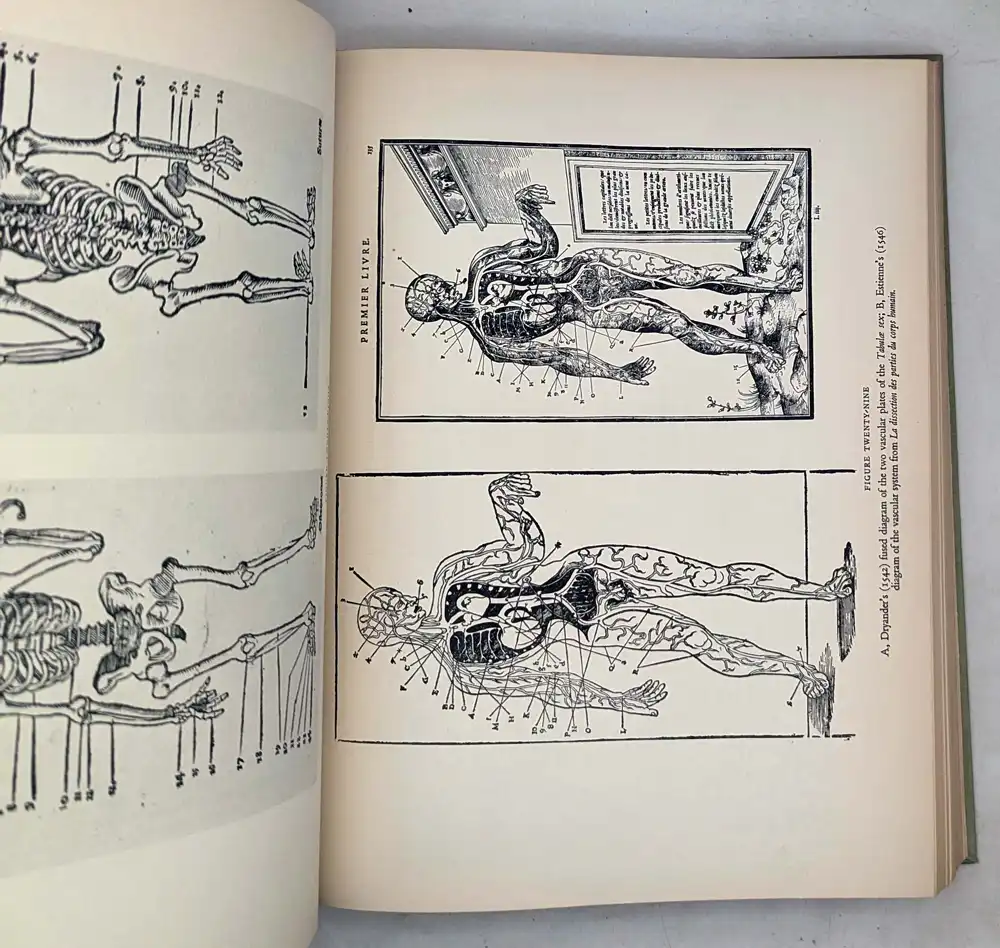
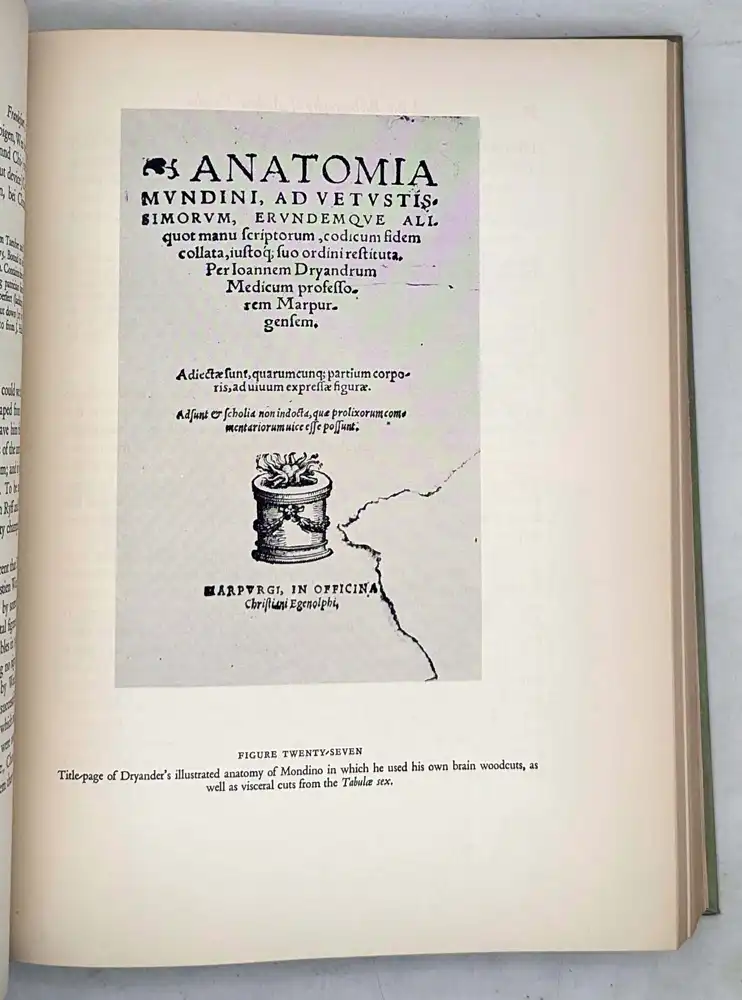
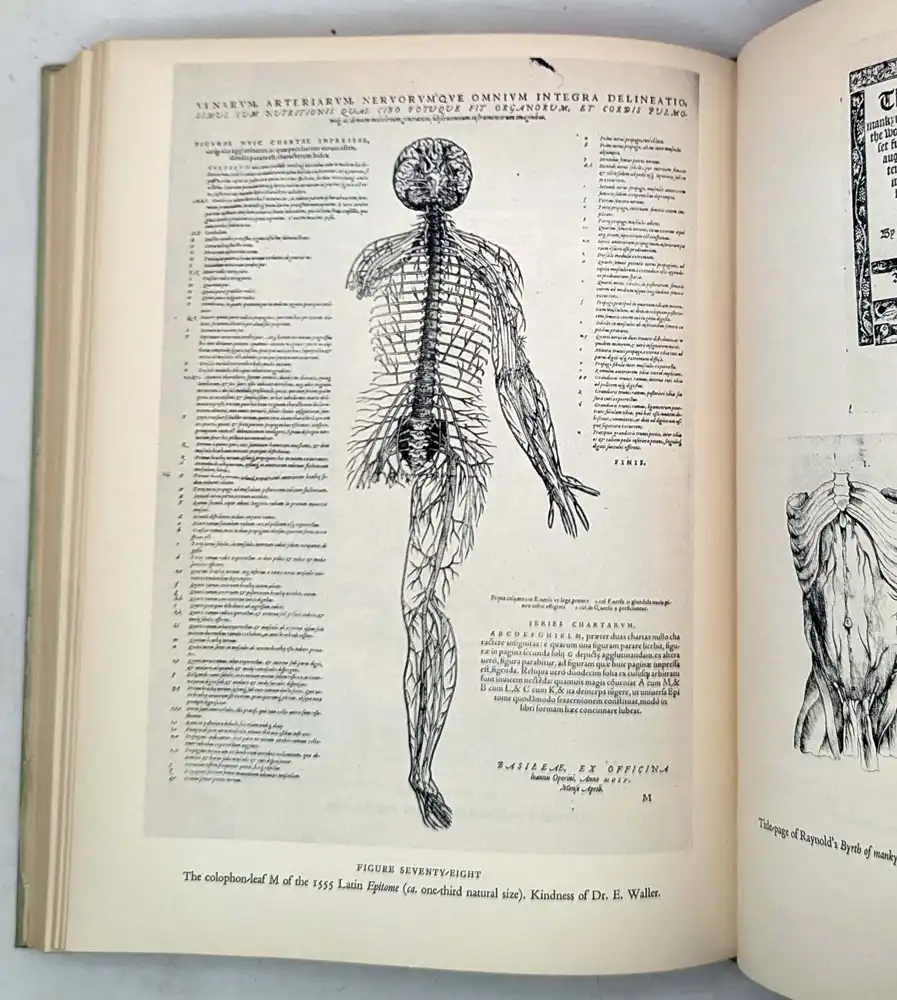
The book is meticulously organized to trace Vesalius’s entire literary output, from his early Paraphrasis to the landmark first and second editions of the Fabrica and its Epitome. Cushing goes beyond mere citation, providing detailed collations, physical descriptions, and a census of known surviving copies, effectively creating a map of the dissemination of Vesalian knowledge across Europe. He also delves into the complex world of pirated editions, plagiarisms, and the passionate controversies Vesalius ignited with his contemporaries.
However, Cushing imbues this rigorous framework with a deep biographical narrative. By examining the evolution of Vesalius’s texts and the intricate history of their illustrations, often attributed to the school of Titian, Cushing illuminates the anatomist’s personal journey, his relentless pursuit of truth, and his profound impact on science. The result is an indispensable and enduring resource, serving simultaneously as a definitive reference for bibliophiles and a rich, compelling portrait of the man who fundamentally altered our understanding of our own anatomy.