
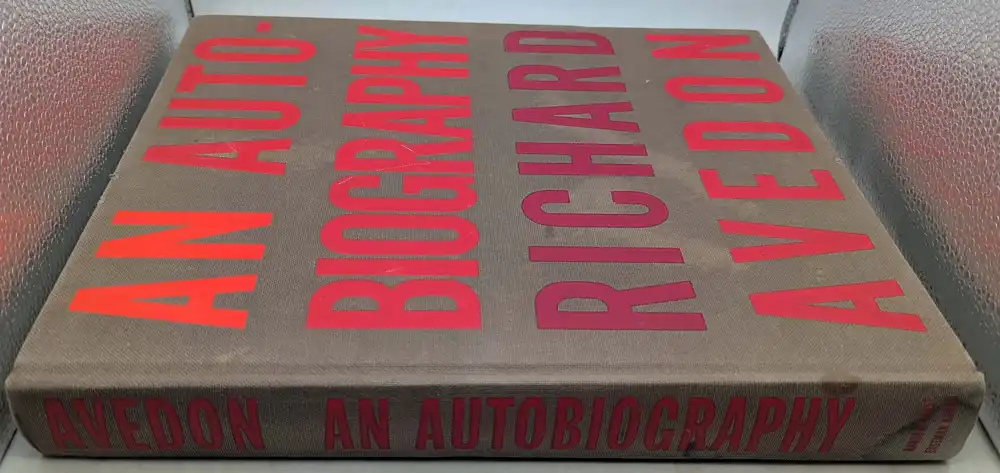
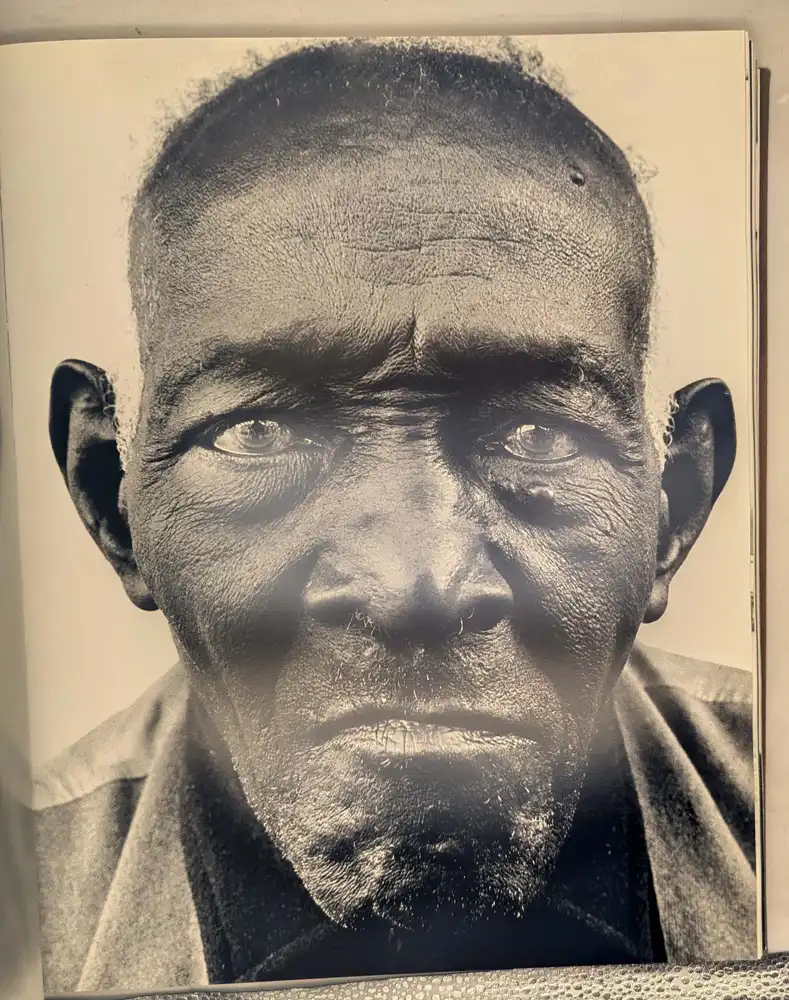

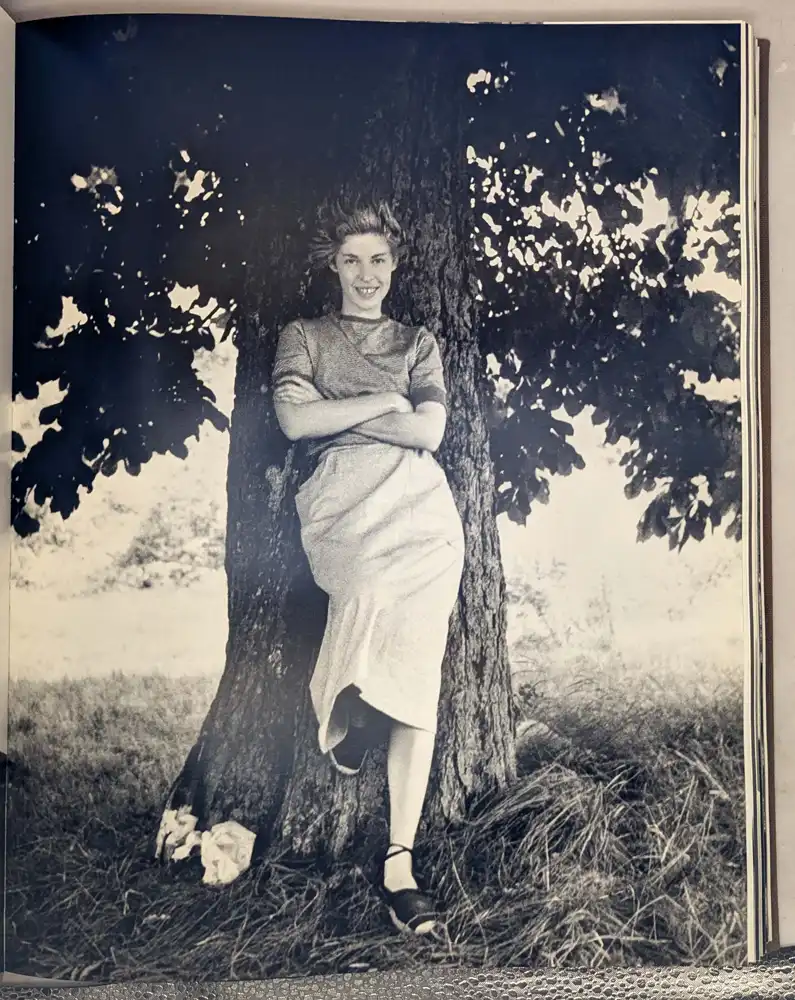
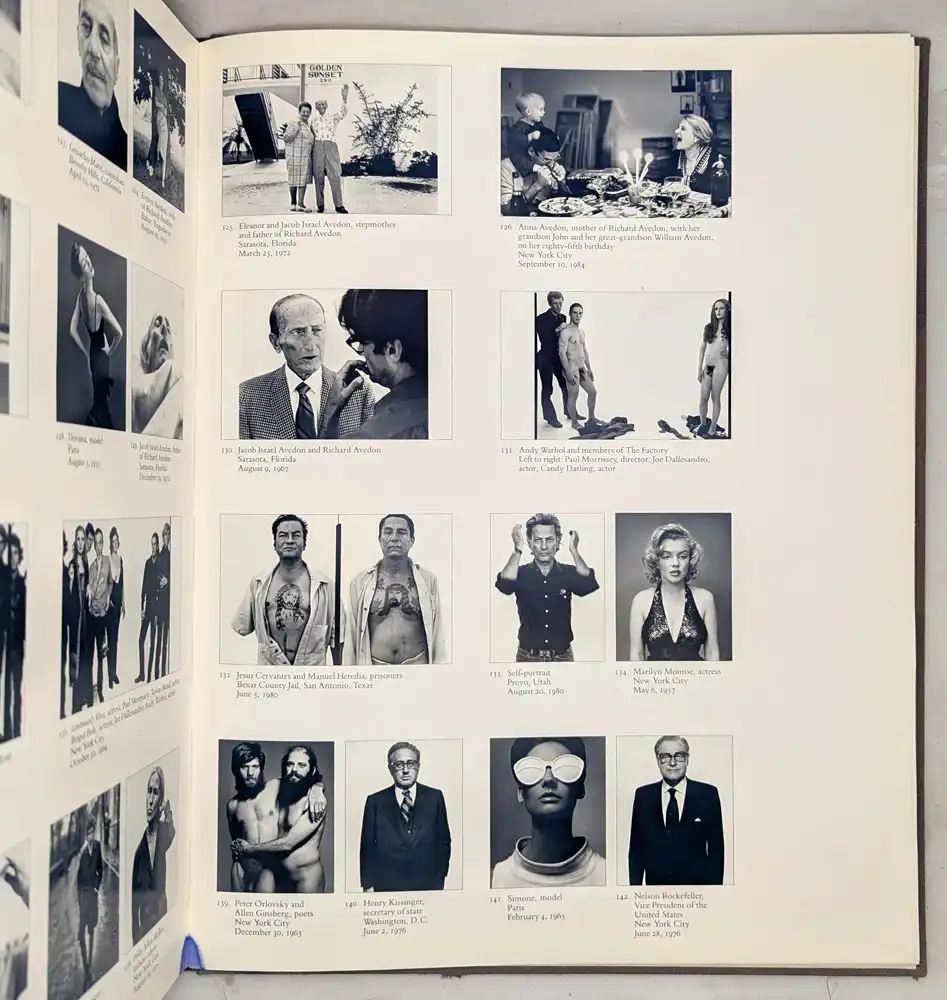
An Autobiography is a monumental visual memoir by the celebrated American photographer Richard Avedon, first published by Random House in 1993. The oversized folio volume assembles 284 photographs drawn from Avedon’s vast archive, tracing the arc of his career from the 1940s through the early 1990s. Rather than a conventional written narrative, the book functions as a carefully orchestrated sequence of images that, in Avedon’s own words, “tracks the path of three crucial illusions” in his life.
The first section explores the illusion of laughter and a young man’s discovery of the fine line between hilarity and panic. The second addresses the illusion of power. The third confronts the loss of all illusions. The interweaving of images from different periods—out of chronological order—is, Avedon suggests, “true to the inner shape of any life,” noting that he sometimes found the image of a later event in an early photograph, and once or twice a late picture was made in the grip of a lost emotion. The portraits are characteristically frontal, stark, and unflinching, stripping away pretension to expose the person beneath.
Among the subjects indelibly captured are Marilyn Monroe, Ezra Pound, Louis Armstrong, Rudolf Nureyev, Dorothy Parker, Janis Joplin, Andy Warhol, Samuel Beckett, Malcolm X, and Alberto Giacometti. In its refusal of easy chronology and its insistence on the photograph as the primary vehicle of memory, An Autobiography stands as both a summation of Avedon’s life’s work and a startling new look at the art of a photographer who fundamentally shaped the way we see the world.