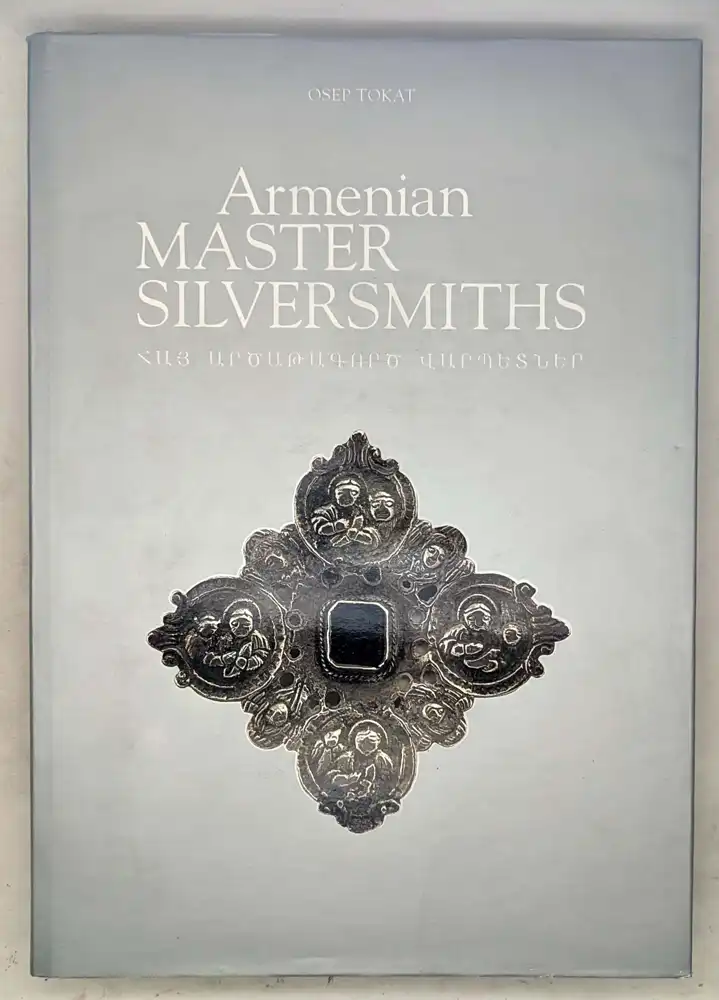
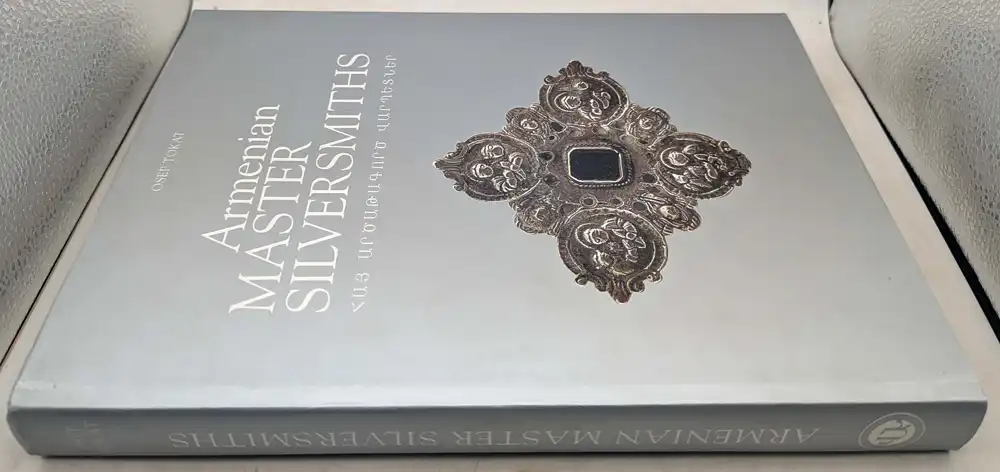
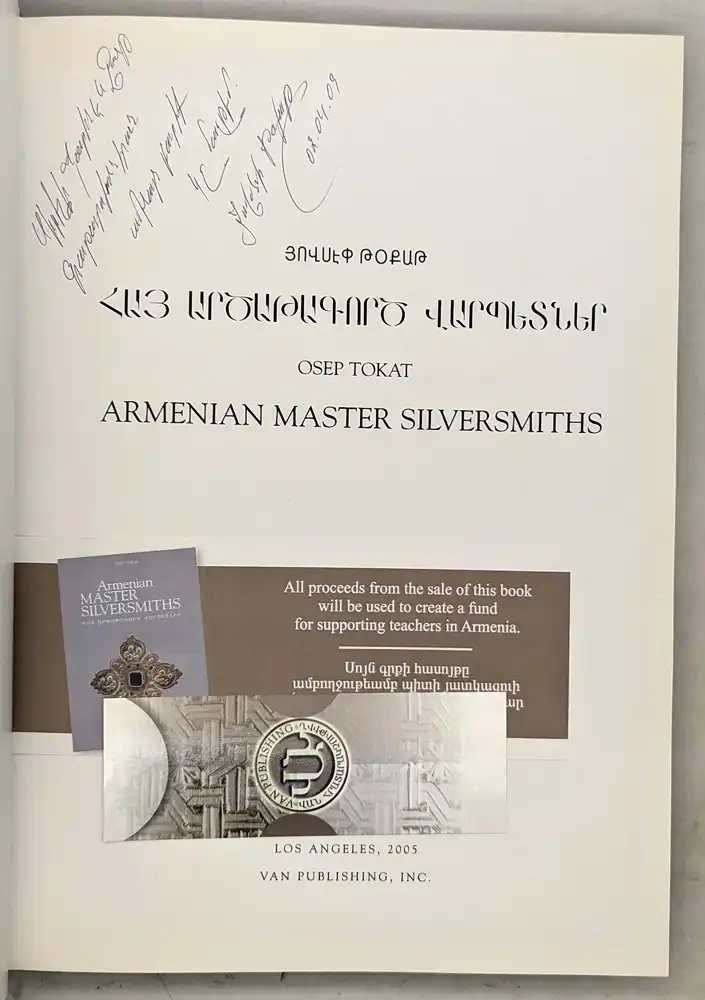
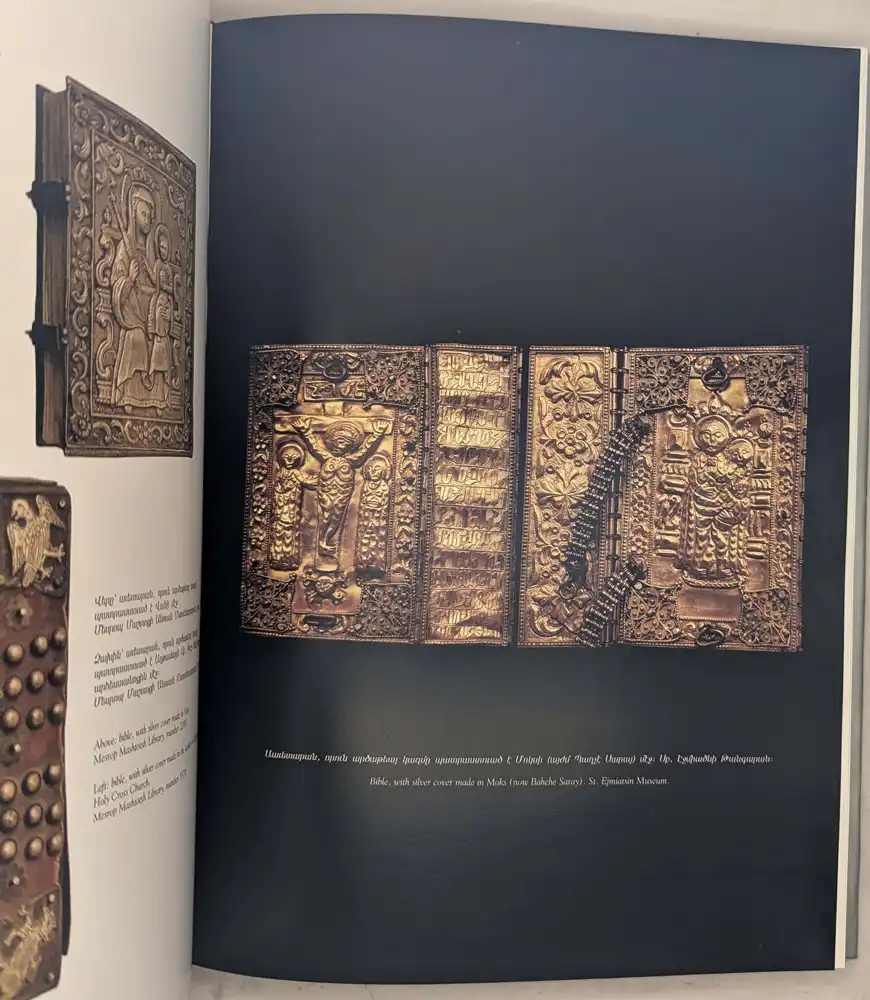
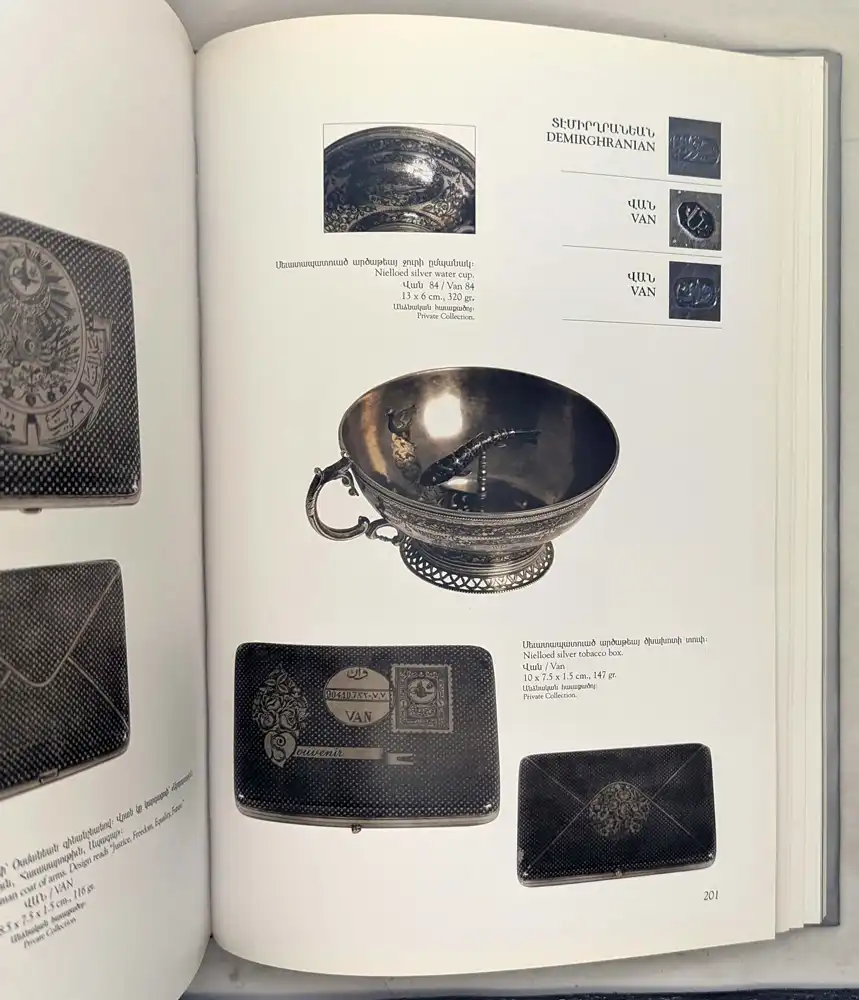
Osep Tokat’s Armenian Master Silversmiths is an extensively researched and beautifully illustrated book documenting the rich artistic heritage and remarkable craftsmanship of Armenian silversmiths. The book explores the historical development of Armenian silver and gold craftsmanship, highlighting the artistic achievements, traditional techniques, and cultural significance of Armenian metalwork across different regions and generations.
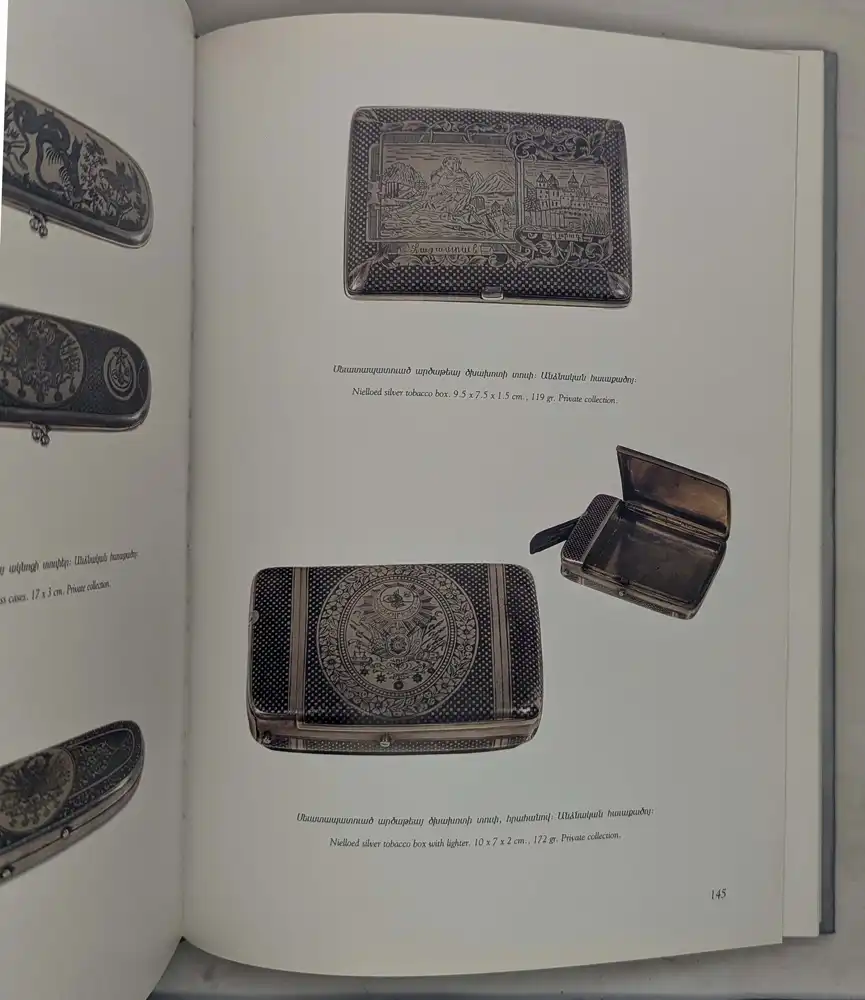
Drawing on years of research, personal collections, historical records, and surviving examples of fine craftsmanship, Tokat brings attention to an important but often overlooked aspect of Armenian cultural history. Particular emphasis is placed on Van, historically one of the most significant centers of Armenian silversmithing. The author examines the ornamental traditions of Armenian gold and silver work, explaining the intricate designs, decorative patterns, engraving, niello (savat), gilding, and other specialized techniques employed by master craftsmen.
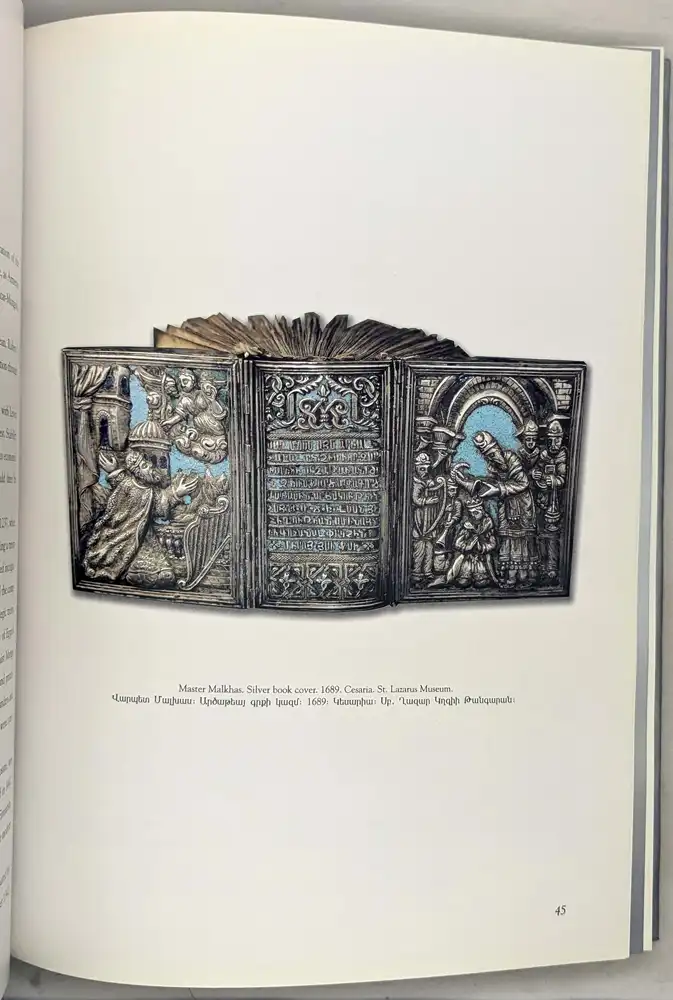
The book also introduces celebrated Armenian silversmiths, presenting information about their identities, workshops, personal histories, and distinctive maker’s marks. Through photographs and detailed descriptions of silver objects, readers discover an extraordinary variety of artistic creations, including jewelry, household utensils, religious objects, tobacco boxes, belts, book bindings, and ceremonial pieces. These artifacts demonstrate the technical excellence, creativity, and refined aesthetic sensibilities of Armenian artisans.
Beyond Van, Tokat documents Armenian goldsmithing and silversmithing traditions in other important Armenian communities, including Constantinople, Caesarea, Smyrna, and Trabzon. The book also considers the continuation of these traditions among Armenian communities in the diaspora.
An especially meaningful aspect of this publication is its dedication to the author’s parents, survivors of the Armenian Genocide of 1915, who preserved several precious Armenian artworks. Their surviving possessions inspired Tokat’s commitment to documenting the achievements of Armenian craftsmen and preserving their names for future generations.