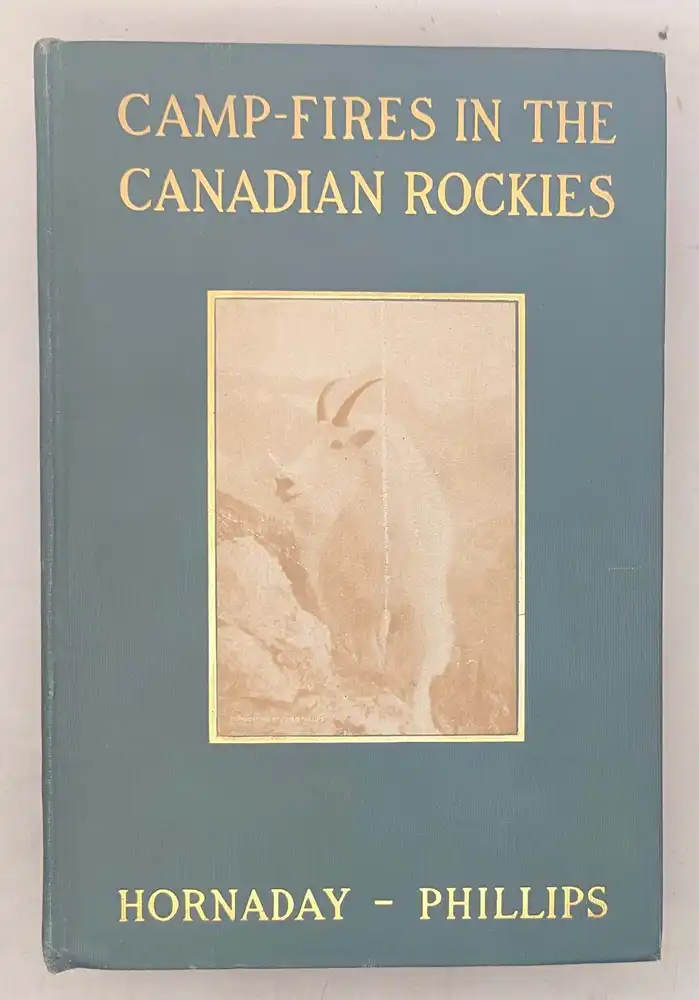
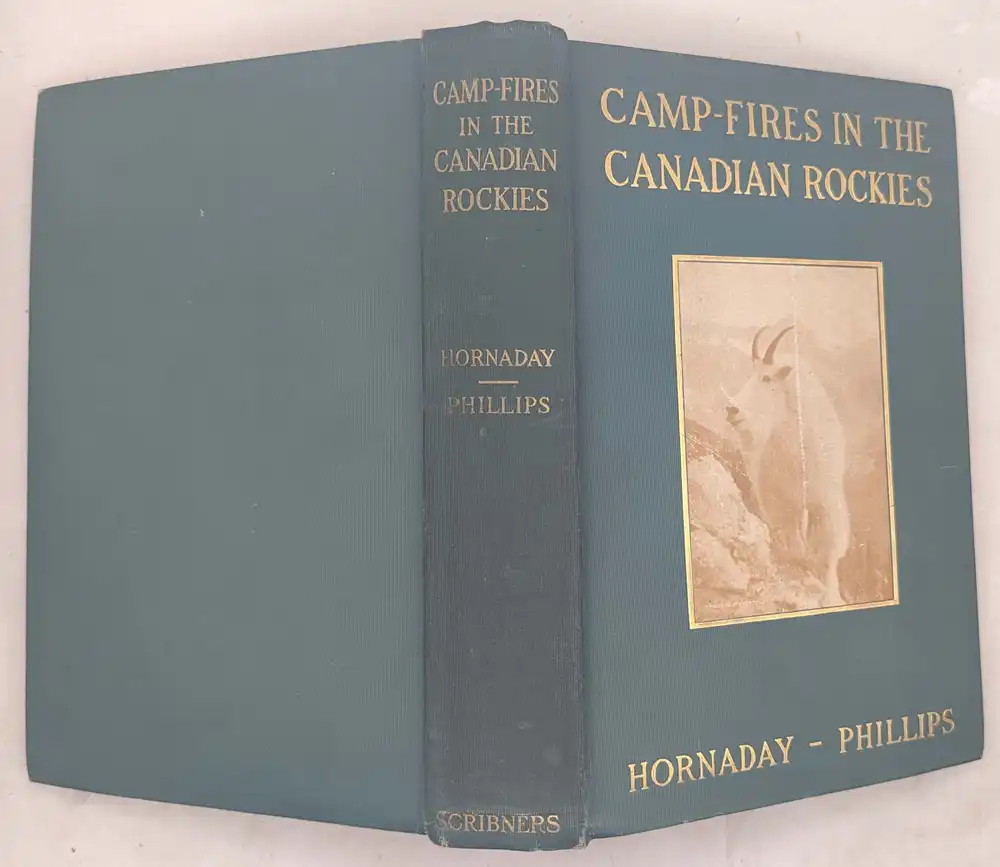
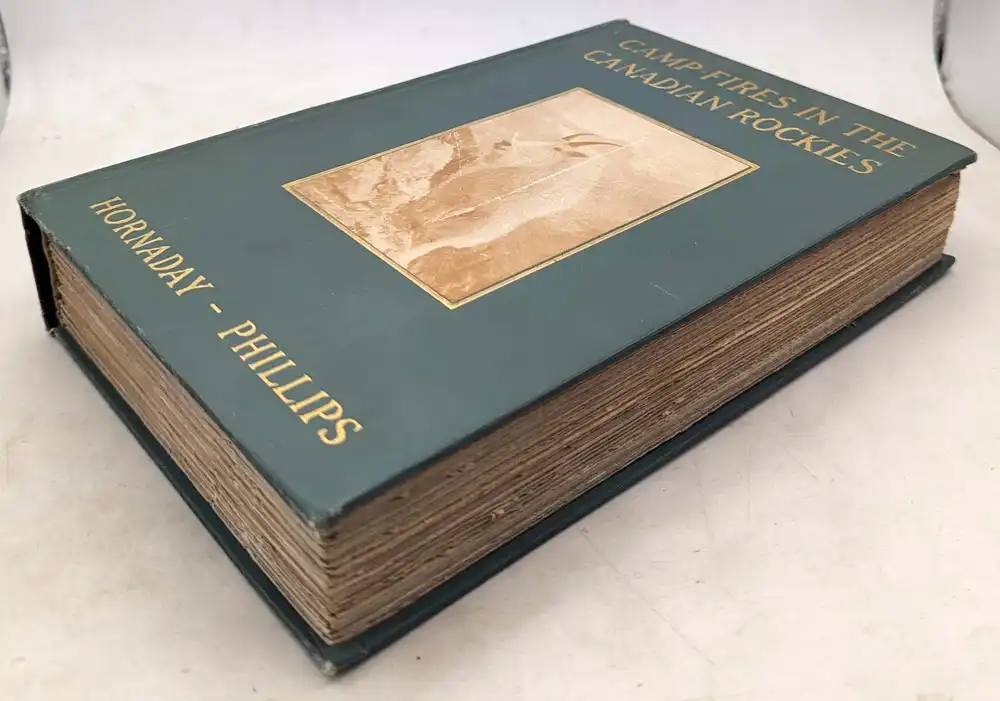
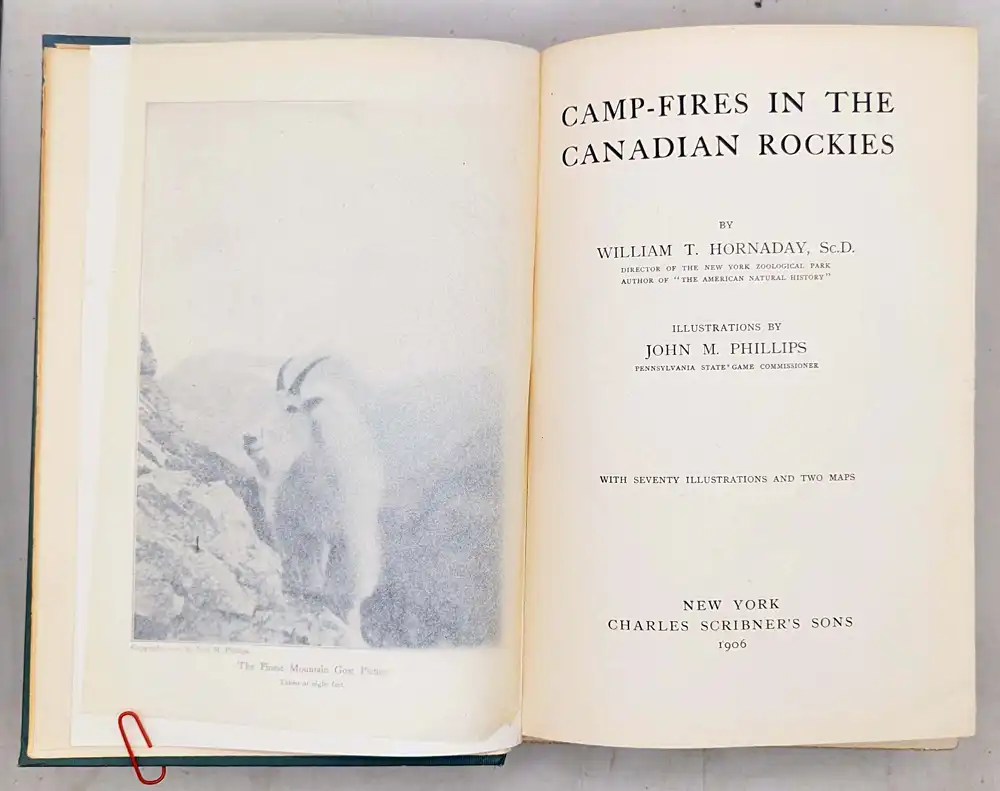
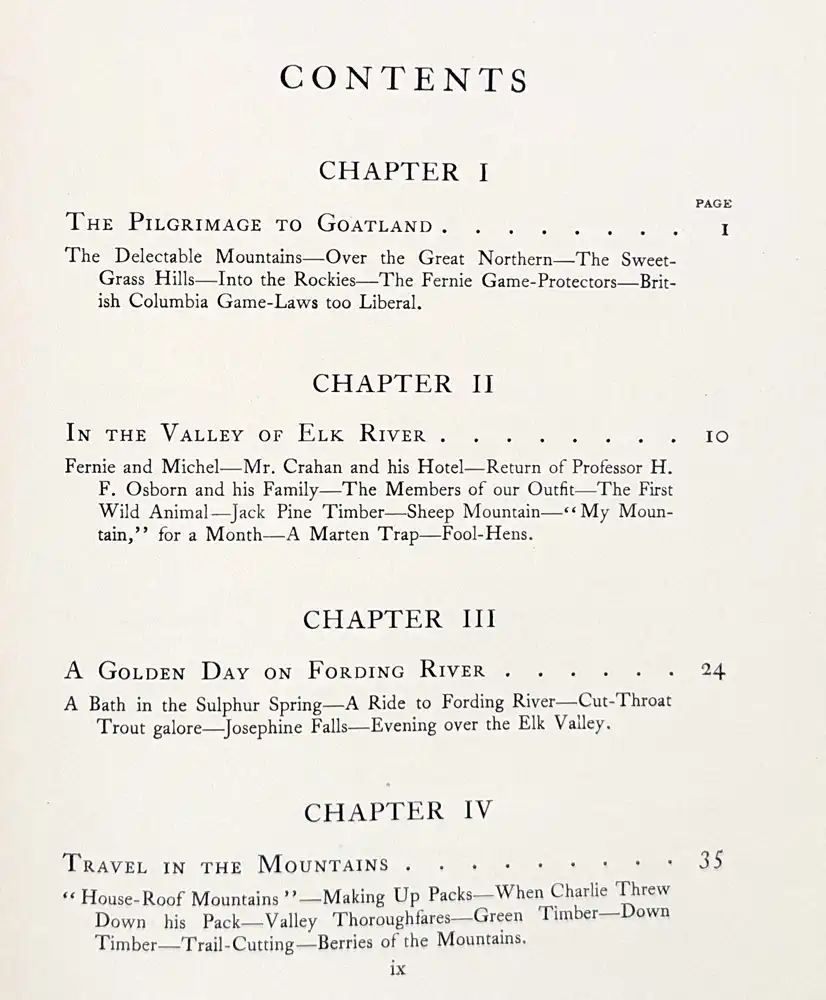
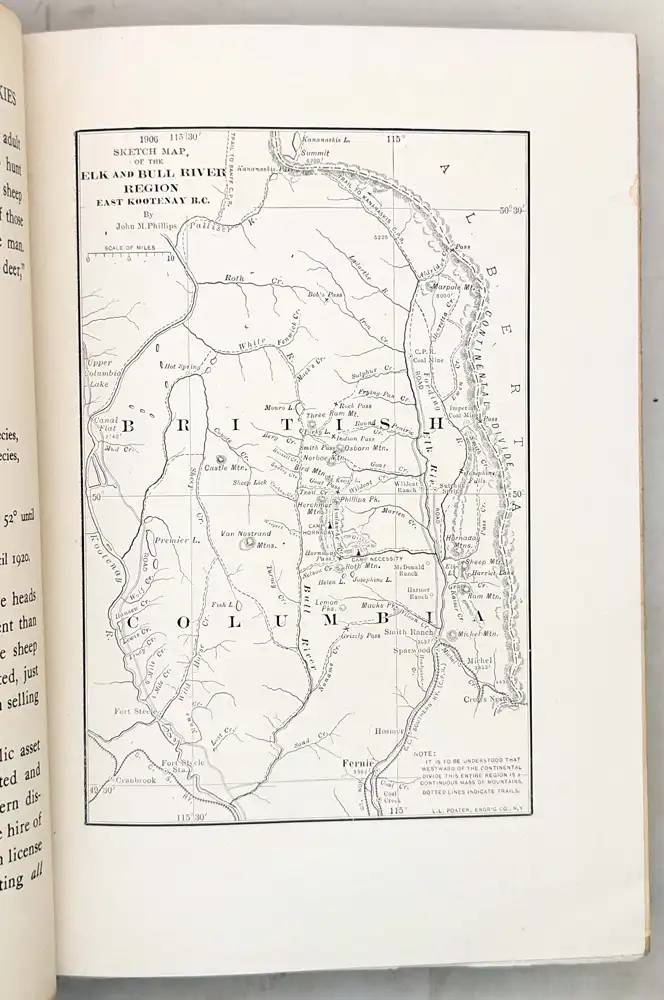
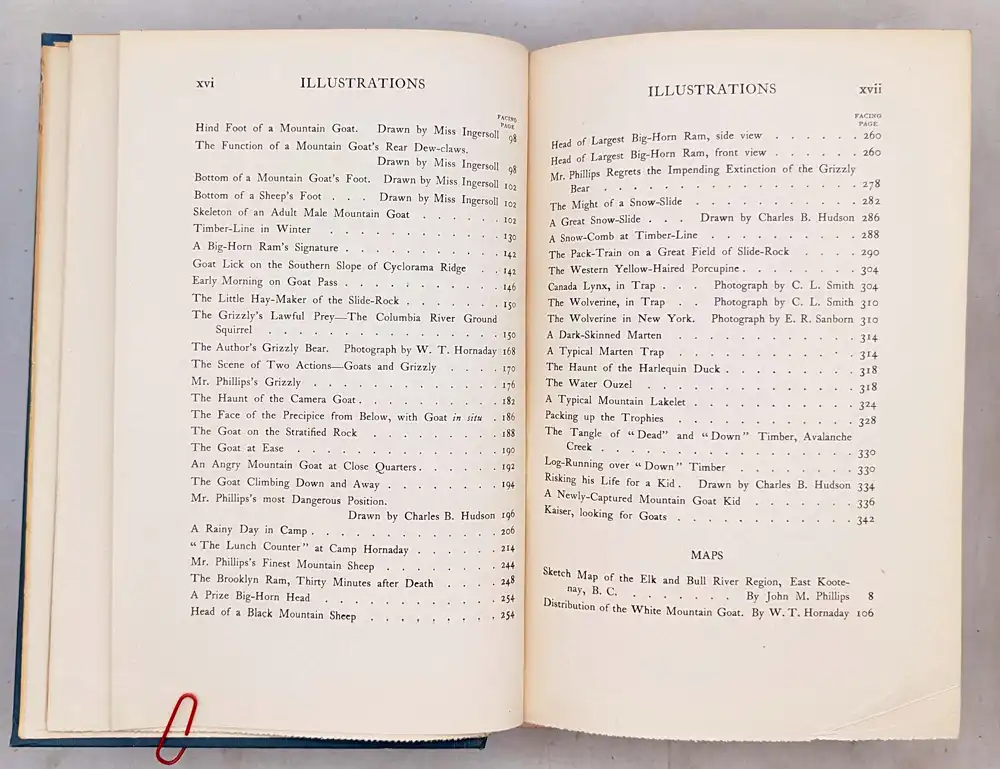
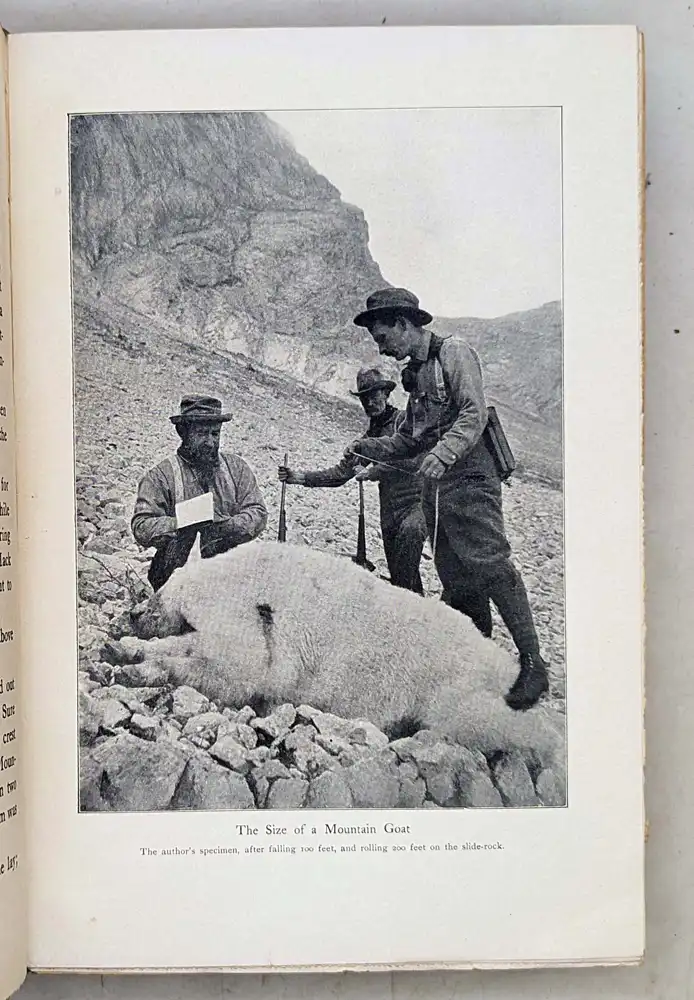
William T. Hornaday’s Camp-Fires in the Canadian Rockies was published in 1906 by Charles Scribner’s Sons in New York, with a London issue by T. Werner Laurie appearing the same year. The book is a hunting and travel narrative recounting Hornaday’s expedition into the rugged mountain wilderness of British Columbia and Alberta, accompanied by the illustrator John M. Phillips, whose drawings and maps enrich the volume.
Hornaday, then director of the New York Zoological Park and a leading figure in American conservation, writes with the dual eye of a sportsman and a naturalist, describing the pursuit of mountain game while recording observations on the habits and habitats of the region’s wildlife. The work is illustrated with seventy plates, most by Phillips, along with contributions from several other artists, and includes two maps. A poignant “In memoriam” section honors the hunting dog Kaiser, who accompanied the party.
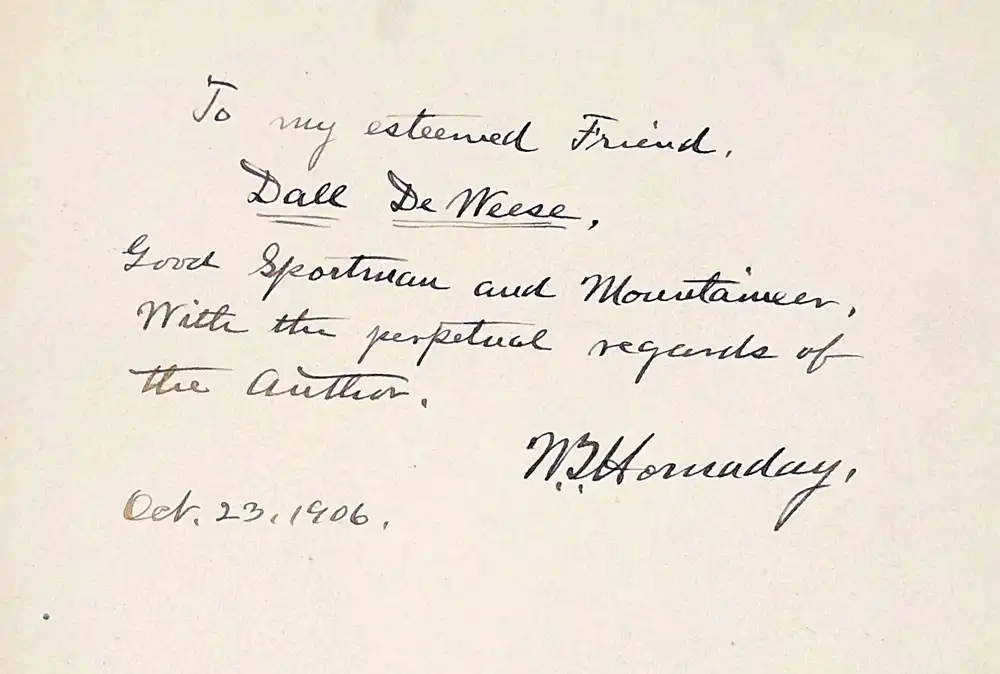
The association copy belonging to Dall DeWeese lends the volume a particular provenance. William Dallas “Dall” DeWeese was a Colorado businessman, horticulturist, and hunter-naturalist who moved to Cañon City in the 1880s and became a prominent booster of the region. He corresponded with Theodore Roosevelt on wildlife conservation and was instrumental in the passage of the Alaska Game Act of 1902. An association copy linking Hornaday’s Canadian Rockies narrative to DeWeese, a kindred sportsman-conservationist of the American West, connects two figures who moved in the same circles of Progressive-era hunting and preservation, and such a copy carries significance beyond the text itself as a relic of that shared world of field naturalists and museum collectors.