
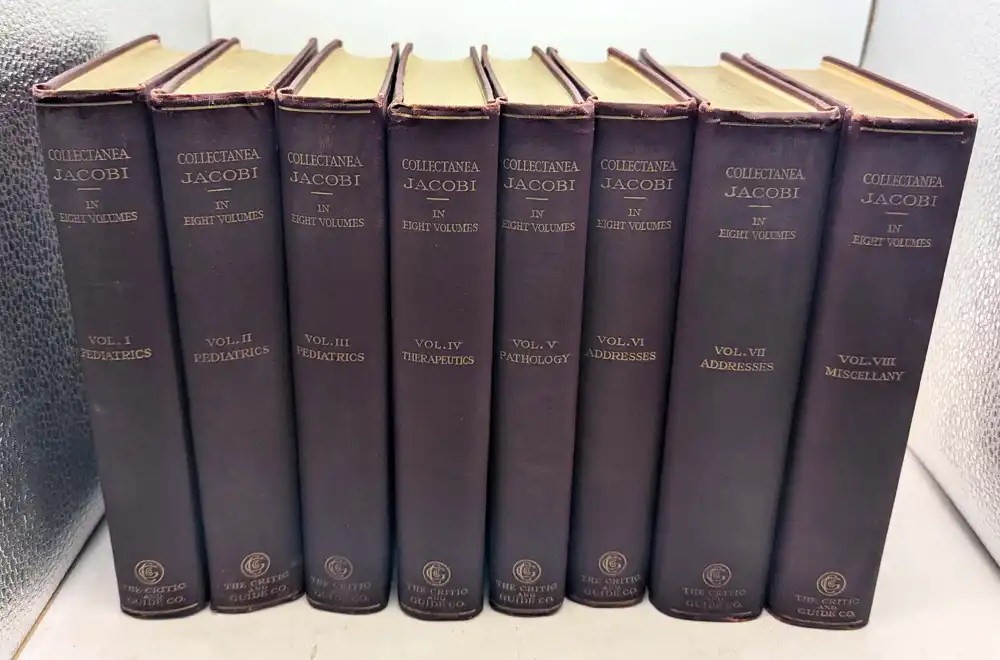

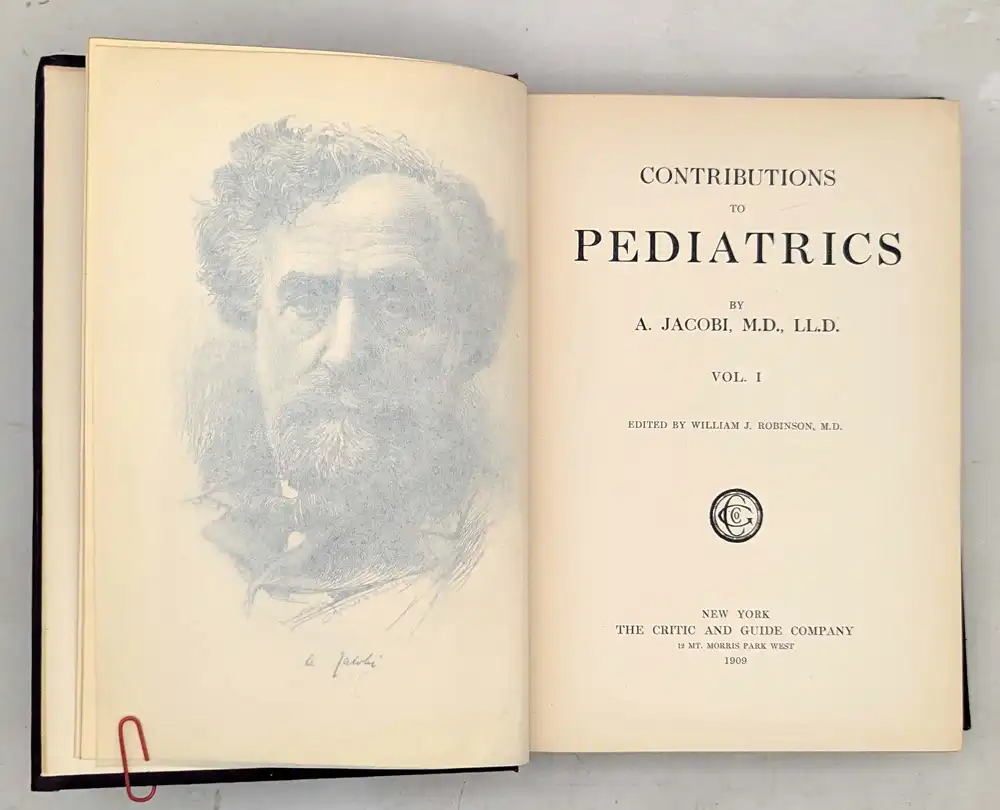
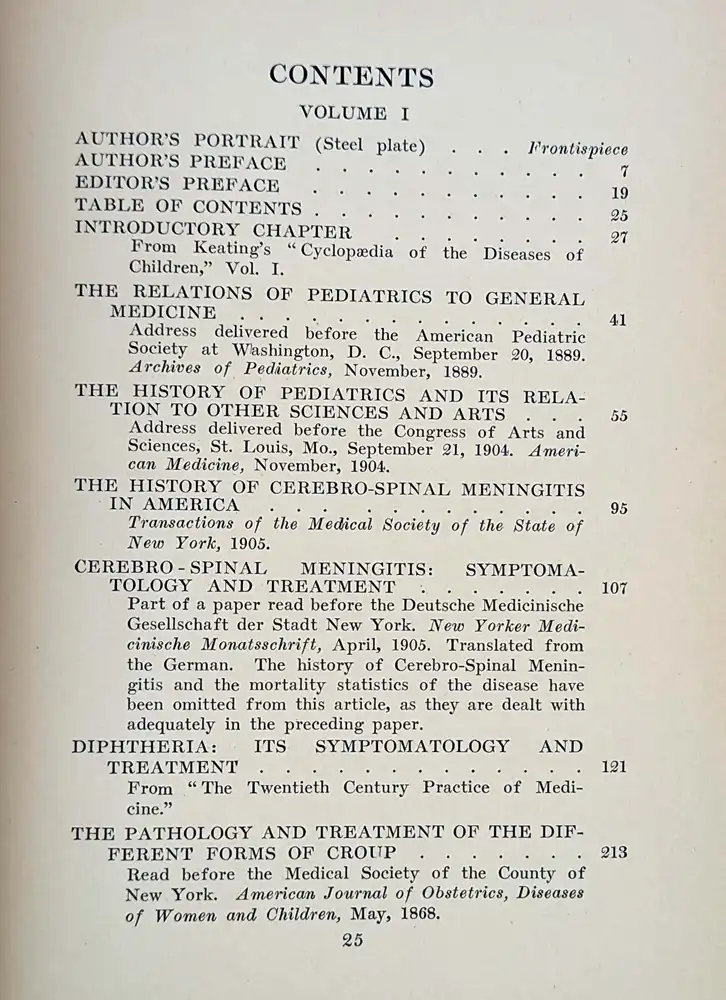
Collectanea Jacob: Contributions to Pediatrics by Dr. Abraham Jacobi, published in 1909, is a landmark collection that helped define pediatrics as a distinct medical specialty in the United States. Jacobi, often called the “father of American pediatrics,” assembled this eight-volume work at the height of his career, drawing together decades of clinical observations, research papers, and lectures that had previously appeared in scattered medical journals.
The book is not a systematic textbook but rather a gathering of Jacobi’s most significant writings, organized thematically. He covers infant feeding—a subject of fierce debate in an era before pasteurization and standardized formulas—with meticulous attention to the chemical composition of cow’s milk versus human milk. Other sections address infectious diseases of childhood, including diphtheria, scarlet fever, and measles, at a time when germ theory was still relatively new and effective treatments were scarce. Jacobi also ventures into unusual territory for his day: the relationship between nutrition and mental development, the dangers of corporal punishment in schools, and the need for proper ventilation and hygiene in orphanages and tenements.
What distinguishes Contributions to Pediatrics is Jacobi’s dual identity as clinician and advocate. He writes with a German-trained scientific rigor—each case study documented, each conclusion hedged with appropriate caution—yet his prose carries the moral urgency of a reformer. He argues forcefully for the establishment of children’s hospitals, for trained nursing care, and for the recognition that childhood diseases require different approaches than adult medicine. He also includes sobering sections on infant mortality, acknowledging that in some American cities, nearly one in three children died before their first birthday.
The book is a time capsule of early twentieth-century medicine, complete with photographs of hospital wards, hand-drawn fever charts, and prescriptions for treatments long since abandoned. Yet Jacobi’s core insight—that children are not small adults and deserve their own medical discipline—remains foundational. Contributions to Pediatrics stands as both a historical document and a testament to a physician who saw in the care of children nothing less than the future of public health.