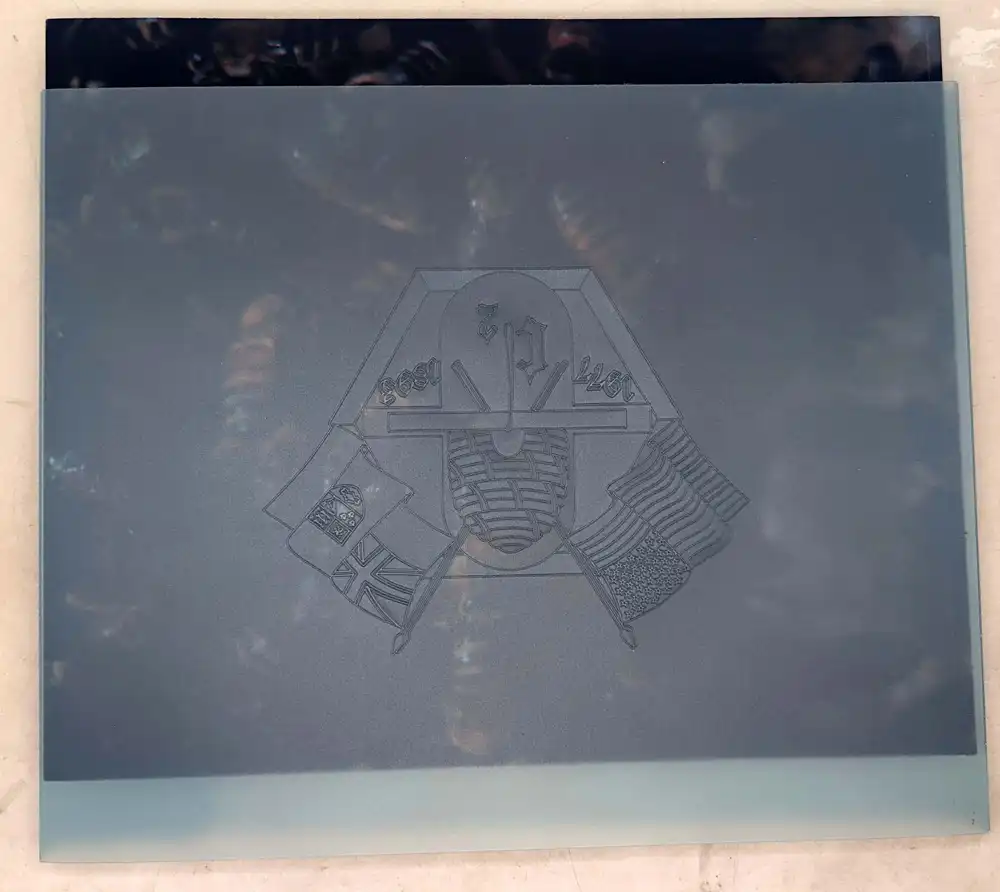
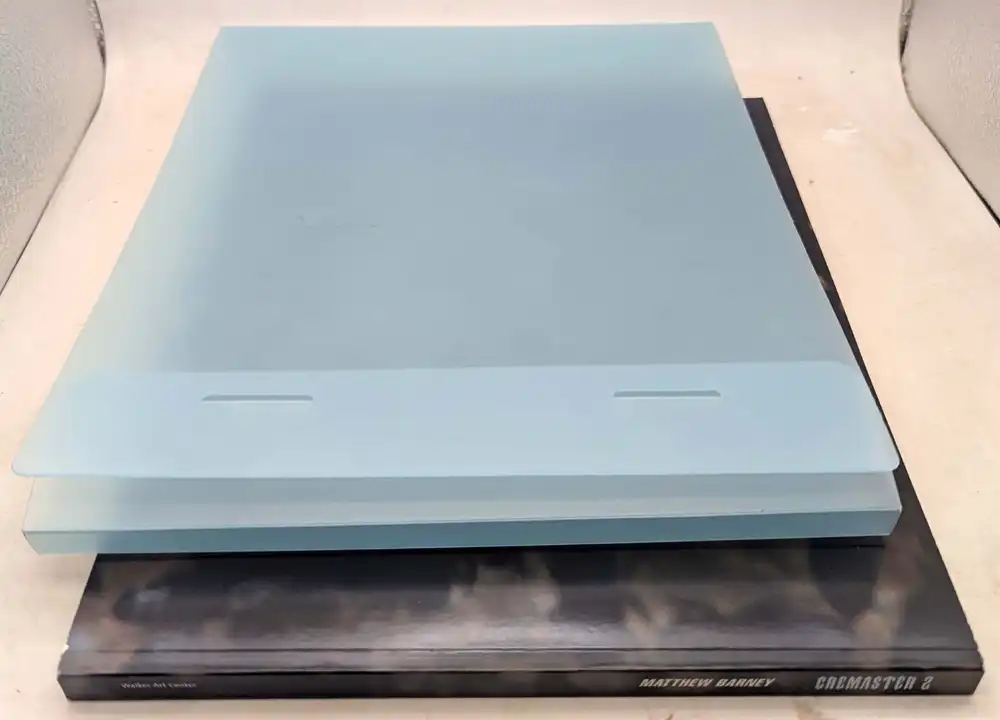
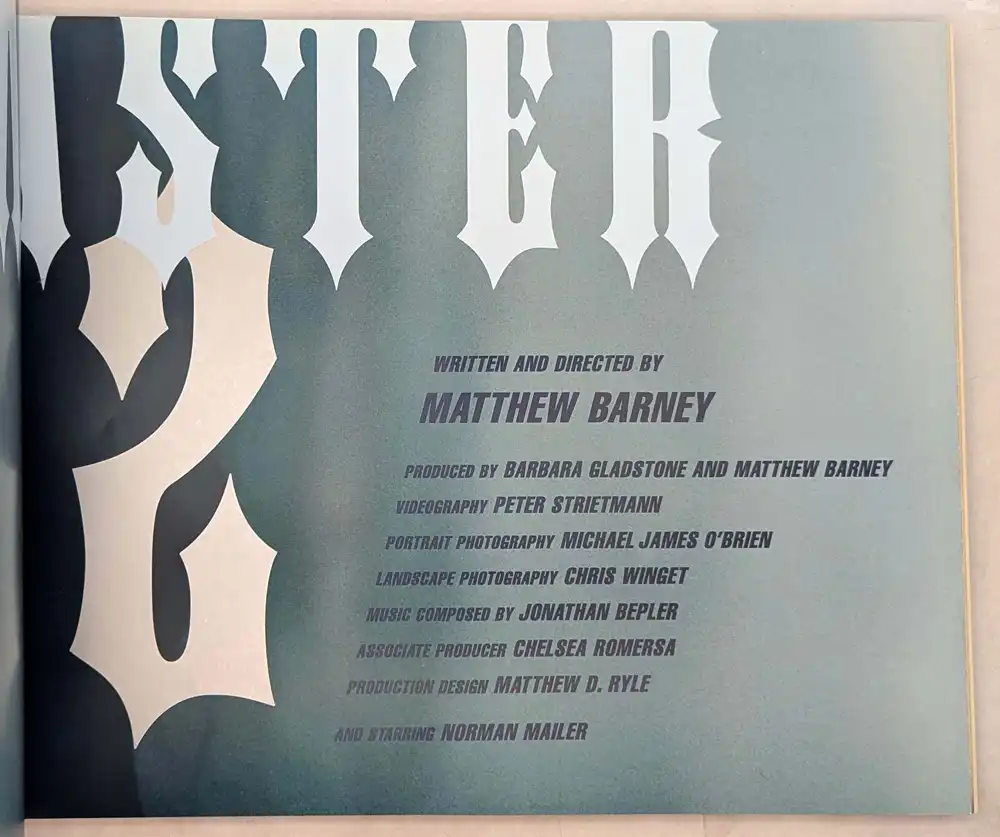
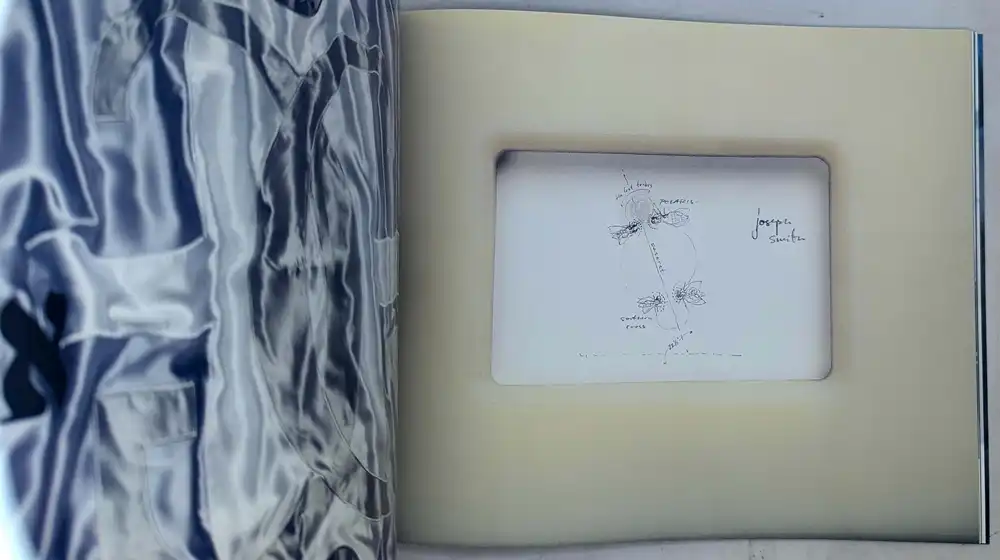

Cremaster 2 by Matthew Barney was published in 1999 by the Walker Art Center in Minneapolis, serving as the artist’s book and exhibition catalogue for the Walker Art Center’s presentation of the same name held from July 18 to October 17, 1999, organized by curator Richard Flood. The volume is a striking physical object in its own right: unpaginated and running roughly seventy-one leaves, and comes encased in a molded plastic sheath featuring the emblem of a beehive, a symbol of the Mormon Tabernacle that recurs within the film’s iconography.
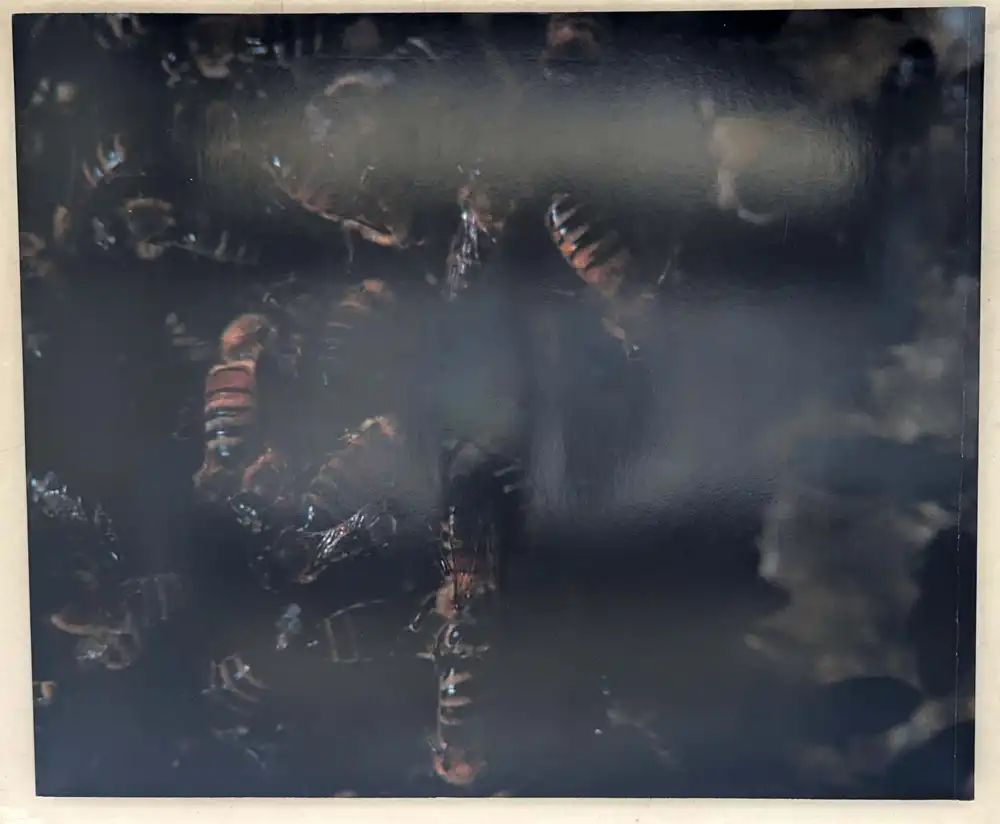
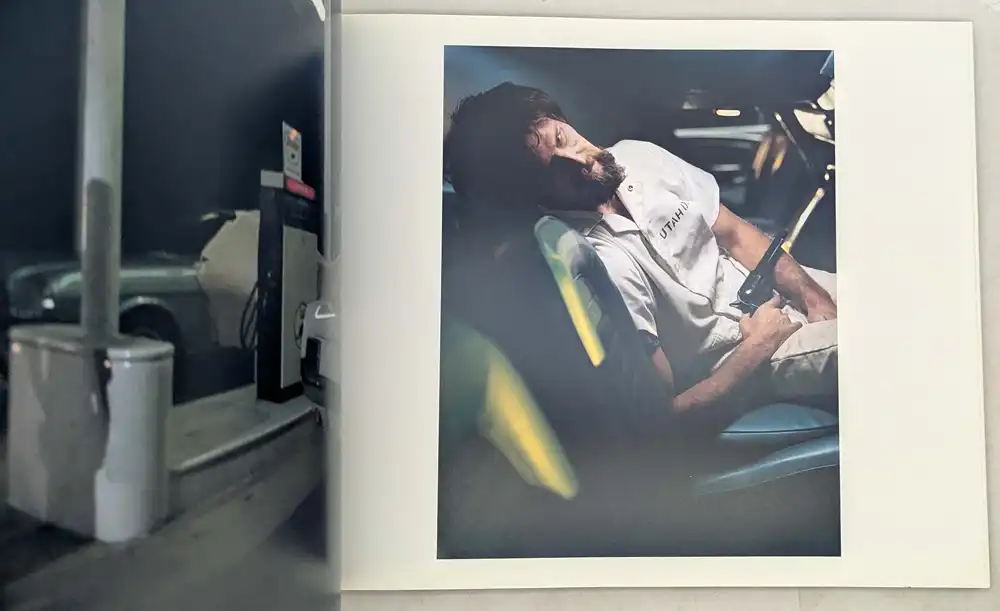
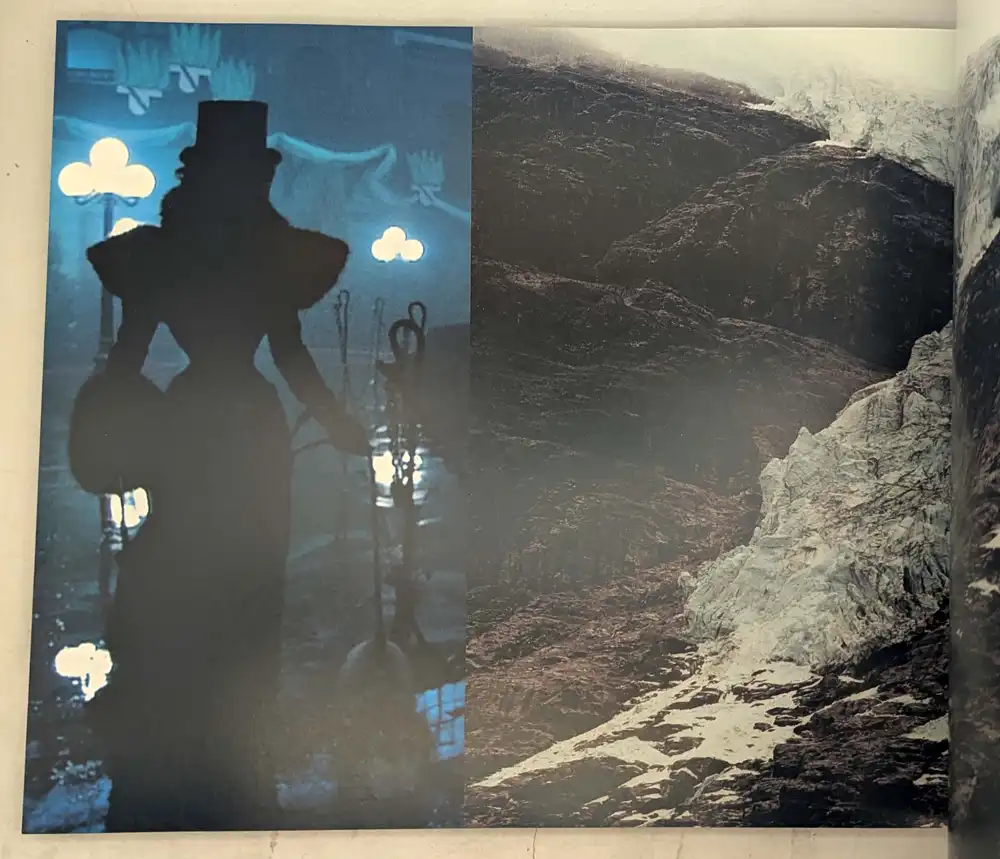
The book is principally composed of stills from Barney’s film, reproduced chiefly in color, alongside an insert containing excerpts from Norman Mailer and Lawrence Schiller’s The Executioner’s Song. As the fourth installment of Barney’s Cremaster cycle, the project is loosely based on the life of Gary Gilmore, with the scenario revolving around Gilmore’s fascination with his alleged maternal grandfather, Harry Houdini, and his desire to join Houdini in the afterlife; Barney filmed in the Salt Flats of Utah, the Columbia Icefield in Canada, and New York City. Within the broader architecture of the cycle, Cremaster 2 is rendered as a gothic Western that introduces conflict into the system, corresponding on the biological level to the phase of fetal development during which sexual division begins . The book captures the film’s distinctive visual language—its austere landscapes, ritualistic tableaux, and sculptural props—in a format that functions as both documentation and autonomous artwork, extending Barney’s exploration of form, restriction, and transformation beyond the screen.