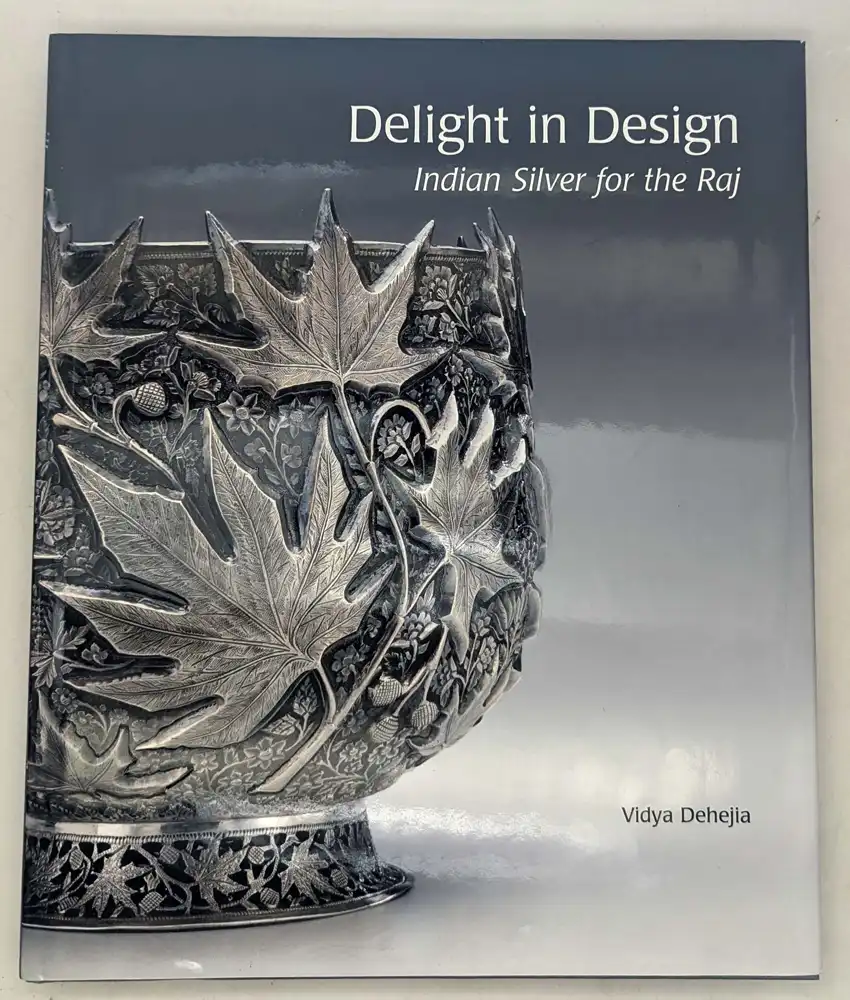
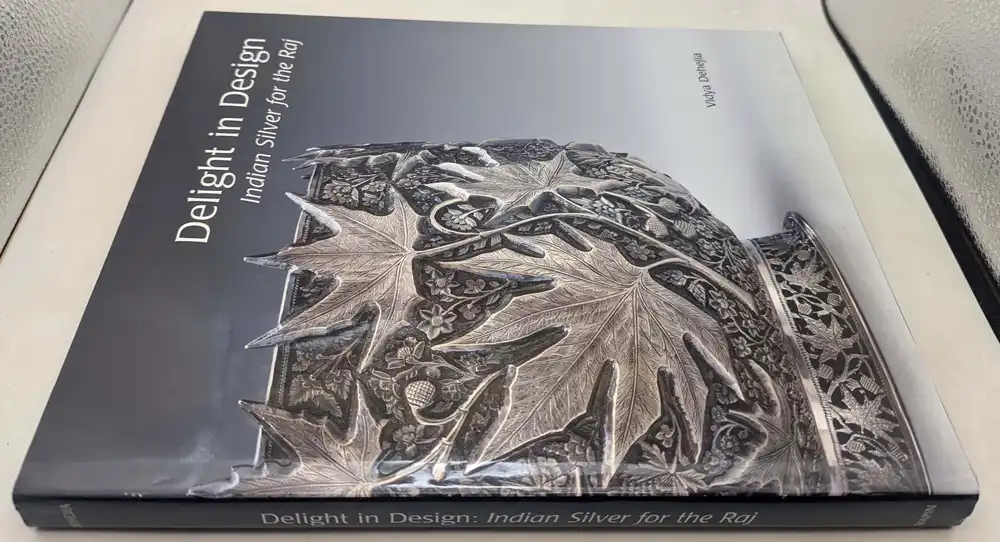
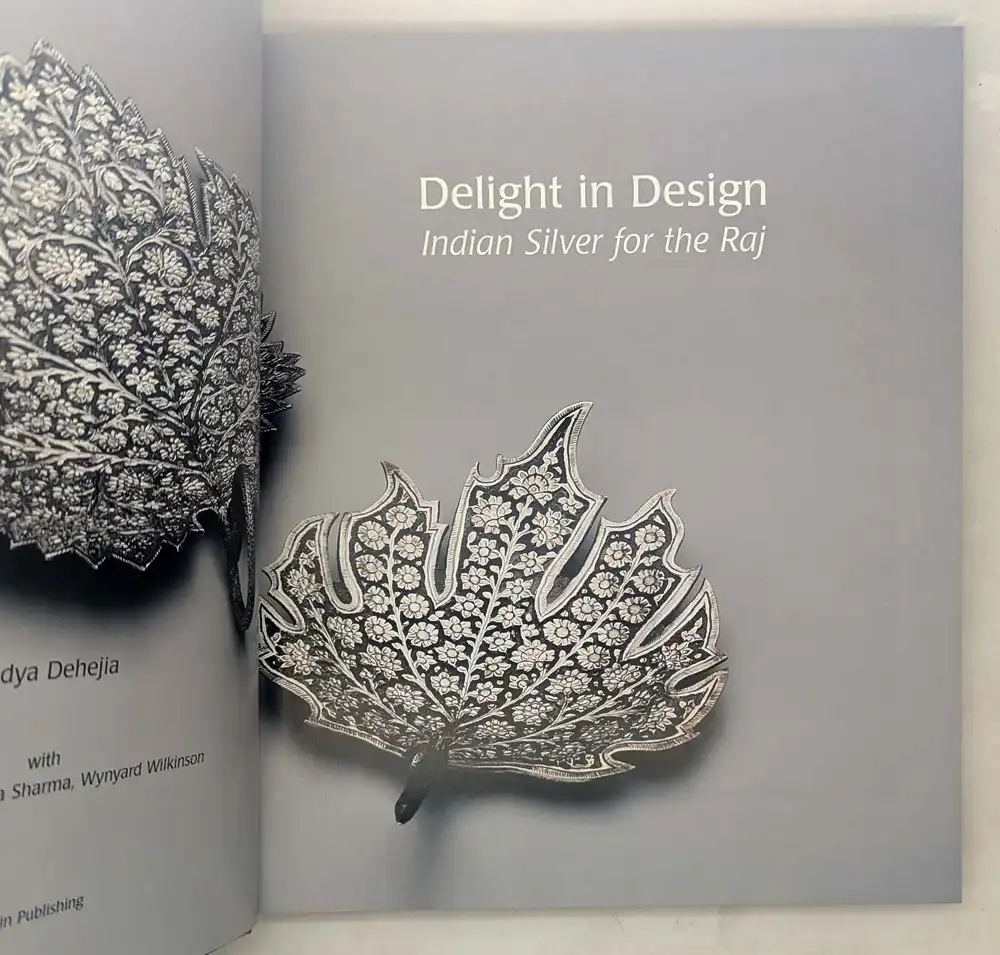
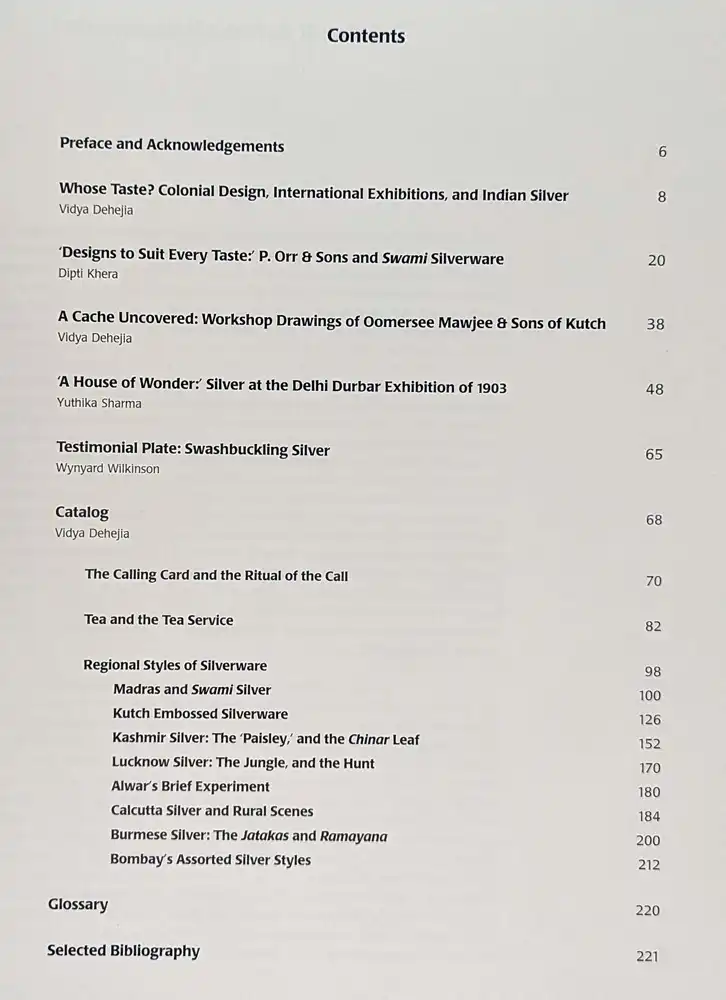
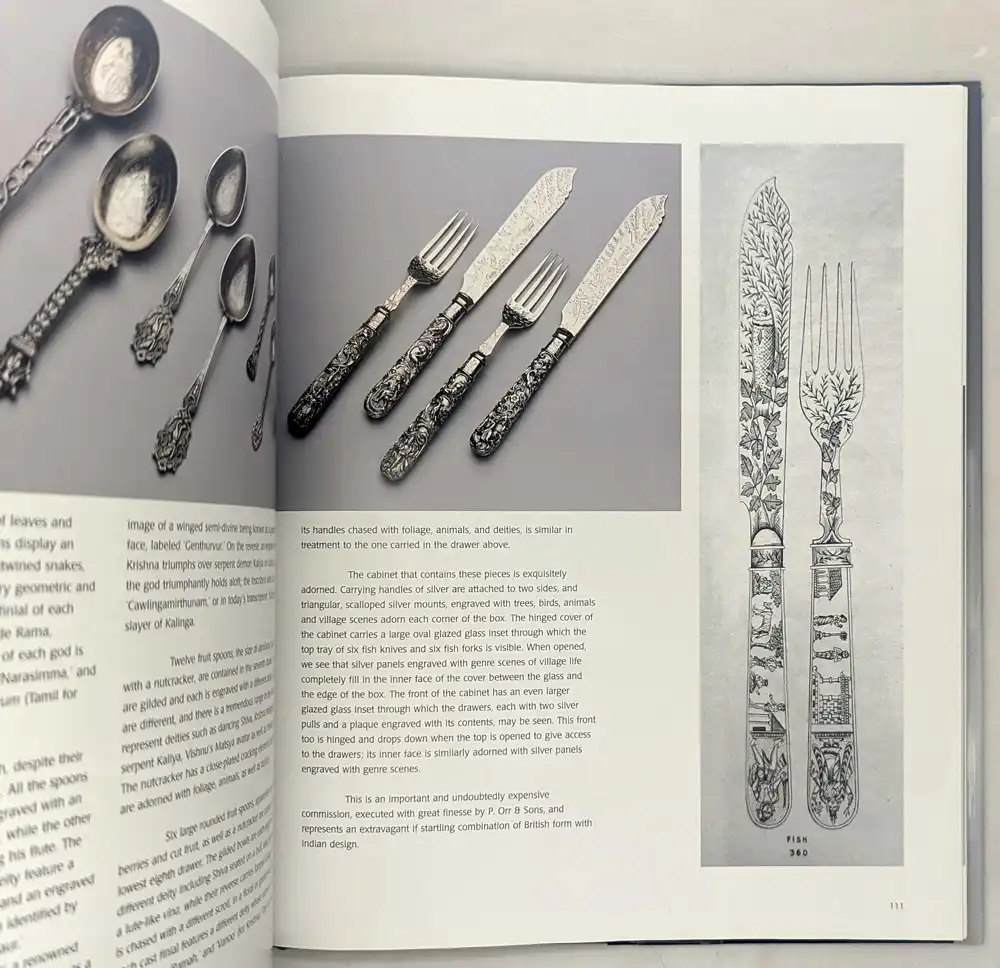
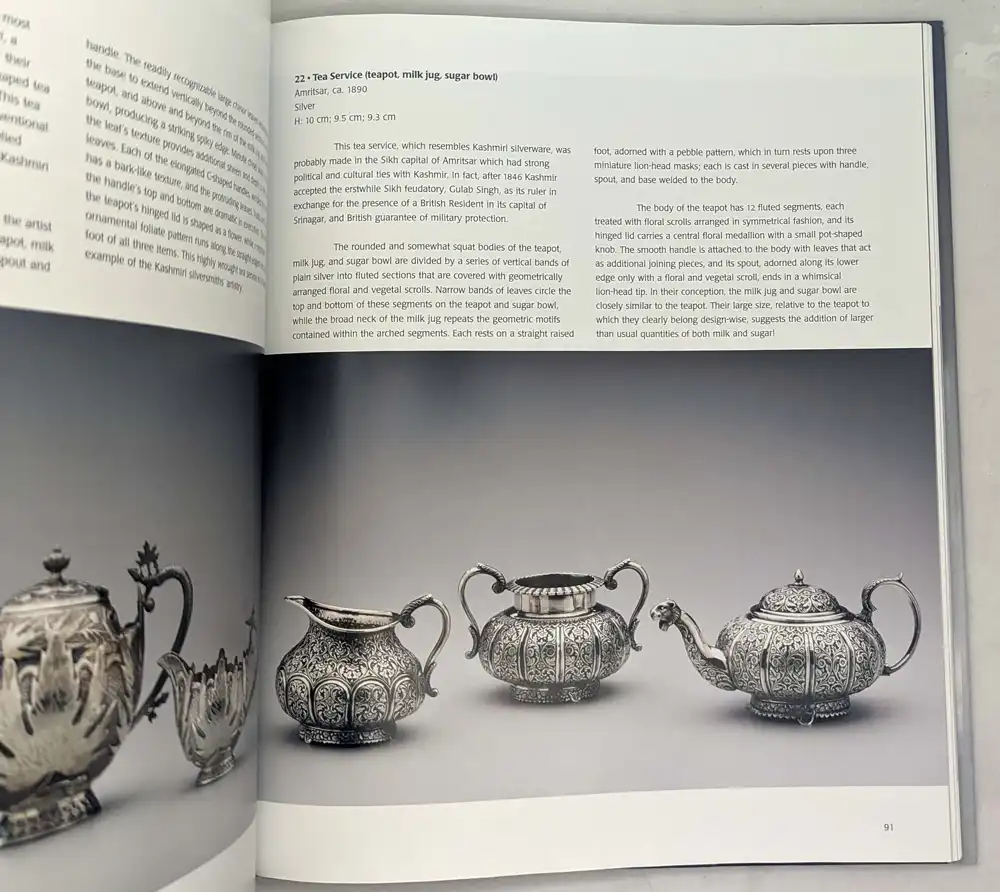
Delight in Design: Indian Silver for the Raj is a scholarly exhibition catalogue published by Mapin Publishing in association with Timeless Books, Ahmedabad, in 2008. The volume was authored by Vidya Dehejia with contributions from Dipti Khera, Yuthika Sharma, and Wynyard Wilkinson, and was published in conjunction with an exhibition held from 18 September to 13 December 2008 at the Miriam & Ira D. Wallach Art Gallery, Columbia University, New York. The book runs 223 pages and includes illustrations, along with a map.
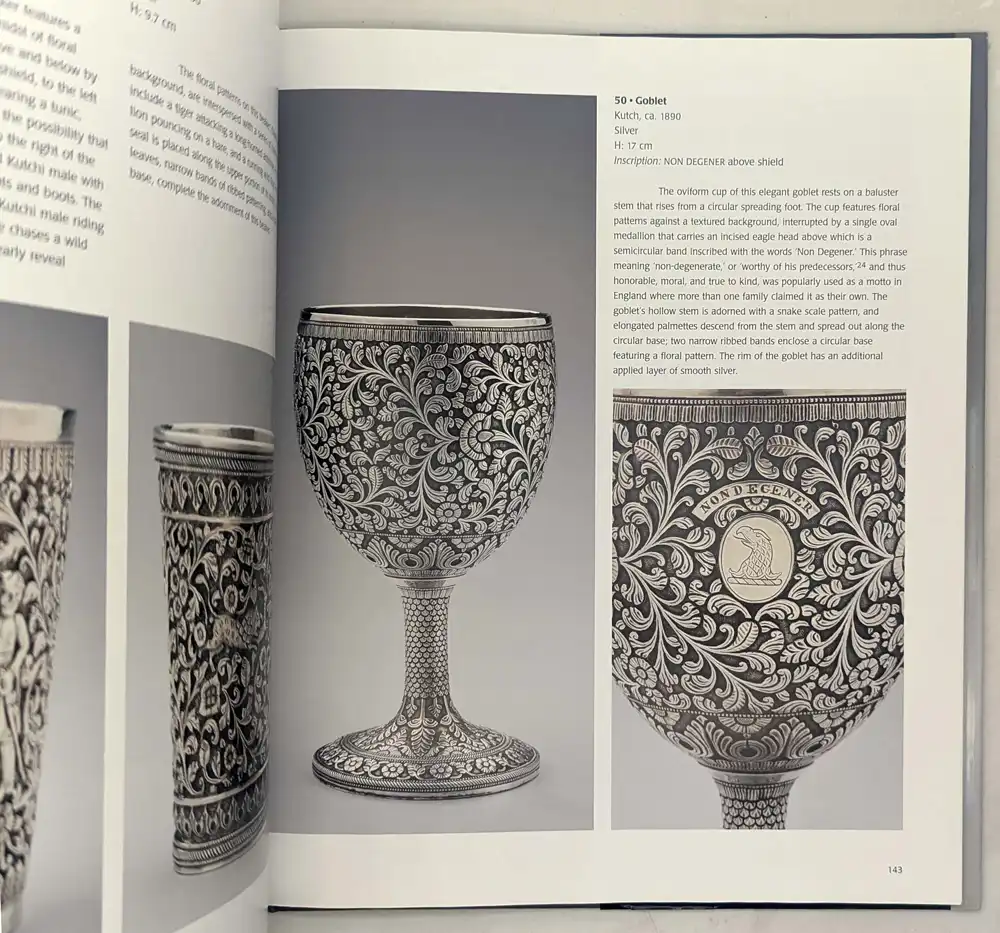
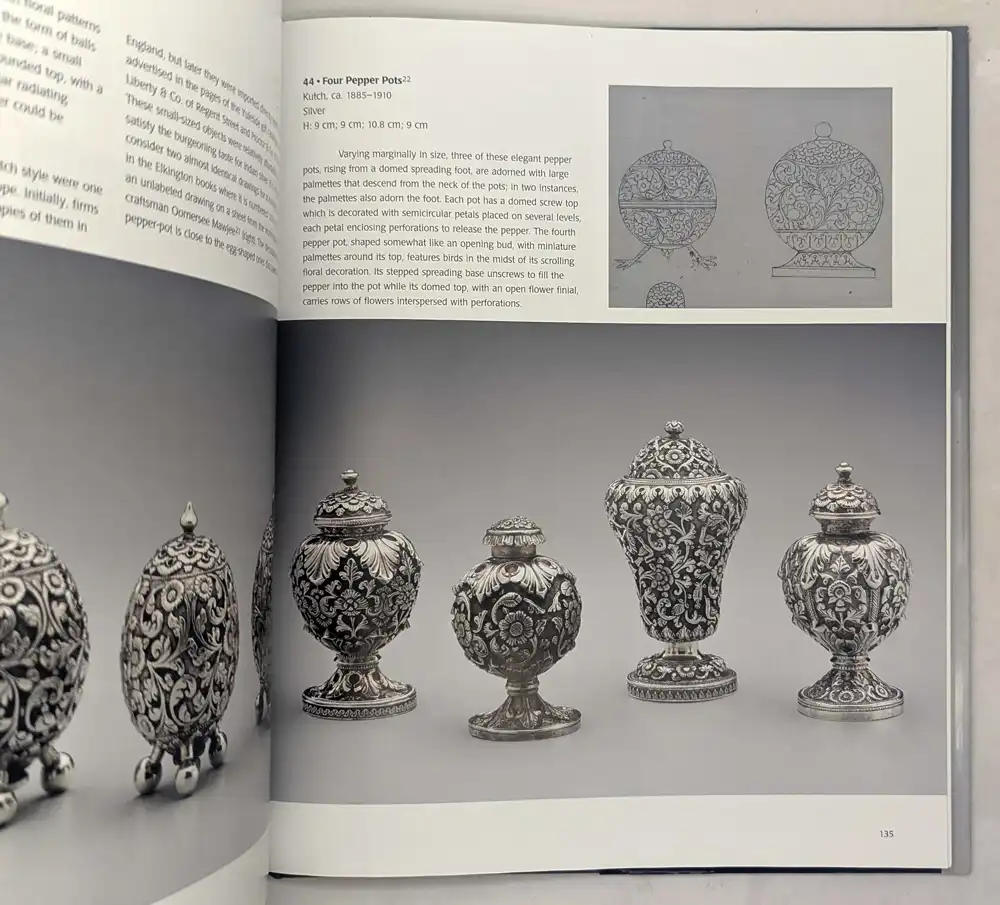
The publication focuses on the remarkable ornamented silverware produced by Indian craftsmen during the period of the British Raj. Silversmiths created elegant silver tea services, bowls, wine and water ewers, beer mugs, and goblets to adorn the sideboard or mantelpiece in a British Raj home, producing European forms fulfilling European requirements, yet embellishing these objects with motifs that reflected local taste and carried recognizably regional patterns. A tea service made in Kutch might feature heavily embossed work with a twisted snake handle and an elephant head spout, while Madras-produced teapots bore images of gods in temple processions, giving rise to the designation “Swami silver”; Calcutta wares displayed rural scenes of water-carrying, grain-husking, and ploughing against palm trees and village huts.
The book comprises five essays exploring different facets of production and consumption, considering the silverware in terms of its clearly distinguishable regional styles, and is prefaced by two thematic sections on calling card cases and tea services that demonstrate their wide prevalence. The visual presentation does justice to the silverware’s dazzling quality, making the volume a significant scholarly contribution to the study of colonial Indian decorative arts.