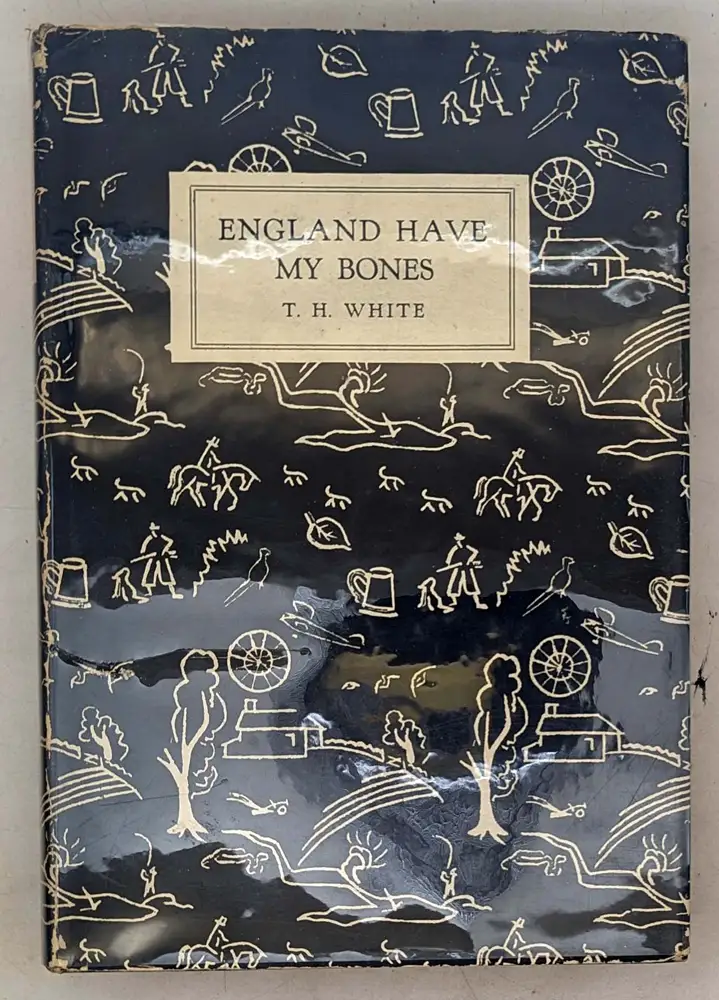
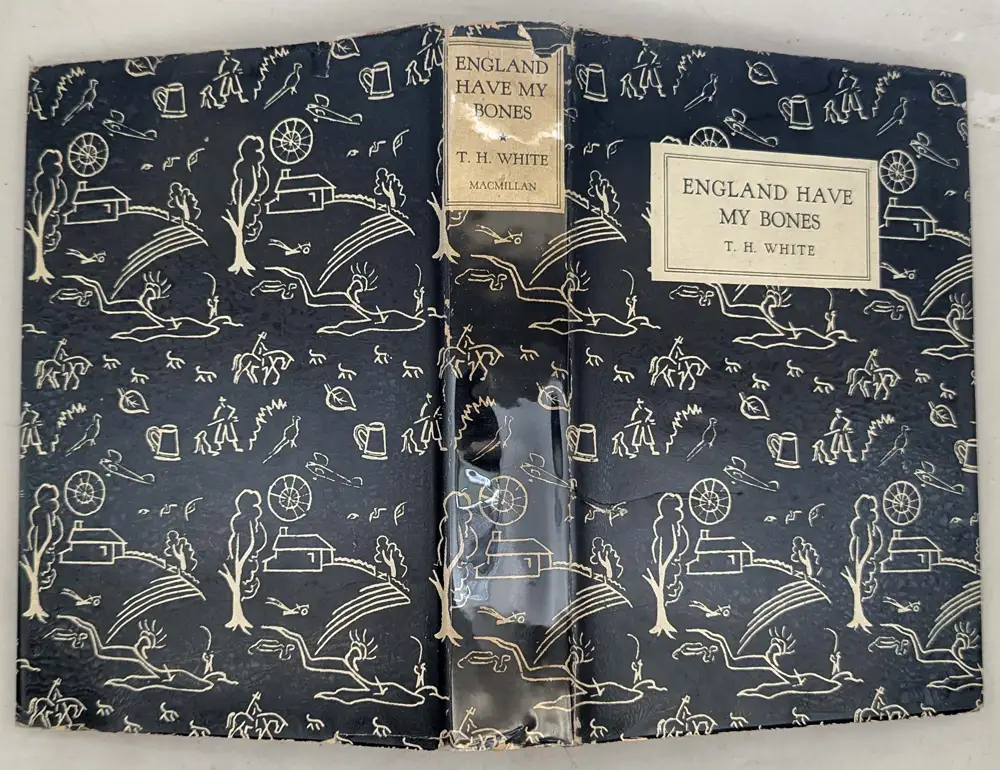
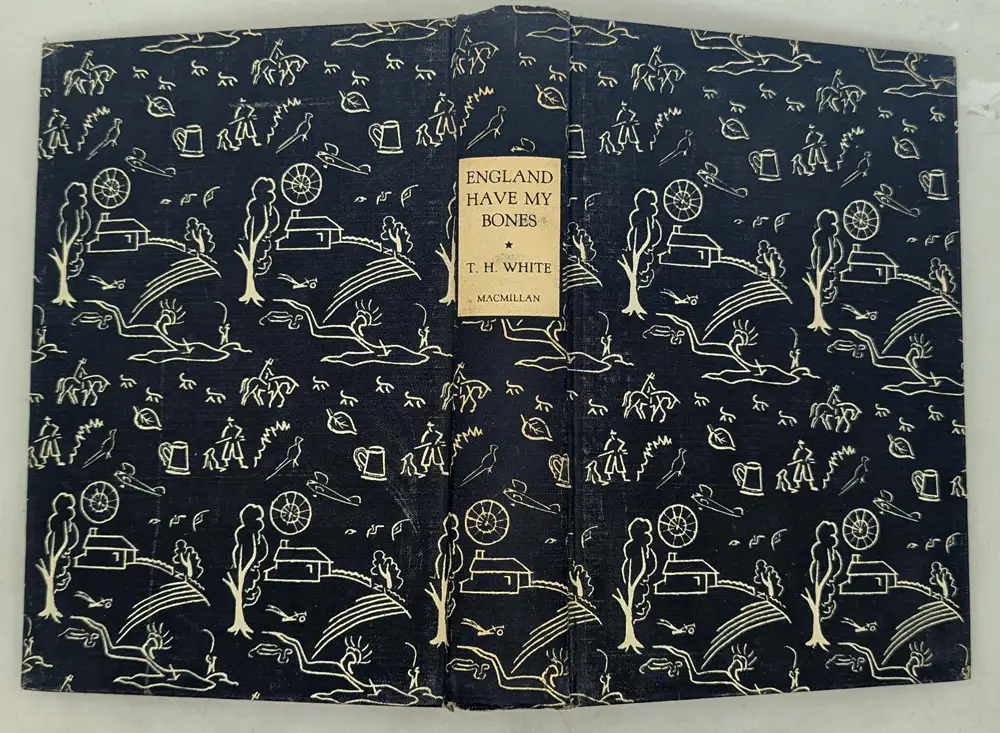
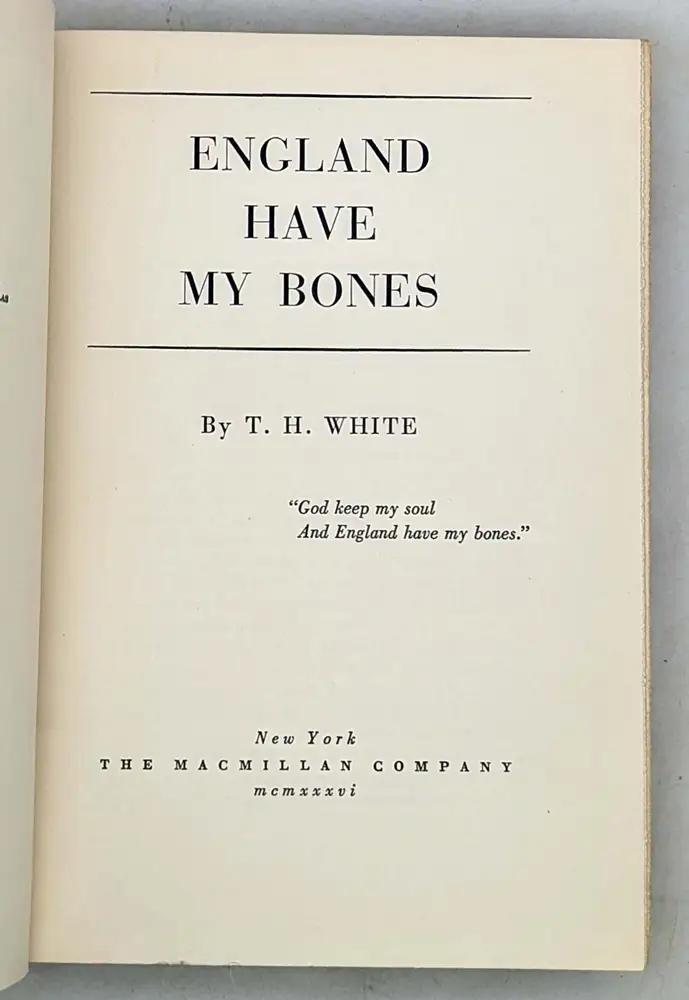
England Have My Bones is T. H. White’s singular memoir of a year spent in rural Dorset during the 1930s, a work that defies easy categorization. Part naturalist’s journal, part philosophical meditation, and part eccentric autobiography, the book captures a restless, brilliant mind in intimate communion with the English countryside.
Written after the success of his Arthurian novel The Sword in the Stone but before its sequel, this volume reveals White at his most unguarded. Having retreated from London to a remote cottage, he dedicates himself to an obsessive catalog of country pursuits: hunting, fishing, falconry, and the meticulous observation of weather, wildlife, and the changing seasons. Yet what emerges is far more than a rural idyll. White approaches each subject—whether learning to train a goshawk, pursuing otters through freezing rivers, or simply noting the migration patterns of birds—with a fanatic’s intensity and a scholar’s appetite for detail.
The narrative oscillates between lyrical nature writing and passages of surprising darkness. White’s prose crackles with restless energy, moving seamlessly from technical discussions of falconry hoods to existential reflections on solitude, failure, and the elusive nature of happiness. His voice is by turns witty, melancholic, and fiercely introspective, offering readers a portrait of a man engaged in a sustained struggle to anchor himself to something tangible and true.
The title itself suggests both belonging and dispossession—a country claimed even as the self remains in question. England Have My Bones stands as a unique contribution to English letters, a work that merges the traditions of Gilbert White’s natural history with the confessional intensity of a modern sensibility. It remains essential reading for those drawn to the English landscape and to the complex inner life of one of the twentieth century’s most singular writers.