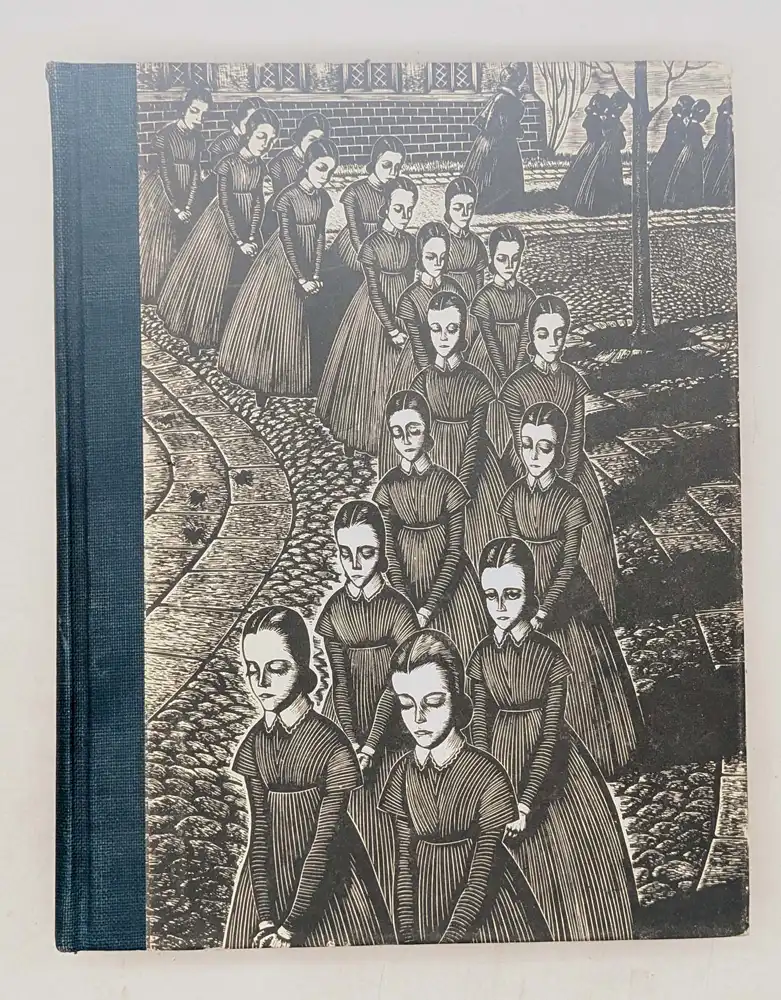
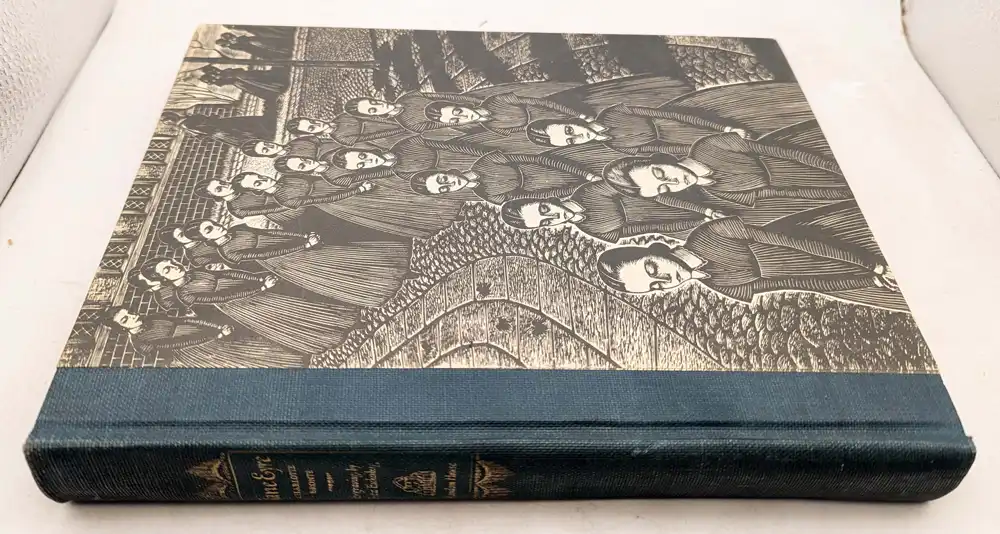
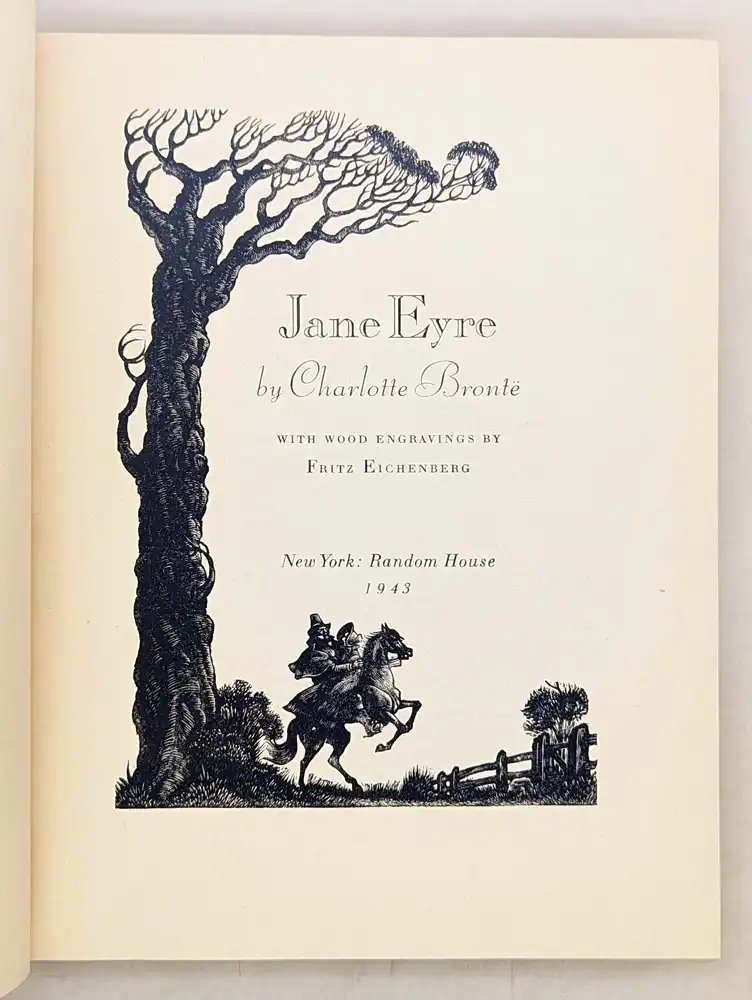
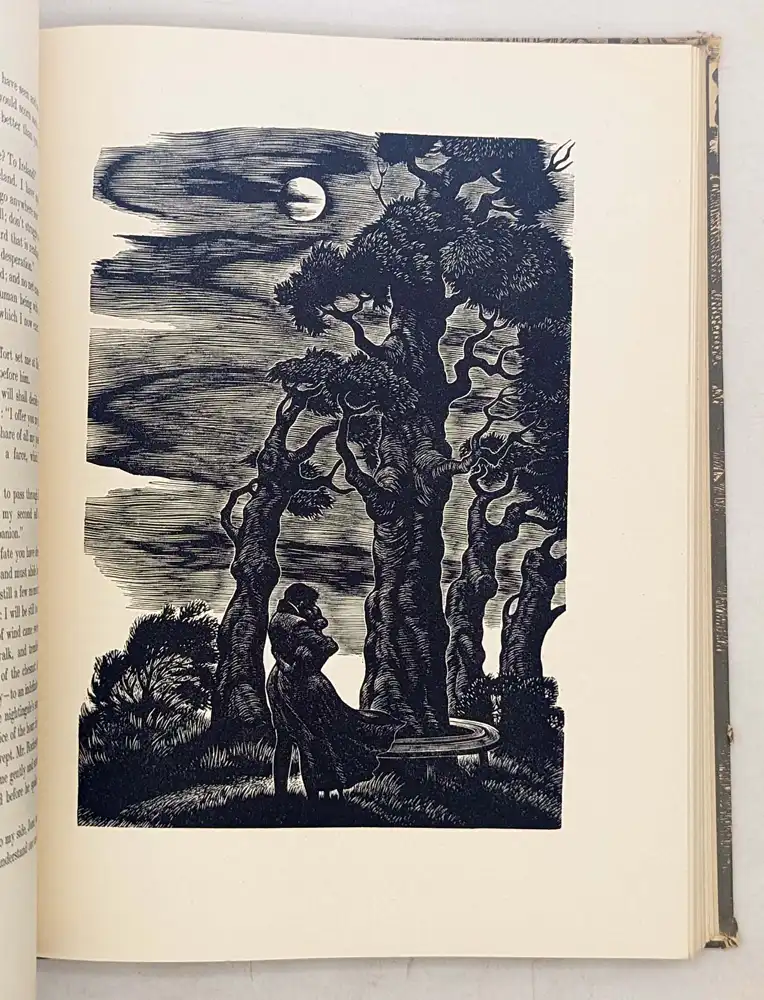
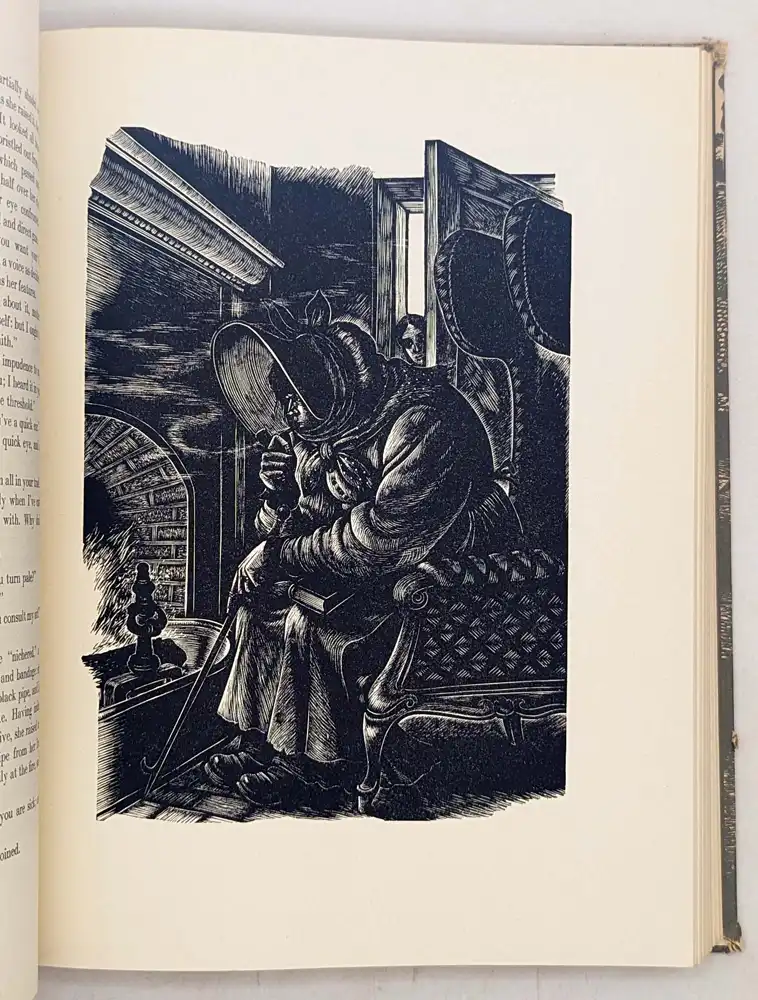
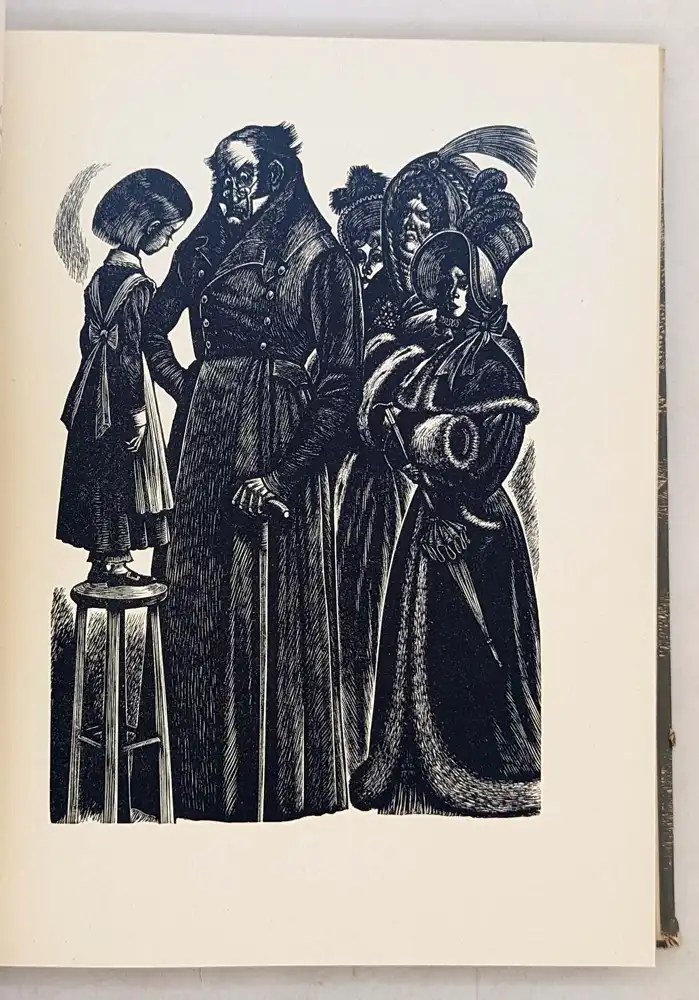
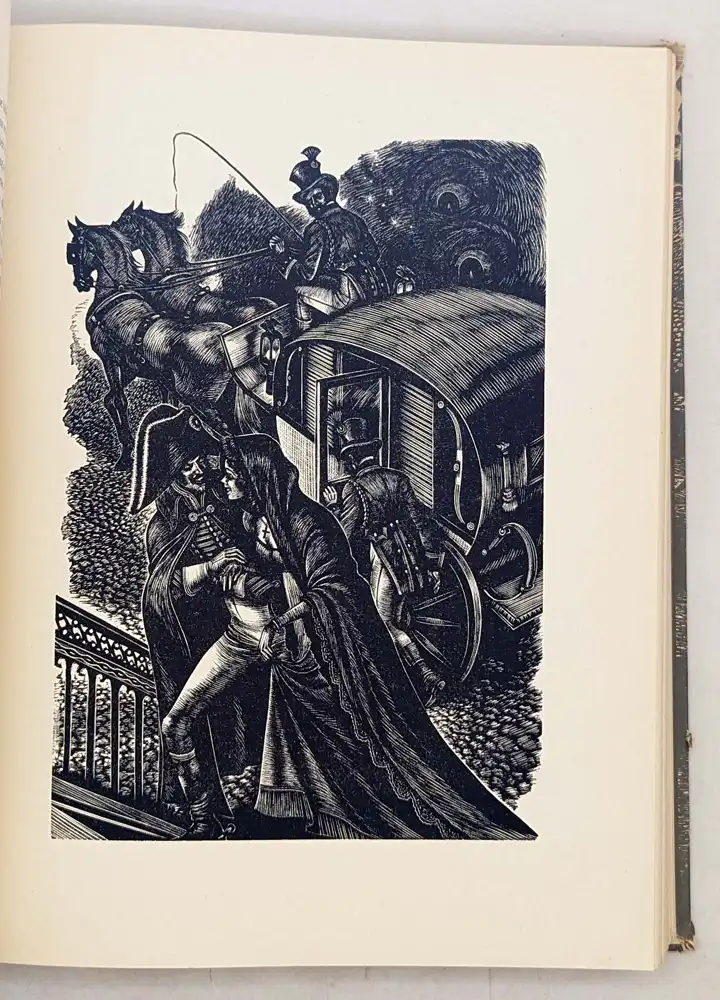
First published in 1847 under the pseudonym Currer Bell, Charlotte Brontë‘s Jane Eyre stands as a monumental work of English literature, renowned for its profound exploration of morality, social criticism, and deep psychological insight. This enduring classic is given a powerful new visual dimension in the 1943 edition, which features stark and evocative wood engravings by the master printmaker Fritz Eichenberg. Published by Random House, this particular edition transforms the reading experience, with Eichenberg’s illustrations perfectly capturing the novel’s brooding, gothic atmosphere and the intense inner life of its protagonist.
The novel charts the life of its remarkable heroine, Jane Eyre, from her harsh, loveless childhood as an orphan to her position as a governess at the mysterious Thornfield Hall. There, she encounters her charismatic but tormented employer, Mr. Rochester, and a passionate love story unfolds, testing the boundaries of morality and desire. Brontë subverts the conventions of her time by creating a heroine who is not classically beautiful but is defined by her fierce independence, unwavering integrity, and powerful inner strength. Jane’s journey is one of moral fortitude, famously leading her to flee from the man she loves rather than compromise her principles, a decision that underscores the novel’s central theme of staying true to oneself. Eichenberg’s stark illustrations, with their dramatic contrasts of light and shadow, serve as the perfect complement to Brontë’s text, visualizing the romantic and gothic elements that have made Jane Eyre a beloved classic for generations.