Johanna Spyri: The Woman Who Gave Switzerland a Voice
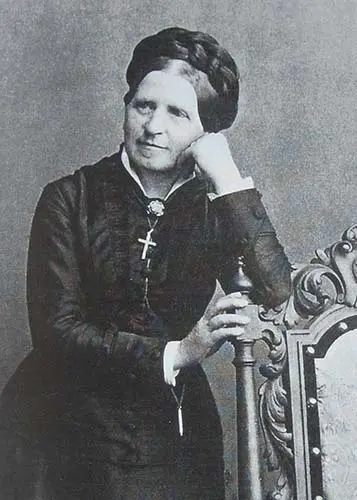
She created one of the most beloved heroines in all of children’s literature—a pigtailed, barefoot, mountain-loving girl who sleeps in a hayloft, drinks fresh goat’s milk, and teaches a wealthy invalid child how to walk again. Yet Johanna Spyri, the author of Heidi, remains surprisingly unknown. Unlike her famous character, who has been adapted into films, cartoons, and television series across a dozen languages, Spyri herself lived a quiet, private life in the shadow of the Alps she loved so well. She wrote not for fame but from a deep, urgent need to tell stories of home, faith, and the healing power of mountains.
Johanna Louise Heusser was born in 1827 in the small village of Hirzel, in the canton of Zürich, Switzerland. Her father was a country doctor, her mother a poet who published hymns and encouraged her daughter’s literary aspirations. The landscape of Johanna’s childhood—the rolling hills, the distant peaks of the Alps, the simple rhythms of village life—would later become the vivid backdrop for her fiction. But her childhood was not entirely idyllic. She was a sensitive, introspective girl who found solace in reading and nature. The family moved to the city of Zürich when she was fifteen, and the transition from rural freedom to urban formality left a lasting mark on her.
In 1852, she married Bernhard Spyri, a lawyer and newspaper editor. The marriage was not a happy one. Bernhard was distant, intellectually demanding, and often critical of his wife’s interests. For nearly two decades, Johanna set aside her literary ambitions to manage the household and raise their only child, a son named Bernhard. She wrote nothing of significance during those years. It was only in her forties, after her husband’s law practice faltered and financial pressures mounted, that she began to write seriously.
Her first story appeared in 1871, when she was forty-four years old. She wrote in secret at first, and then with increasing confidence. Her stories were rooted in the Swiss Reformed tradition—moral, earnest, and deeply concerned with questions of faith, duty, and redemption. But they were also warm, observant, and filled with the particular textures of Swiss village life: the smell of fresh bread, the sound of cowbells on a summer morning, the fierce independence of mountain people.
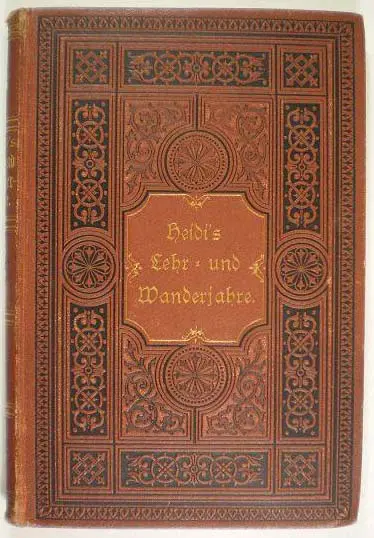
Heidi, the book that would make her immortal, appeared in two volumes in 1880 and 1881. The story was simple: an orphaned girl is sent to live with her gruff grandfather in the Swiss Alps. She thrives in the mountain air, befriends a goatherd named Peter, and brings joy to her isolated grandfather. But when she is taken to Frankfurt to be a companion to a disabled girl named Clara, she falls ill with homesickness. Eventually, she returns to the mountains, and in the pure air of the Alps, Clara learns to walk. The novel was an immediate success, praised for its vivid descriptions, its psychological insight, and its celebration of the natural world as a source of healing.
Spyri wrote dozens of other books—stories for children and adults, novellas, religious meditations—but none achieved the fame of Heidi. She continued writing until her death in 1901, at the age of seventy-four. By then, Heidi had already been translated into multiple languages and had begun its long journey around the world.
Johanna Spyri died in Zürich, far from the mountain village of her childhood. But through her books, she returned to the Alps again and again. She once wrote that the purpose of her stories was to give children “something to carry with them through life.” She succeeded beyond her wildest dreams. Every time a child reads Heidi—and children still read it, more than a century later—the pigtailed girl runs barefoot across the mountains once more. And Johanna Spyri, the quiet Swiss housewife who found her voice late in life, becomes immortal.
Johanna Spyri Selected Bibliography
- Heimatlos: Two stories for children, and for those who love children (1877)
- Heidi (1880)
- The Story of Rico (1882)
- Uncle Titus and His Visit to the Country (1883)
- Gritli’s Children (1883)
- Rico and Wiseli (1885)
- Veronica And Other Friends (1886)
- What Sami Sings with the Birds (1887)
- Toni, the Little Woodcarver (1890)
- Erick and Sally (1891)
- Mäzli (1891)
- Cornelli (1892)
- Vinzi: A Story of the Swiss Alps (1892)
- Moni the Goat-Boy (1897)
- Little Miss Grasshopper (1898)