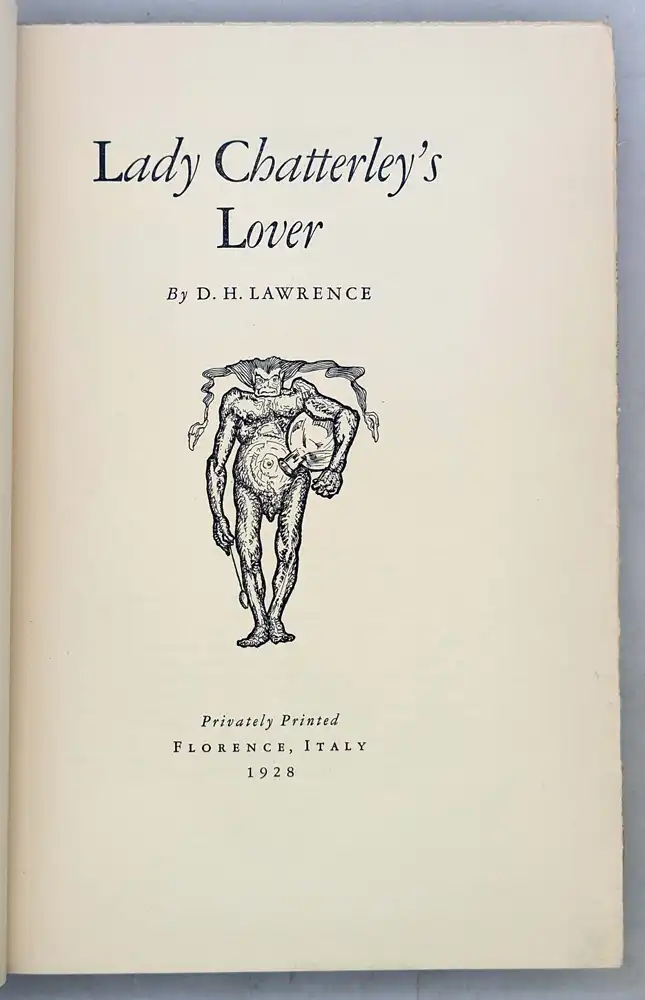
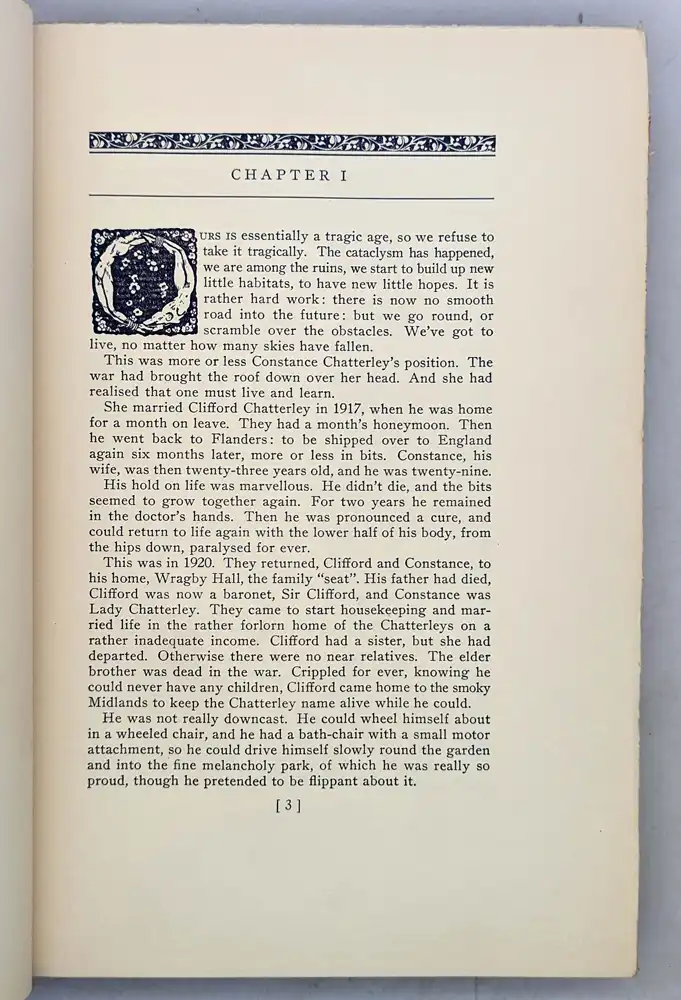
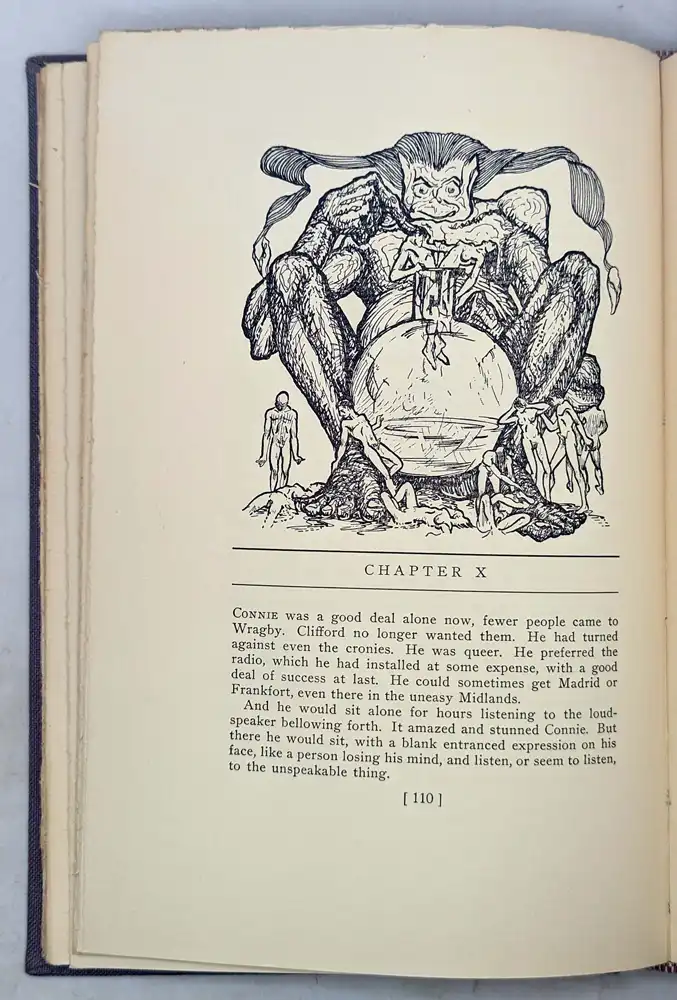
D. H. Lawrence’s Lady Chatterley’s Lover was first published privately in Florence, Italy, in 1928, printed with the assistance of Pino Orioli because no commercial publisher in Britain would risk issuing a book with such explicit content.
The novel tells the story of Constance Reid, Lady Chatterley, whose marriage to Sir Clifford Chatterley has been hollowed out by his paralysis from a Great War injury and his subsequent emotional neglect of her. Isolated on the Wragby estate and starved of both physical affection and genuine connection, Constance drifts into an affair with Oliver Mellors, the estate’s gamekeeper, a working-class former soldier whose blunt tenderness awakens her to a mode of being she had nearly forgotten. Lawrence uses their relationship to mount a sustained critique of modern industrial England, the deadening effects of intellect divorced from the body, and the rigid class divisions that make their love scandalous.
The novel’s frank language and unapologetic depictions of sexual intimacy made it notorious; it was banned in the United States until 1959 and could not be published openly in the United Kingdom until 1960, when Penguin Books faced a landmark obscenity trial under the newly passed Obscene Publications Act. Penguin’s acquittal in that trial, followed by the sale of 200,000 copies on the first day of publication, became a cultural turning point, often cited as a threshold moment in the loosening of British censorship and the arrival of the permissive 1960s . Beyond its reputation, the novel remains Lawrence’s final completed work and a passionate argument for the integration of body and mind, for tenderness as a form of regeneration, and for the possibility of human wholeness in the wreckage of a tragic age.