
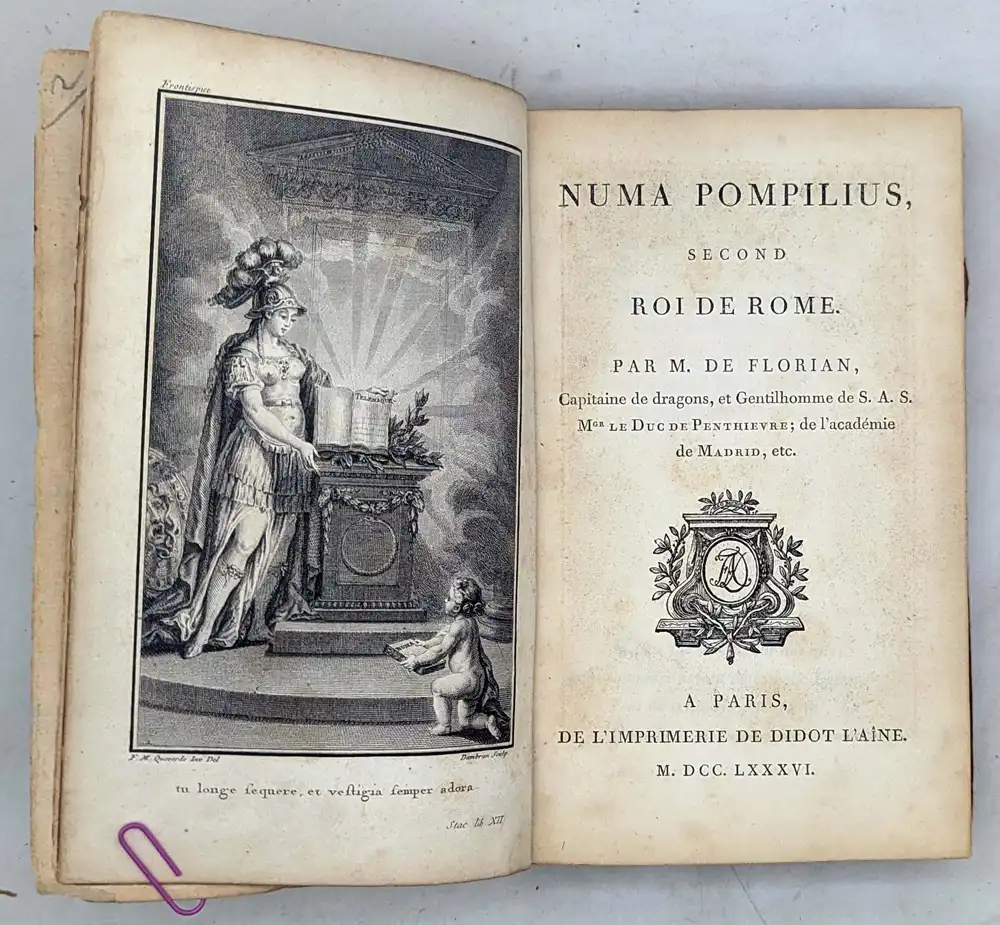
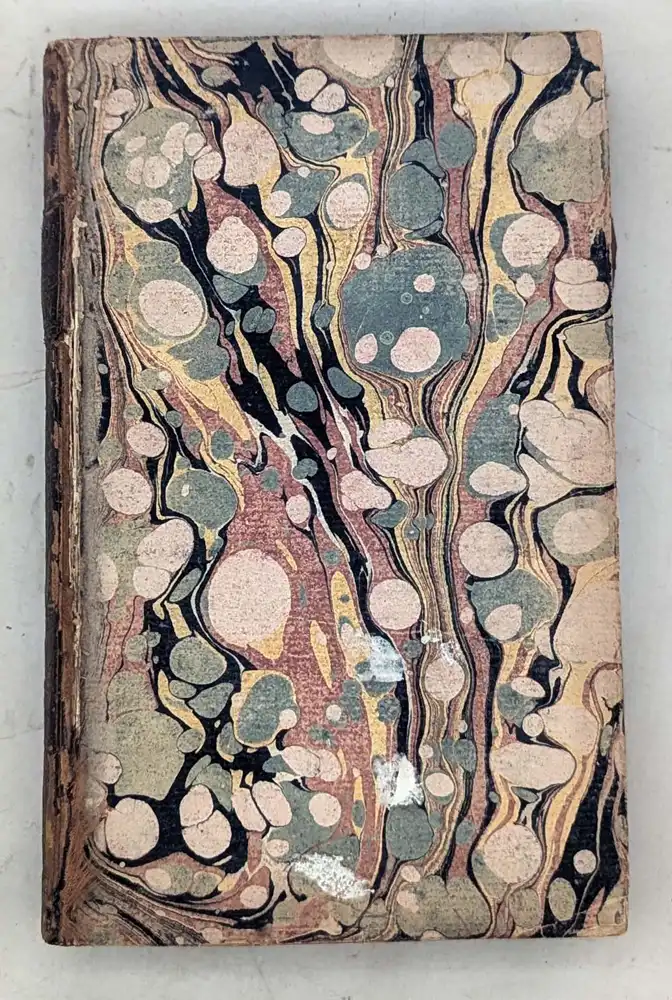
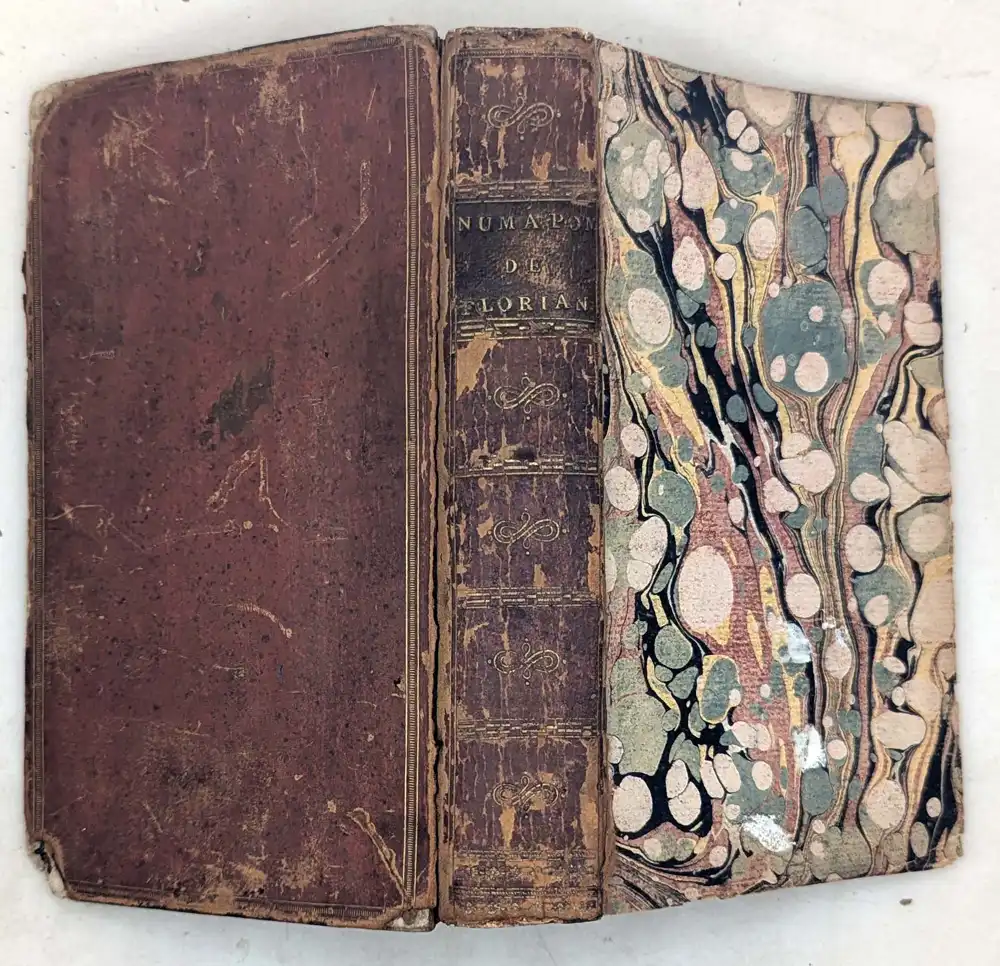
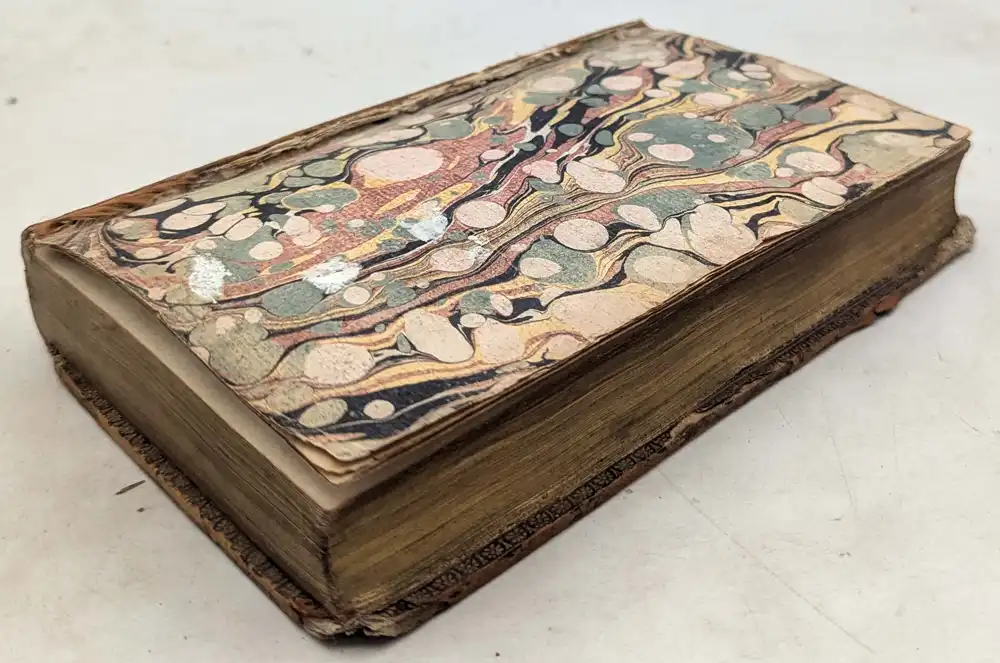
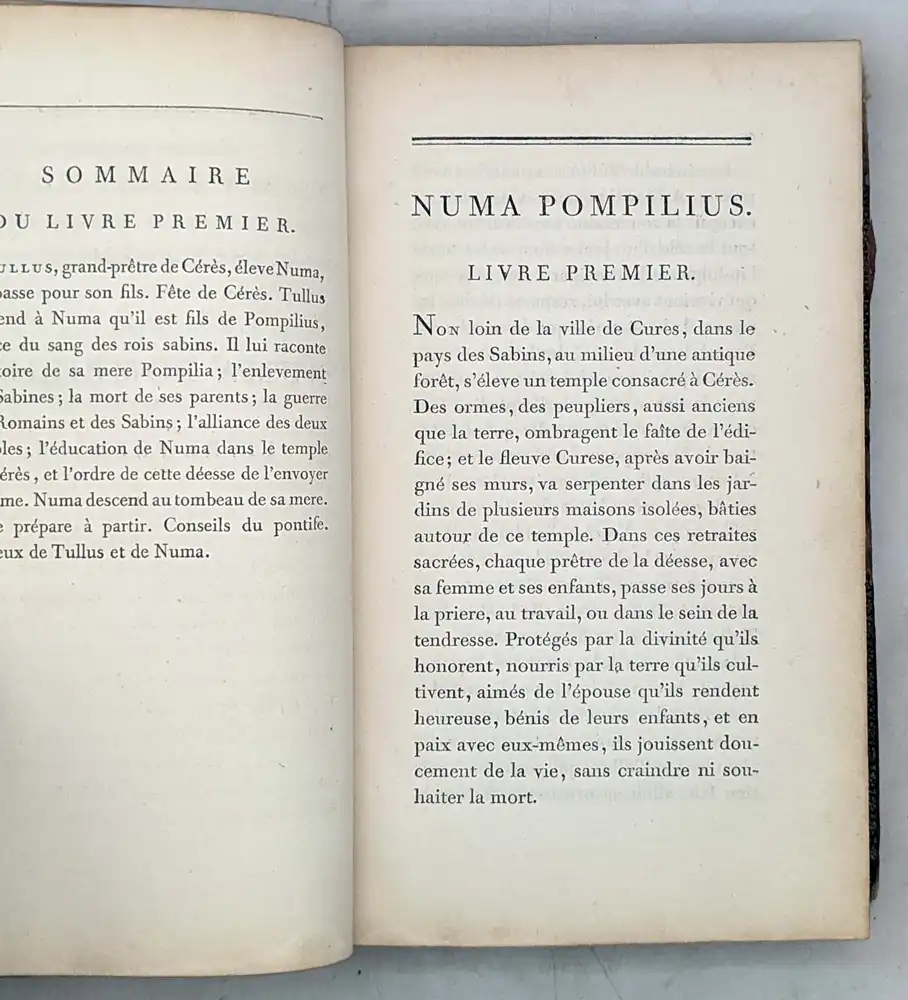
M. de Florian’s Numa Pompilius, second roi de Rome is a late eighteenth-century French literary work that reimagines the life and reign of Rome’s legendary second monarch. The book was first published in Paris in 1786 by the press of Didot l’aîné, with a second edition issued in the same year.
The author, Jean-Pierre Claris de Florian, was a writer and academician whose works often blended historical narrative with moral reflection and sentimental prose, and this volume formed part of his broader literary output during the final decades before the Revolution. The text presents Numa not merely as a political successor to Romulus but as a civilizing figure whose legislation, religious reforms, and diplomatic instincts shaped the early Roman state. Florian’s narrative dwells on Numa’s supposed Pythagorean education, his efforts to soften the warlike customs of the Romans, and his establishment of priestly colleges and sacred laws, all rendered with the polished, emotionally resonant style characteristic of late ancien régime belles-lettres.
The 1786 edition, included engraved plates after designs by François-Marie-Isidore Queverdo, underscoring its status as a crafted literary object rather than a dry chronicle. While modern scholarship rarely treats Florian’s Numa as a primary historical source, the work remains a telling example of how eighteenth-century French readers encountered Roman antiquity through the lens of Enlightenment moralism and sentimental fiction. Later reprints and English translations appeared in the following decades, but the 1786 Didot edition stands as the authoritative first appearance of the text.