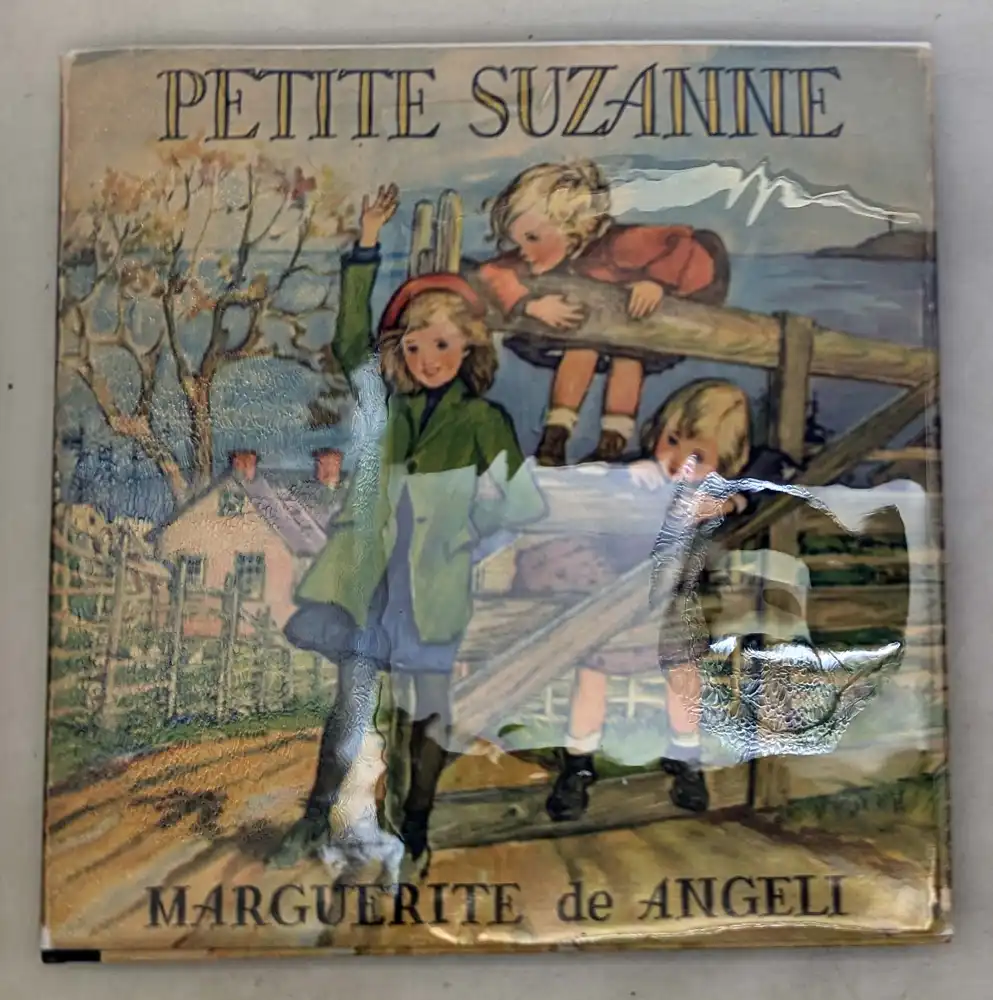
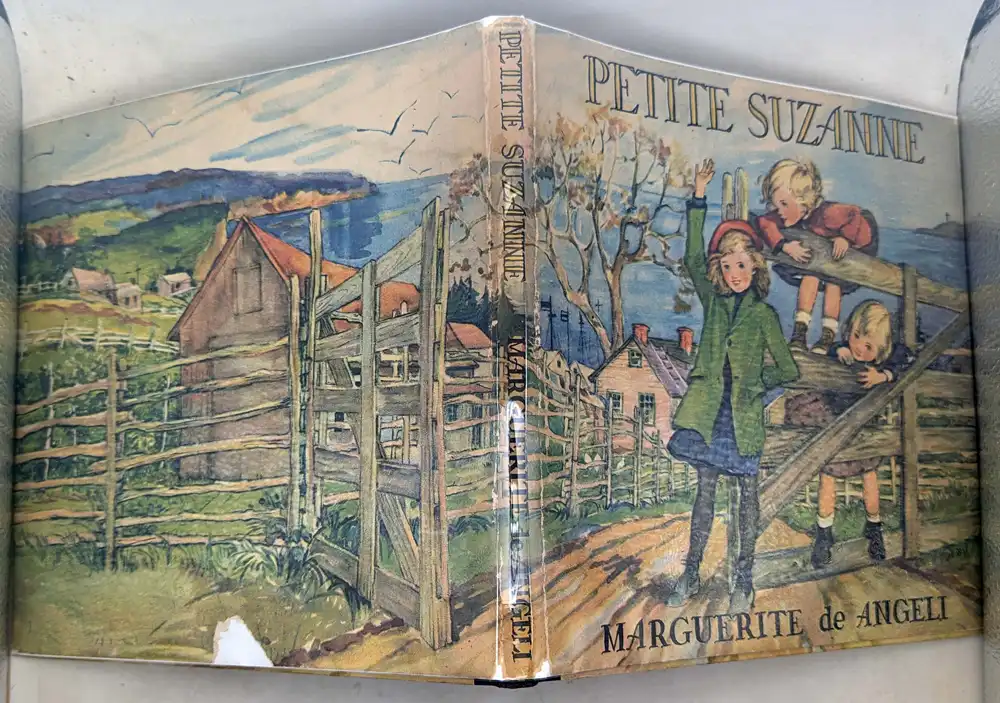
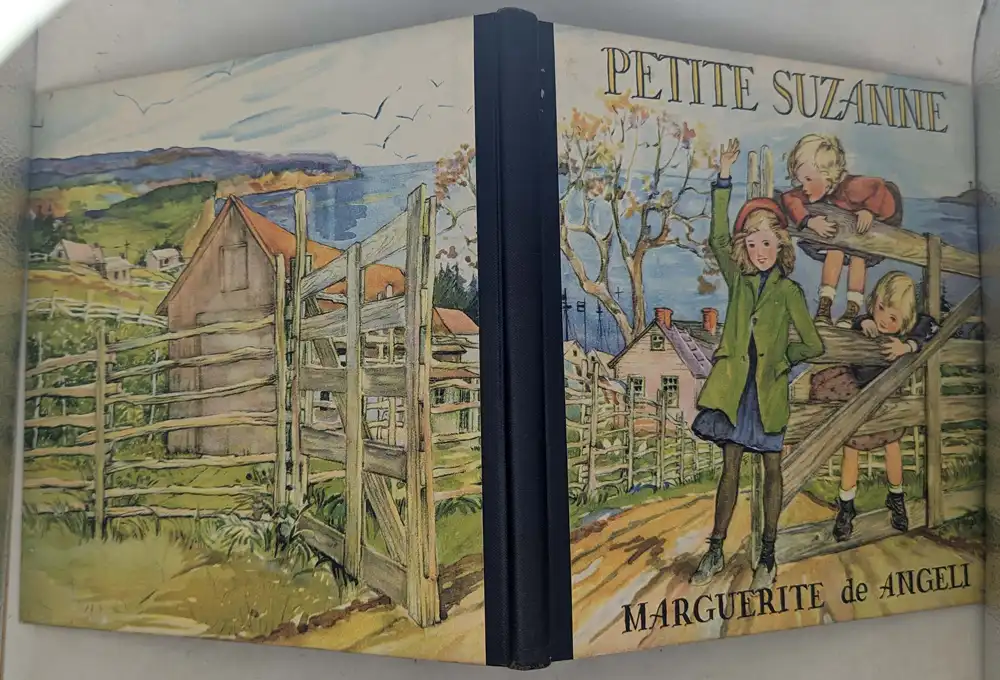
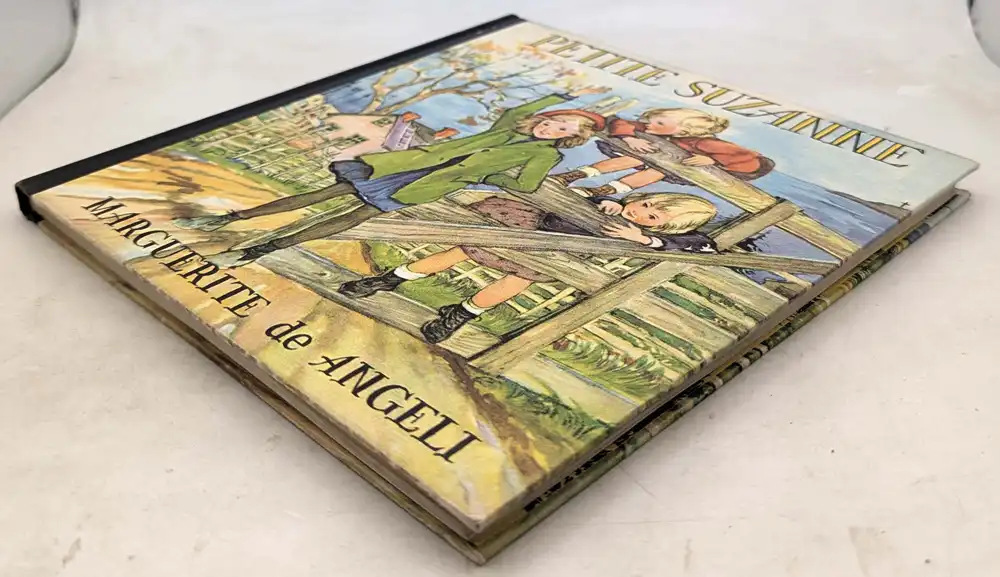
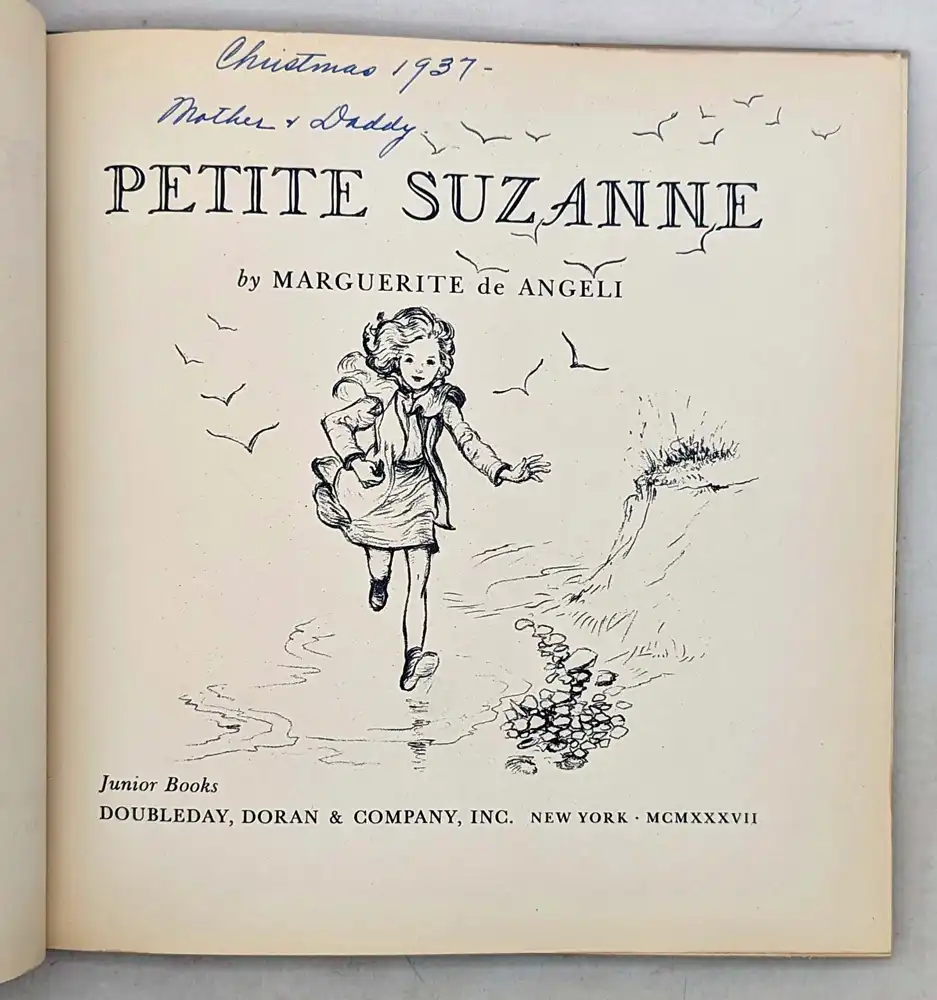
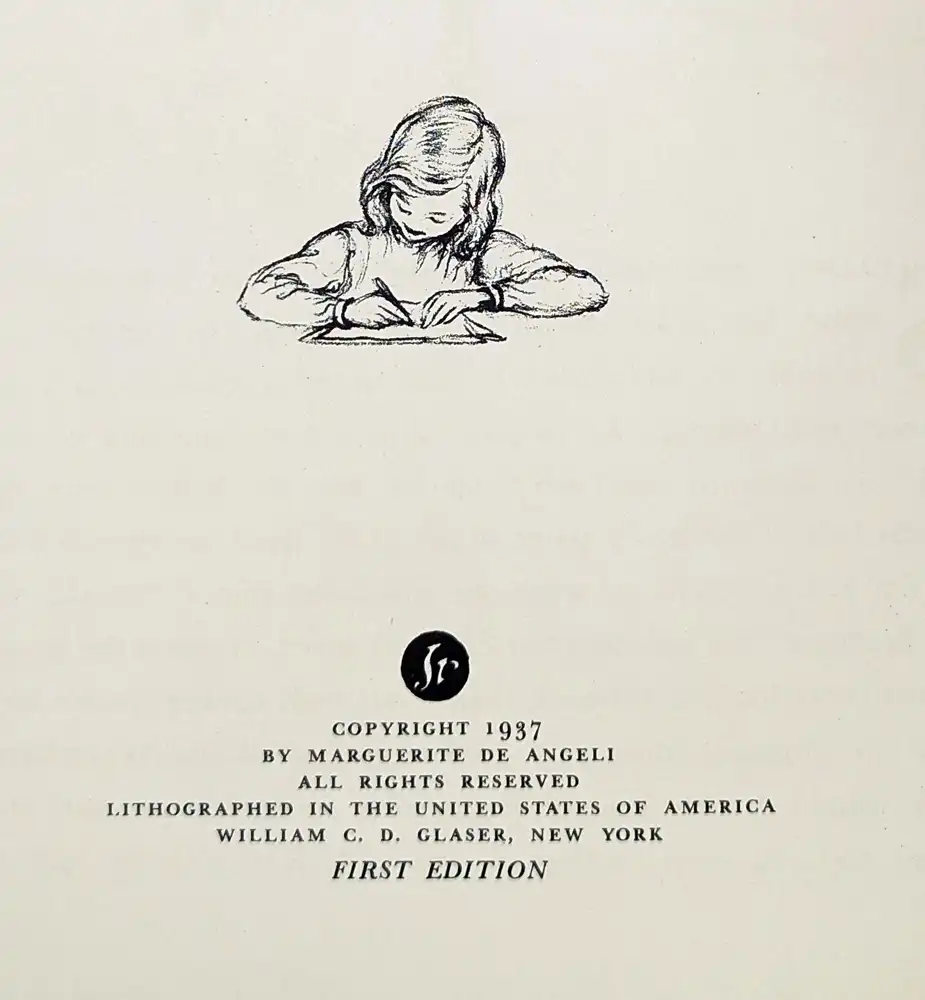
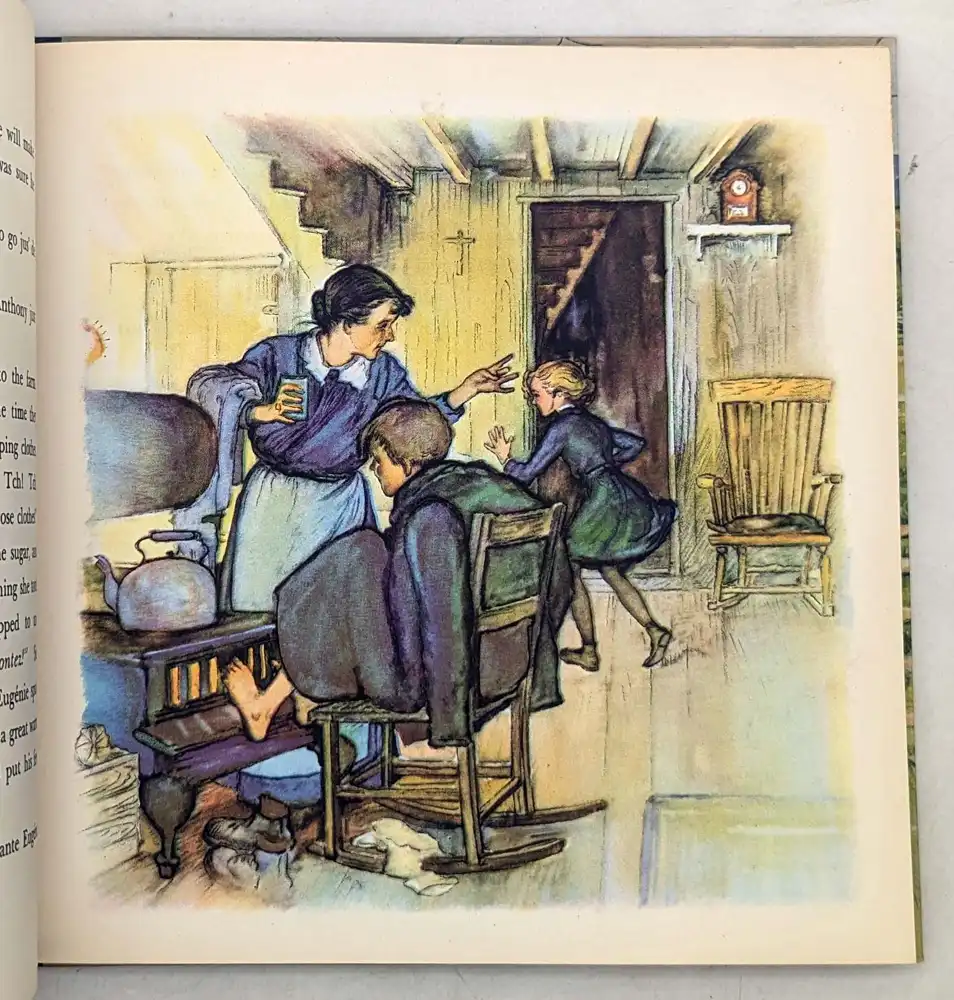
Petite Suzanne is a children’s picture book written and illustrated by Marguerite de Angeli, first published in 1937 by Doubleday, Doran in New York. The story follows a little French-Canadian girl living on the Gaspé coast, in the Quebec region of Canada. Her quiet life is touched by the arrival of a tourist lady, who takes her to see the famous peninsula rocks, a landmark of the Gaspé landscape. Beyond this excursion, the narrative follows the girl as she goes hunting for rabbits and learns to weave, completing her work in time for Christmas.
These episodes weave together the seasonal rhythms and traditional crafts of Gaspé life with the curiosity of a child encountering a visitor from outside her community. De Angeli, who would later win the Caldecott Medal for The Door in the Wall and write the beloved Thee, Hannah!, was known for her warm, detailed illustrations of regional American and Canadian life, and Petite Suzanne belongs to this early period of her career, when she was establishing herself as both author and artist for young readers. The book reflects the mid-twentieth-century vogue for gentle, culturally specific stories that introduced American children to neighboring communities, and its depiction of French-Canadian customs, from weaving to the Christmas season, preserves a small portrait of Gaspé village life as understood through the eyes of a child.