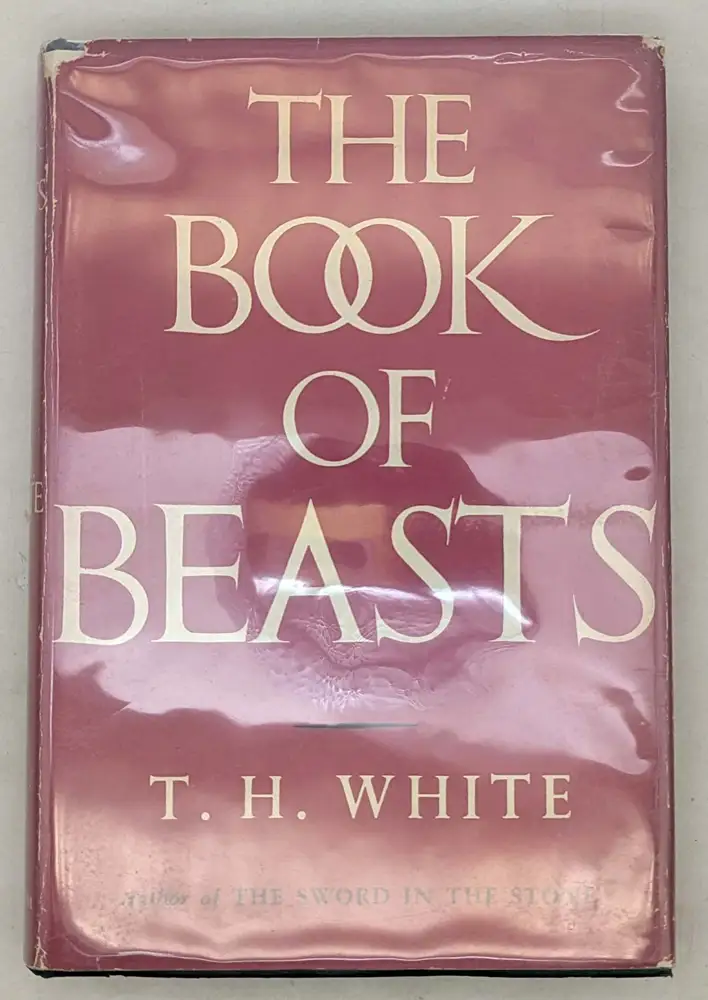
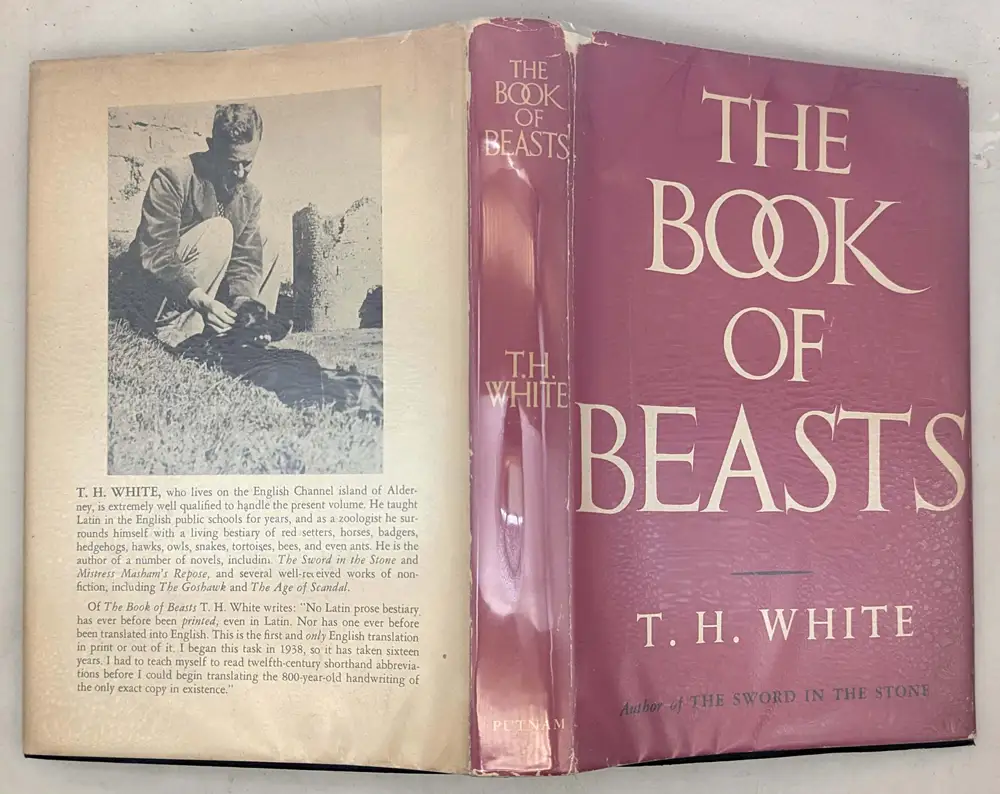

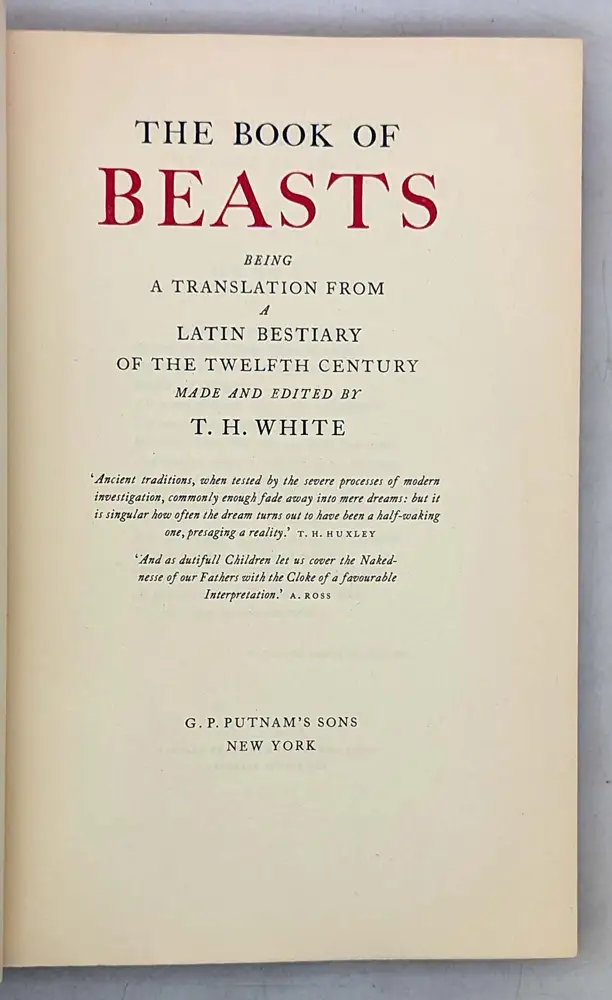

The Book of Beasts is T. H. White’s vibrant translation and adaptation of a twelfth-century Latin bestiary, originally compiled by an unknown scribe. Published in 1954, this volume serves as both a scholarly labor of love and a whimsical portal into the medieval imagination, when the natural world was understood as a vast tapestry of moral and spiritual symbolism.
White, already celebrated for his Arthurian retellings, approaches the ancient text with a unique blend of erudition and playful wit. The book catalogs a menagerie of real and fantastical creatures—from lions, unicorns, and elephants to the more enigmatic basilisk, yale, and amphisbaena—each entry accompanied by the original medieval descriptions alongside White’s spirited commentary. What might have been a dry translation becomes instead a lively conversation across centuries, as White interjects with footnotes, historical context, and his characteristically dry humor.
The heart of the bestiary lies not in biological accuracy but in allegorical interpretation. Each creature is presented not merely as an animal but as a reflection of divine order or human virtue. The lion, for instance, is praised for its nobility and linked to Christ, while the pelican’s legendary self-sacrifice becomes a symbol of redemption. These moralized readings offer a window into a worldview where the natural world existed primarily as a book of symbols waiting to be read.
White’s fascination with medievalism permeates every page, rendering The Book of Beasts a work of affectionate reconstruction. It appeals equally to lovers of literature, history, and mythology, preserving the wonder of a time when maps still warned of dragons and every creature carried a lesson. The result is a singular volume that bridges the medieval and modern, inviting readers to rediscover the strangeness and beauty of a world enchanted by its own imagination.