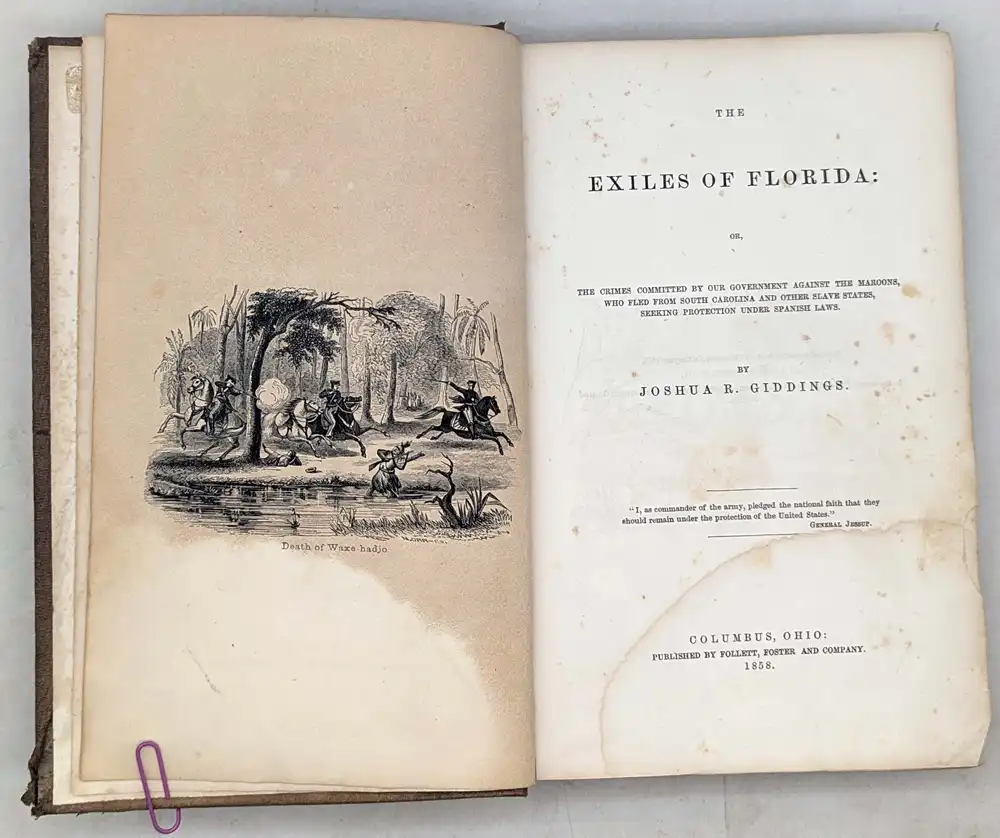
Joshua R. Giddings’s The Exiles of Florida was first published in 1858 by Follett, Foster and Co. in Columbus, Ohio, carrying the full title The Exiles of Florida: or, The Crimes Committed by Our Government Against the Maroons, Who Fled from South Carolina and Other Slave States, Seeking Protection Under Spanish Laws.
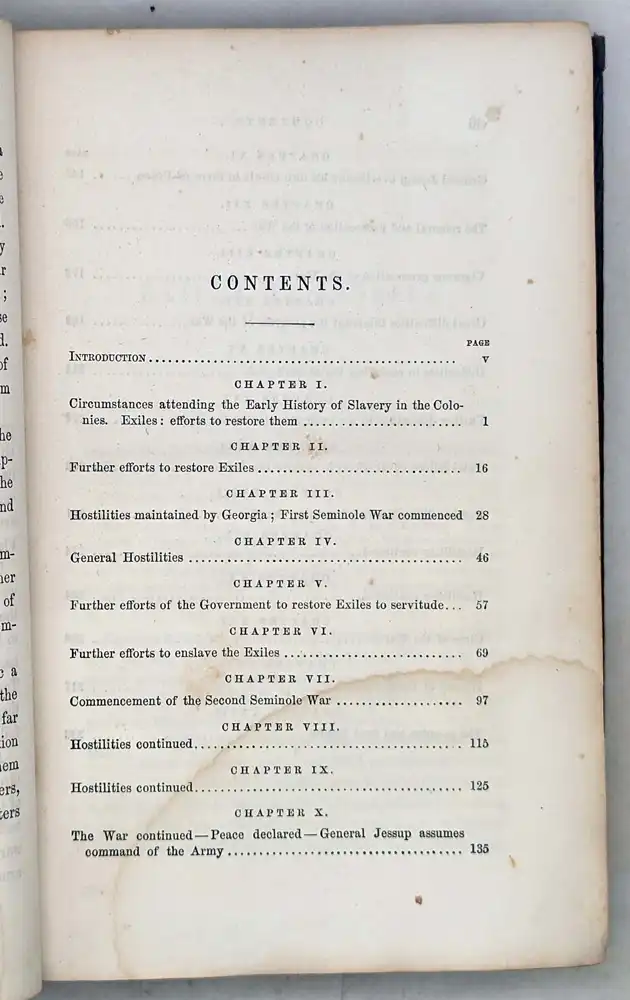
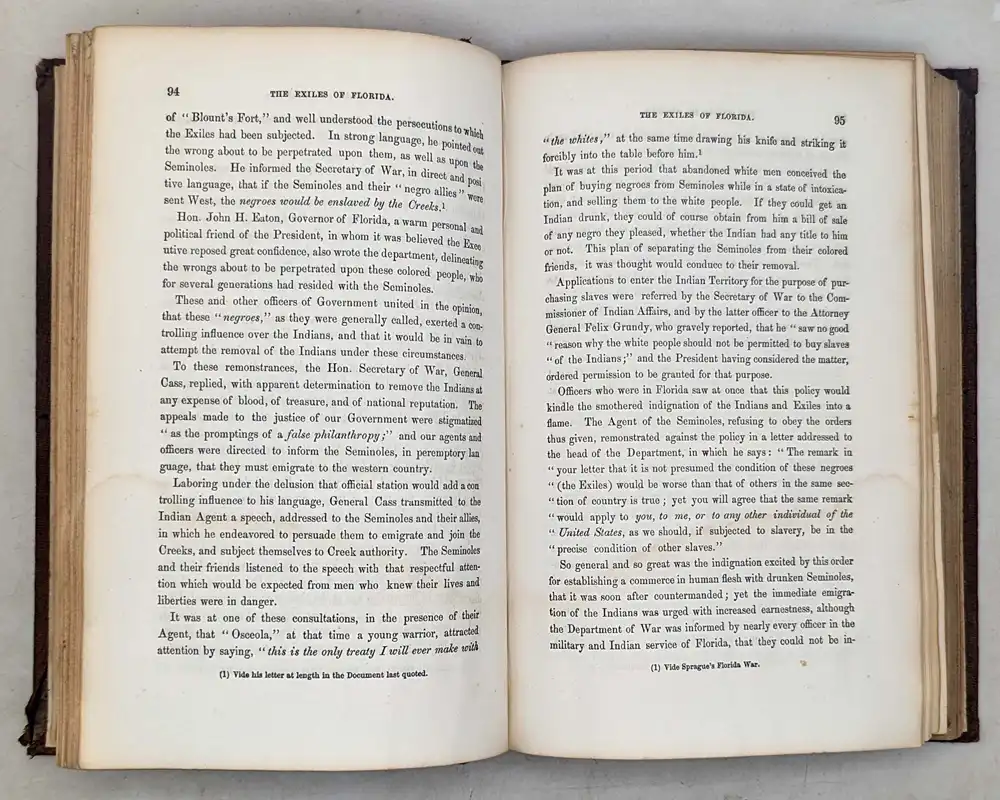
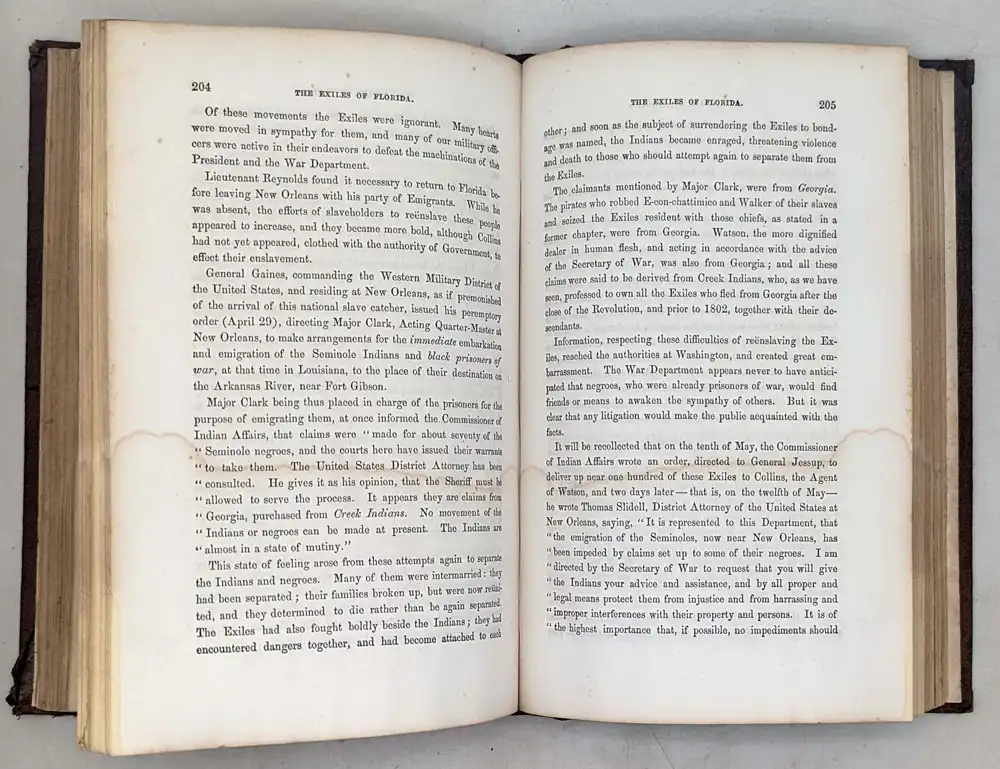
The book is a searing indictment of federal policy written by an Ohio congressman and committed abolitionist who used his position to expose the machinations of the slaveholding interest. Giddings chronicles the flight of enslaved people from the American South into Spanish Florida, where they found refuge and forged an alliance with the Seminole Nation, forming communities that the United States government viewed as a dangerous threat to the institution of slavery. Drawing on government records, military correspondence, and personal testimony, he documents the successive military campaigns—the First and Second Seminole Wars—that the federal government waged to destroy these communities and re-enslave their inhabitants.
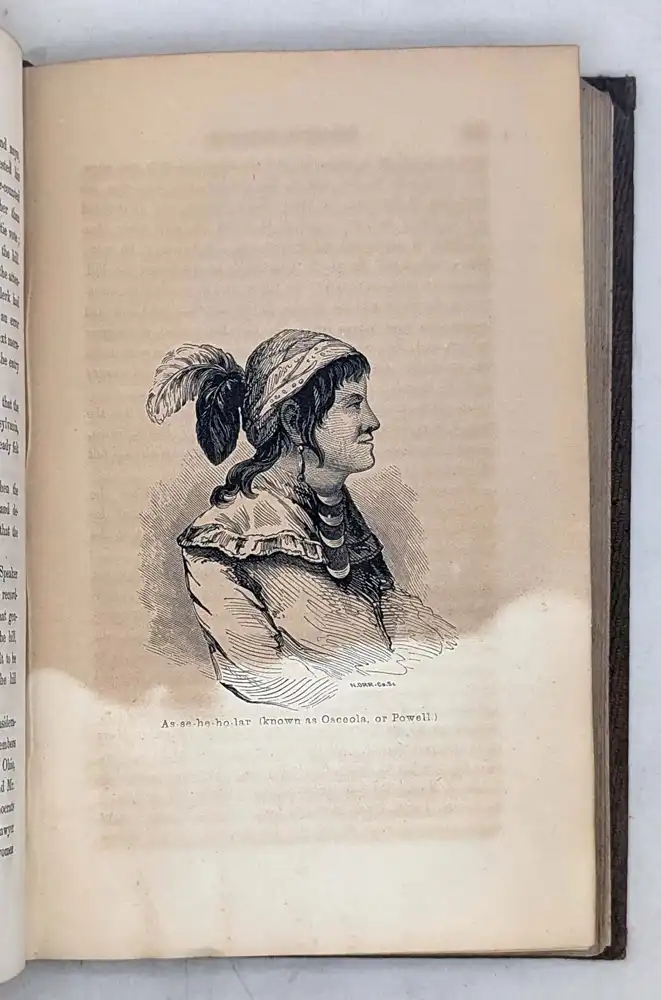
The narrative details the efforts of generals and officials to capture the Maroons, the repeated betrayals of peace agreements, and the ultimate failure of the government’s attempts to return these people to bondage . The volume runs to 338 pages and includes an engraved frontispiece depicting the death of the Seminole leader Waxe-hadjo. Giddings frames the government’s actions not merely as policy failures but as moral crimes and betrayals of national ideals, and the book stands as a landmark of antislavery literature notable for centering African-descended resistance and for its sharp critique of American expansionism and pro-slavery policy. A facsimile reproduction of the 1858 edition was issued by the University of Florida Press in 1964.