

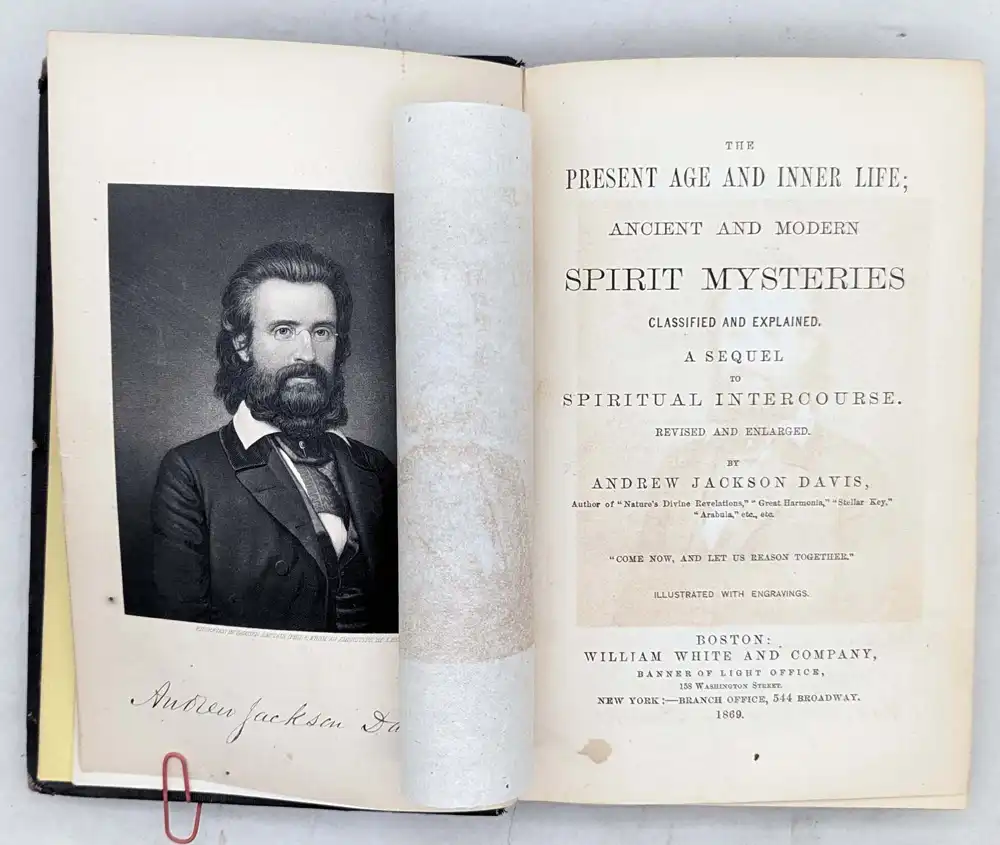
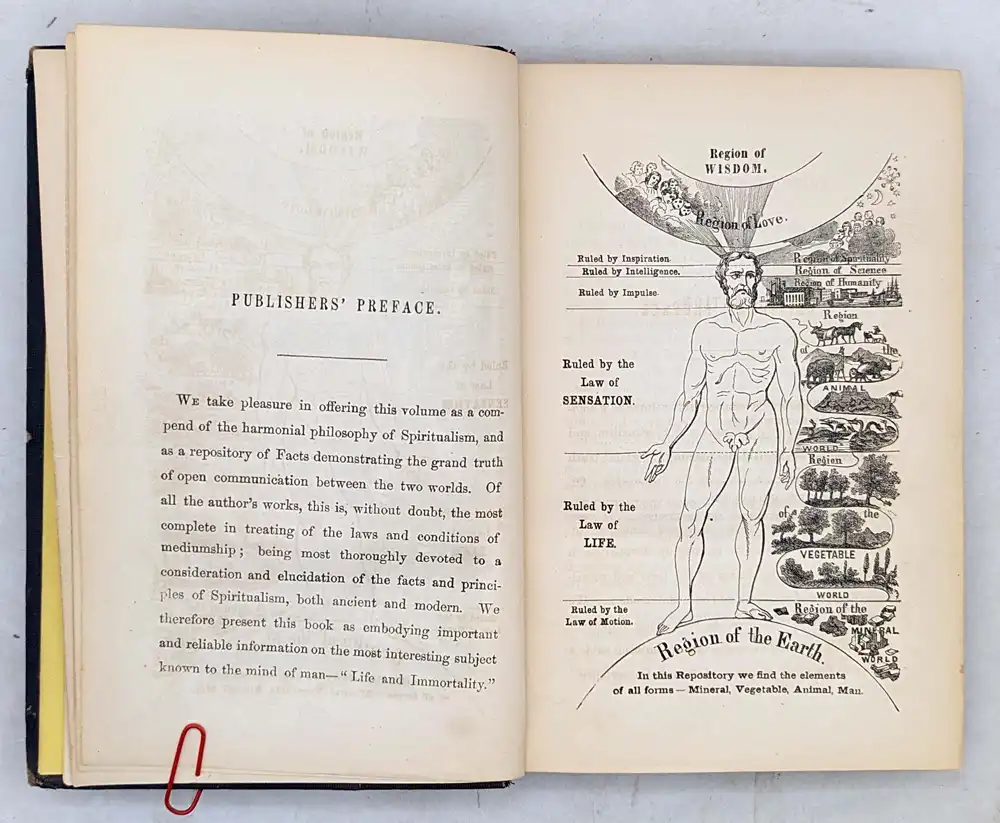
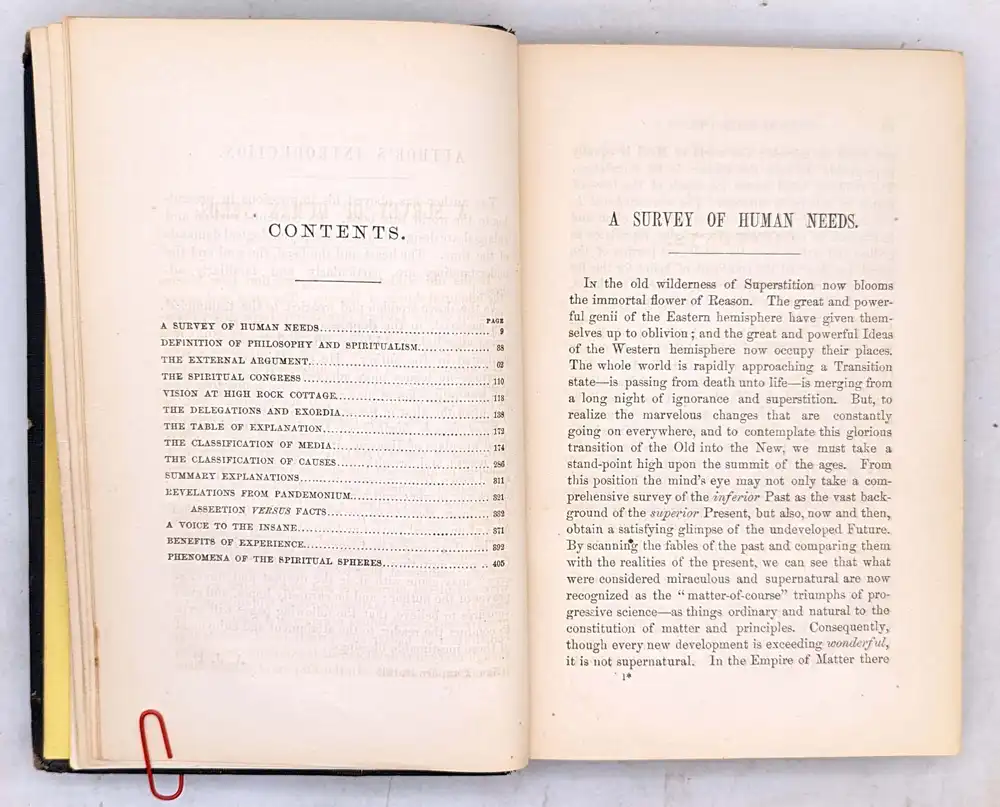
Andrew Jackson Davis’s The Present Age and Inner Life is a foundational text of American Spiritualism that seeks to reconcile the spiritual longings of the nineteenth century with the emerging authority of modern science. Originally published in 1853, with revised and enlarged editions appearing through 1910, the work functions as a sequel to his earlier Spiritual Intercourse and carries the expansive subtitle Ancient and Modern Spirit Mysteries Classified and Explained.
Writing from the perspective of a former clairvoyant healer, Davis argues that the world requires a “Harmonial Philosophy”—a unified system of thought capable of synthesizing the facts of science with the immutable laws of nature and the realities of the inner life. He critiques the inadequacy of traditional theology to answer the pressing questions of an intelligent, modern mind and identifies the materialistic tendencies of the sciences as a primary source of spiritual starvation. The book systematically classifies and explains a vast array of “spirit mysteries,” ranging from the mechanics of clairvoyance and spiritual communication to the nature of guardian spirits, the afterlife, and the moral implications of demonic influence.
Throughout the text, Davis positions himself as a reformer, insisting that true faith must be grounded in adequate evidence and that the investigation of nature’s hidden chambers is not a sin but a necessary step toward human progress. By presenting the “inner life” as a scientifically accessible dimension of existence, Davis offers his readers a framework for understanding themselves as dual citizens of a material world and a spiritual cosmos, ultimately aiming to destroy sectarian hatreds and bring about a universal harmony that the churches and schools had failed to provide.