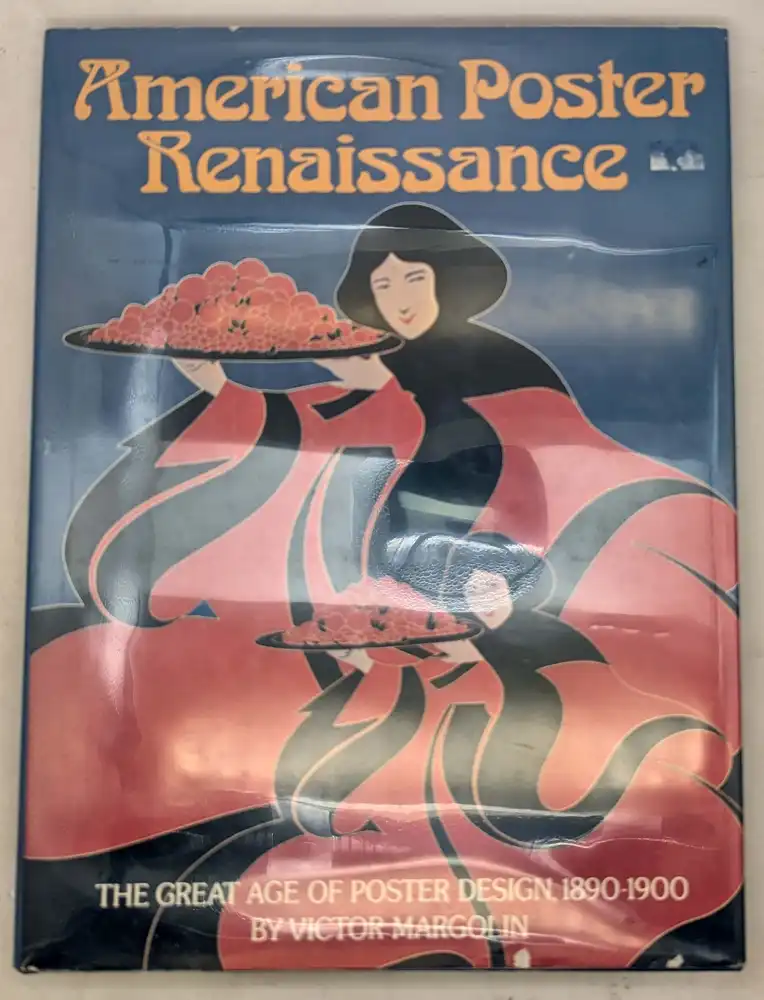
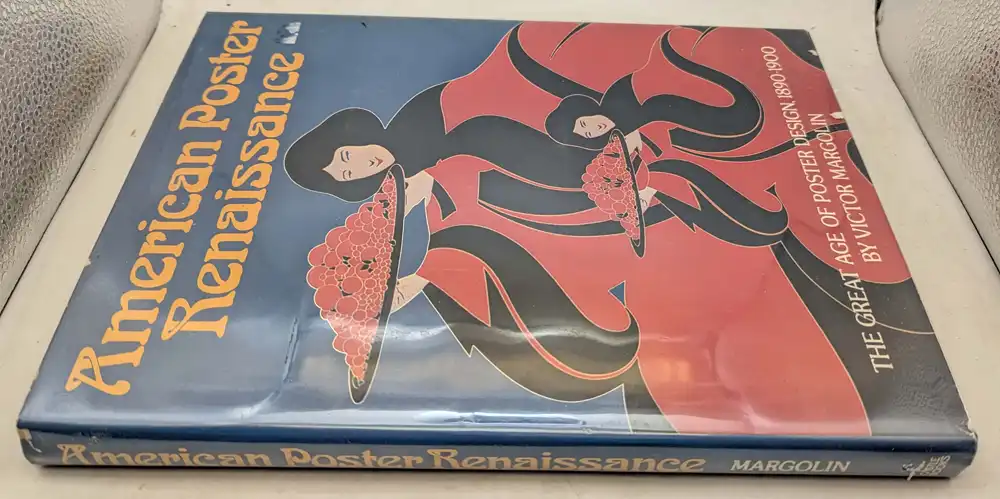
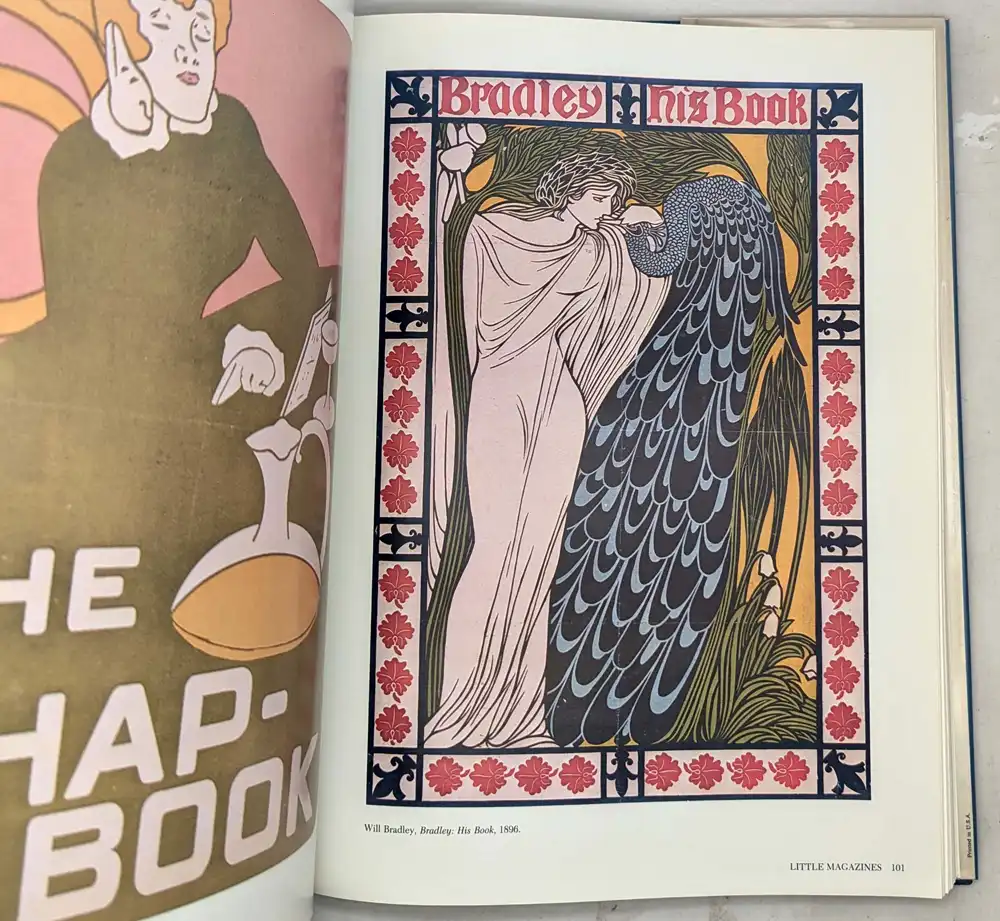
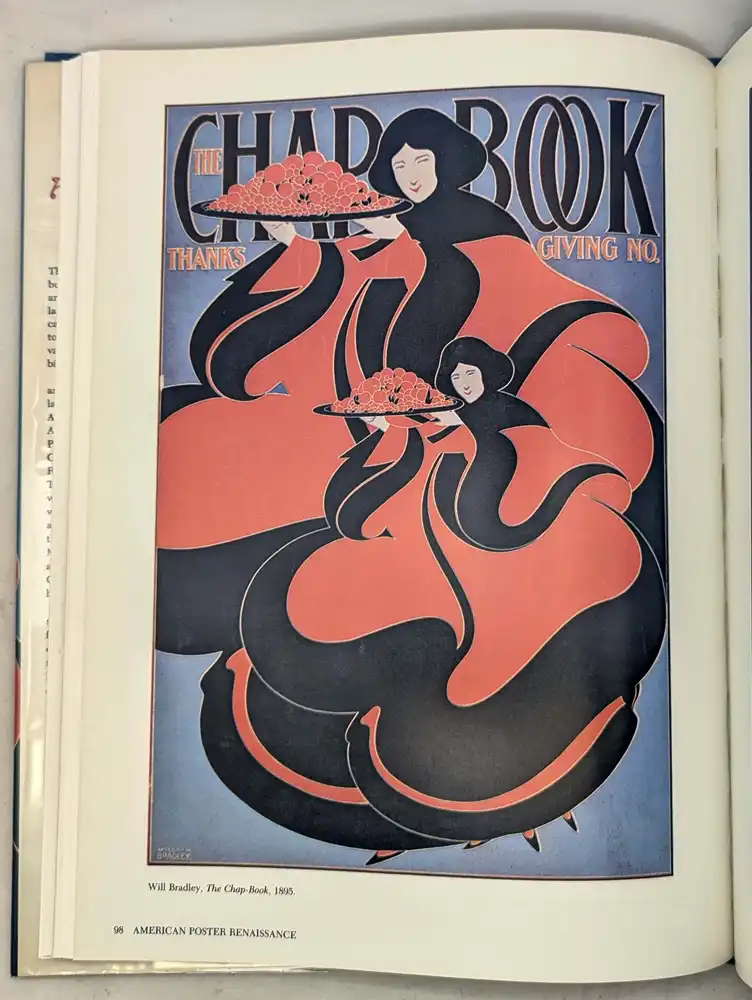
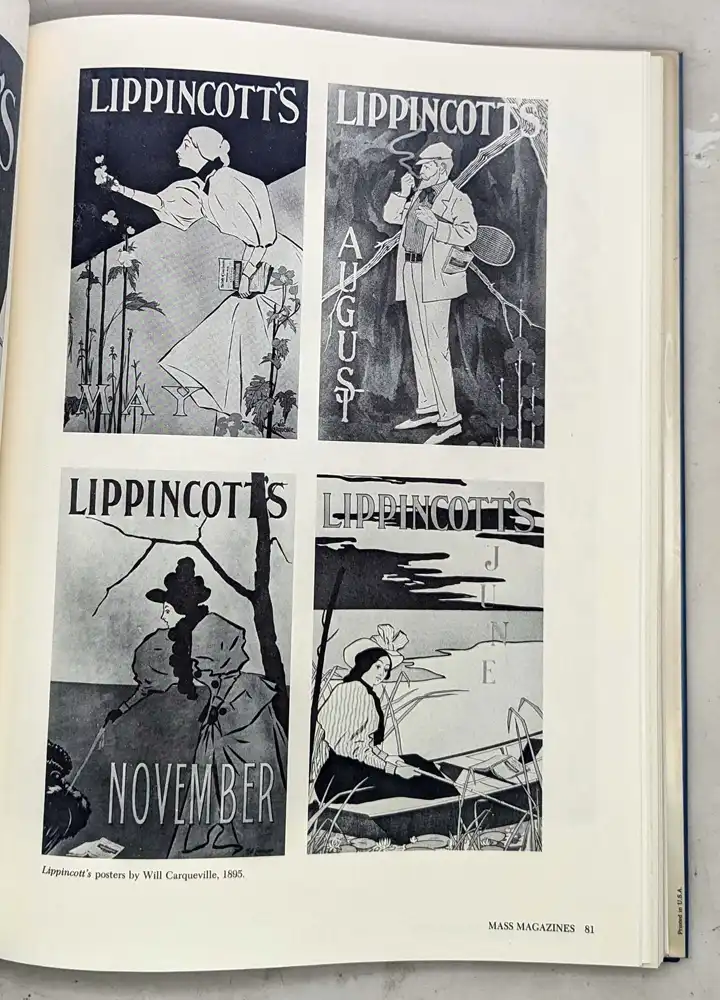
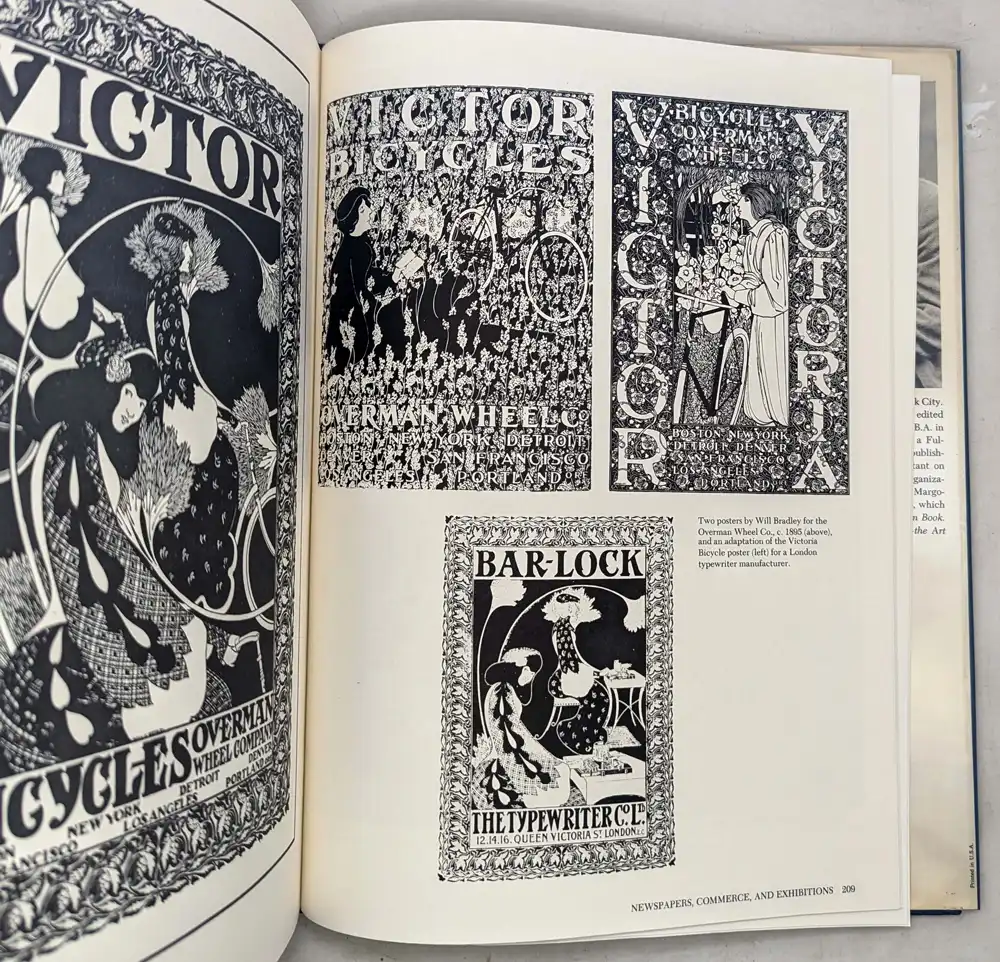
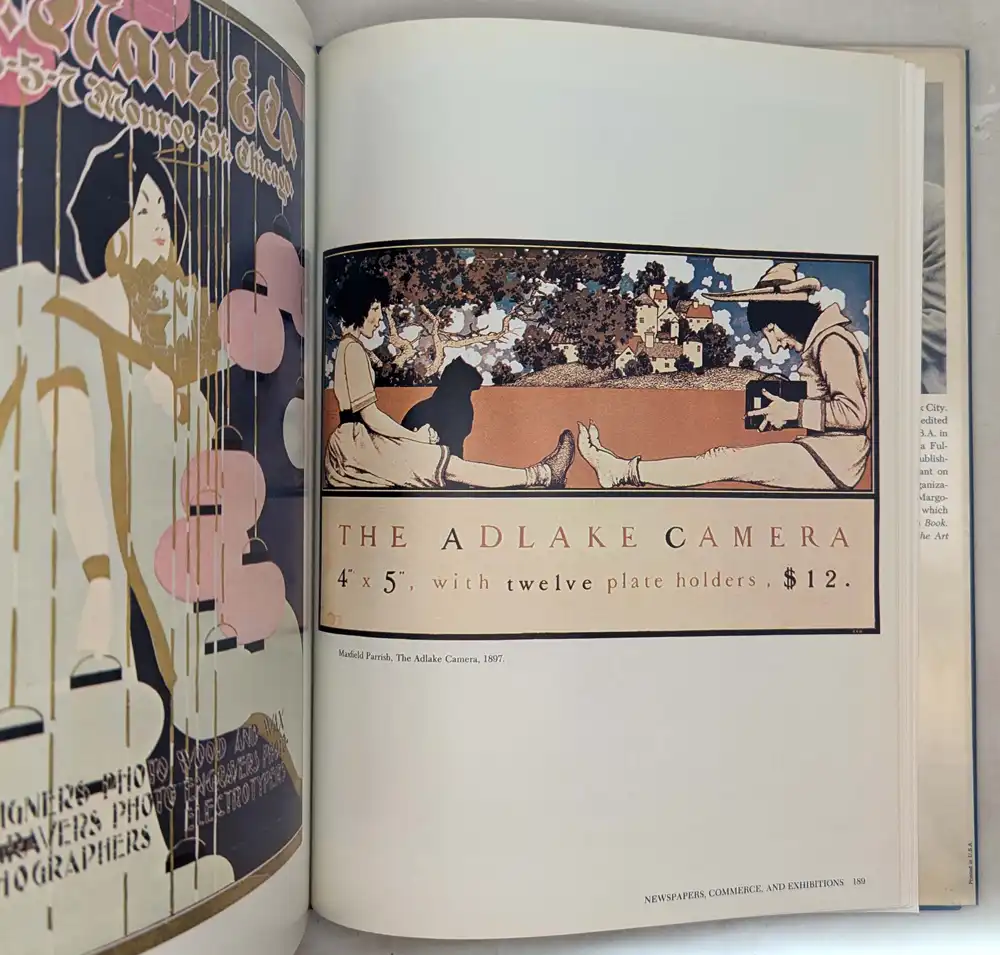
Victor Margolin’s American Poster Renaissance, published in 1975 by Watson-Guptill, is a landmark study that for the first time brought together the major American poster artists of the 1890s in a single, lavishly illustrated monograph. Focusing on what the author describes as the great age of poster design from 1890 to 1900, the work examines the decade when the poster emerged as the perfect advertising medium for a vast array of new products, from periodicals and patent medicines to bicycles.
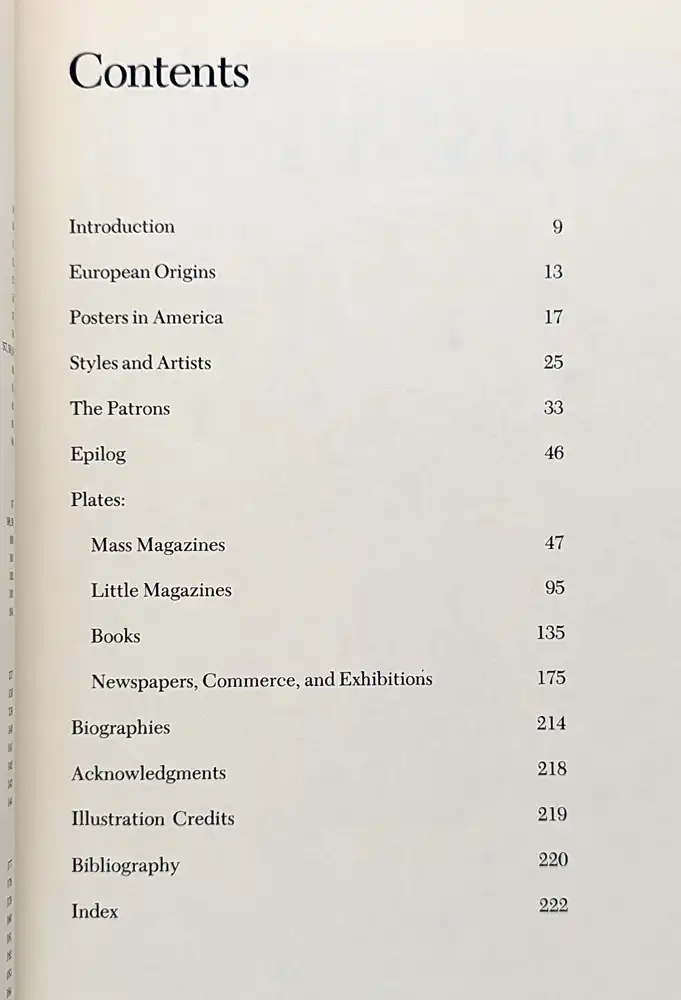
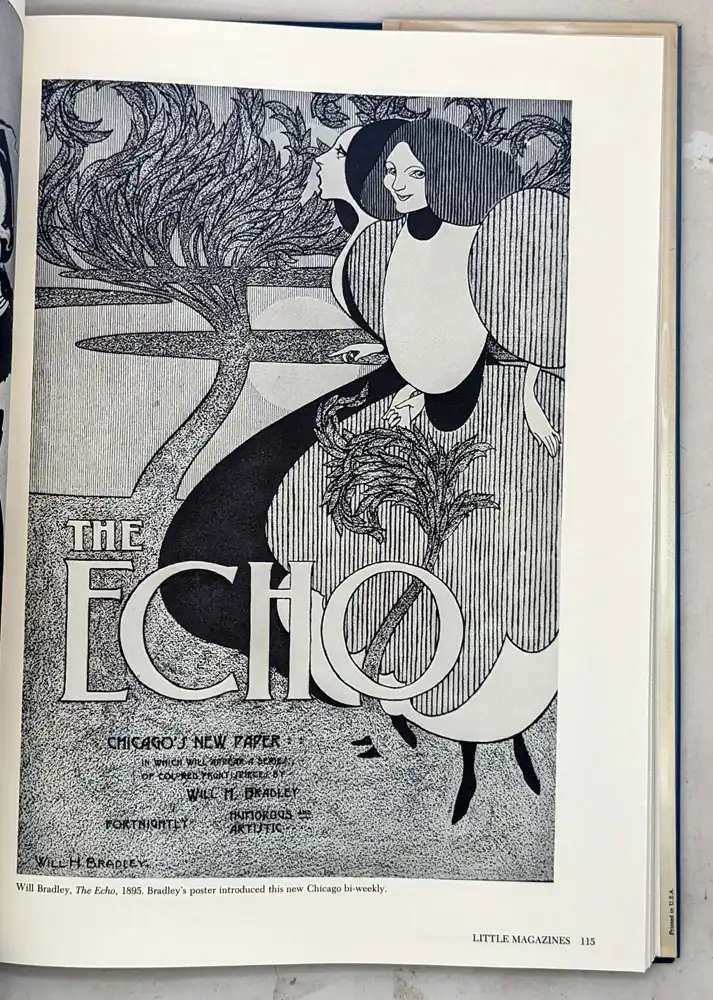
The large-format volume, running to over 220 pages, is richly illustrated with 175 black-and-white images and an impressive 48 full-colour plates, showcasing the vibrant and innovative work that defined the period. Margolin provides a comprehensive survey of the key artists who shaped this movement, including Will Bradley, Edward Penfield, Maxfield Parrish, J.C. Leyendecker, John Sloan, and Louis Rhead, and the book also features individual biographies of these prominent illustrators. The text is organized thematically, covering the European origins of the poster movement, its development in America, an analysis of styles and artists, and the crucial role of patrons in fostering this new art form. Sections are also devoted to the appearance of posters in mass magazines, little magazines, books, and for commercial and exhibition purposes.
More than a simple picture book, American Poster Renaissance is a scholarly work that includes a bibliography and an index. It was so successful that a concise edition was later published as The Golden Age of the American Poster in 1976. The book remains an essential and very useful resource for anyone interested in the Art Nouveau period and the history of American graphic design.