Felix Salten: The Man Behind Bambi and the Shadows of Vienna
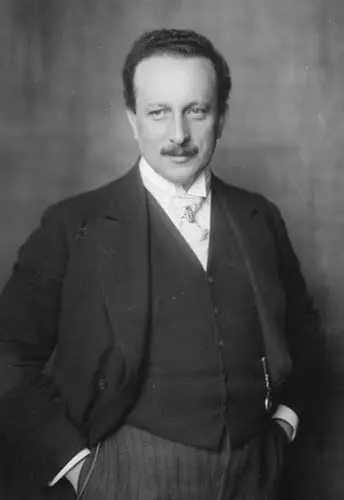
Felix Salten (1869-1945) is a name eternally linked to a single, enduring creation: Bambi, the wide-eyed fawn whose life story has become a global parable of nature, loss, and growth. Yet, to reduce Salten to merely the author of Bambi is to overlook the fascinating, complex, and often contradictory life of a man who was a central figure in the glittering, and ultimately tragic, intellectual world of fin-de-siècle Vienna. He was a prolific journalist, a sharp critic, a novelist of human frailty, a friend to some of Europe’s greatest minds, and a Jew who witnessed the rise of the very darkness that would force him into exile.
Born Siegmund Salzmann in 1869 in Budapest, Salten moved with his family to Vienna as a young child. His formal education ended early due to financial hardship, and he entered the workforce as an insurance agent—a profession he despised. His salvation was the cafe. The literary cafes of Vienna, particularly the famed Café Griensteidl, became his university. Immersing himself in the vibrant Jung-Wien (Young Vienna) movement, he befriended the likes of Arthur Schnitzler, Hugo von Hofmannsthal, and Karl Kraus. Here, amidst the coffee steam and intellectual fervor, Salten found his voice as a journalist, critic, and feuilletonist. He wrote with astonishing speed and versatility on theatre, art, literature, and politics for major newspapers like the Neue Freie Presse, becoming one of Vienna’s best-known and most-read journalists.
His literary output was vast and varied. Before Bambi, he wrote plays, short stories, and novels, often exploring sophisticated, urban themes of love, eroticism, and social mores. Works like The Good Companion and Olga’s 19 showcased his sharp observation of Viennese society. He even authored provocative, erotic novels like Josephine Mutzenbacher (published anonymously), a testament to his range and his engagement with the repressed sexual undercurrents of his time. He was a cultural impresario, directing the Burgtheater for a period and moving effortlessly among the city’s elite. Yet, he always remained something of an outsider—a self-made man from a modest background in a world of titles, and a Jew in a society with a rising tide of antisemitism.
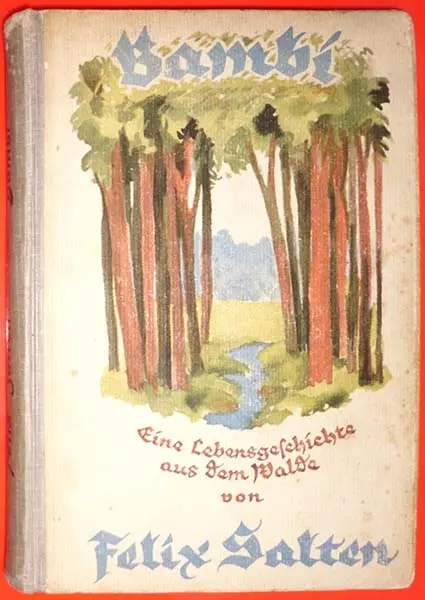
It was against this backdrop of personal success and gathering societal darkness that Salten wrote his masterpiece. Bambi, A Life in the Woods (Bambi. Eine Lebensgeschichte aus dem Walde) was published in 1923. Far from a simple children’s tale, it is a profound and often brutal Bildungsroman set in the natural world. Written with the keen eye of an observer who felt the pressures of a hostile environment, the novel is a meticulous study of animal behavior and ecology, as well as a powerful allegory of existential fear, the loss of innocence, and the struggle for survival. “He,” the unseen, all-powerful human hunter who brings death into the forest, is a terrifying force of nature. For contemporary readers, and certainly for Salten himself, the allegory was palpable: it spoke of the pervasive threat facing European Jews, the fragility of safety, and the need for vigilance and adaptation. The book was a critical success, praised for its poetic style and philosophical depth.
The 1930s transformed Salten’s allegory into grim reality. With the Nazi annexation of Austria in the 1938 Anschluss, Salten’s books, including Bambi, were banned and burned for being the work of a Jew. At nearly seventy, he was forced to flee the city that had defined him. He found brief refuge in Switzerland, where he continued to write. It was there, in exile, that he saw Walt Disney’s animated adaptation of his work premiere in 1942. The film, which softened the story’s harshness and infused it with sentimental American warmth, became a classic, securing Bambi’s place in the global imagination but also obscuring the novel’s darker, more European and philosophical origins. Salten, who had sold the film rights for a modest sum, died in Zurich in 1945, just months before the end of the war, never able to return to Vienna.
Felix Salten’s legacy is thus a double one. To the world, he is the creator of an iconic, beloved character whose name evokes Disney animation. To literary and cultural history, he is a poignant symbol of a lost Vienna—a man who chronicled its brilliance, contributed to its culture, and embodied its contradictions. His life straddled two eras: the secure, if hypocritical, grandeur of the Habsburg Empire and the catastrophic upheaval of the 20th century. Bambi stands as his enduring testament, a children’s story for adults that is, at its heart, a profound meditation on vulnerability, the shadow of death, and the lonely responsibility of survival. It is a work that could only have been born from the mind of a man who, from the comfortable cafes of Vienna, could already sense the storm gathering in the forest.
Felix Salten Selected Bibliography
- 1899 – Der Gemeine
- 1906 – Josephine Mutzenbacher, authorship assumed – in German: Josefine Mutzenbacher oder Die Geschichte einer Wienerischen Dirne von ihr selbst erzählt (Vienna: Privatdruck [Fritz Freund], 1906)
- 1907 – Herr Wenzel auf Rehberg und sein Knecht Kaspar Dinckel
- 1910 – Olga Frohgemuth
- 1911 – Der Wurstelprater
- 1922 – Das Burgtheater
- 1923 – Der Hund von Florenz; English translation by Huntley Paterson, illustrated by Kurt Wiese, The Hound of Florence (Simon & Schuster, 1930)
- 1923 – Bambi: Eine Lebensgeschichte aus dem Walde; English transl. Whittaker Chambers, illus. Kurt Wiese, foreword John Galsworthy, as Bambi, a Life in the Woods (US: Simon & Schuster, 1928; UK: Jonathan Cape, June/July 1928)
- 1925 – Neue Menschen auf alter Erde: Eine Palästinafahrt
- 1927 – Martin Overbeck: Der Roman eines reichen jungen Mannes
- 1929 – Fünfzehn Hasen: Schicksale in Wald und Feld; English transl. Whittaker Chambers, as Fifteen Rabbits (US: Simon & Schuster, 1930); revised and enlarged (New York : Grosset & Dunlap, 1942, illus. Kurt Wiese)
- 1931 – Freunde aus aller Welt: Roman eines zoologischen Gartens; English transl. Whittaker Chambers, illus. Kurt Wiese, as The City Jungle (US: Simon & Schuster, 1932)
- 1931 – Fünf Minuten Amerika
- 1933 – Florian: Das Pferd des Kaisers; transl. Erich Posselt and Michel Kraike, Florian, the Emperor’s Stallion (Bobbs-Merrill, 1934)
- 1938 – Perri; German, Die Jugend des Eichhörnchens Perri
- 1939 – Bambi’s Children, English translation (Bobbs-Merrill); German original, Bambis Kinder: Eine Familie im Walde (1940)
- 1940 – Renni the Rescuer
- 1942 – A Forest World
- 1945 – Djibi, the Kitten, illus. Walter Linsenmaier; U.S. transl., Jibby the Cat (Messner, 1948)