
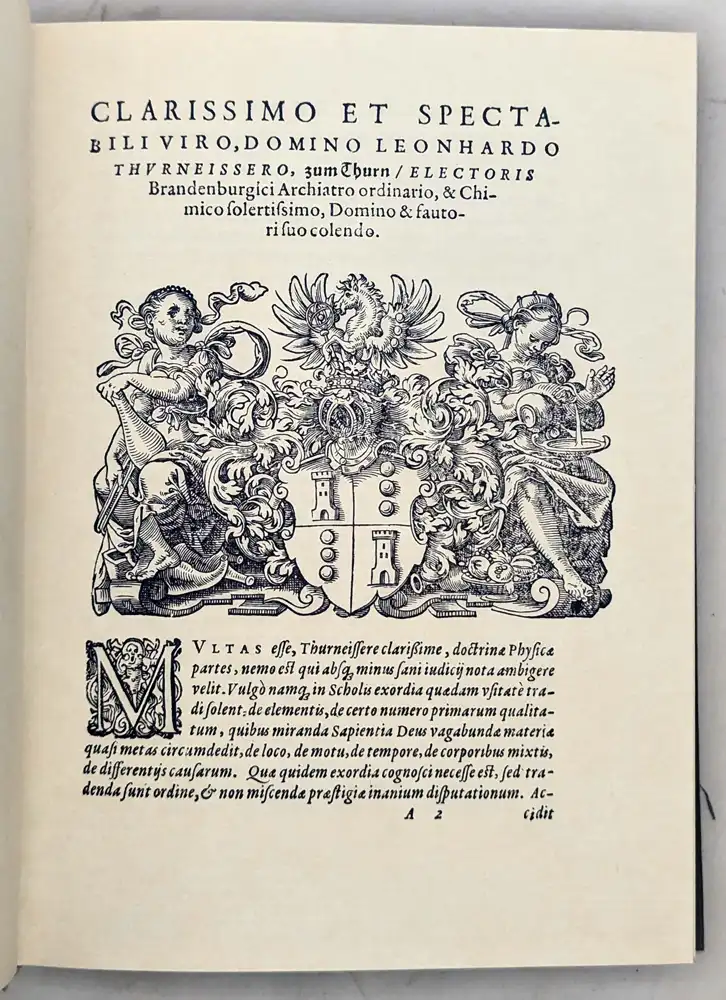
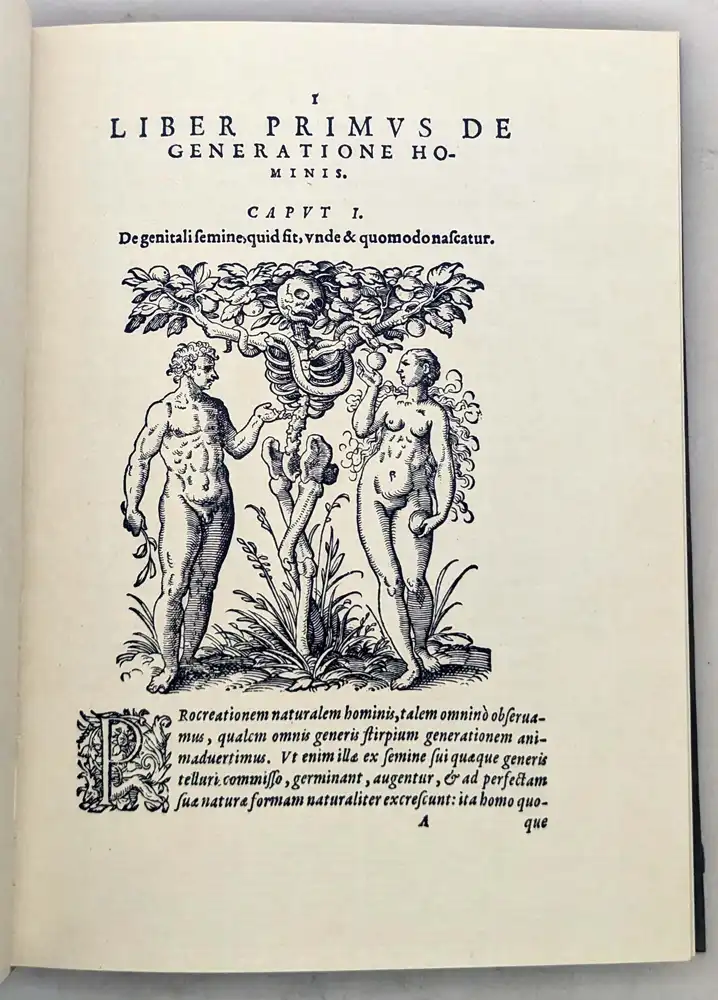
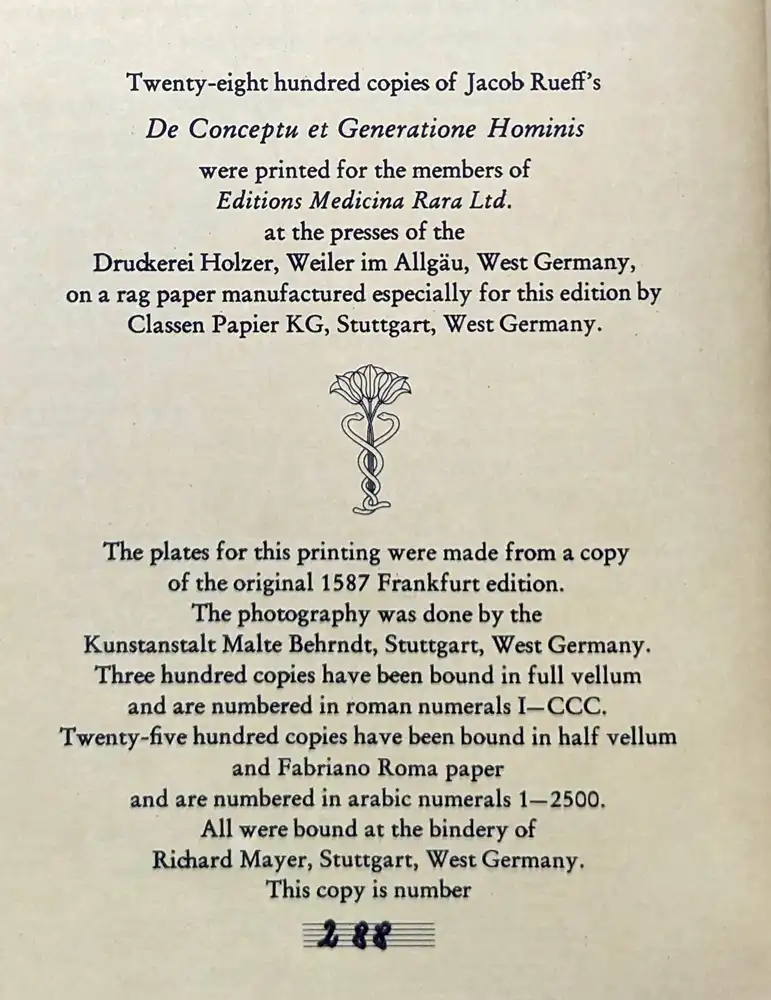
The 1587 edition of Jacob Rueff’s De conceptu et generatione hominis represents the culmination of this influential obstetrical work’s evolution, appearing as the third Latin edition and the second to feature the celebrated woodcuts of Jost Amman . Published in Frankfurt by Peter Schmidt for the prominent publisher Sigmund Feyerabend, this edition solidified the book’s status as a cornerstone of Renaissance medical literature. The work was a comprehensive handbook of six books that covered the entire reproductive process, beginning with conception and fetal development, moving through maternal care and the management of labour, and concluding with discussions of difficult births, uterine diseases, and sterility . While rooted in the classical theories of Galen and Aristotle, Rueff, as a physician and surgeon of Zurich who was responsible for instructing midwives, infused the text with practical observations from his own practice. The book was so central to his work that it was mandated to be read aloud at every birth a Zurich midwife attended.
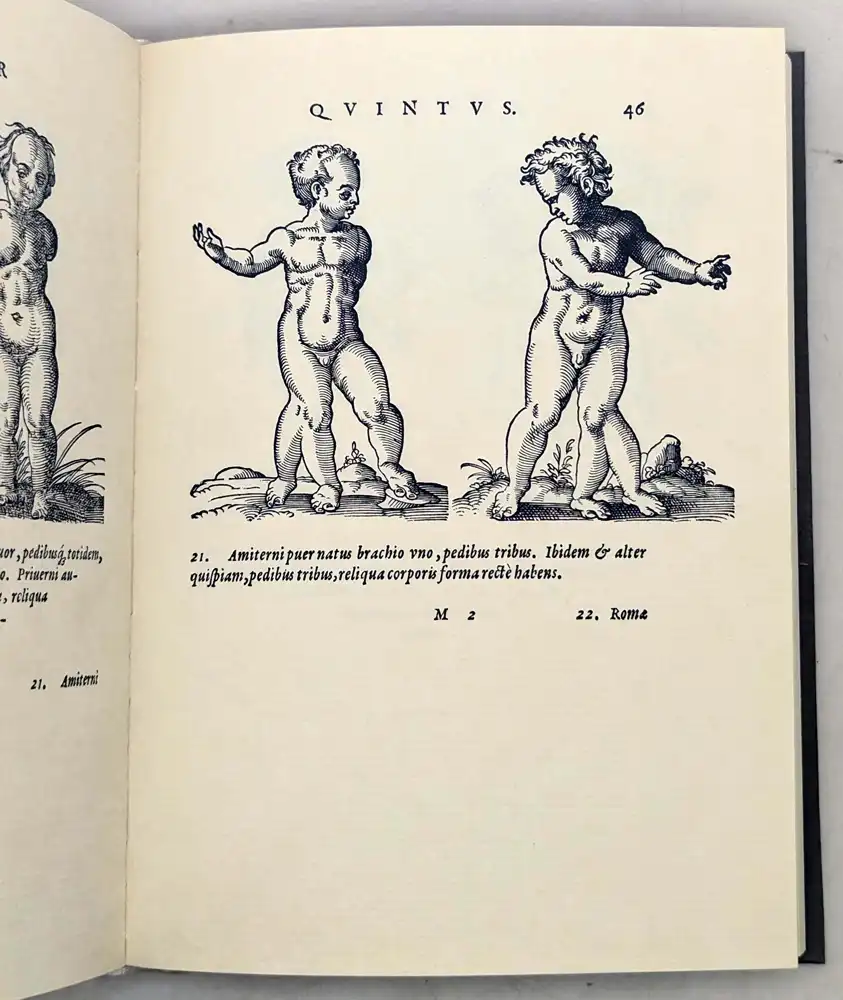
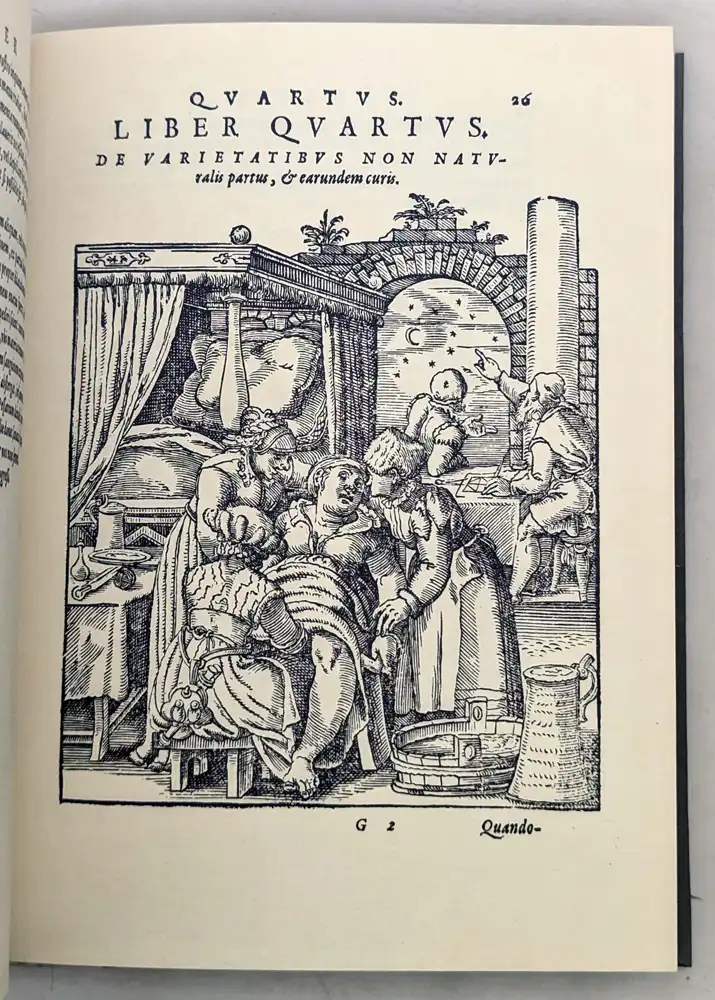
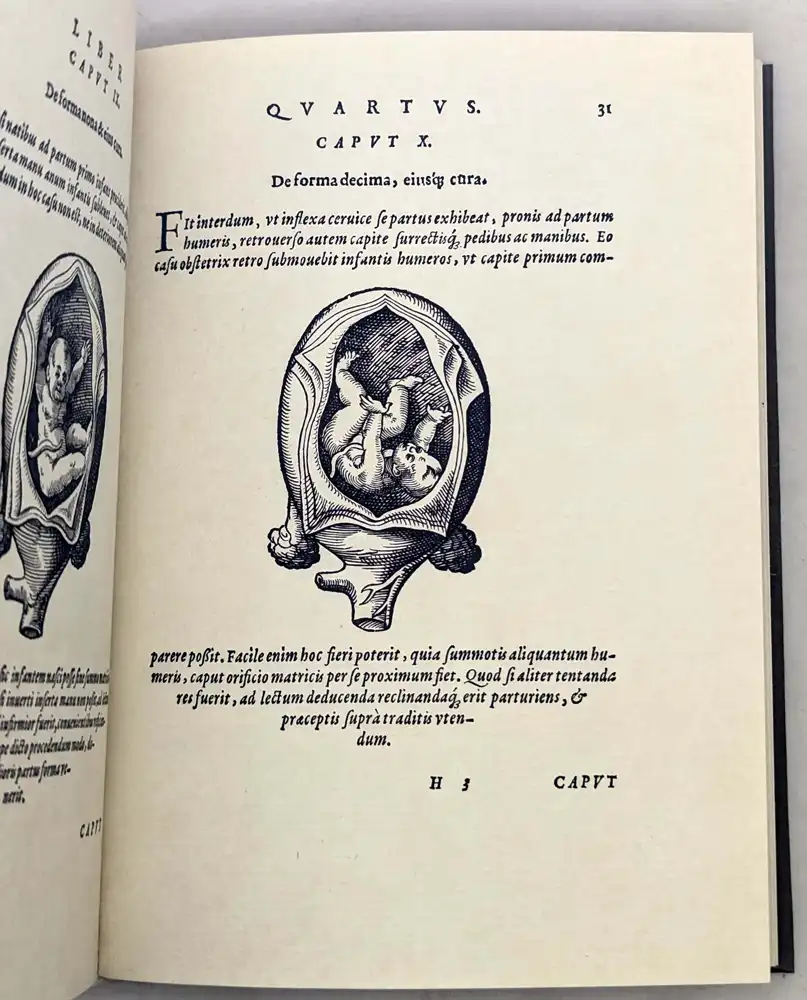
What truly distinguishes the 1587 edition, and the reason it remains a landmark in the history of medicine, is its remarkable series of illustrations by Jost Amman, which are hailed as the first true anatomical pictures in an obstetrical book . These woodcuts provided an unprecedented visual guide to female reproductive anatomy, derived in part from the work of Vesalius, and depicted a wide range of obstetrical subjects . Scenes of childbirth in sixteenth-century Europe are brought to life, showing the expectant mother visiting her midwife, using a birthing chair, and surrounded by attendants, while astrologers plot the child’s horoscope in the background. The illustrations also include technical images of the developing fetus in various presentations, surgical instruments like the toothed “duck-bill” forceps for extracting a dead fetus, and a series of striking depictions of both real and imagined birth abnormalities, or “monstrosities”. This edition thus offers a comprehensive and invaluable insight into early modern obstetrical practice, seamlessly blending visual art, medical instruction, and the cultural beliefs of its time.



![Modern Operative Surgery - G. Grey Turner 1935 [2 vols]](https://www.nocloo.com/wp-content/uploads/2026/03/gt-surgery01-300x400.webp)