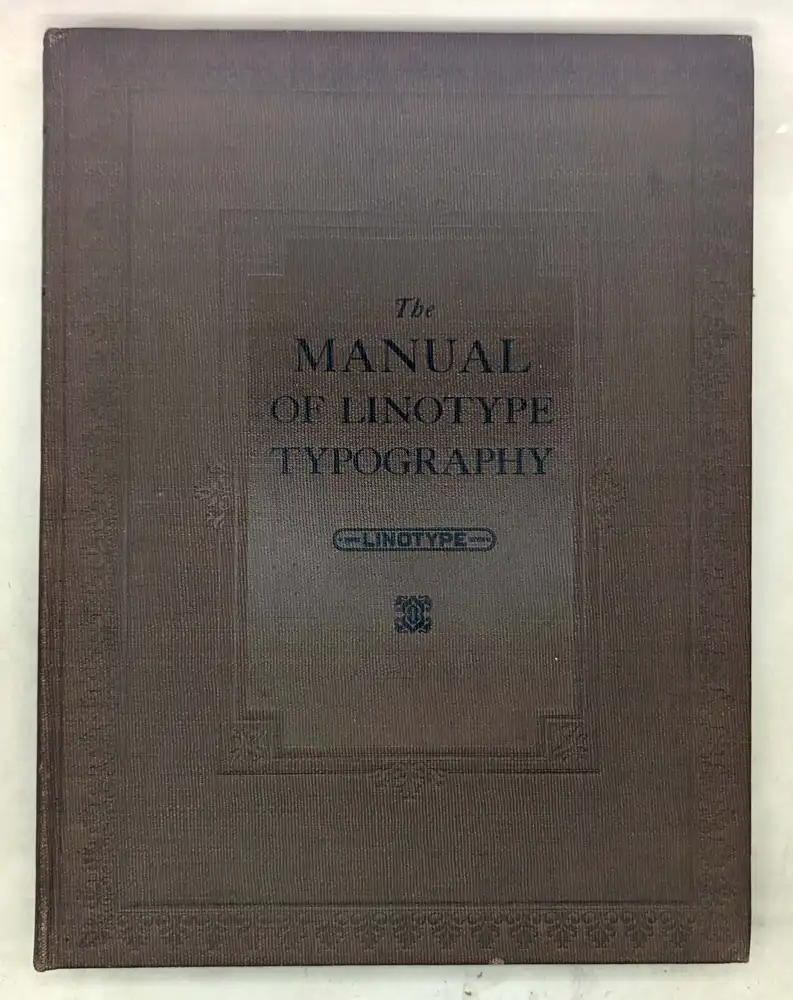
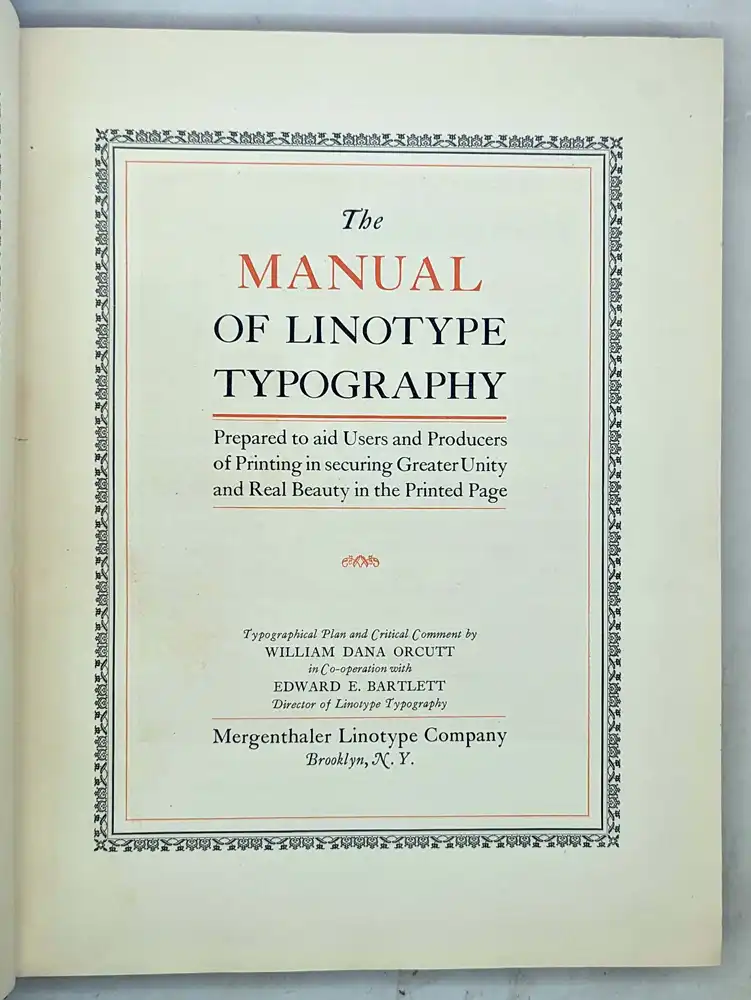
Published in 1923 by the Mergenthaler Linotype Company, The Manual of Linotype Typography is a substantial and elegantly produced work designed to demonstrate that the emerging technology of mechanical typesetting could achieve the beauty and refinement of the finest hand-set printing. The book’s typographical plan and critical commentary were the work of William Dana Orcutt, a prominent figure in the printing and book design world of the early twentieth century, who collaborated with Edward E. Bartlett on this ambitious project.
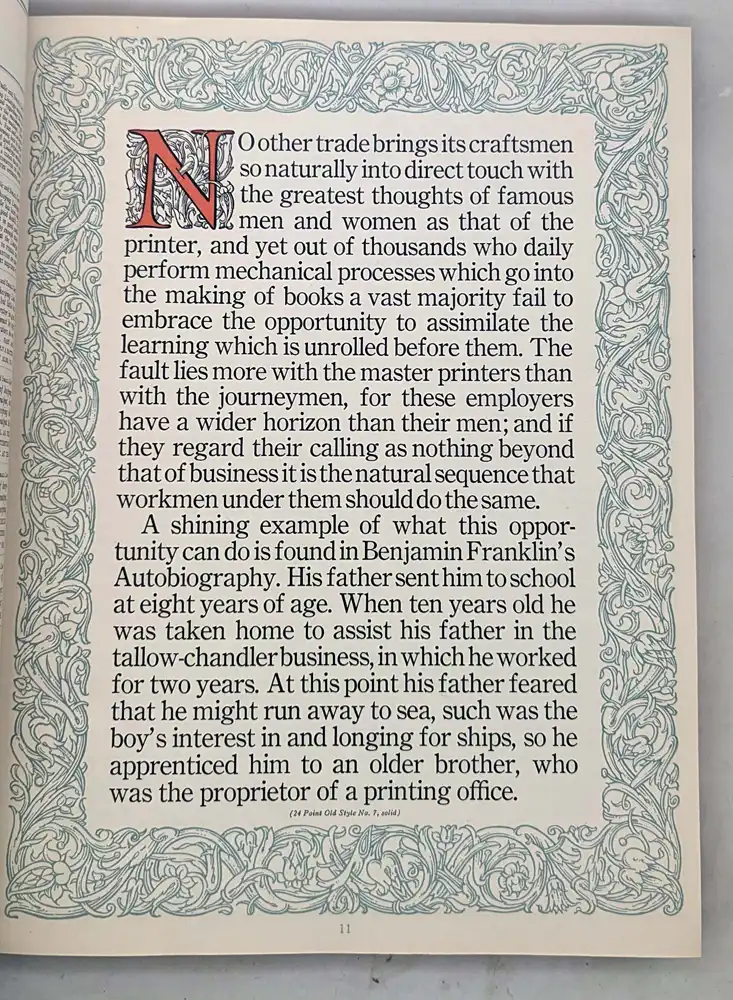
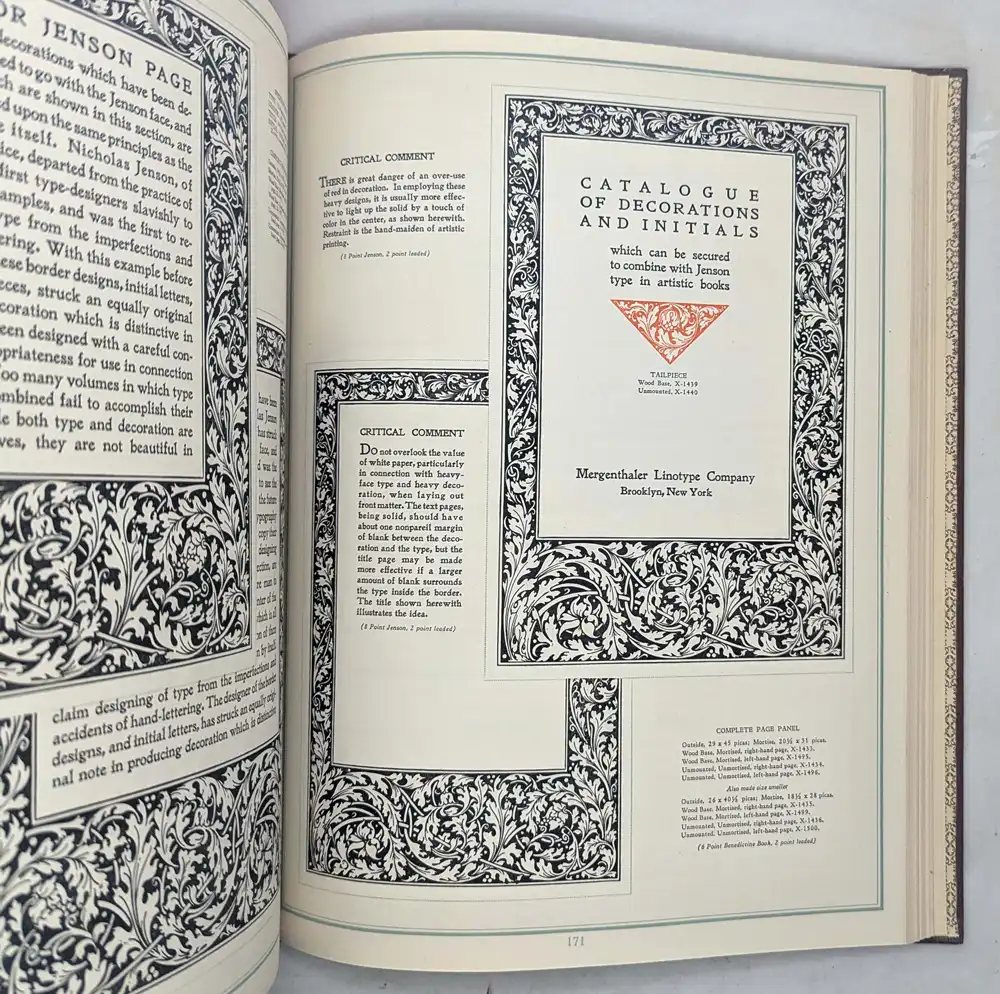
The manual was conceived not merely as a specimen book but as a practical guide “prepared to aid users and producers of printing in securing greater unity and real beauty in the printed page”. Orcutt’s approach was informed by a deep appreciation for the history of the craft, and he sought to apply the principles of classical book design, particularly those of the 15th-century Italian humanist presses, to the modern context of the Linotype machine. The design of the book itself serves as a primary example of this philosophy, moving away from the decorative exuberance of contemporary advertising to embody a more restrained and “humanist” ideal. Its careful layout, generous margins, and use of traditional red and black inks are intended to make a persuasive argument for the aesthetic potential of machine composition.
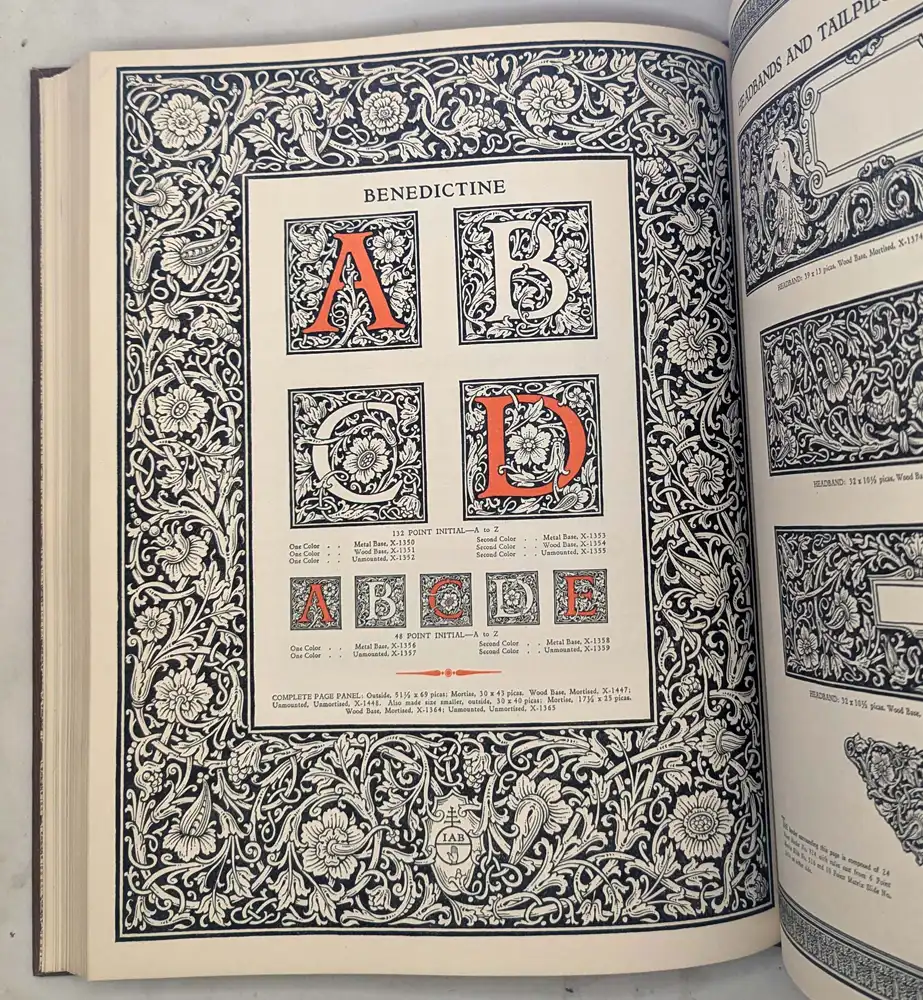
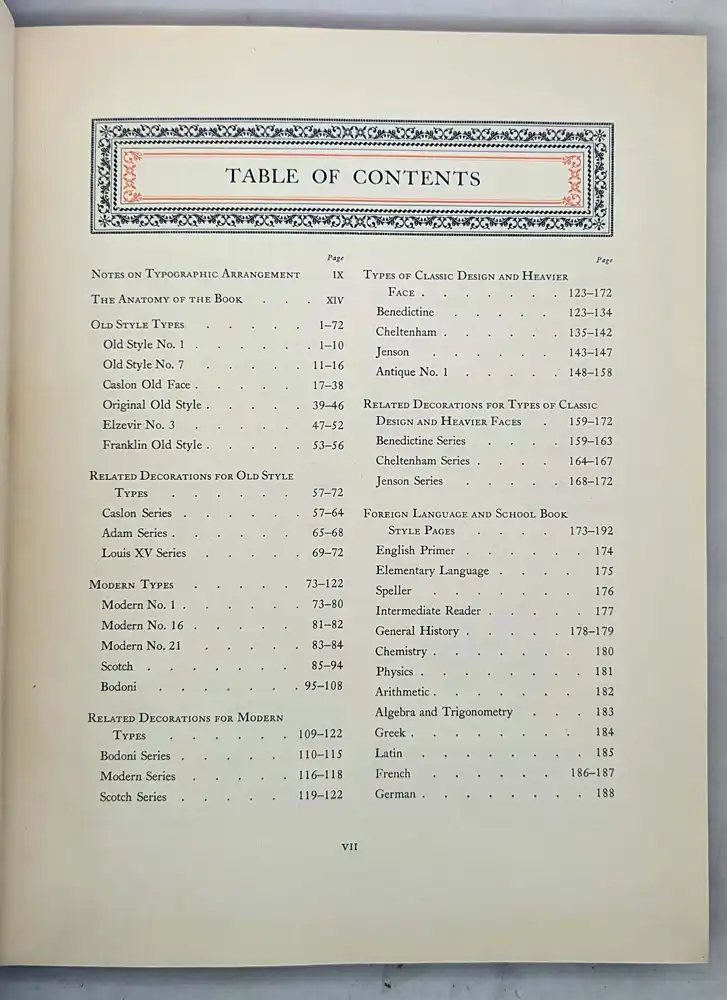
Running to xv, 256 pages in a large quarto format, the volume is a rich visual resource. It contains a mounted frontispiece, numerous illustrations throughout, and colourful decorations, all of which showcase the range and capabilities of Linotype composition. The contents are structured to provide practical examples for a wide variety of printing tasks, including book typography, dramatic composition, genealogical work, and commercial printing. A rare and beautifully produced book, The Manual of Linotype Typography stands as both a historical document of a transformative era in printing and a lasting statement on the enduring principles of good page design.