

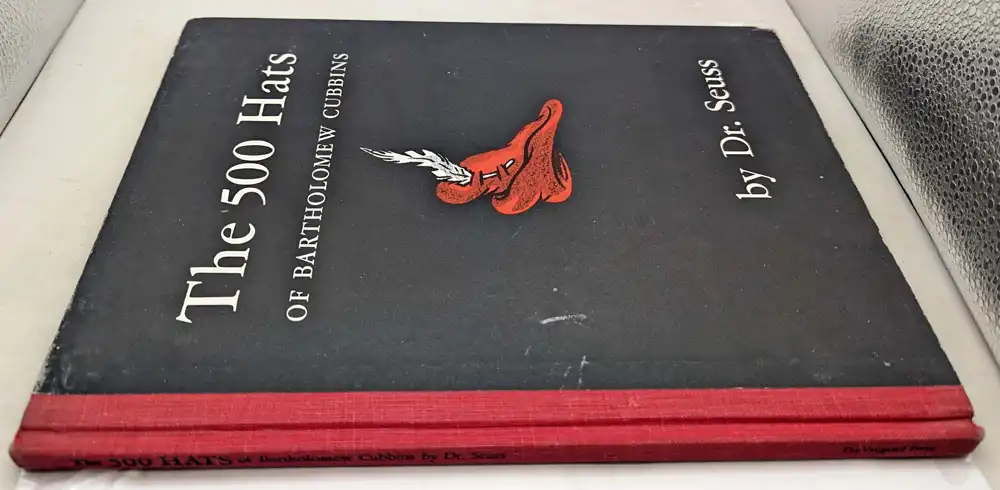

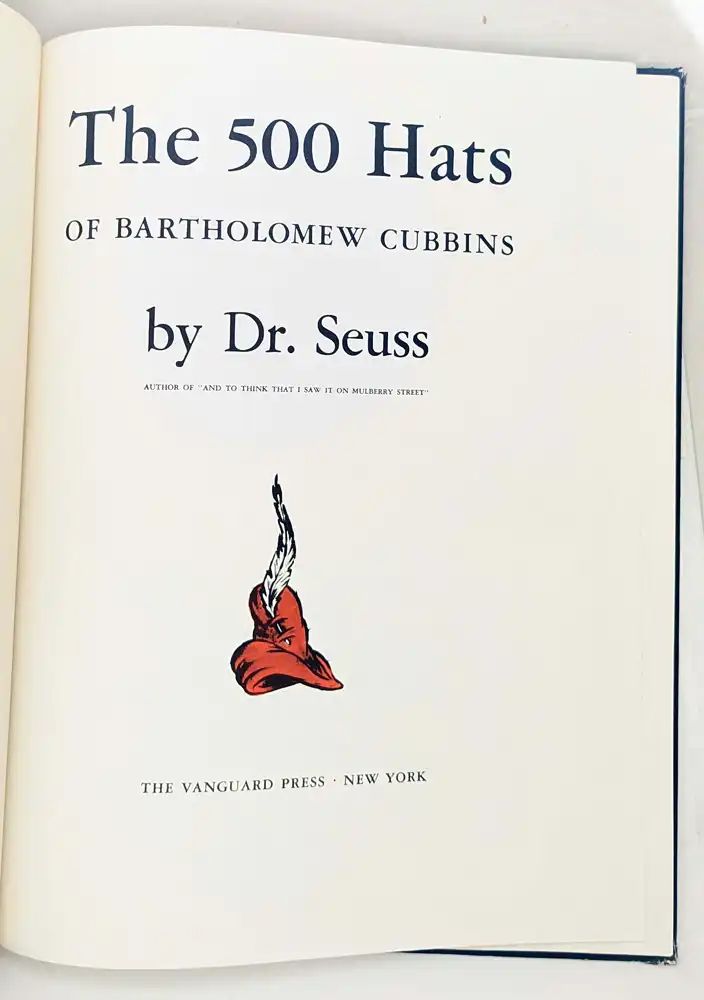
First published in 1938 by Vanguard Press, The 500 Hats of Bartholomew Cubbins is one of Dr. Seuss‘s earliest and most distinctive works . Unlike his more famous rhyming stories, this book is written in prose, showcasing a different facet of Theodor Geisel’s boundless imagination. The idea for the story came to Geisel on a commuter train, where he found himself idly wondering what would happen if a stiff, formal businessman’s hat were taken away; he concluded the man would simply “grow a new one”.
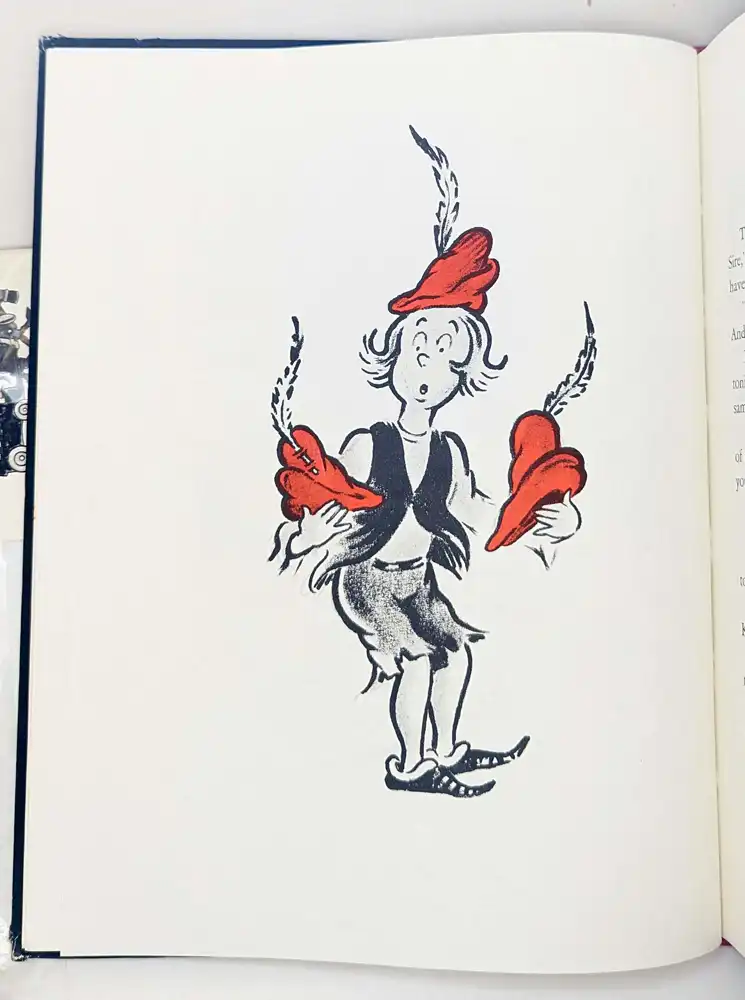
The story unfolds in the feudal Kingdom of Didd, where a young peasant boy named Bartholomew Cubbins finds himself in grave trouble. While in town selling cranberries, the royal procession passes by, and Bartholomew is ordered to remove his hat as a sign of respect. He does so, but to his astonishment and the King’s growing fury, another identical hat instantly appears on his head. Each time he removes a hat, another takes its place, leading the King to see this as a deliberate insult.
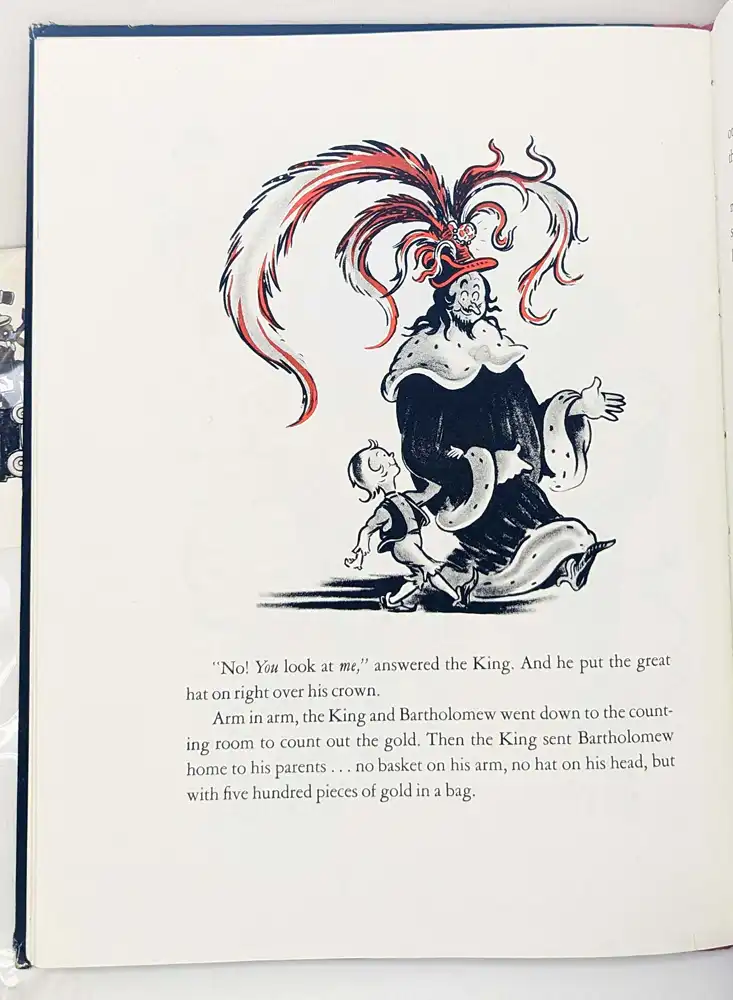
Bartholomew is dragged to the palace, where a host of characters—the Royal Hatter, Wise Men, a great Bowman, and even the King’s Magicians—all fail to solve the perplexing problem. The threat of execution looms, until the boy is taken to the highest turret. As they ascend, the hats begin to change, becoming more and more extravagant with each step . The 500th hat, a magnificent creation of feathers and jewels, is so stunning that the King is awestruck and eagerly trades 500 gold pieces for it. Bartholomew’s head is finally bare, and he returns home a wealthy boy, though no one, not even the King, can ever explain how the strange event occurred. The book is a classic tale about the abuse of power and the importance of individuality, delivered with the signature zany humor that defines Dr. Seuss’s legacy.