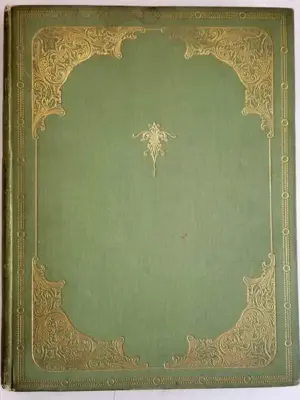
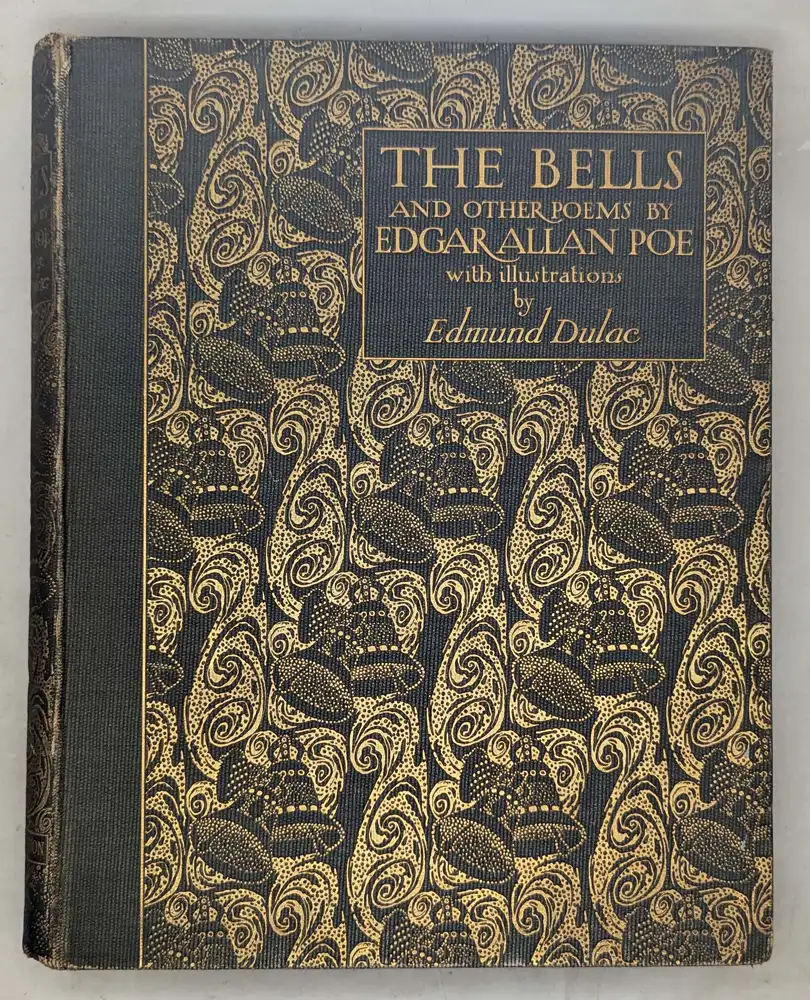
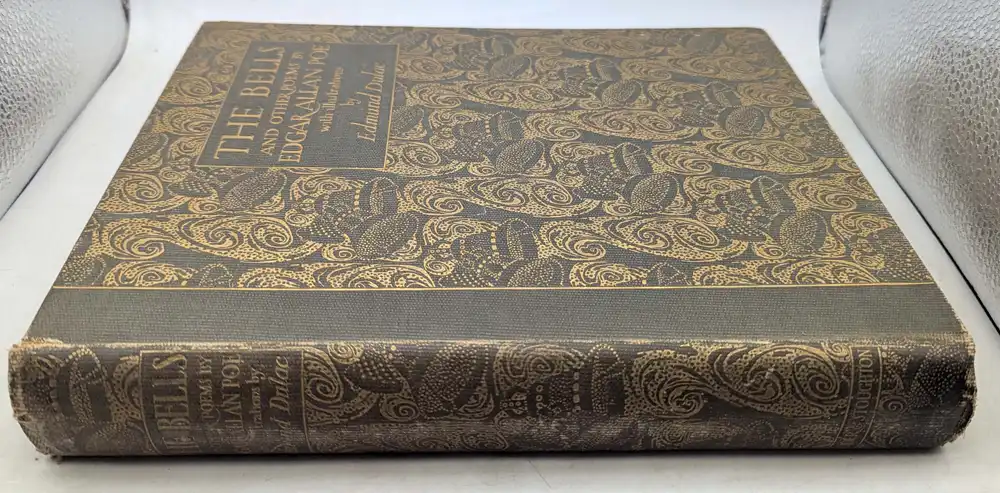
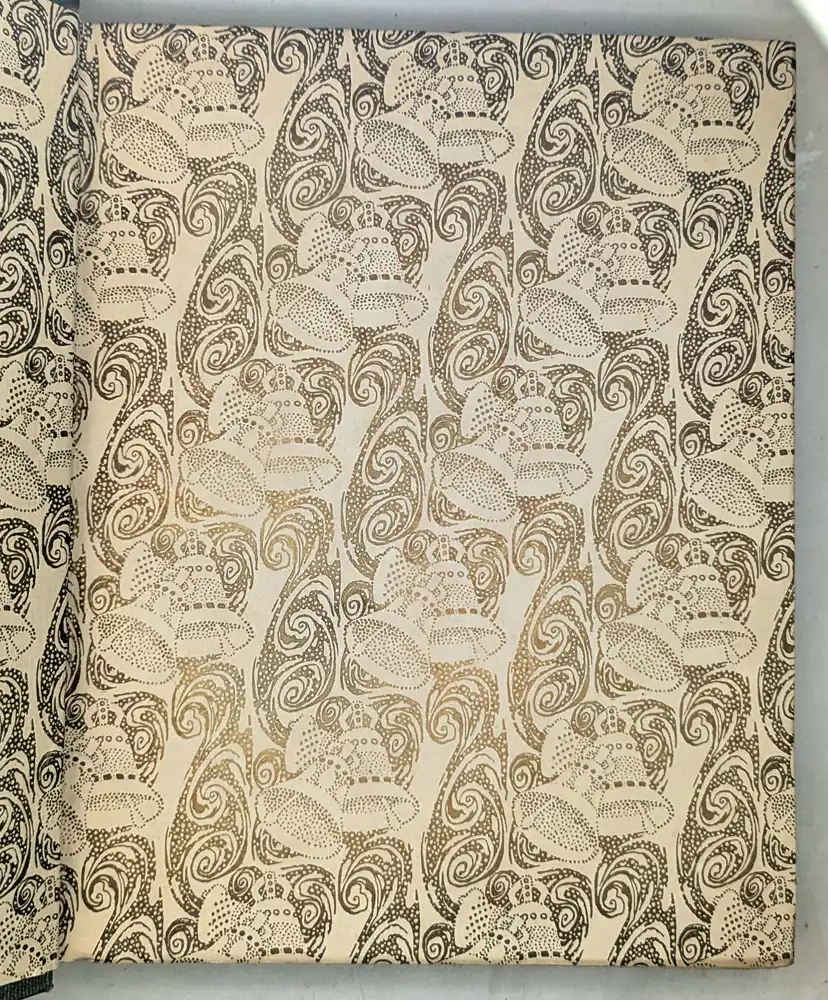
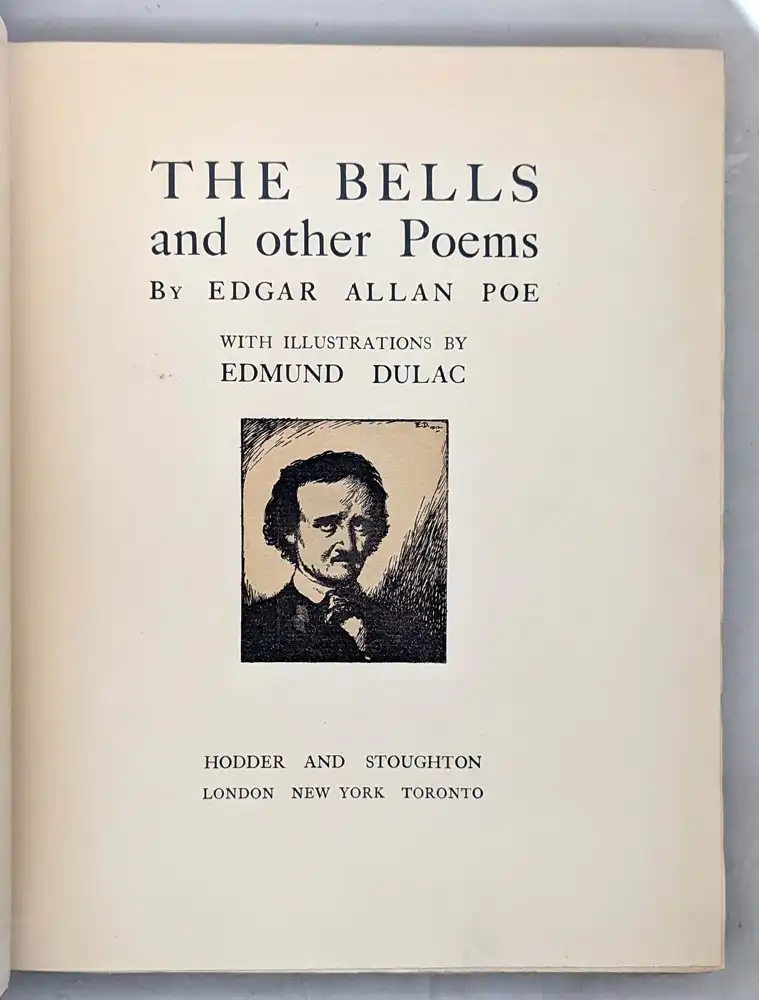
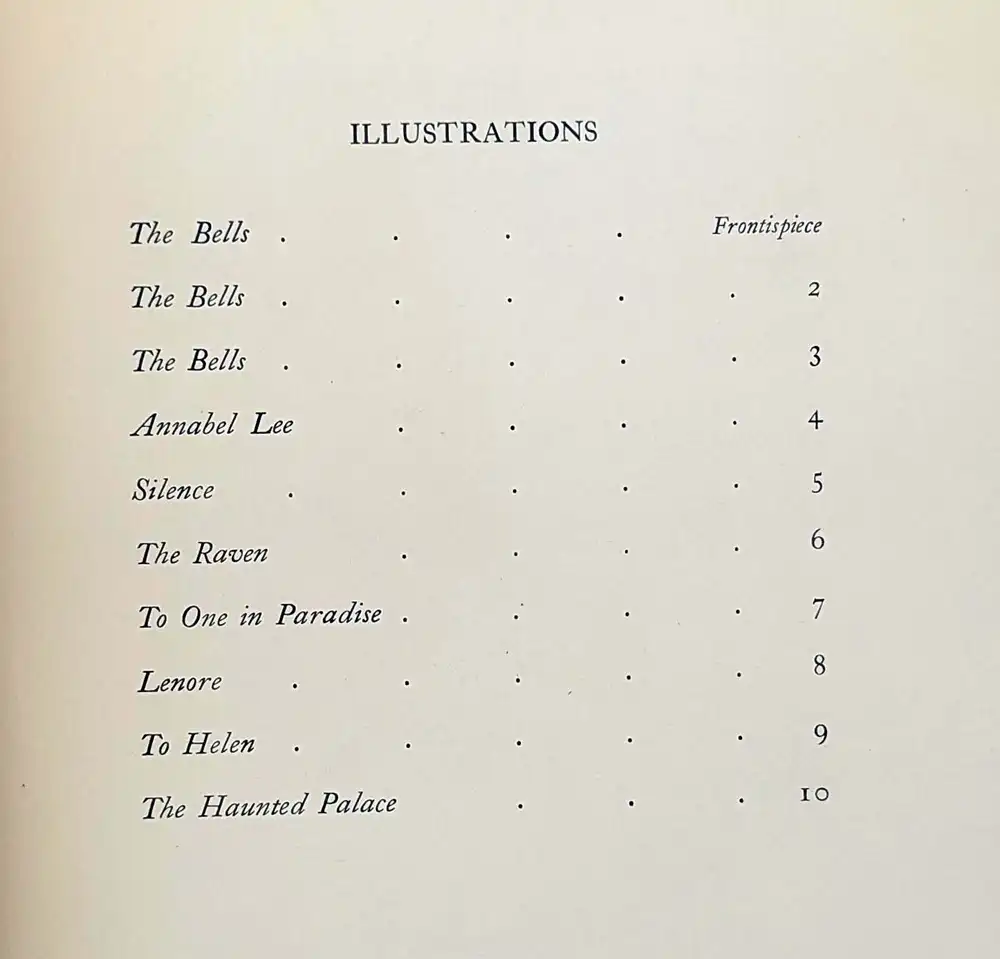
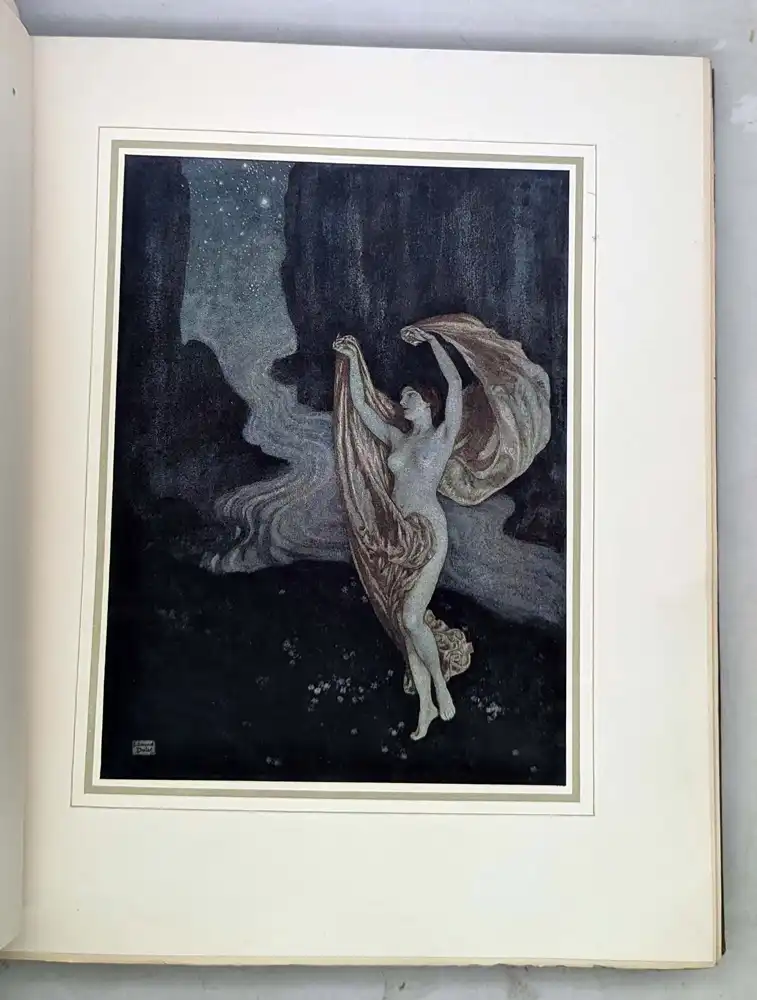
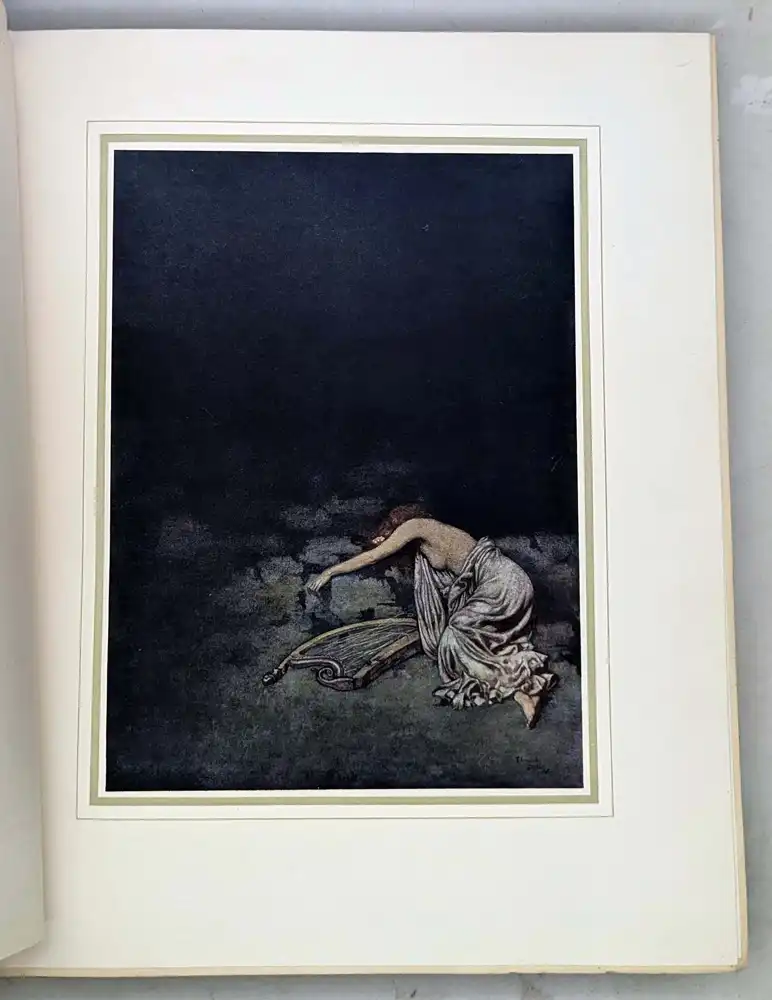
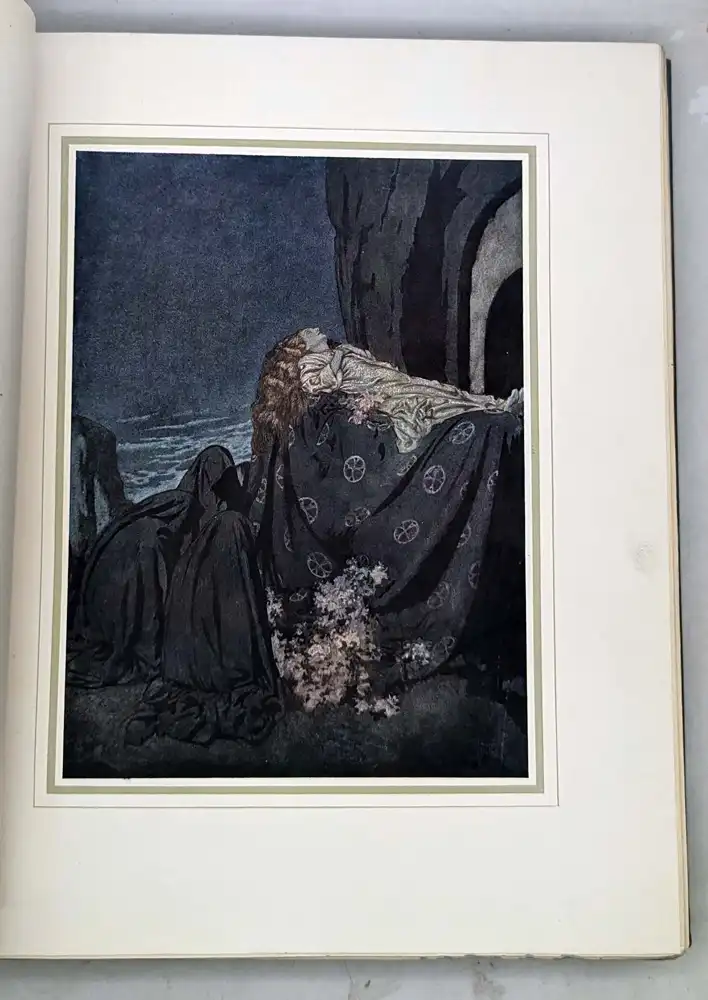
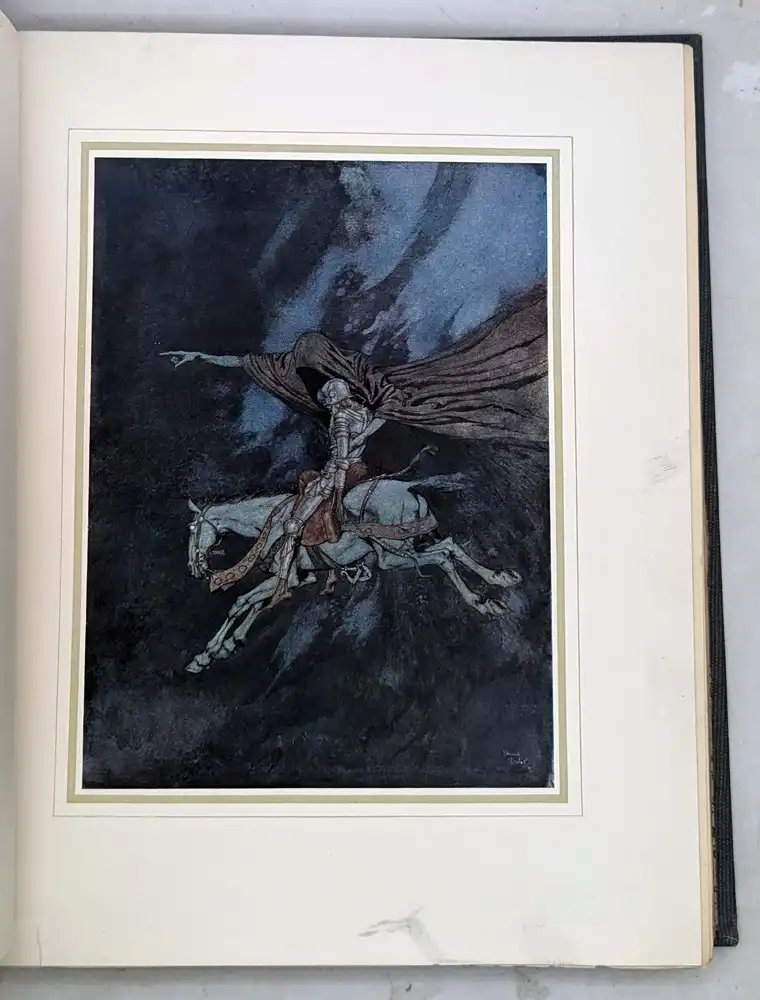
The Bells and Other Poems by Edgar Allan Poe, illustrated by Edmund Dulac in the sumptuous 1912 edition, stands as one of the great marriages of literary darkness and pictorial opulence in the history of illustrated books. Dulac, already renowned for his illustrations of the Arabian Nights and Shakespeare’s The Tempest, brought his singular vision to Poe’s haunting verses, creating a visual counterpart that neither softens nor overwhelms the poetry but rather amplifies its eerie, melancholic music through the language of gold leaf and watercolor.
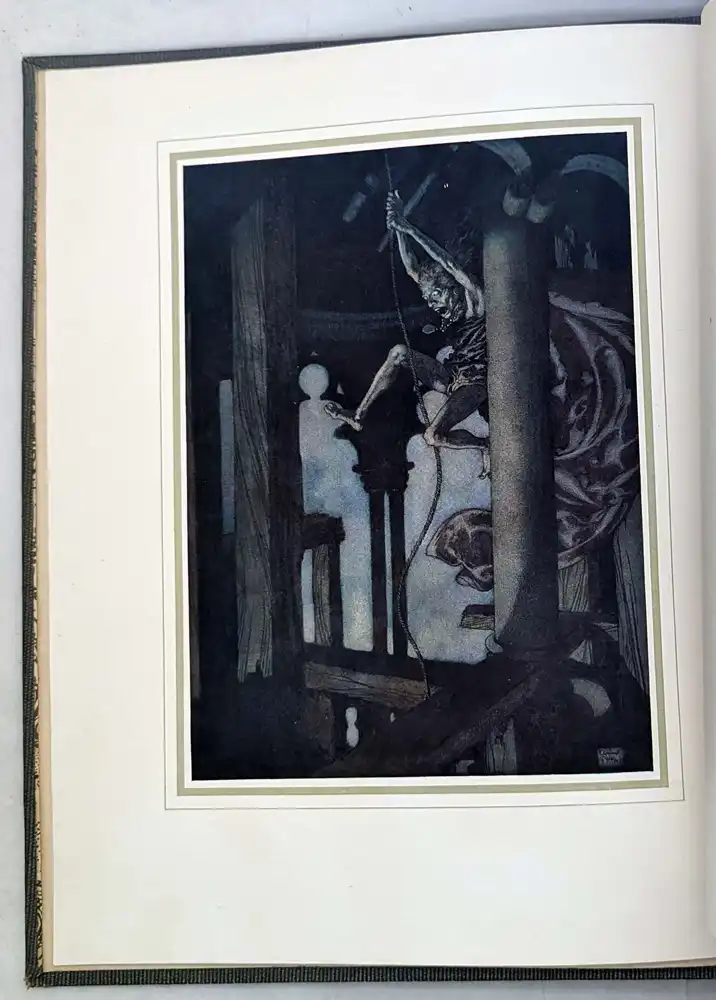
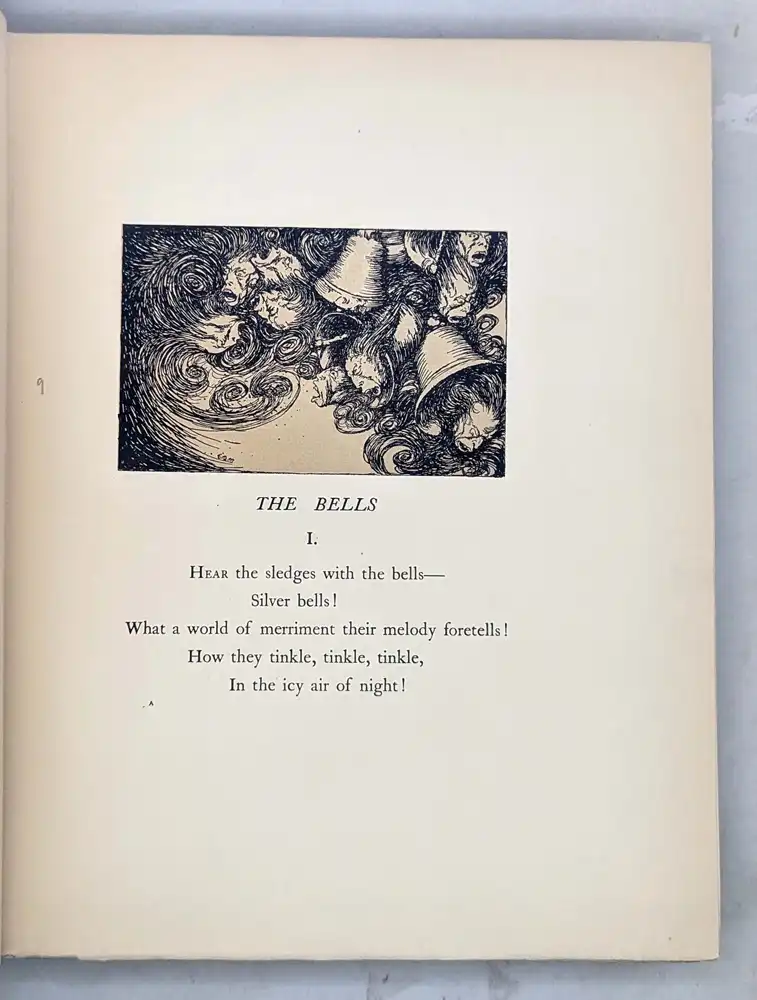
The title poem, “The Bells,” with its relentless, onomatopoeic progression from silver sleigh-bells to brazen, clanging alarm bells, finds in Dulac a kindred spirit. His illustrations for this piece are among the most extraordinary in the volume, depicting the four stages of the bells’ symbolic journey—the innocence of youth, the passion of matrimony, the terror of fire, and the solemnity of death—through a palette that shifts from frosty silver and rose to fiery orange and finally to funereal blacks and deep violets. His rendering of the ghoul-king who tolls the iron bells is a masterpiece of grotesque beauty, the figure half-dissolving into the swirling, bell-shaped forms that dominate the composition.
Dulac’s illustrations for Poe’s other poems prove equally inspired. For “Ulalume,” he conjures a moonlit landscape of funereal cypresses and ghostly mists, the figures of the grieving lover and his spectral companion rendered with a Pre-Raphaelite delicacy that belies the poem’s profound desolation. His “Annabel Lee” is a vision of ethereal romance, the kingdom by the sea bathed in a pearlescent glow, the lovers suspended in a moment of tragic purity. The great triumph of Dulac’s art lies in his ability to inhabit Poe’s world without imposing himself upon it; he does not illustrate the poems so much as enter into their atmosphere, translating their rhythms into visual equivalents. Every page shimmers with the tension between beauty and decay, love and loss, the earthly and the spectral—the very essence of Poe’s enduring genius.