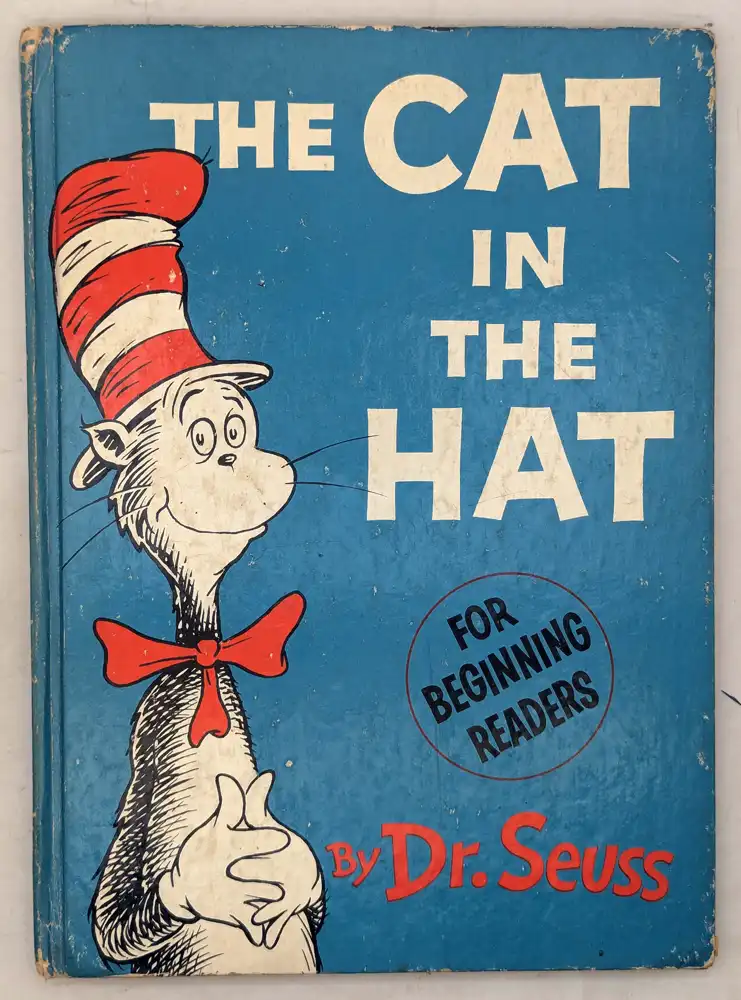
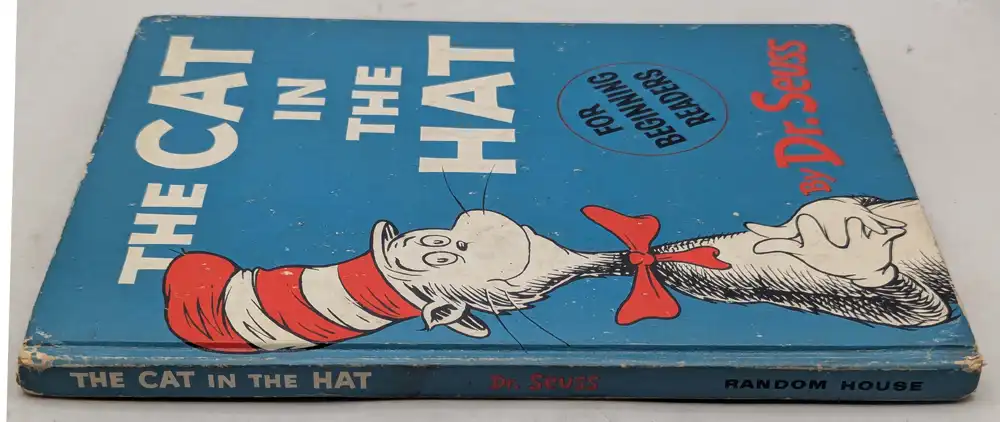
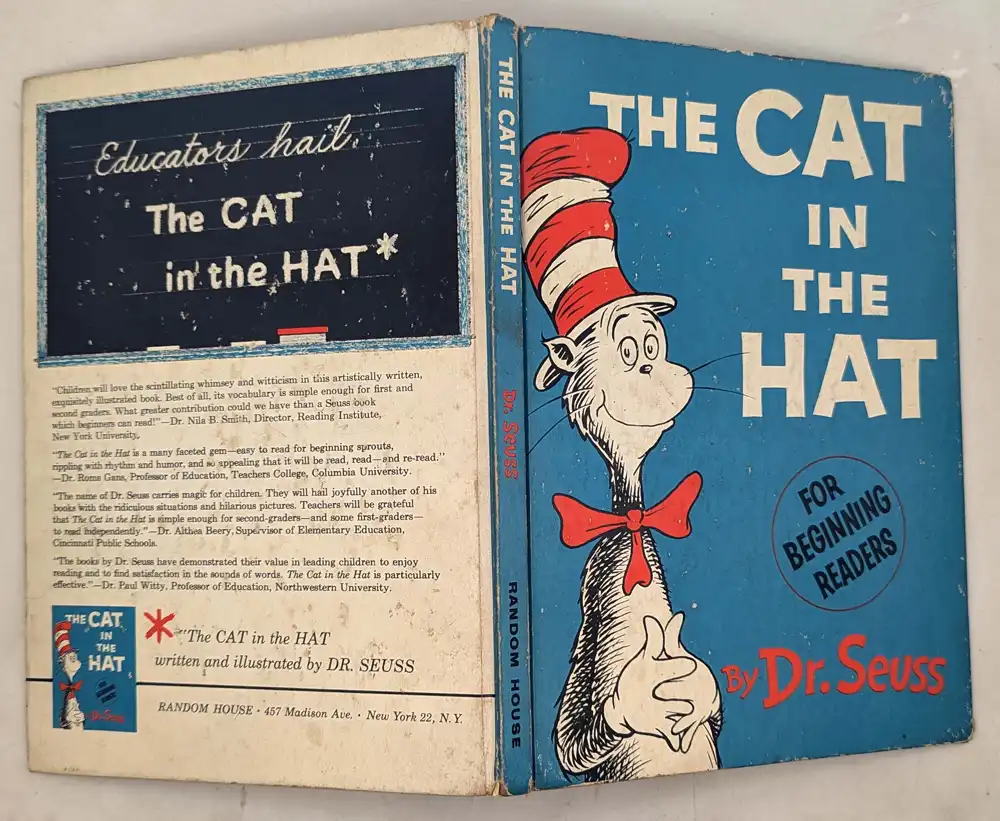
Published in 1957, The Cat in the Hat by Dr. Seuss is one of the most influential and beloved children’s books ever written, a work that fundamentally altered the landscape of early childhood education and publishing. Theodor Geisel, writing under his famous pen name, created the book in response to a growing concern that the primers used to teach reading in American schools, particularly the mundane “Dick and Jane” series, were failing to engage young minds. The publisher Houghton Mifflin challenged Geisel to write a book for six-year-olds that was genuinely entertaining and that used no more than a restricted list of just over two hundred vocabulary words. Geisel laboured over the project for months, struggling to transform this limiting constraint into a compelling narrative, until he found his breakthrough by deciding to rhyme the first two words on the list he could pair: “cat” and “hat”.
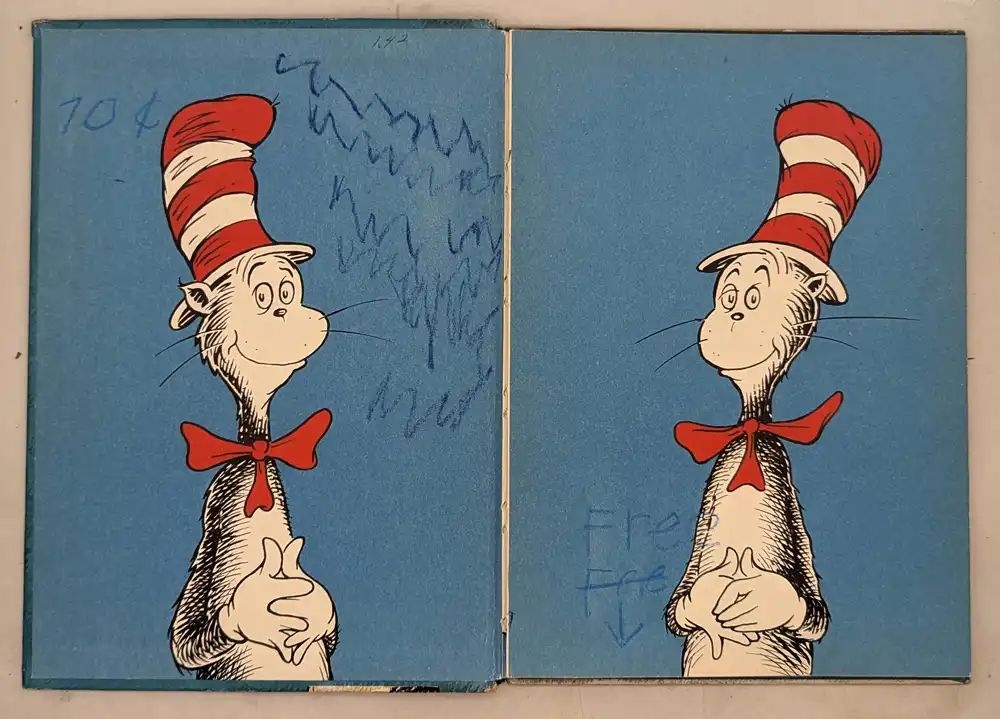
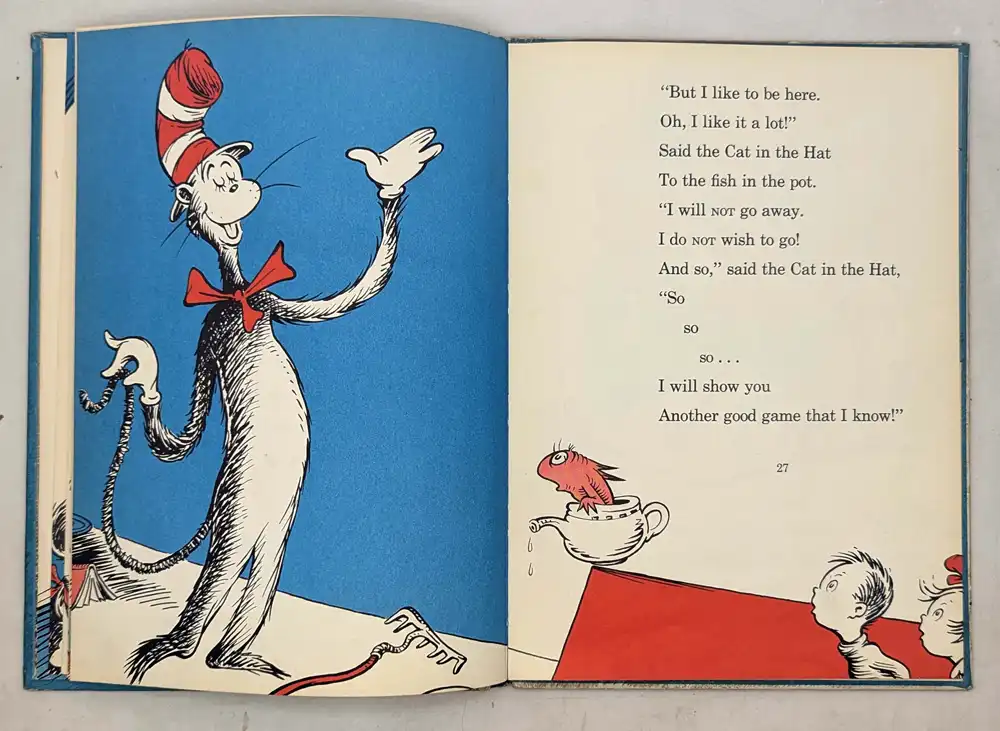
The story he produced is a masterpiece of controlled vocabulary and anarchic imagination. It opens on a dreary, rainy day with a brother and sister, Sally and her unnamed narrator brother, left alone and staring out the window in utter boredom. Their monotonous afternoon is shattered by the dramatic, almost surreal entrance of a tall, anthropomorphic cat in a red-and-white-striped stovepipe hat. This stranger invites himself in, ignoring the frantic protests of the family’s pet fish, who serves as the exasperated voice of caution and domestic order. The Cat proceeds to perform a series of increasingly elaborate and destructive balancing tricks, juggling furniture and household objects with manic glee, until he introduces Thing One and Thing Two, two wild, blue-haired creatures who proceed to turn the house into a chaotic shambles. The children and the fish are terrified that their mother will return to witness the destruction, and the boy finally manages to capture the Things, forcing the Cat to take his leave. The crisis seems imminent until the Cat returns at the last moment with a machine that cleans the entire house with miraculous speed, restoring it to perfect order just as the mother walks through the front door. The book ends with one of the most famous questions in children’s literature, asking the reader whether they would tell their mother of the afternoon’s events, leaving the children and the audience in a state of complicit, delighted wonder.