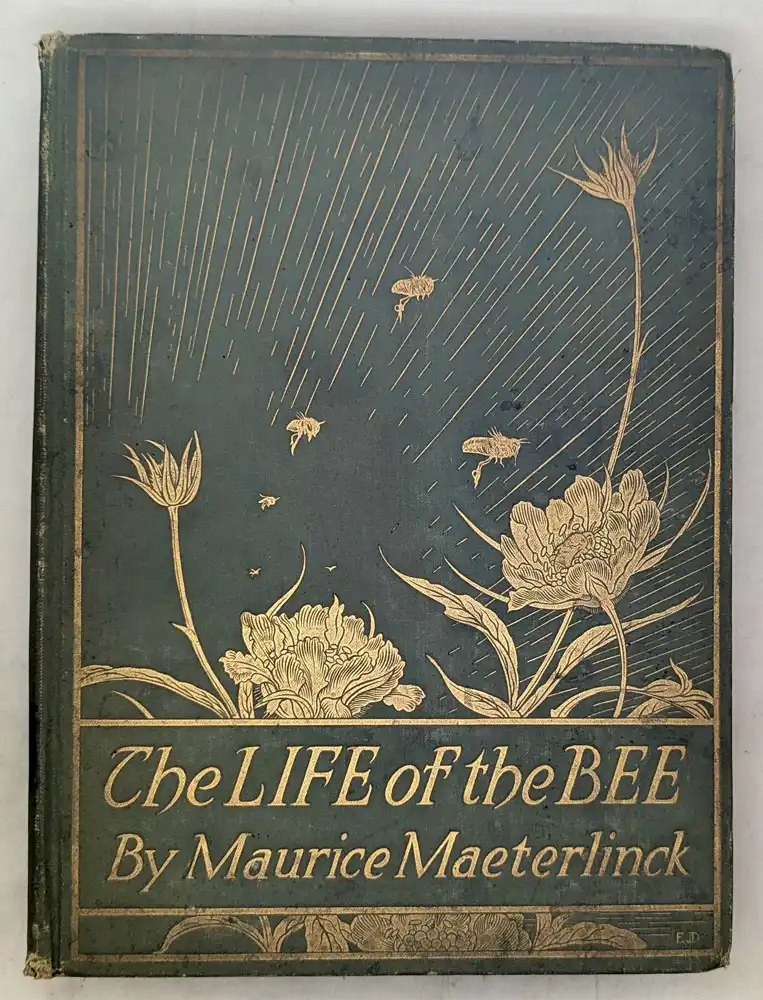
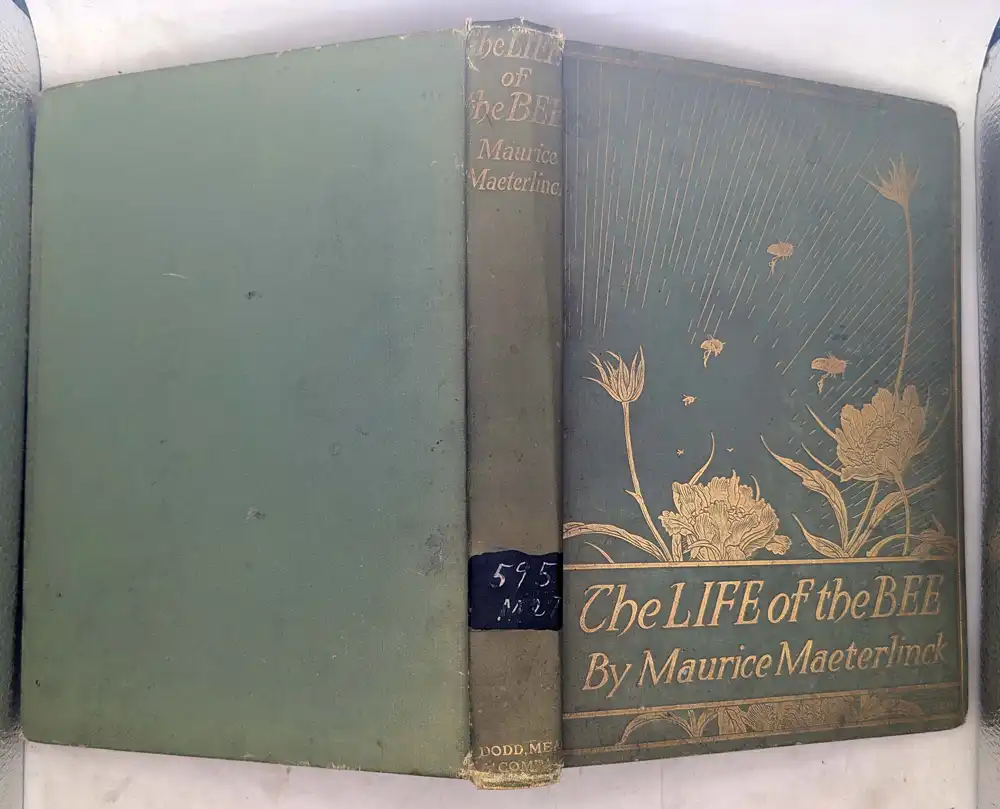
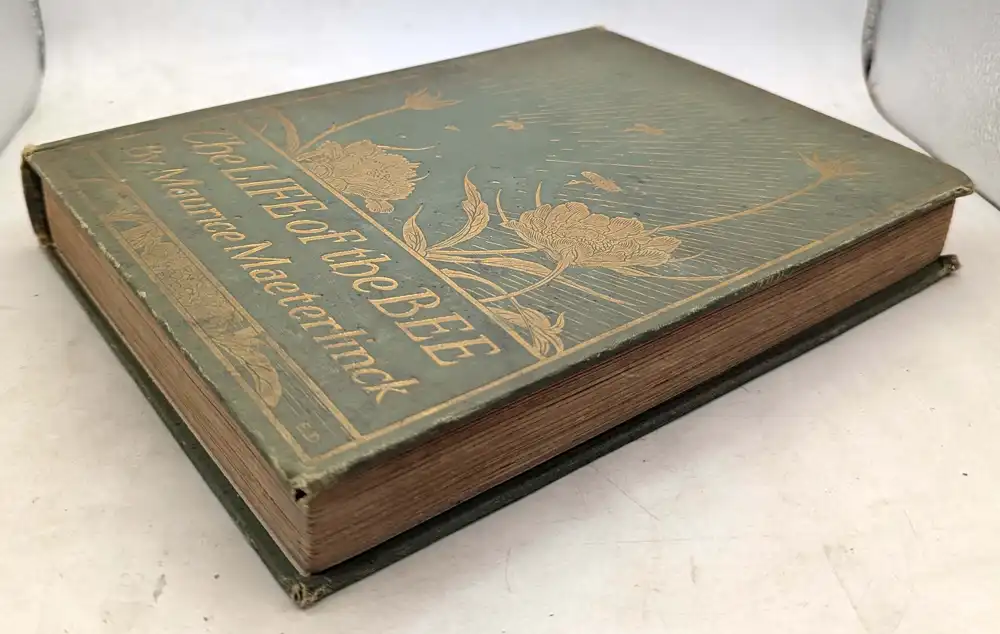
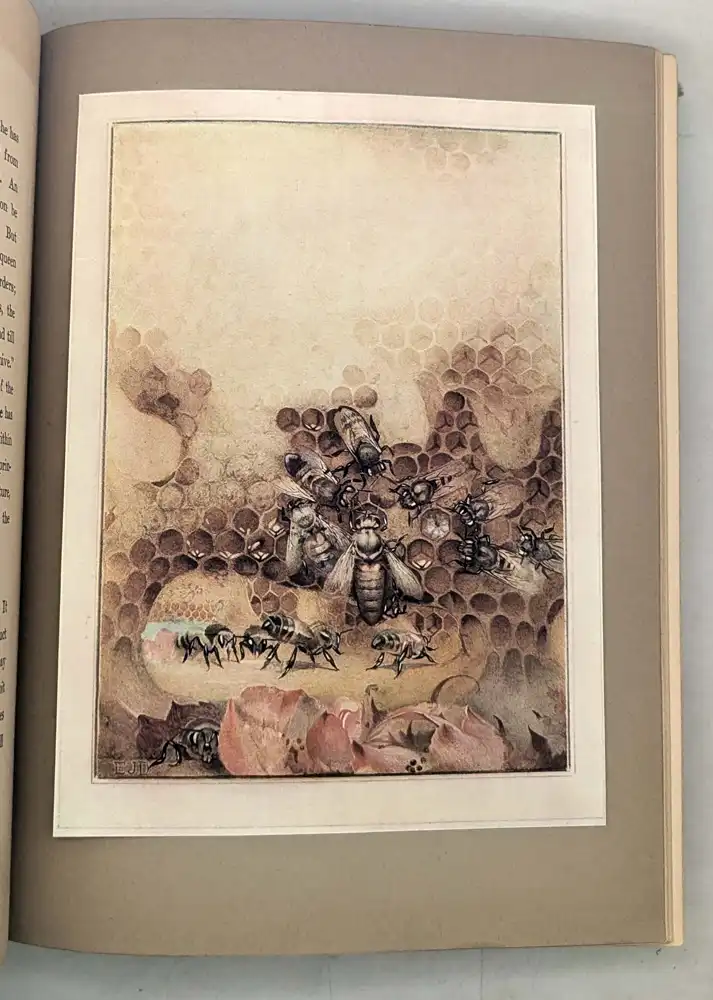
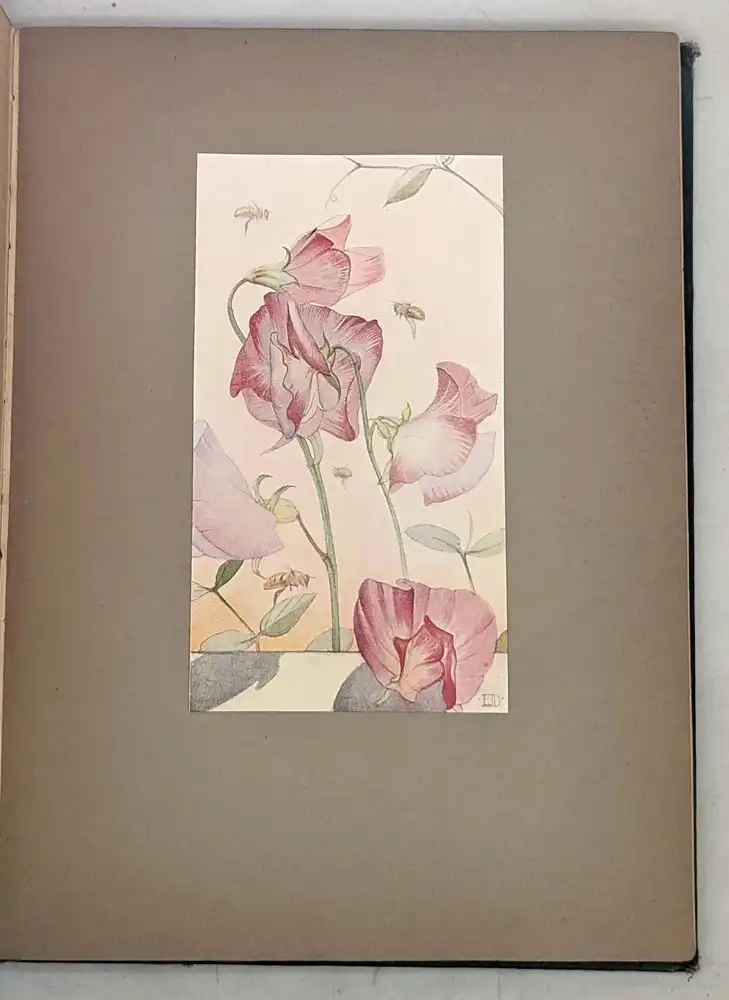
The Life of the Bee, as illustrated by Edward Detmold in the exquisite 1912 edition, transforms Maurice Maeterlinck’s poetic natural history into a visual meditation of breathtaking intricacy. The Belgian Nobel laureate’s text, originally published in 1901, is no dry scientific treatise but a philosophical reverie on the hive as a microcosm of instinct, sacrifice, and communal destiny. Detmold’s illustrations elevate this already luminous prose into a realm of decorative wonder, where the natural world becomes a tapestry of gold, amber, and shadow.
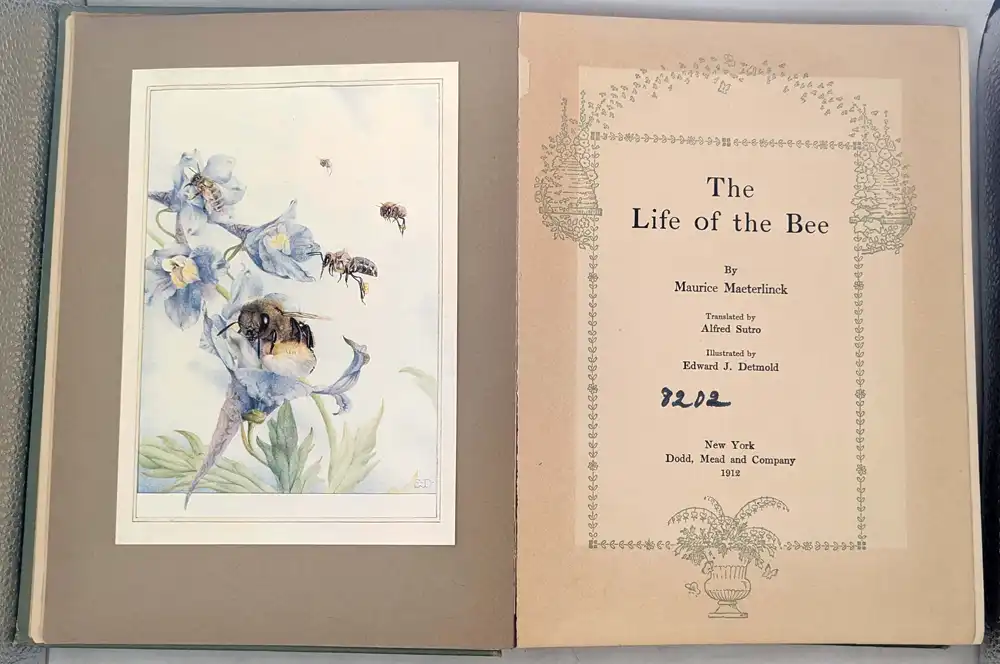
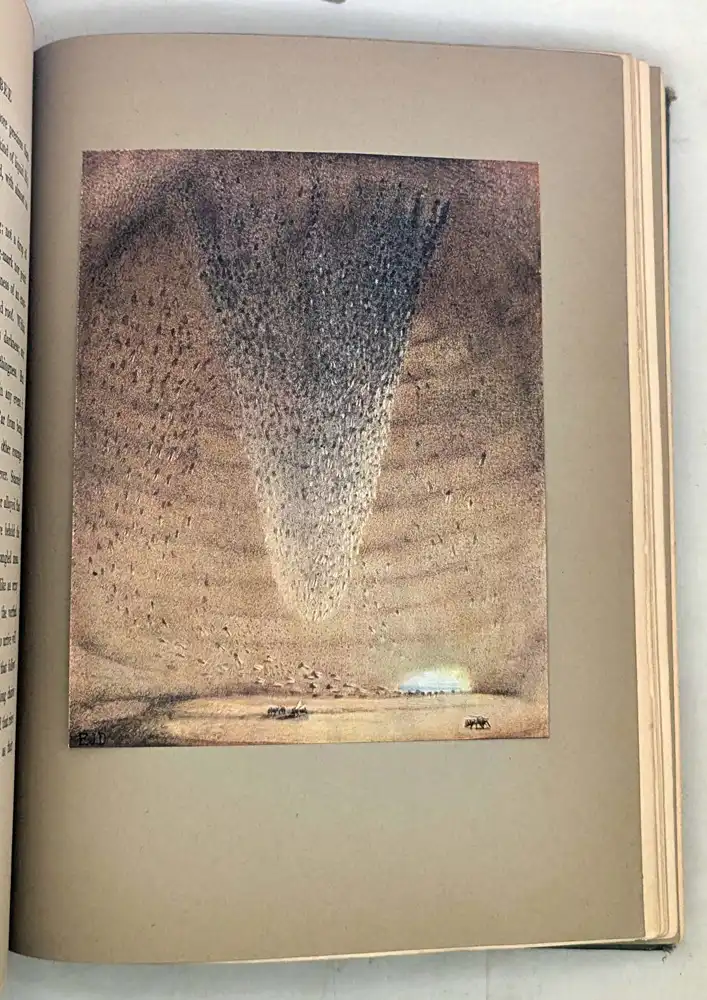
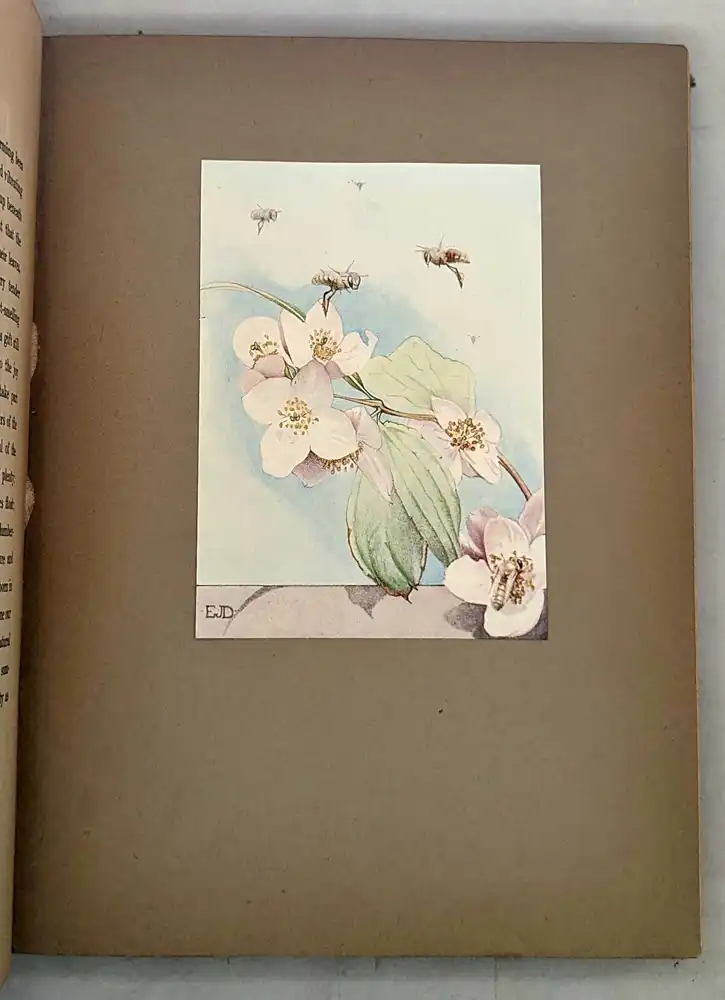
The volume opens with Detmold’s signature frontispiece, a vision of the queen bee surrounded by her attendants, rendered with the precision of a botanical engraving yet suffused with an almost mystical reverence. Throughout the book, his plates alternate between panoramic views of the hive in its pastoral setting and intimate close-ups of its inhabitants: workers clustering in geometric harmony, drones lounging in drowsy indolence, and the relentless, murmuring activity that defines the colony. His technique, a masterful blend of watercolor and etching, captures the translucence of wings and the iridescent sheen of chitin, while his compositions often frame the bees within ornate borders of stylized flowers and foliage, suggesting that their existence is both biological fact and elaborate ritual.
Detmold’s genius lies in his ability to render the invisible visible. Maeterlinck speaks of the hive’s “spirit,” the collective intelligence that guides its actions; Detmold answers with images of swarming bees forming living chains, their bodies linking like the components of a single, sentient organism. The darker passages of the text—the massacre of the drones, the virgin queen’s deadly duel—are handled with a restrained gravity, the artist’s palette deepening to somber browns and cool greys. Ultimately, this edition presents the bee not as an insect, but as a symbol of nature’s profound, unthinking wisdom, a world unto itself whose laws of labor, loyalty, and renewal mirror our own highest aspirations and deepest mysteries.