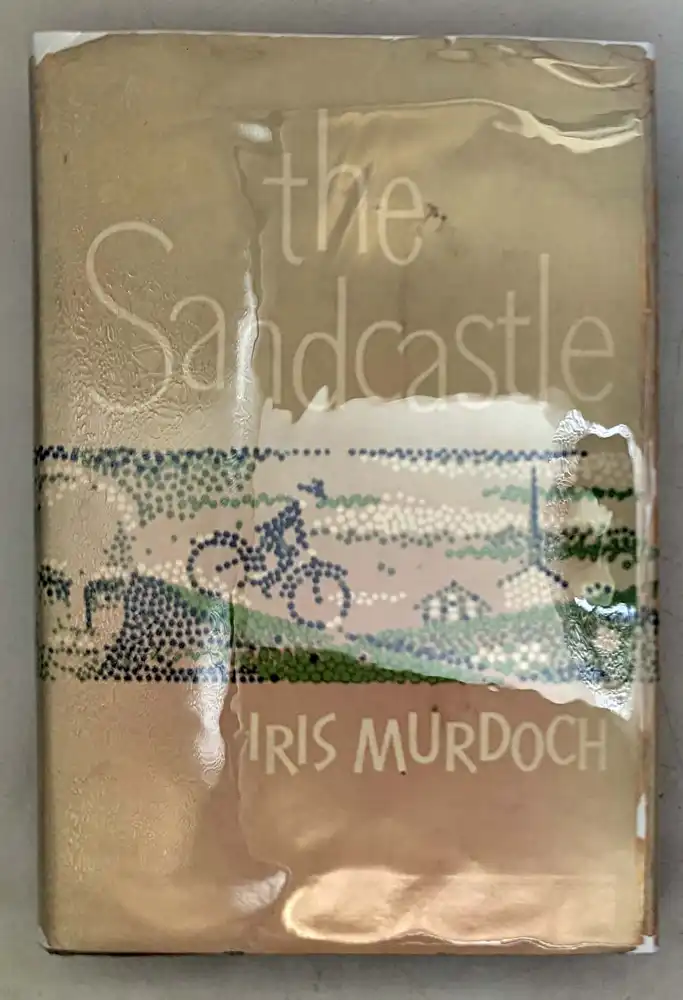
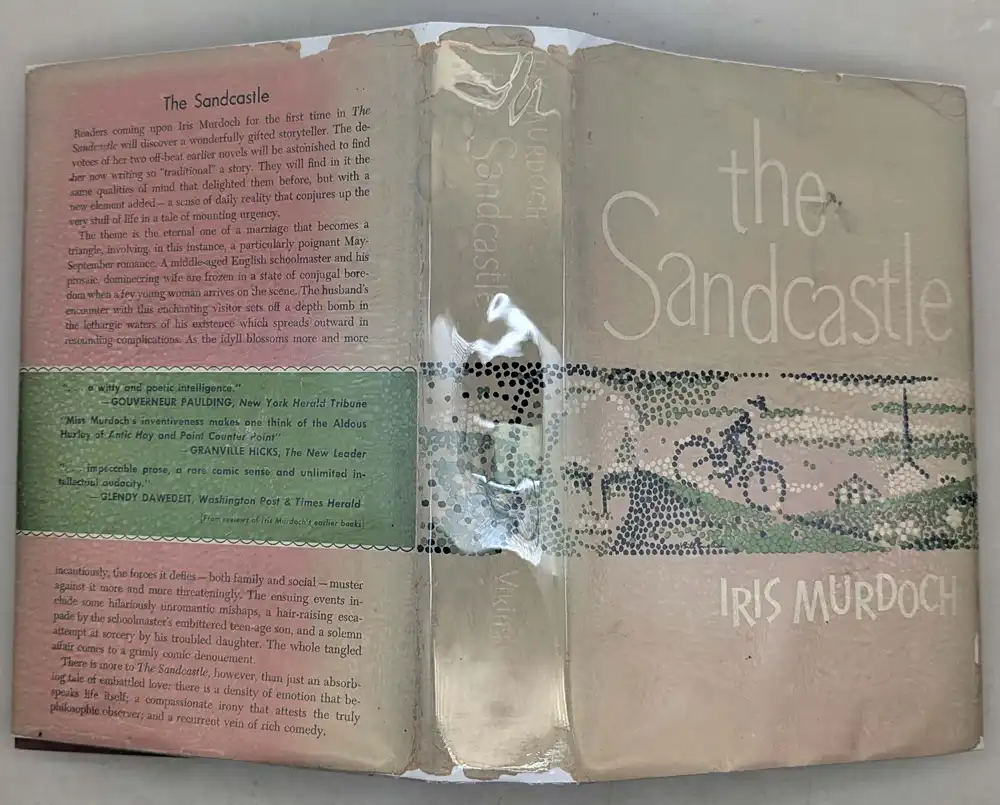
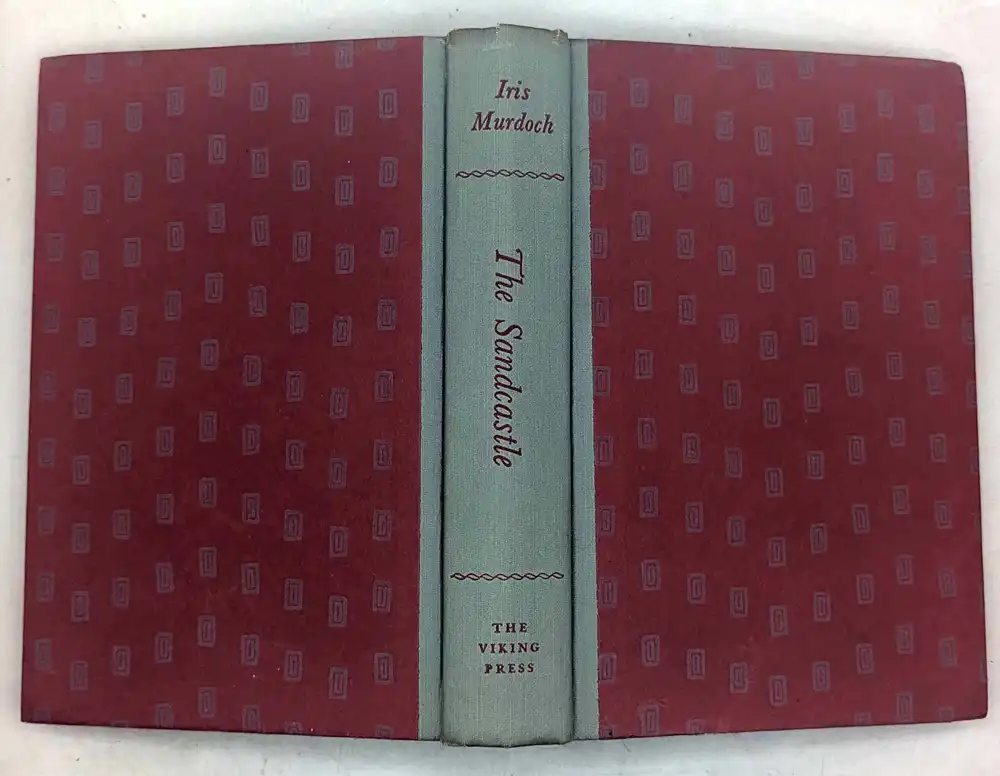
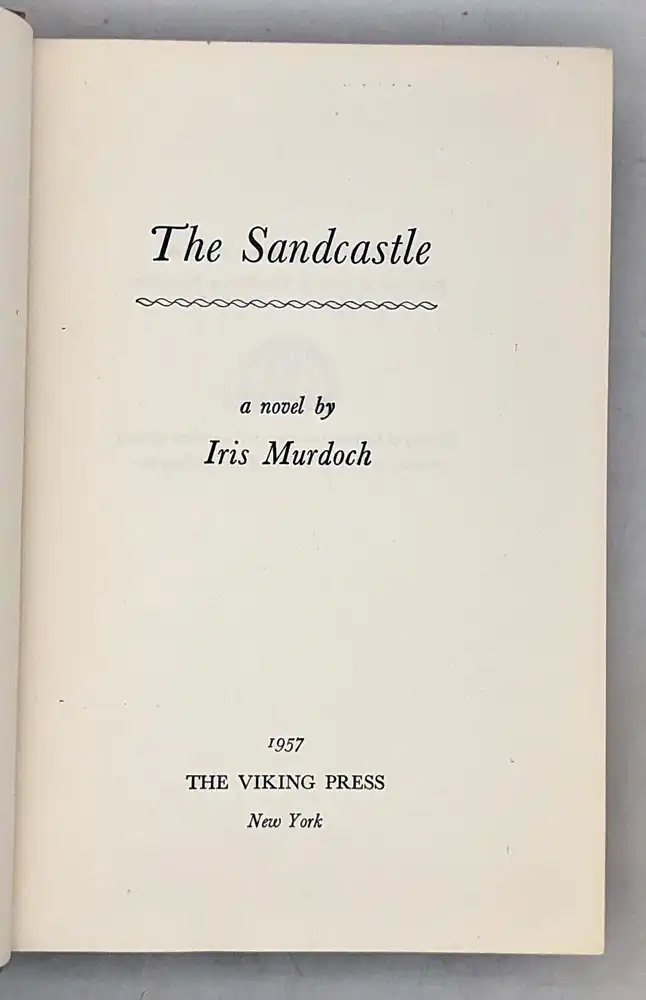
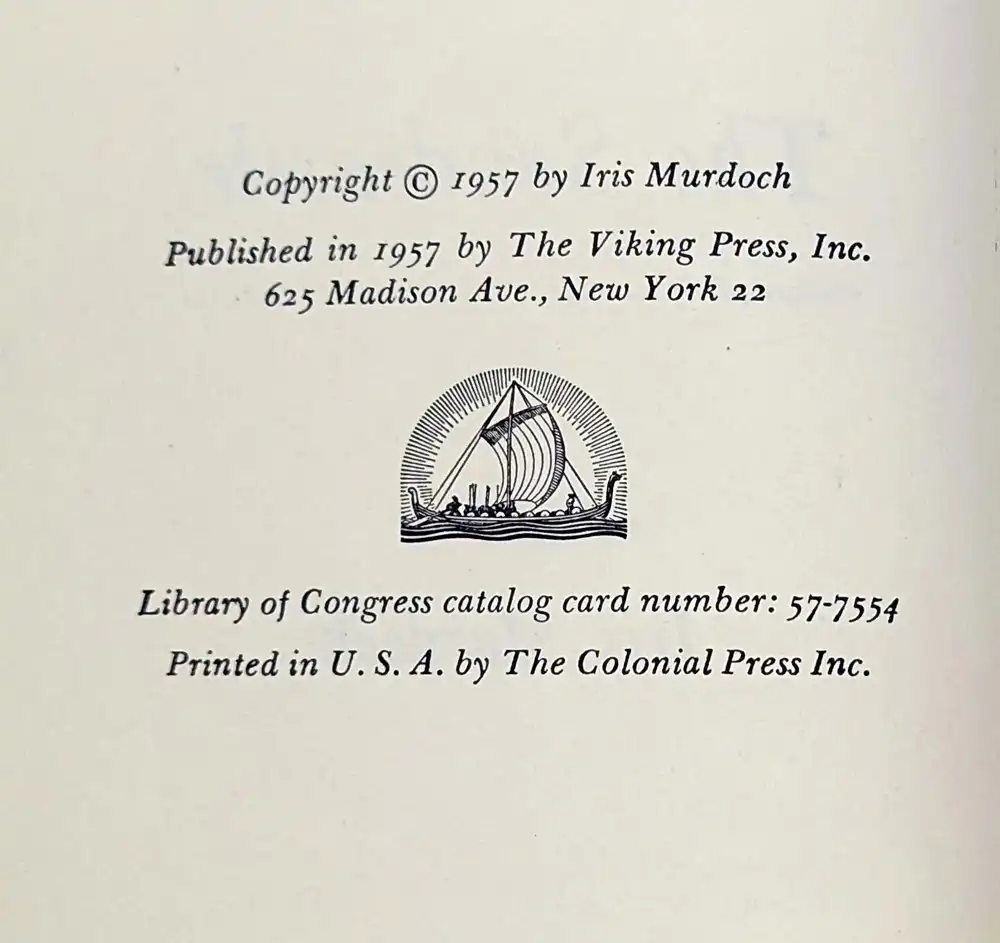
The Sandcastle is Iris Murdoch’s third novel, first published in London by Chatto & Windus in 1957. The book is dedicated to Murdoch’s husband, John Bayley. Set at St. Bride’s, described as “a sound and reputable public school of the second class” not far from London, the novel centers on William Mor, a middle-ranking schoolmaster in his forties whose life is unsettled by the arrival of Rain Carter, a young painter commissioned to portray the retired headmaster, Demoyte. Mor, married for some twenty years to Nan and father to two nearly grown children, falls into a reluctant love with Rain, and she with him, forcing him to confront the gap between the authority he appears to possess and the indecision that actually governs him . He despises the school’s imitation Gothic pretensions yet continues teaching there; he wants to stand for Parliament as a Labour candidate but blames his hesitation on his wife’s hostility rather than admit his own paralysis.
A contemporary review in The New York Times praised the novel as a “tragic comedy,” observing that Murdoch had shown in her first two books a gift for comedy and tragedy separately, and here demonstrated mastery of both together, weaving a dozen strikingly different characters into a tight net of devices and desires. The review also noted the novel’s classical structure, with its participants enduring episodes of tears and laughter while bystanders cannot easily tell where one leaves off and the other begins. As an early work by a future Booker Prize winner, The Sandcastle captures Murdoch’s characteristic concern with moral weakness, romantic illusion, and the quiet damage wrought by indecision.
Also available by Iris Murdoch: