George Orwell: The Collector’s Guide to First Editions, Rare and Collectible Books
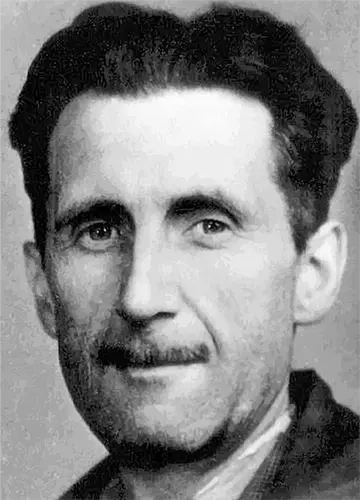
Early Life and the Burden of Empire
Eric Arthur Blair was born on June 25, 1903, in Motihari, Bengal, then part of British India. His father was a minor colonial official in the Opium Department, a detail Orwell would later describe with characteristic discomfort. He was sent to England at the age of one, raised by his mother and sisters, and saw his father only on brief visits. He attended St. Cyprian’s, a brutal preparatory school where he was first exposed to the casual cruelties of the English class system. He won a scholarship to Eton College, where he studied classics but distinguished himself as a quiet, bookish outsider rather than an athlete or socialite. Instead of attending university, as his background would have predicted, Orwell joined the Indian Imperial Police in 1922 and was posted to Burma, then a colony of the British Empire. He served for five years, rising to the rank of assistant district superintendent. The experience transformed him. He witnessed the violence, racism, and hypocrisy of empire firsthand. He shot an elephant—an incident he later turned into one of his most famous essays—and he learned to hate the system he served. In 1927, he resigned and returned to England determined to become a writer.
Down and Out in Two Continents
Orwell’s first act as a writer was to disappear. He wanted to understand poverty from the inside. He dressed in ragged clothes, moved into a cheap boarding house in London, and then traveled to Paris, where he worked as a dishwasher in luxury hotels. He kept detailed notes, and the result was Down and Out in Paris and London (1933), a memoir of hunger, degradation, and the dignity of the poor. He published it under the pseudonym George Orwell (the name derived from the River Orwell in Suffolk) to avoid embarrassing his family. The book was praised for its honesty and its refusal to sentimentalize poverty. He followed it with Burmese Days (1934), a scathing novel about colonial life, and then A Clergyman’s Daughter (1935) and Keep the Aspidistra Flying (1936), both critiques of the English class system.
The Road to Wigan Pier and Spain
In 1936, Orwell was commissioned by a left-wing publisher to investigate poverty in the industrial north of England. He lived among coal miners, documented their living conditions, and produced The Road to Wigan Pier (1937), a work that is part journalism, part autobiography, and part political manifesto. The first half describes the physical squalor of the mining towns. The second half explains why Orwell, a man of privilege, became a socialist. The same year, he married Eileen O’Shaughnessy and traveled to Spain to report on the Spanish Civil War. He joined the Workers’ Party of Marxist Unification (POUM), a small anti-Stalinist militia, and fought on the Aragon front. In 1937, he was shot through the neck by a sniper, an inch from his jugular vein. While recovering, he watched as Stalin’s secret police turned on his fellow socialists, jailing and murdering anti-Stalinist leftists. The experience shattered his remaining illusions about Soviet communism.
Animal Farm and the Cold War
Orwell’s account of Spain, Homage to Catalonia (1938), was largely ignored. He returned to England, wrote several unsuccessful novels, and struggled with tuberculosis. During World War II, he worked for the BBC producing propaganda broadcasts for India. He grew increasingly frustrated with wartime censorship and left-wing intellectuals who defended Stalin. In 1944, he completed Animal Farm, a fable about a revolution that turns into a dictatorship. Every publisher rejected it, some because they feared offending the Soviet Union, others because they considered it unsellable. When it was finally published in 1945, Animal Farm became an international sensation. Orwell was suddenly famous at forty-two. But his health was failing.
Nineteen Eighty-Four and the Language of Tyranny
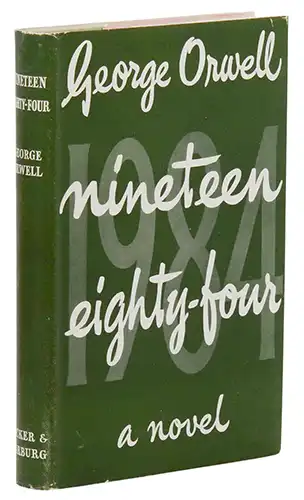
Orwell spent the last years of his life on the Scottish island of Jura, writing Nineteen Eighty-Four (1949) in a remote farmhouse with no electricity or running water. The novel introduced concepts that have entered the global vocabulary: Big Brother, thought police, doublethink, Newspeak, Room 101. It is a vision of totalitarianism perfected—not merely the brutality of the gulag, but the destruction of language, memory, and truth itself. Orwell died of a lung hemorrhage on January 21, 1950, in a London hospital, less than a year after the novel was published. He was forty-six years old.
Influence and the Orwellian Legacy
Orwell’s influence is immeasurable. He gave the English language the adjective “Orwellian” to describe surveillance, propaganda, and the manipulation of truth. His essays, particularly “Politics and the English Language,” remain required reading for any writer who cares about clarity and honesty. His insistence on plain, direct prose influenced generations of journalists and essayists. And his novels have become warning lights for the dangers of totalitarianism, equally relevant under Stalin, Mao, and every subsequent regime that has traded in lies. George Orwell was not a comfortable figure. He was prickly, judgmental, and often wrong in his predictions. But he was honest. He saw what others refused to see. And he wrote it down. endures not as a prophecy of inevitable doom, but as a permanent call to vigilance, a reminder that the defense of truth and freedom begins with the words we choose to use.
George Orwell – First Editions Identification Guide
A Complete Bibliography of George Orwell: Novels, Rare Books & First Editions
| Year | Title | Publisher | First edition/Printing Identification Points |
|---|---|---|---|
| 1933 | Down and Out in Paris and London | London: Victor Gollancz Ltd., 1933 | Black calico-textured cloth on boards. Yellow Dust jacket (8s/6d). Published 9 January 1933. 1500 copies printed. ALSO: 1933. Second (500 copies) & Third impression (1000 copies) were issued later January 1933. "First published January 1933 | Second impression January 1933 | Third impression January 1933." stated on © page. ALSO: Harper & Brothers Publishers, NY, 1933. First American edition. Pale purple calico-textured cloth on boards. Pale green Dust jacket ($2.50). "No. 2414" at foot of front flap and "No. 2413." at foot of rear flap. Published 30 June 1933. 1750 copies printed. |
| 1934 | Burmese Days | Harper & Brothers Publishers, NY, 1934 | Orange calico grain cloth on boards. Dull yellow and off white floral swirl endpapers.Yellow Dust jacket ($2.50). First American edition, precedded the UK edition a year. "FIRST EDITION | I-I" stated on © page. Published 25 October 1934. 2000 copies printed. ALSO: Second US impression, 1934. "SECOND EDITION | K-I" stated on © page. ALSO: London: Victor Gollancz Ltd., 1935. First English edition. Black calico textured cloth on boards. Yellow Dust jacket, with Clergyman's Daughter reviews on front/back flap (7s/6d). Published 24 June 1935. 1500 copies printed. Note: There was a second printing of 500 copies. |
| 1935 | A Clergyman's Daughter | London: Victor Gollancz Ltd., 1935 | Black calico-textured cloth on boards. Front and back cover plain. Yellow Dust jacket with excerpt reviews for Down and out in Paris and London (7s/6d). Misprint on p. 188: "Blask Mask" for "Black Mask"". Published 11 March 1935. 2000 copies printed. ALSO: Harper & Brothers Publishers, NY, 1936. First American edition. Blue calico textured cloth on boards.. Cream Dust jacket, printed in pink & black on front cover ($2.50). Error on the spine being stamped "The Clergyman’s Daughter". Published 17 August 1936. 1000 copies printed. |
| 1936 | Keep the Aspidistra Flying | London: Victor Gollancz Ltd., 1936 | Blue calico textured cloth on boards. Yellow Dust jacket(7s/6d). Published 20 April 1936. 3000 copies printed. ALSO: Harcourt, Brace and Company, [1956]. First American edition. Green calico textured cloth on boards. Cream Dust jacket ($3.75). "FIRST AMERICAN EDITION, 1956" stated on © page. Published January 1956. |
| 1937 | The Road to Wigan Pier | London: Victor Gollancz Ltd., 1937 | Limp orange cloth. Left Book Club Edition (Not for Sale to the Public). Two variants:, priory as listed: (A) 200 copies were bound without the foreword. (B) Bound with foreword. Note: In some copies the illustrations are placed in the wrong order, 1—16 following 17—32. priority undetermined. 44,150 copies printed. Yellow Dust jacket (2s/6d). ALSO: London: Victor Gollancz Ltd., 1937. First English trade edition. Blue calico textured cloth on boards. Yellow Dust jacket (10s/6d). Published 8 March 1937. 2150 copies printed. Notes: This is really only a reissue of the first edition, without the foreword, with a new title page, and in a variant binding.ALSO: London: Victor Gollancz Ltd., 1937. Limp orange cloth. Reissue of Part 1 of the Left Book Club Edition. "PART ONE ONLY" stated on the front cover. (1s). 890 copies printed. ALSO: Harcourt, Brace and Company, [1958]. First American edition. Blue calico-textured cloth on boards. Off white Dust jacket. |
| 1938 | Homage to Catalonia | London: Secker and Warburg, 1938 | Green calico textured cloth on boards. Cream Dust jacket (10s/6d). "First Published April 1938" stated on © page. Published 25 April 1938. 1500 copies printed. Misprint on p. 236, line 3 "where a comma is omitted after "In fact". ALSO: Harcourt, Brace and Company, [1952. First American edition. Yellow calico textured cloth on boards.. Cream Dust jacket, front and spine speckled green ($3.50). "first American edition" stated on © page. Published May 1952. 4000 copies printed. |
| 1939 | Coming Up for Air | London: Victor Gollancz Ltd., 1939 | Blue calico textured cloth on boards. Yellow Dust jacket(7s/6d). Published 12 June 1939. 2000 copies printed. ALSO: Harcourt, Brace and Company, [1950]. First American edition. Grey calico textured cloth on boards. Cream Dust jacket, printed in green and blue ($3.95). "COPYRIGHT, 1950, BY | HARCOURT, BRACE AND COMPANY, INC" stated on © page. Published 19 January 1950. 8000 copies printed. |
| 1941 | The Lion and the Unicorn | London: Secker and Warburg, 1941 | Mottled grey linen grain cloth on boards. Cream and blue Dust jacket (2s). "First published 1941" stated on © page. Published 19 February 1941. 5000 copies printed. |
| 1945 | Animal Farm | London: Secker and Warburg, 1945 | Green calico textured cloth on boards. Dust jacket printed in grey & green (6s). "First Published May 1945" stated on © page. Published 17 August 1945. 4500 copies printed. Note: There were two reprints in August, 1945 (10000 copies) & October 1946 (6000 copes) with "Reprinted [DATE]" stated on © page. ALSO: Harcourt, Brace and Company, [1946]. Black calico textured cloth on boards. Black Dust jacket ($1.75). First American edition. "first American edition" stated on © page. Published 26 August 1946. 50,000 copies printed. ALSO: Reginald Saunders, Toronto, [1946]. Fist Canadian edition. Red calico textured cloth on boards. Black Dust jacket ($2.00). "first Canadian edition" stated on © page. Published November 1946. 2000 copies printed. |
| 1949 | Nineteen Eighty-Four | London: Secker and Warburg, 1949 | Green calico-textured cloth on boards. Two variants Dust jacket: red and green(10s). "First published 1949" stated on © page. Published 8 June 1949. 25,575 copies printed. ALSO: Harcourt, Brace and Company, [1949]. First American edition. Grey calico grain cloth on boards. Two variants Dust jacket, blue & red ($3.00). "first American edition" stated on © page. Published 13 June 1949. 20,000 copies printed. ALSO: Book of the Month Club reissue. Same binding as First American edition. No mention of "first American edition" on © page. Dust jacket has "Book of the Month Club" at foot of the front flap. Over 190,000pp. ALSO: S.J. Reginald Saunders Ltd., Toronto, [1949]. First Canadian edition. Same binding as First American edition. "first Canadian edition" stated on © page. 15,000 copies printed. |
George Orwell – First Printing Dust Jackets Identification Guide
Gallery of First edition Dust Jackets of Orwell’s works.


Reference:
- Gillian Fenwick: George Orwell, A Bibliography