Katsuhiro Otomo: The Visionary Architect of Modern Manga & Anime
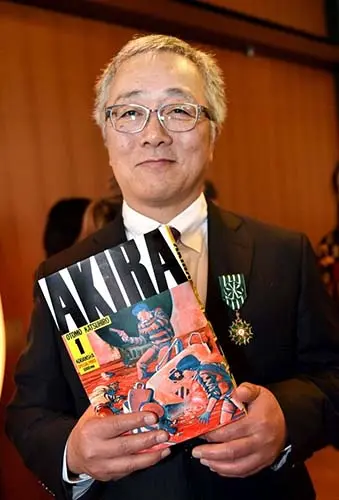
In the landscape of modern Japanese visual storytelling, few figures tower as imposingly as Katsuhiro Otomo. Born in 1954 in the rural Miyagi Prefecture, Otomo’s journey from a small-town youth enamored with Western cinema and manga to a globally revered auteur is a testament to a singular, meticulous vision. His work, most famously the cyberpunk epic Akira, did not merely entertain; it fundamentally reshaped the ambitions of manga and anime, forging a new path for countless creators who followed.
Otomo’s early career in the 1970s saw him contributing to Action magazine, where he quickly distinguished himself from the mainstream shōnen traditions. Influenced less by contemporary manga and more by the detailed, kinetic realism of French comic artists like Jean “Moebius” Giraud and the immersive, often dystopian worlds of Western science fiction cinema, Otomo developed a unique style. His early short stories like “Fireball” and serials such as “Domu: A Child’s Dream“ showcased a groundbreaking approach. He employed cinematic framing, obsessive architectural and mechanical detail, and a willingness to explore dark, psychological themes, all rendered with a stunning, almost photorealistic sense of place. This was a departure from the more expressionistic or simplified styles prevalent in manga at the time, establishing Otomo as a pioneer of visual verisimilitude.
This meticulous world-building reached its apotheosis in Akira, serialized from 1982 to 1990. The sprawling narrative of Neo-Tokyo, a metropolis of staggering scale and socio-political decay, became a benchmark. Otomo’s panels were not just illustrations; they were blueprints for a living, breathing, and crumbling city. His influence here is monumental. Mangaka like Tsutomu Nihei (Blame!), with his endless, biomechanical megastructures, and Masamune Shirow (Ghost in the Shell), in his fusion of tech and philosophy, directly channel Otomo’s legacy of dense, immersive sci-fi worlds. Similarly, later creators of “hard” sci-fi and cyberpunk manga, such as Yukito Kishiro (Battle Angel Alita), owe a clear debt to the detailed, physics-conscious aesthetic and gritty urban landscapes Otomo perfected.
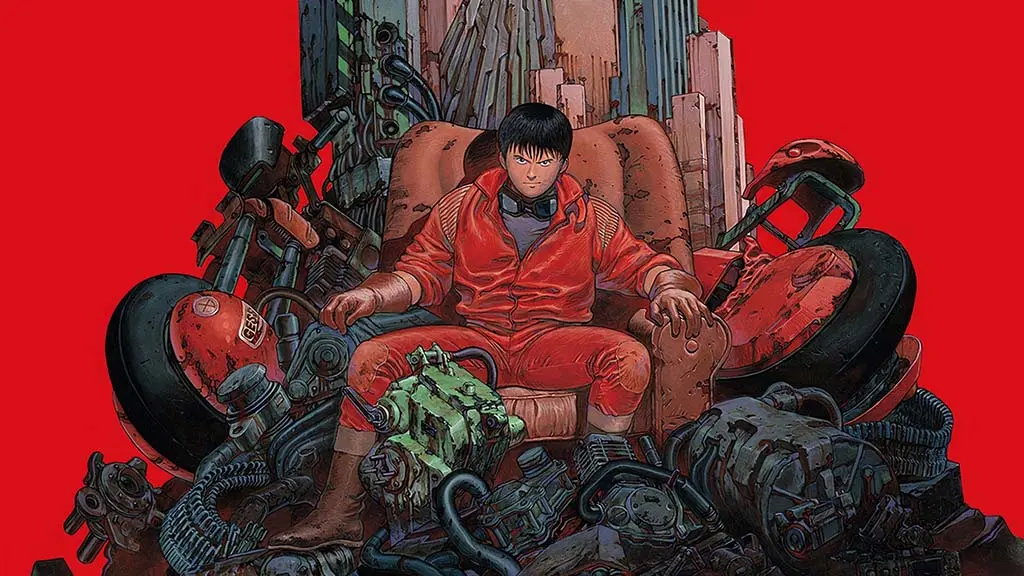
However, Otomo’s influence exploded beyond the page with the 1988 anime film adaptation of Akira, which he personally directed. The film was a seismic event. Its unprecedented budget, revolutionary cel animation, and painstaking attention to detail—from the shimmering rain-slicked streets to the iconic bike slide—set a new gold standard for the medium. It proved anime could be a serious, complex, and visually spectacular art form for an international adult audience. This directly empowered the next generation of animation visionaries. The films of Satoshi Kon (Perfect Blue), with their psychological depth and seamless transitions, and Mamoru Oshii (Ghost in the Shell), with his philosophical pacing and political themes, were made possible by the path Otomo cleared. Directors like Hideaki Anno (Neon Genesis Evangelion) also engaged with Otomo’s legacy, both drawing from and reacting against the cold, precise realism of Akira with a more emotionally raw and symbolic style.
Conversely, while Otomo was shaped more by European comics and film, his later work shows a fascinating cross-pollination with his Japanese peers. His 1995 anthology film Memories features a segment, Magnetic Rose, co-written by Satoshi Kon, blending Otomo’s technical mastery with Kon’s signature narrative surrealism. Furthermore, in his post-Akira manga like Steamboy (a Victorian-era steampunk saga) and the samurai tale Sanctuary (co-written by Buronson), Otomo continued to prioritize exhaustive historical and technical research, influencing a broader spectrum of genre manga toward greater authenticity.
Katsuhiro Otomo’s legacy is that of an architect. He constructed worlds of such tangible detail and narrative weight that they became foundational structures for the imagination of others. He dissolved the boundaries between manga panel and film storyboard, insisting on a directorial eye in static images and an artist’s detail in moving ones. By demanding that manga and anime could be as complex, visually sophisticated, and thematically challenging as any great novel or film, he empowered a legion of creators to build upon the foundations he laid. From the decaying concrete of Neo-Tokyo to the intricate brass of his steampunk engines, Otomo’s work remains the bedrock upon which much of modern sci-fi manga and anime is built.
Katsuhiro Otomo – Bibliography
- Fireball (1979)
- Otomo’s early short manga work, already showing his interest in youth culture, chaos, and social tension that would define his later career.
- Domu: A Child’s Dream (Dōmu: Yume no Naka) (1980–1981)
- A psychological horror manga about supernatural violence in a housing complex. This is widely regarded as Otomo’s artistic breakthrough and directly paved the way for Akira.
- Akira (1982–1990)
- Otomo’s most famous work and a landmark of global manga. Set in post-apocalyptic Neo-Tokyo, Akira blends political unrest, psychic powers, and spectacular destruction, redefining what manga could achieve both narratively and visually.
- Short Peace (1980s, various years)
- A collection title often used for Otomo’s short manga and concept pieces from different periods, highlighting his range from satire to science fiction.
- Good Morning, Althea (1982)
- A science-fiction short story centered on memory, identity, and technology, frequently cited in discussions of Otomo’s mature narrative style.
- Legend of the Mother Sarah (Haha wo Tazunete Sanzenri) (1988–1996)
- A post-apocalyptic epic written by Otomo and illustrated by Takumi Nagayasu. Explores motherhood, survival, and religious imagery in a devastated world.
- Orbital Era (2000s)
- A science-fiction project by Otomo that has seen limited publication and remains unfinished, often referenced as an example of his long-gestating ideas.

![Letters Written by Philip Dormer Stanhope, Earl of Chesterfield, to His Son, Philip Stanhope 1775 [2 vols]](https://www.nocloo.com/wp-content/uploads/2026/03/ec-chesterield01-196x300.webp)