
Lectures on Appendicitis and notes on other Subjects by Dr. Robert T. Morris, third edition published in 1899, is a landmark surgical text that captures a critical turning point in medical history: the moment when appendicitis transformed from a mysterious, frequently fatal abdominal malady into a condition understood, diagnosable, and treatable through surgical intervention. Morris, a prominent New York surgeon and professor at the New York Post-Graduate Medical School, wrote these lectures for practicing physicians and advanced students at a time when the very term “appendicitis” was barely a decade old.
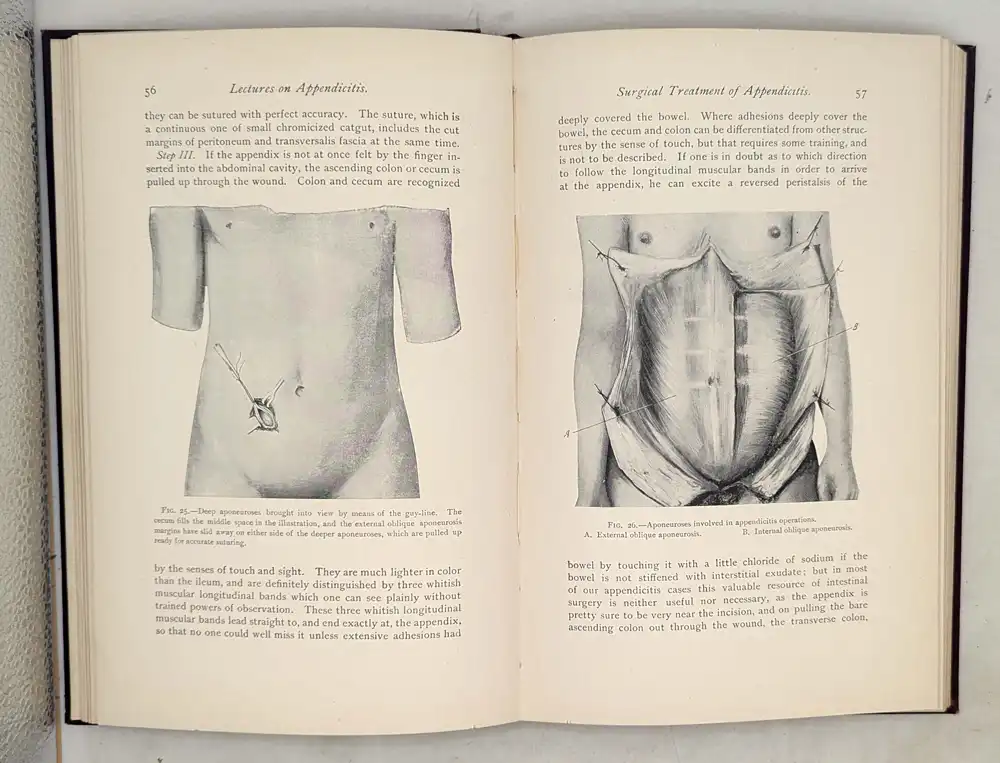
The book is structured as a series of formal lectures, each building upon the last. Early lectures trace the emerging understanding of the vermiform appendix as a vestigial structure prone to inflammation, blockage, and perforation. Morris reviews the anatomy of the right lower quadrant with meticulous attention, providing detailed illustrations of the appendix’s variable positions—retrocecal, pelvic, preileal, and others—each requiring a different surgical approach. He then distinguishes appendicitis from other causes of acute abdominal pain, including typhlitis, peritonitis, intestinal obstruction, and the various “colics” that had previously masked the true diagnosis.
The middle lectures focus on clinical presentation: the characteristic migration of pain from the periumbilical region to McBurney’s point, the patterns of fever and leukocytosis, the significance of nausea and guarding. Morris emphasizes that delayed diagnosis is the enemy, as a perforated appendix releases bacteria into the peritoneal cavity, leading to generalized peritonitis and death—a progression he documents with grim case histories drawn from his own practice.
The final lectures are unabashedly surgical. Morris argues forcefully for early operative intervention, a position still debated at the time against those who favored “medical” treatment with opium, purgatives, and cold packs. He describes incision placement, techniques for locating a buried appendix, ligation of the base, drainage of abscesses, and post-operative nursing care. The third edition includes updates based on Morris’s accumulating experience since the first edition of 1895, including statistical tables showing improved mortality rates with early surgery.
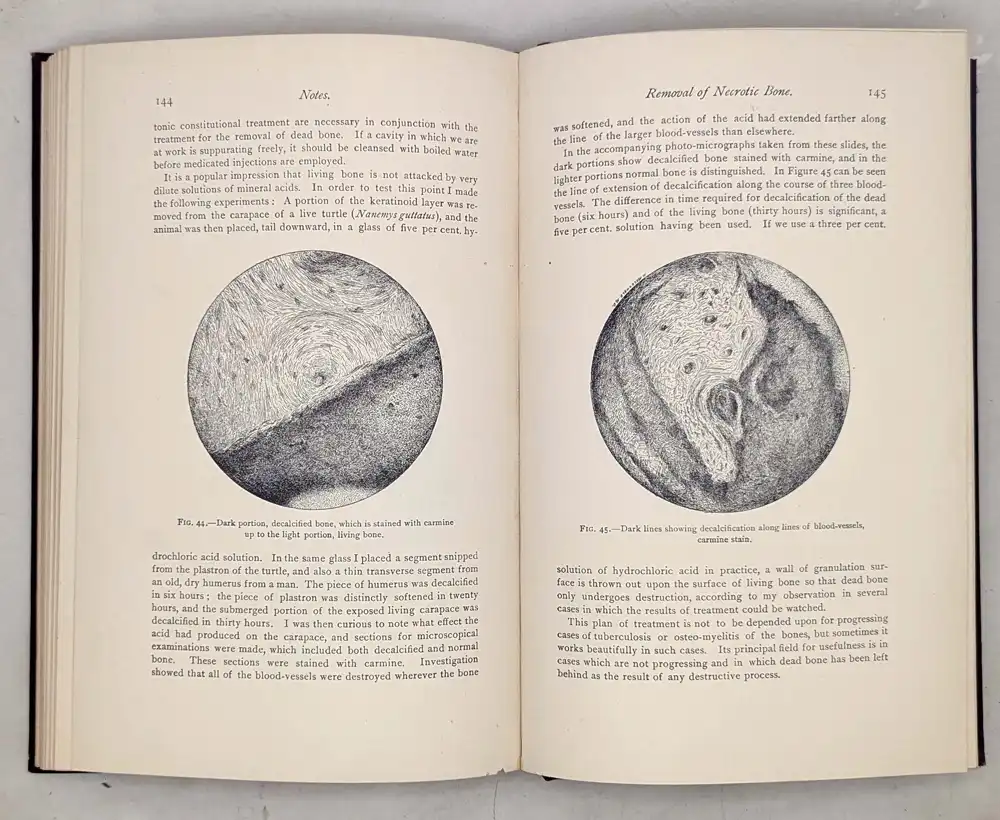
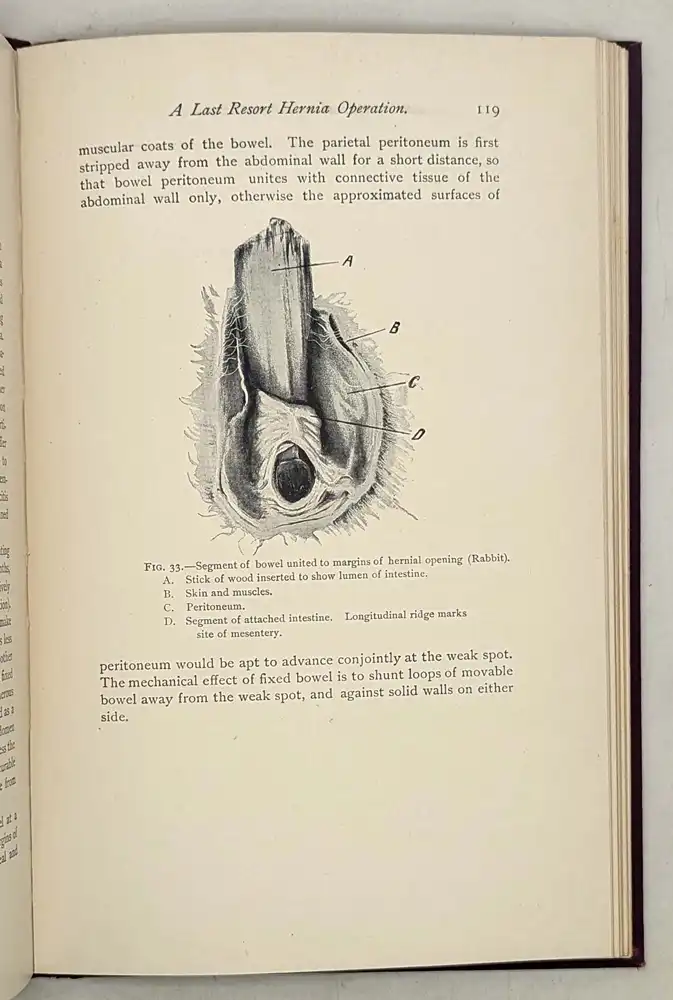
Illustrations include line drawings of anatomical variations, photographs of surgical specimens, and diagrams of operative steps. The text is infused with the confidence of a generation of surgeons who had just learned that they could save lives previously considered lost. Lectures on Appendicitis is thus both a practical manual and a historical artifact, documenting the moment when a common killer was tamed by the scalpel.