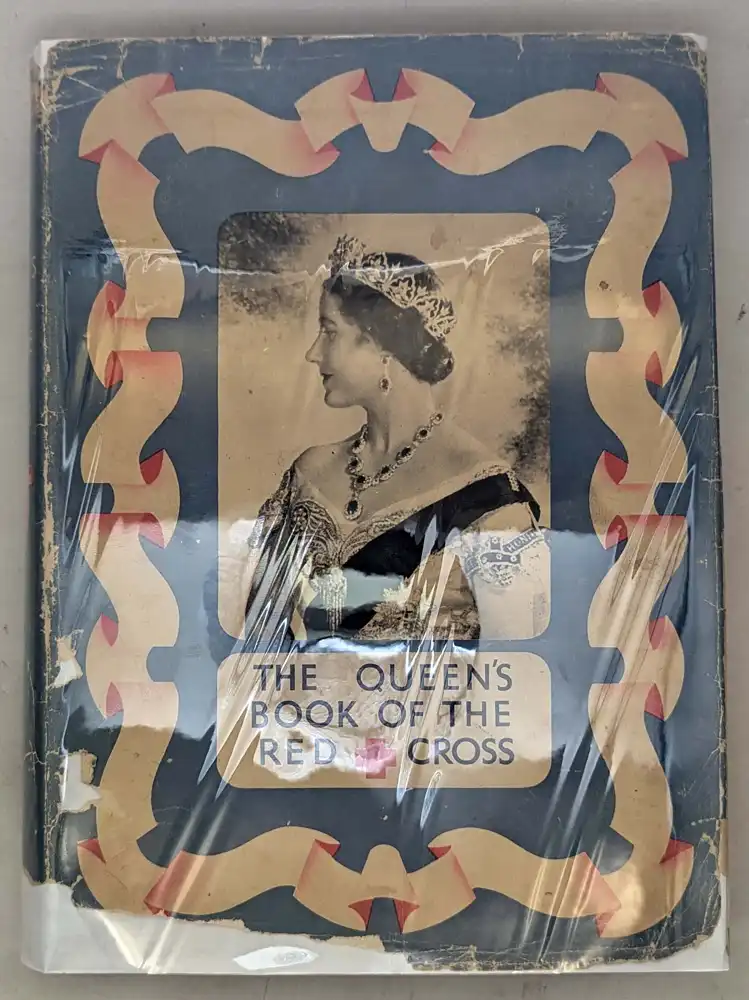
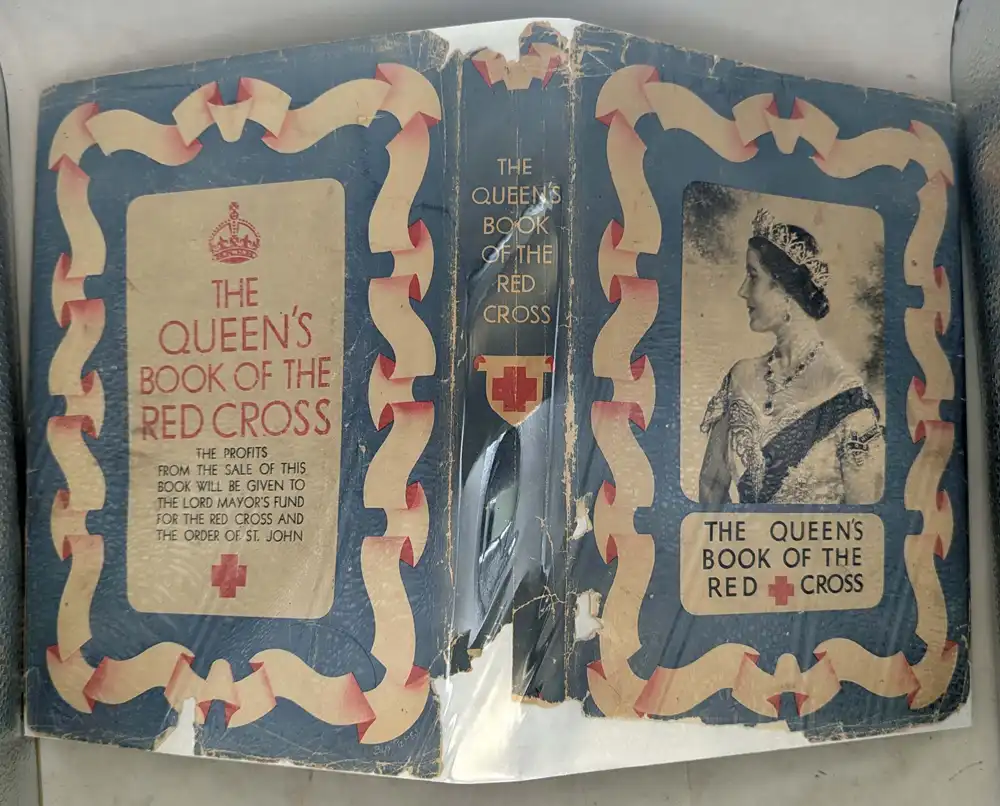
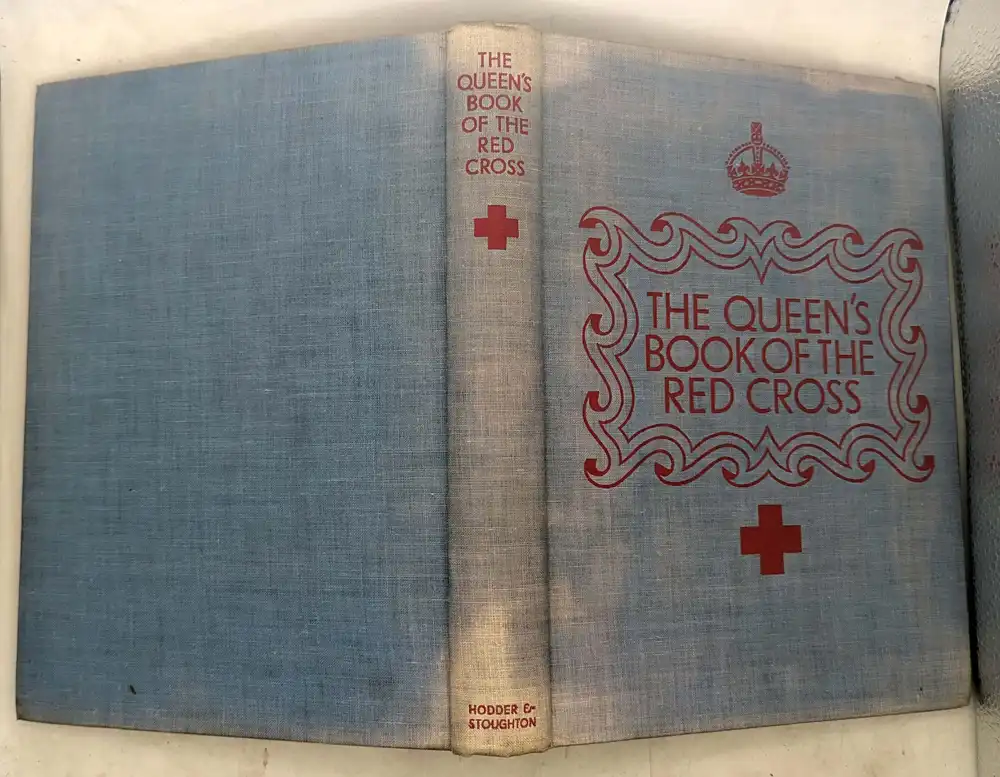
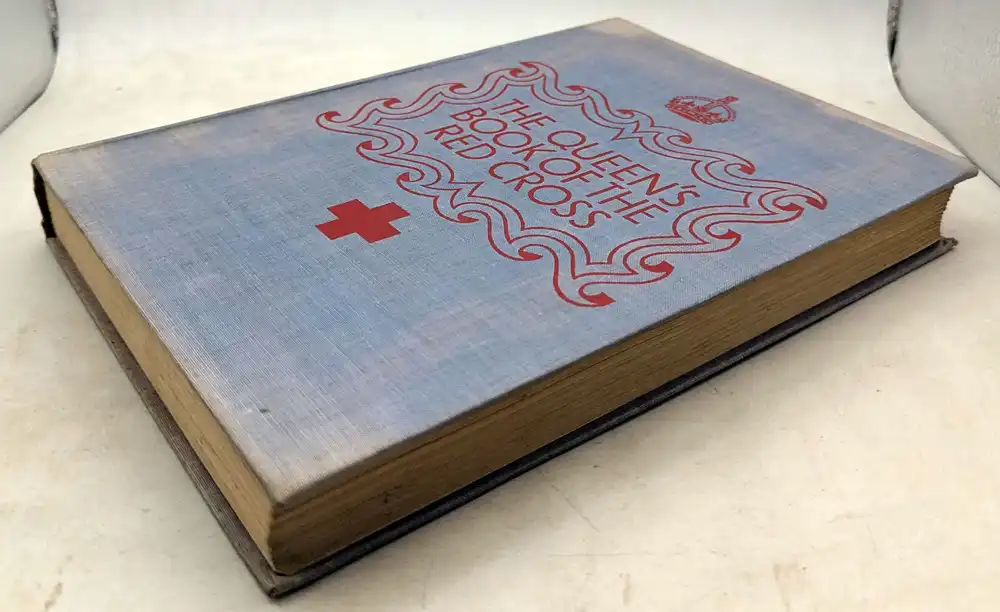
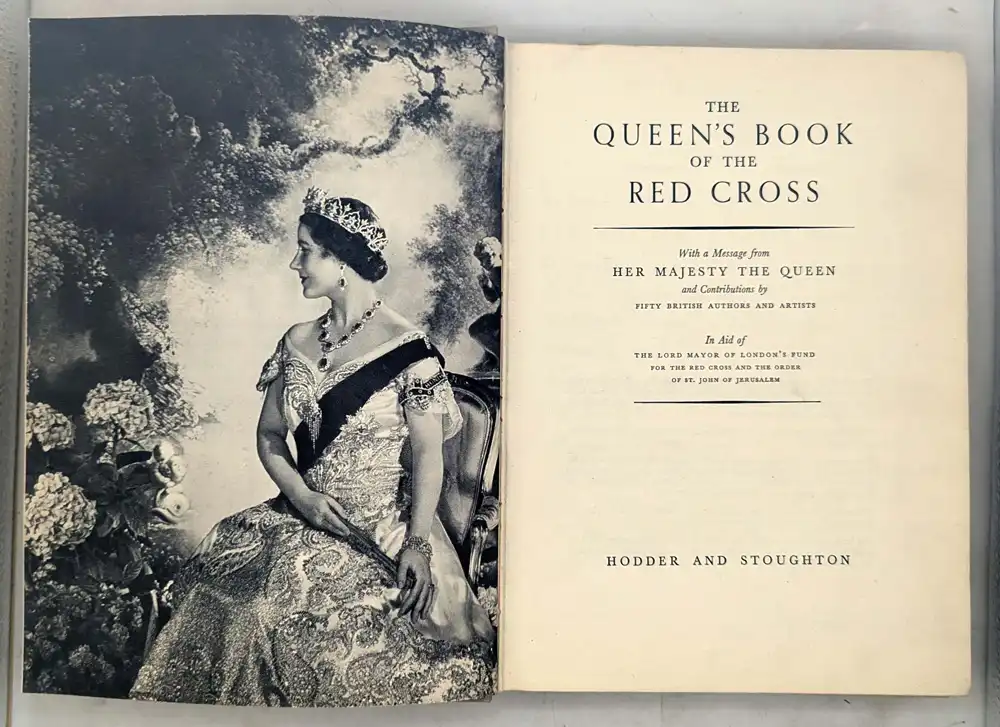
The Queen’s Book of the Red Cross is a remarkable fundraising anthology published in November 1939, at the very outset of the Second World War. Sponsored by Queen Elizabeth, later known as the Queen Mother, the volume was created to support the vital work of the British Red Cross and the Order of St. John of Jerusalem during a time of national crisis. It stands as a testament to the collective spirit of Britain’s literary and artistic elite, who united their talents for the war effort.
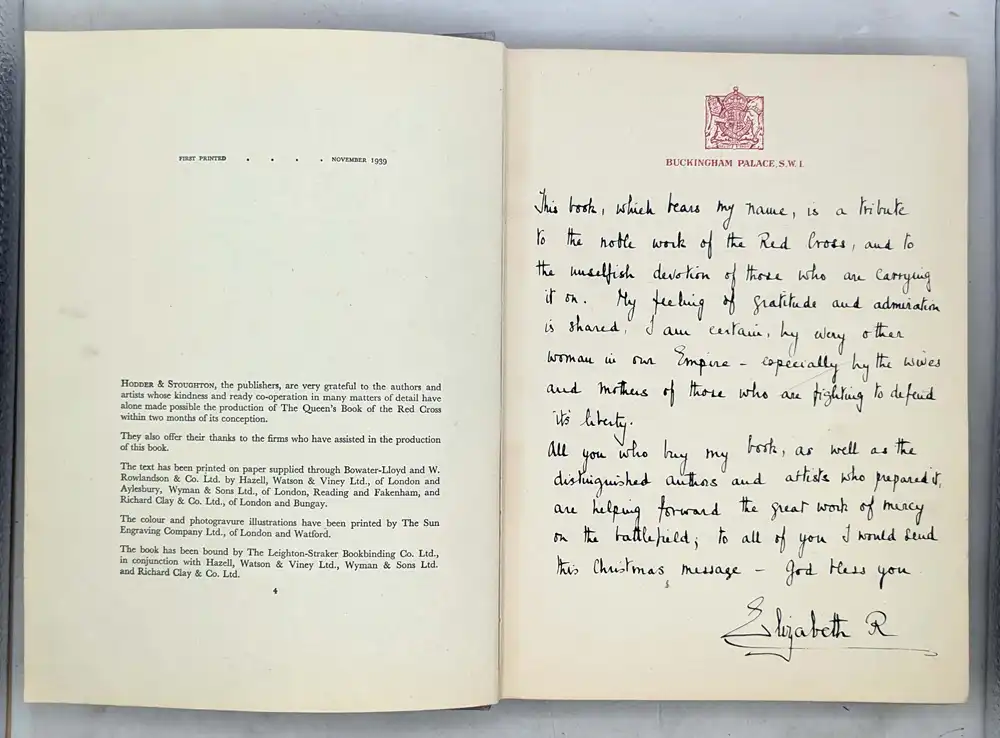
Published by Hodder and Stoughton in London, the book is distinguished by its extraordinary list of fifty contributing authors and artists . The literary contributions are a who’s who of early 20th-century English letters, including a new poem by T.S. Eliot, a story by Daphne du Maurier, a play by A.A. Milne, and works from John Masefield, Walter de la Mare, and Georgette Heyer . The anthology is prefaced with a facsimile reproduction of a personal letter from the Queen herself , adding a deeply personal and royal imprimatur to the project.
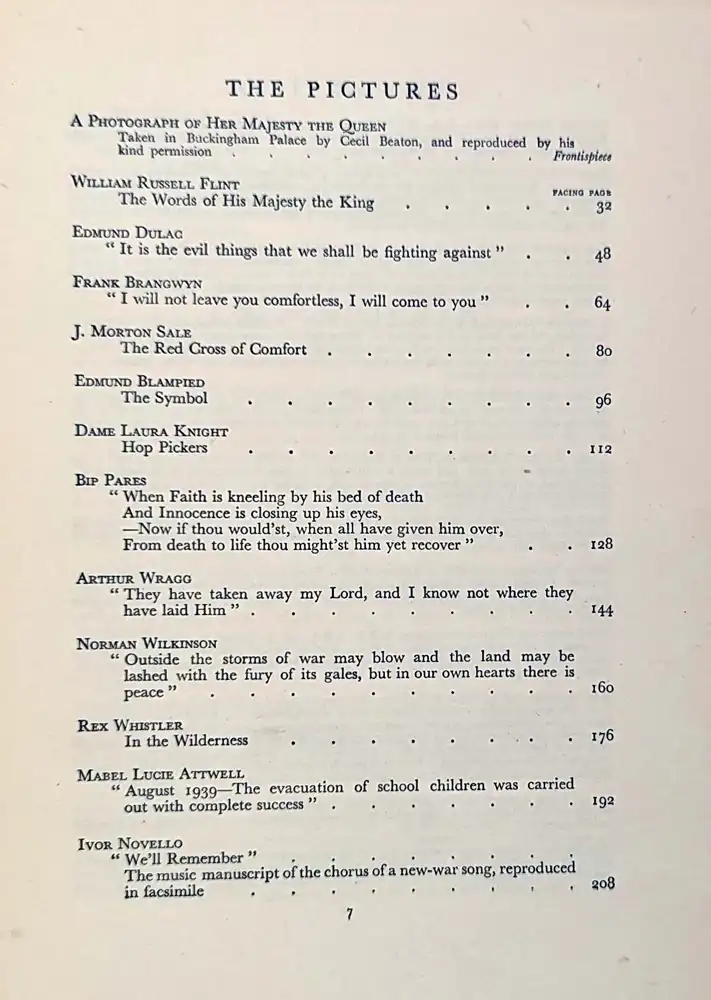
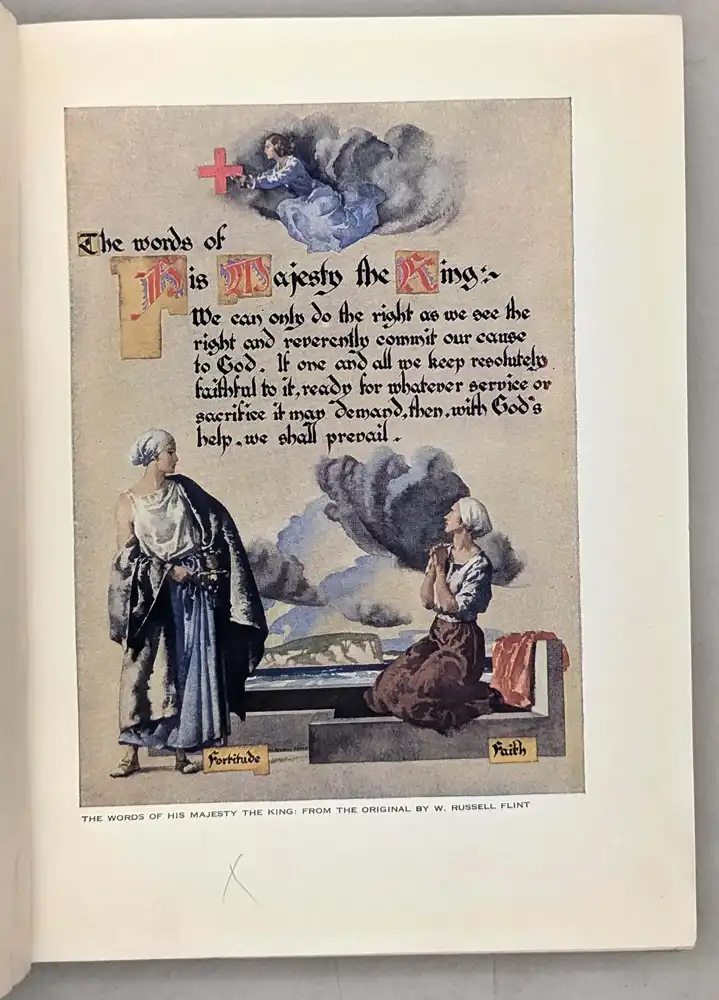
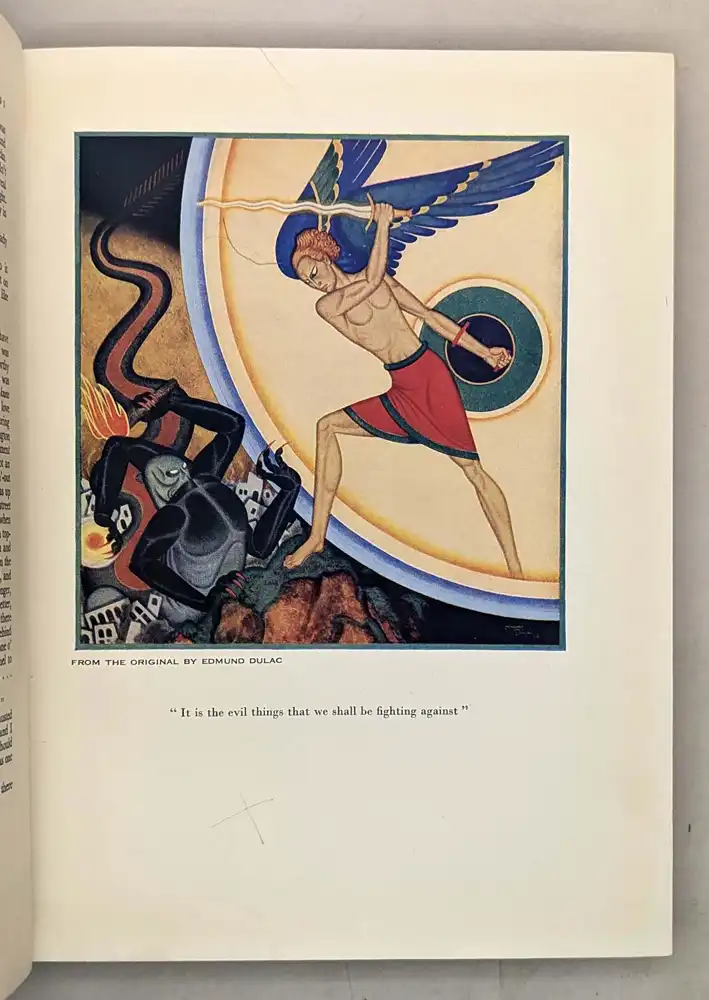
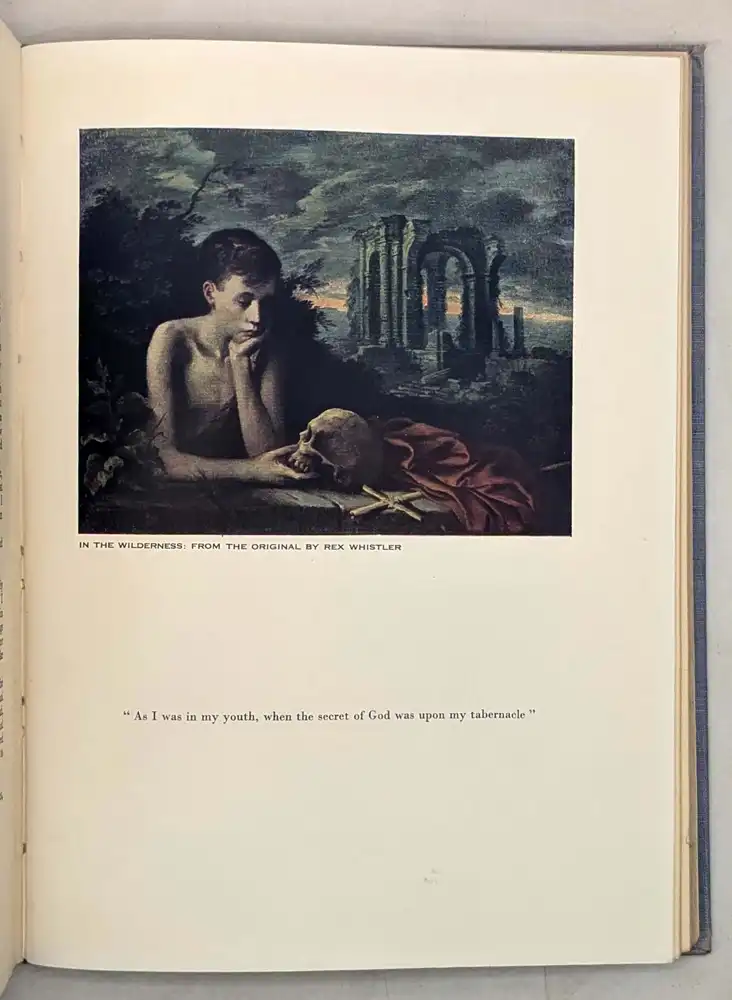
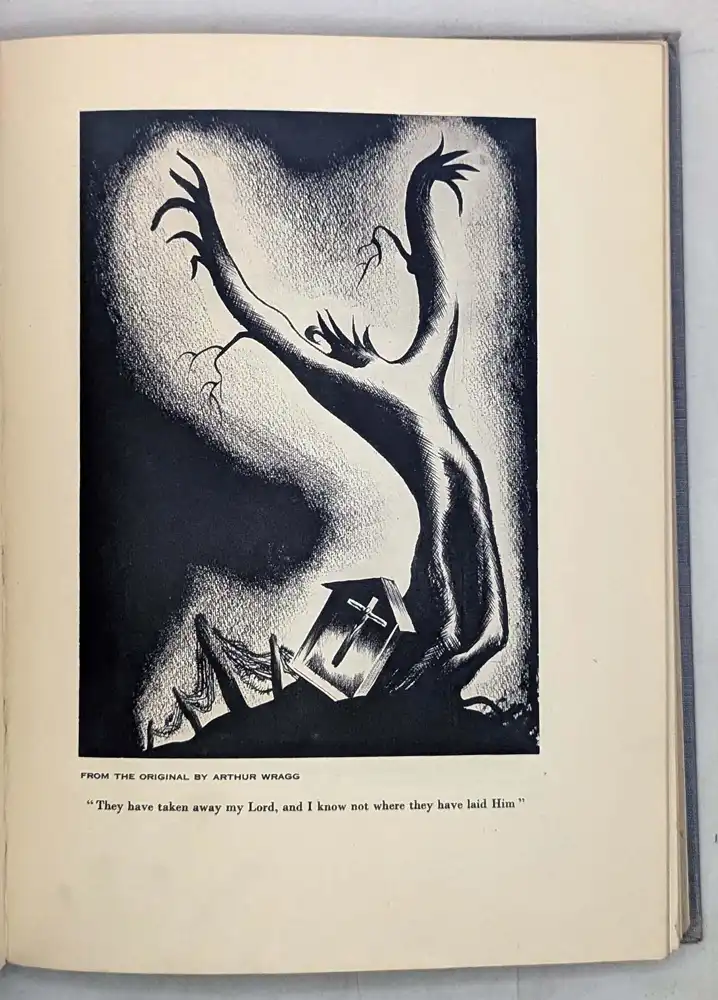
The book is also a showcase for the period’s finest illustrators. Its pages are graced with artwork by renowned figures such as Edmund Dulac, William Russell Flint, and Rex Whistler, alongside a striking frontispiece portrait of the Queen taken by the celebrated photographer Cecil Beaton . The first edition, with its distinctive blue cloth binding, was printed on paper supplied by multiple companies and bound collaboratively by several London bookbinders, reflecting the broad industrial mobilization of the era . A rare and significant object, The Queen’s Book of the Red Cross remains a poignant and beautiful artifact of cultural history, capturing a moment when the arts were pressed into service for a humanitarian cause.