Helen Bannerman: The Unlikely Author of a Controversial Classic
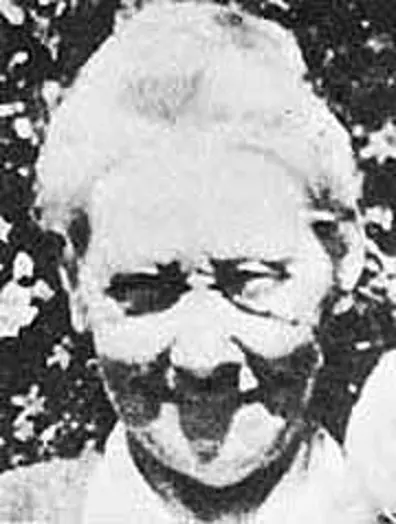
Few children’s authors have achieved such immense popularity with so slender a body of work as Helen Bannerman. Born Helen Brodie Cowan Watson in Edinburgh, Scotland, in 1862, she was the daughter of a minister of the Free Church of Scotland. Her upbringing was solidly middle-class, respectable, and far removed from the tropical landscapes that would later make her famous. Yet it was in the heat of an Indian summer, with no formal training as a writer or illustrator, that she created one of the most beloved—and later most contested—picture books in the English language.
Bannerman’s path to India came through marriage. In 1889, she wed Dr. William Burney Bannerman, a physician and officer in the Indian Medical Service. The couple moved to Madras (now Chennai), where they raised their three children. It was for these children, in fact, that the story of Little Black Sambo was first invented. During a long train journey with her two young daughters, Bannerman found herself without a storybook to entertain them. Drawing on scraps of paper and using a few colored pencils, she improvised a tale about a small South Indian boy, his fine new clothes, and his clever escape from a pack of hungry tigers.
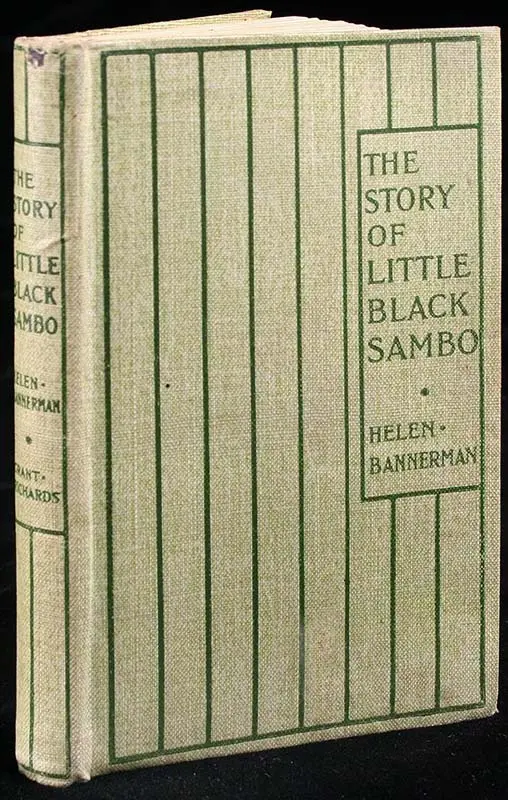
The story was a hit within her family, and in 1899, Bannerman sent the manuscript and her simple illustrations to the London publisher Grant Richards. To her surprise—and perhaps to everyone’s surprise—The Story of Little Black Sambo became an immediate sensation. The book sold tens of thousands of copies in its first year and was reprinted endlessly across the English-speaking world. Children adored the repetitive, cumulative plot: Sambo loses his beautiful red coat, blue trousers, purple shoes, and green umbrella to one tiger after another, only to retrieve them all when the tigers, in a furious argument, chase each other around a tree and melt into a pool of butter. The pancakes Sambo’s mother makes from that butter were, for generations of young readers, the stuff of pure delight.
Helen Bannerman wrote several other stories for children—The Story of Little Black Mingo, The Story of Little Black Quasha, and The Story of Little Black Bobtail, among others—but none achieved the fame (or infamy) of her first. She and her husband returned to Scotland after his retirement, and she died in Edinburgh in 1946 at the age of eighty-four. Today, Bannerman remains a deeply problematic figure: a well-meaning Edwardian mother whose innocent creation was twisted by others into something hurtful. Her original book, in its first edition, is a historical artifact of a vanished world—a world where a Scottish lady in Madras could invent a story for her children without foreseeing the storm it would one day unleash.
Bannerman’s original illustrations were charmingly naive—small watercolors that lacked perspective and anatomical precision but possessed a lively, childlike energy. She never intended the book as a serious depiction of any culture, Indian or African. The characters were simply imaginary figures drawn from her own head, dressed in bright, fanciful clothes. Yet as the book’s fame grew, American publishers began re-illustrating the story, often transforming Sambo and his parents into grotesque caricatures rooted in the worst traditions of minstrelsy. The character’s name, “Sambo,” which had been a common nickname in parts of southern India, took on ugly racial connotations in the United States. By the mid-twentieth century, a book written out of maternal love had become a symbol of racist stereotyping.
Books written and illustrated by Helen Bannerman include:
- Little Black Sambo. First Edition 1899.
- Little Black Sambo (Grant Richards, 1899)
- Little Black Mingo (Nisbet, 1901)
- Little Black Quibba (Nisbet, 1902)
- The Story of Little Degchie-Head (Nisbet, 1903)
- Pat and the Spider (Nisbet, 1904)
- The Story of the Teasing Monkey (Nisbet, 1906)
- The Story of Little Black Quasha (Nisbet, 1908)
- The Story of Little Black Bobtail (Nisbet, 1909),
- Sambo and the Twins (Nisbet, 1937)
- Little White Squibba (Nisbet, 1966).