
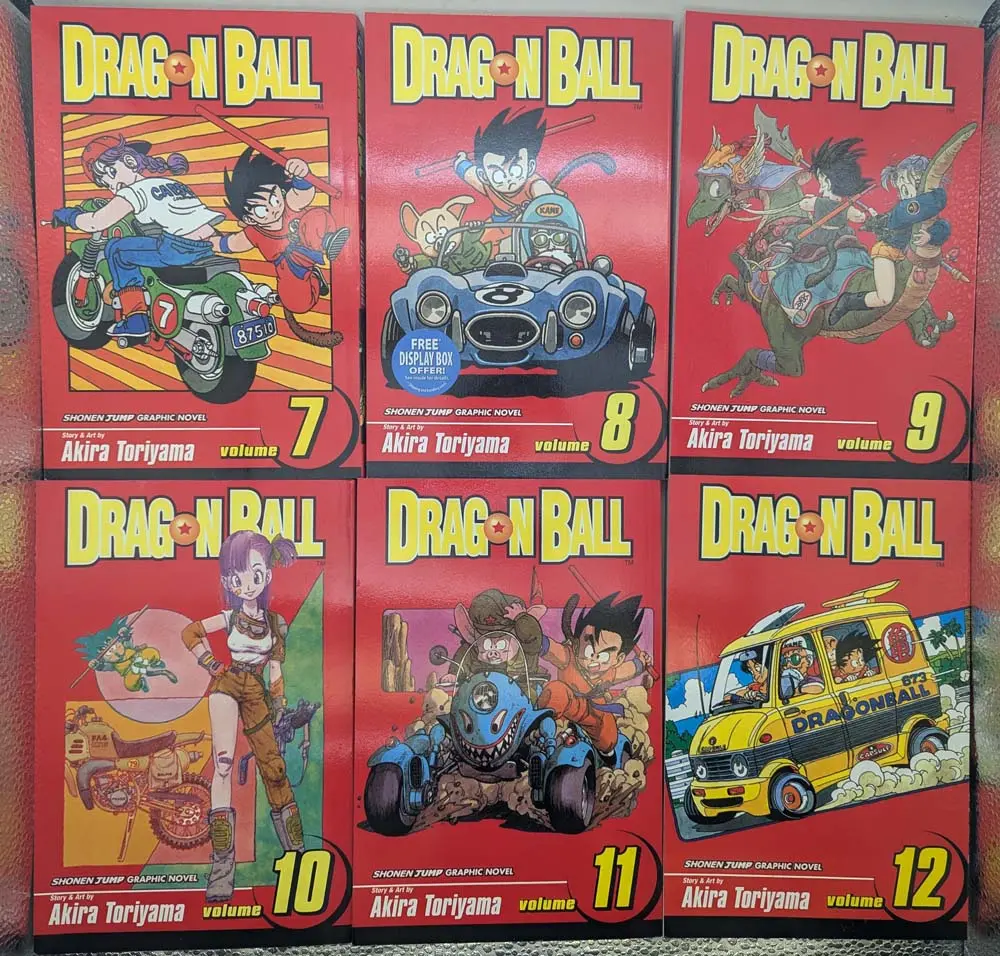

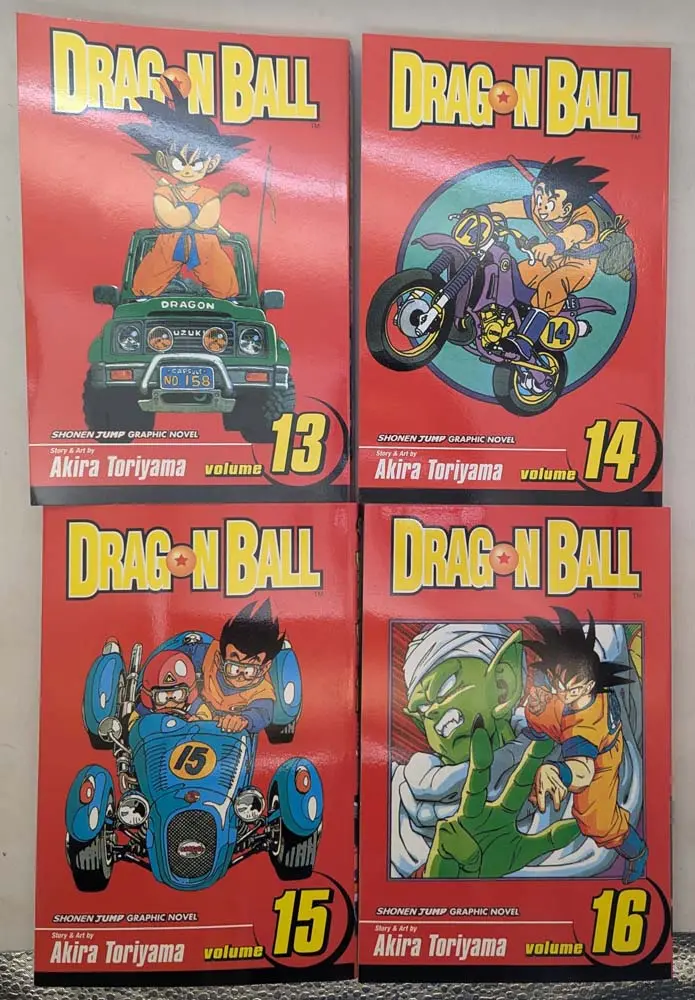

Dragon Ball: A Journey from Whimsical Fantasy to Earth-Shattering Battles
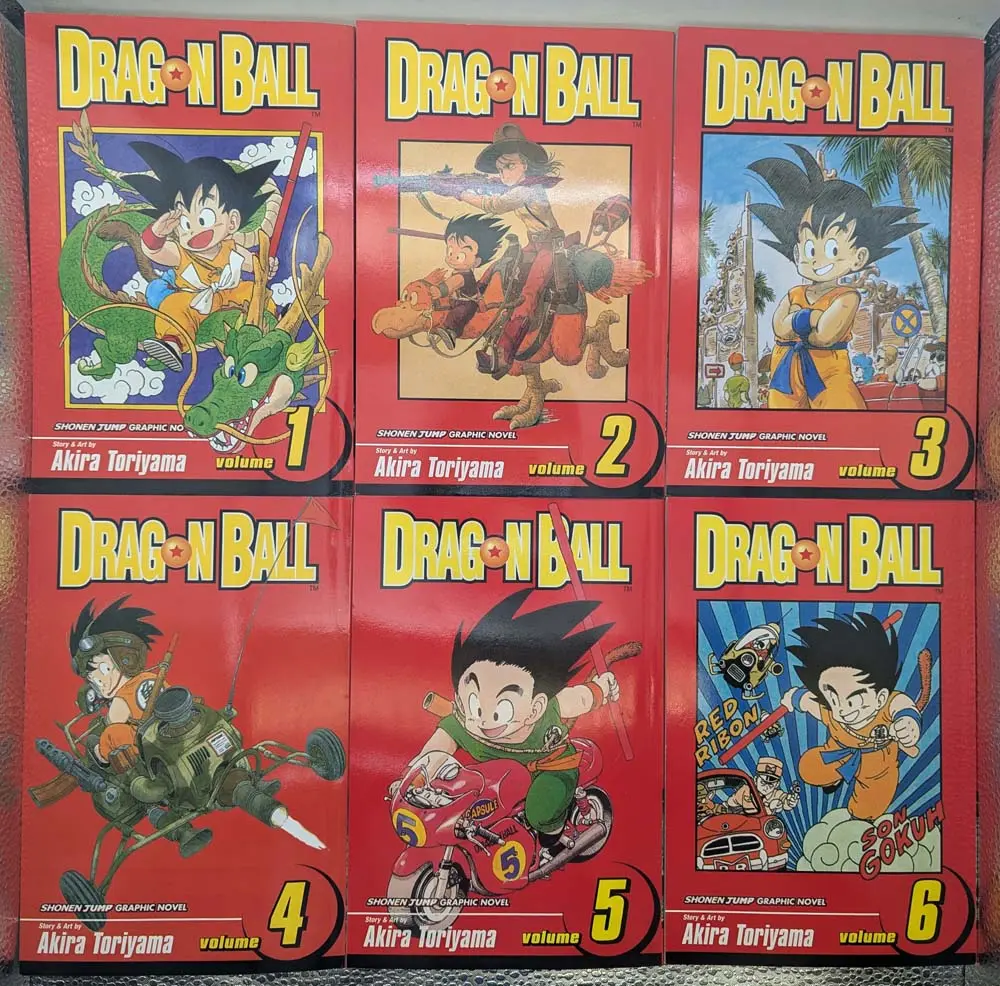
Akira Toriyama’s Dragon Ball is a foundational manga that evolved from a humorous adventure series into the blueprint for the modern battle shonen genre. It follows the lifelong journey of Son Goku, a naive, monkey-tailed boy with superhuman strength, who is recruited by a teenage girl named Bulma to help her find the seven wish-granting Dragon Balls.
The series is distinctly divided into two major arcs. The first, often called the “early Dragon Ball” or “hunt for the Dragon Balls,” is a comedic, episodic adventure inspired by the Chinese novel Journey to the West. Goku travels the world, trains under the eccentric martial arts master Kame-Sen’nin (Master Roshi), and makes lifelong friends and rivals like the desert bandit Yamcha and the stoic monk Krillin. This portion emphasizes adventure, humor, and tournament-style martial arts competitions, where Goku tests his skills.
The second half of the series, popularly known as “Dragon Ball Z” in its anime adaptation, dramatically shifts in tone and scale. It introduces galactic threats, planet-destroying powers, and an epic, serialized narrative. Goku discovers his alien heritage as a Saiyan, a warrior race, and must repeatedly defend Earth from increasingly powerful villains like the galactic tyrant Frieza, the cybernetic Cell, and the magical Majin Buu. The focus becomes intense training, dramatic power-ups (most famously the Super Saiyan transformation), and monumental battles that determine the fate of the universe.
Toriyama’s genius lies in his dynamic, clean art style, clever humor, and brilliantly paced fight choreography. Dragon Ball established core shonen tropes—the power-seeking hero, tournament arcs, escalating power levels, and transformative rage—while maintaining a heart centered on friendship, perseverance, and the endless pursuit of becoming stronger. Its influence on global pop culture and the manga industry is immeasurable.