
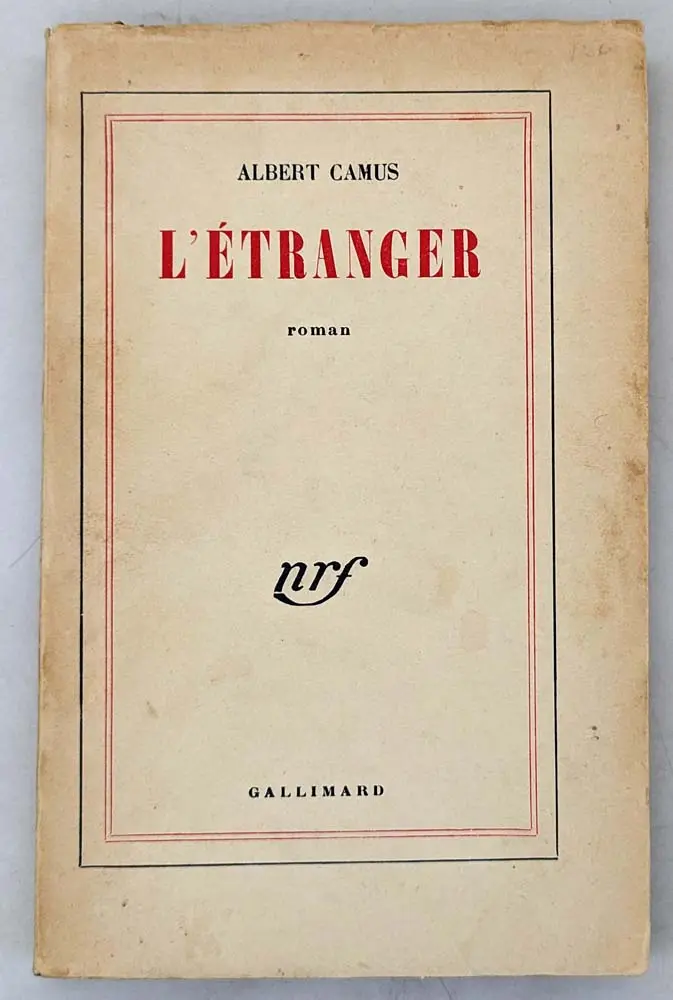
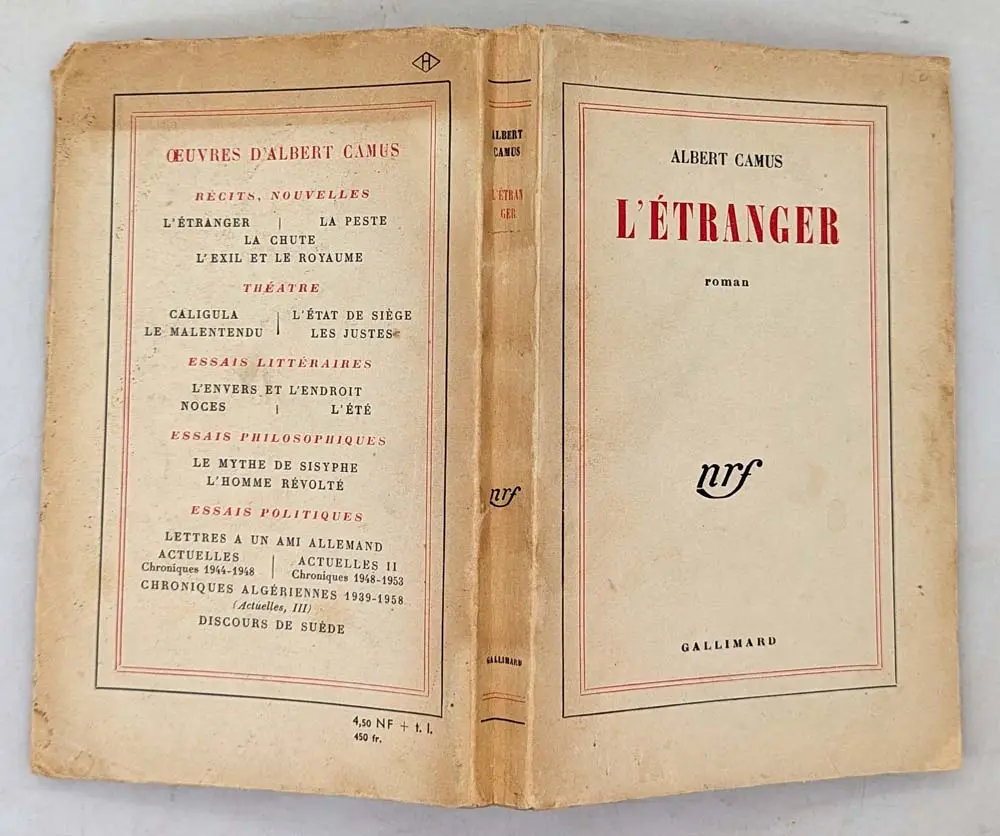

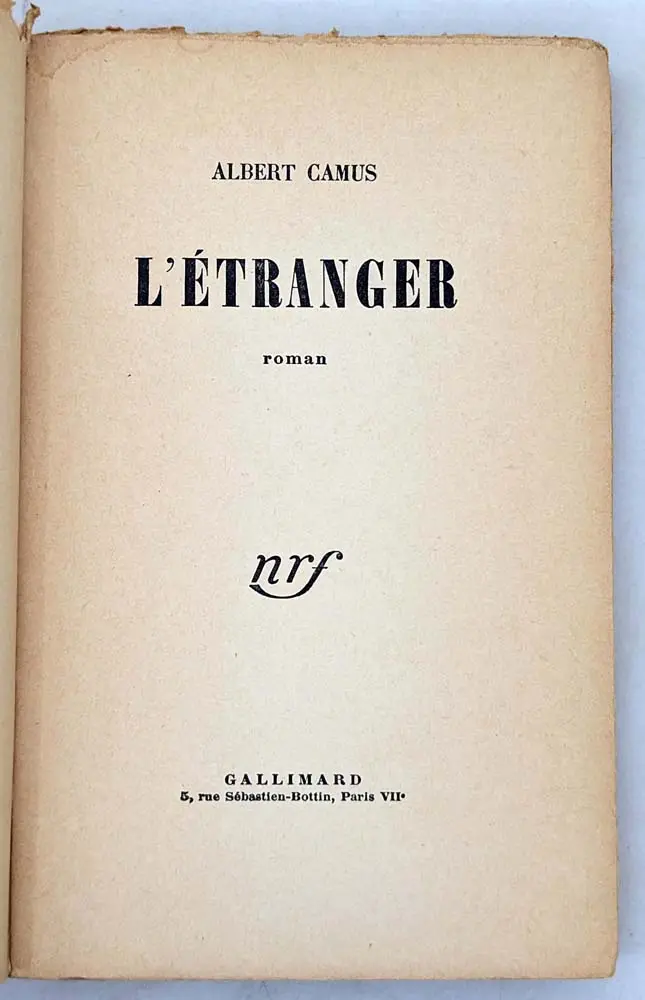

L’Étranger (translated as The Stranger or The Outsider) is a seminal 1942 novella by French-Algerian author Albert Camus. Set in French Algeria, the story follows Meursault, a detached and emotionally indifferent young man whose seemingly apathetic response to his mother’s death sets off a chain of events that leads to his trial and condemnation.
The novel is divided into two parts. In the first, Meursault attends his mother’s funeral without displaying conventional grief, then quickly resumes his routine—swimming, dating a former coworker named Marie, and befriending his neighbor Raymond, a man of questionable morals. When Meursault accompanies Raymond to a beach house and becomes embroiled in a conflict with an Arab man (whose name is never given), he ends up shooting the man in ambiguous circumstances, driven more by the oppressive heat and glare of the sun than by clear intent.
The second part focuses on Meursault’s imprisonment and trial. Rather than focusing on the crime itself, the prosecution fixates on Meursault’s lack of emotion at his mother’s funeral, painting him as a soulless outsider who defies societal norms. His honesty and refusal to conform to expected moral or religious behaviors alienate him further from society. Ultimately, he is condemned not so much for the murder as for his failure to play by society’s emotional and philosophical rules.
L’Étranger is a cornerstone of existentialist and absurdist literature. Through Meursault’s perspective, Camus explores themes of alienation, the absurdity of human existence, the indifference of the universe, and the conflict between individual authenticity and societal expectations. The novel’s stark, minimalist prose and its unsettling protagonist have made it a classic of 20th-century literature and a powerful meditation on what it means to be human in an indifferent world.