Virginia Woolf: The Collector’s Guide to First Editions, Rare and Collectible Books
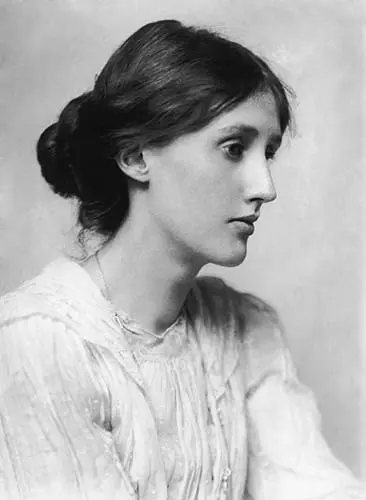
Adeline Virginia Woolf (1882-1941) stands as a central figure in twentieth-century literature, a revolutionary novelist and essayist who transformed the English novel through her profound exploration of consciousness, her lyrical prose, and her feminist critique. As a leading voice of the Modernist movement, she shattered conventional narrative forms to capture the elusive flow of subjective experience. Her influence extends far beyond the page, shaping not only the course of fiction but also the foundations of feminist thought and literary criticism.
A Life Shaped by Intellect and Fragility
Born Adeline Virginia Stephen in London, Woolf’s life was marked by both extraordinary privilege and profound trauma. She was educated at home in her father’s vast library, immersed in the world of Victorian letters—her father, Sir Leslie Stephen, was a renowned historian and editor. This intellectual environment was, however, shadowed by tragedy. The deaths of her mother, half-sister, and father in her adolescence led to the first of her severe mental breakdowns, a struggle with bipolar disorder that would punctuate her life and ultimately lead to her suicide by drowning in 1941.
Alongside her sister, the painter Vanessa Bell, Woolf became a central figure in the Bloomsbury Group, an collective of artists, intellectuals, and writers who rejected Victorian conventions in favour of modernist aesthetics and progressive social ideals. This environment of intense artistic and intellectual exchange was crucial to her development. In 1912, she married the political theorist Leonard Woolf, whose unwavering support was instrumental in managing her health and fostering her career. Together, they founded the Hogarth Press, which not only published her own groundbreaking works but also introduced English readers to authors like T.S. Eliot and Sigmund Freud.
The Stream of Consciousness and the Inner Life
Woolf’s revolutionary contribution to literature was her mastery of the stream of consciousness technique. Rejecting the materialist, plot-driven style of her Edwardian predecessors like Arnold Bennett and John Galsworthy, she sought to represent the inner, subjective reality of her characters—the continuous shower of impressions, memories, emotions, and associations that constitute human awareness.
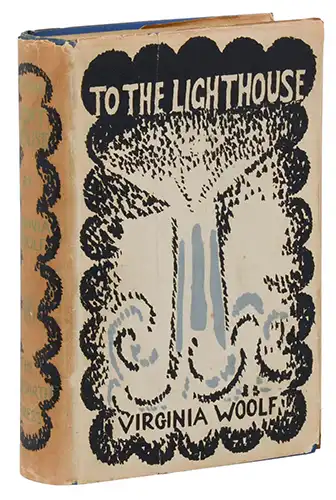
This philosophy is articulated in her seminal essay “Modern Fiction” (1919), where she famously asks: “Examine for a moment an ordinary mind on an ordinary day. The mind receives a myriad of impressions… Is it not the task of the novelist to convey this varying, this unknown and uncircumscribed spirit?” Her novels are the answer to this question. In Mrs. Dalloway (1925), the narrative flows through the minds of various characters over a single day in London, weaving together the inner lives of a society hostess and a shell-shocked war veteran. In To the Lighthouse (1927), the passage of time and the complexities of family relationships are rendered through the shifting perspectives of the Ramsay family and their guests. Her most radical experiment, The Waves (1931), is a series of interwoven soliloquies by six characters, creating a poetic, almost symphonic, structure.
A Room of One’s Own: The Foundation of Modern Feminism
Beyond her fictional innovations, Woolf’s influence is perhaps most powerfully felt through her feminist essays. A Room of One’s Own (1929) is a foundational text of twentieth-century feminism. In it, she puts forward a simple yet revolutionary thesis: “A woman must have money and a room of her own if she is to write fiction.”
Tracing the historical and social obstacles faced by women writers, she invented the figure of “Shakespeare’s sister,” a woman of equal genius who would have been denied the education and opportunity to develop her talent. This work not only provided a critical history of women’s writing but also championed the idea of a distinct female literary tradition and voice. It laid the groundwork for later feminist literary criticism by highlighting the ways in which material conditions and patriarchal structures shape artistic production.
A Far-Reaching Legacy
Virginia Woolf’s influence is deep and multifaceted:
- On Literature: She paved the way for writers to prioritize internal psychological states over external action. Her influence is visible in the works of authors as diverse as Michael Cunningham (whose novel The Hours is a direct homage to Mrs. Dalloway), Margaret Atwood, and Zadie Smith. Her lyrical, impressionistic style gave permission to generations of novelists to treat prose as a poetic and fluid medium.
- On Feminist Theory: A Room of One’s Own became a rallying cry for the second-wave feminist movement of the 1960s and 70s. Thinkers like Simone de Beauvoir and Kate Millett built upon her analysis of women’s social and economic subordination. Her work remains a cornerstone of gender studies, continually revisited for its insights into creativity, patriarchy, and androgyny.
- On Literary Criticism: Woolf was also a prolific and insightful critic. Her essays collected in The Common Reader demonstrate a unique ability to enter into the spirit of other writers, from the Greeks to the Moderns. She helped shape the informal, impressionistic style of criticism that focuses on the reader’s experience and the writer’s sensibility.
Legacy: The Rhythm of the Waves
Virginia Woolf’s life and work were a continuous quest to capture the essence of consciousness itself—what she called “the luminous halo, the semi-transparent envelope surrounding us from the beginning of consciousness to the end.” Though her life was cut short by mental illness, her literary legacy is one of immense courage and innovation. She dismantled the traditional architecture of the novel to make space for the rhythms of the inner self, and she articulated the conditions necessary for women’s artistic freedom with unparalleled clarity. Her voice, at once fragile and fiercely intelligent, continues to resonate, reminding us of the profound complexity of human experience and the enduring power of a mind that truly has a room of its own.
Virginia Woolf – First Editions Identification Guide
A Complete Bibliography of Virginia Woolf: Novels, Rare Books & First Editions
| Year | Title | Publisher | First edition/Printing Identification Points |
|---|---|---|---|
| 1915 | The Voyage Out | London: Duckworth & Co., 1915 | Bright moss-green cloth boards; lettered in gold on spine. Grey-green dust-jacket printed in navy-blue (6s). ALSO: New York: George H. Doran Co., [9120]. First American edition. Green cloth boards; lettered in black on spine. White dust-jacket printed in black ($2.25). "Copyright, 1920, | By George H. Doran Company" stated on © page. Note: The text was revised by the author for the first American edition. Apart from the American sheets issued by Duckworth in 1920 and in 1927 and by the Hogarth Press in 1929, the revised version has not been published in the United Kingdom. ALSO: London: Duckworth & Co., [1920]. First American edition, English issue. Sage-green cloth boards; lettered in black on spine. Dust jacket. "Copyright, 1920, | by George H. Doran Company" stated on © page. ALSO: New York: Harcourt, Brace & Co., [1926]. First American edition, first Harcourt, Brace impression. Sky-blue cloth boards; mauve paper label printed in black on spine. Deep cream dust-jacket printed and illustrated in dark blue ($2.50)."Copyright, 1920, | by George H. Doran Company" stated on © page. |
| 1917 | The Mark on the Wall | Hogarth Press, 1917 | Japanese paper wrappers; lettered in black on upper cover(1s/6d). Wrappers vary: (1)-(2) Japanese paper, red and white conventional all-over design or dull blue; (3) thin yellow paper wrappers. Contains two stories: Three Jews by Leonard Woolf and The Mark on the Wall by Virginia Woolf. 150 copies printed. Note: The Hogarth Press was started in 1917 by Leonard and Virginia Woolf as ‘a hobby of printing rather than publishing. This, the first publication of the Hogarth Press, was printed by the authors on a hand-press. The woodcuts are by Dora Carrington. The short story was not published separately in the United States. It was reprinted (revised) in Monday or Tuesday and in A Haunted House and Other Short Stories. ALSO: Hogarth Press, 1919. First separate edition. Thin off-white paper wrappers (1s/6d). "First Published —July 1917 | Second Edition—June 1919" stated on verso of cover. |
| 1919 | Kew Gardens | Hogarth Press, 1919 | Off-white wall-paper wrappers, hand colour-washed on the outside in royal-blue, chocolate-brown and orange on a black ground; white printed paper label on upper cover (2s). 150 copies printed. ALSO: Hogarth Press, 1919. Second English edition. Off-white wall-paper wrappers, with floral pattern in pink, green, pale brown and black, painted on the outside in royal-blue, chocolate brown and orange on a black ground; white printed paper label pasted on upper cover (2s). 500 copies printed. "First Published, May, 1919. | Second Edition, June, 1919" stated on © page. ALSO: Hogarth Press, [1927]. Third English edition (Limited). White paper boards; decorated upper cover printed in azure-blue, lime-green and milk-chocolate-brown (15s). "This edition, published in 1927" stated on © page. Limited to 500 numbered copies. Note: A few copies were signed by the author and illustrator. |
| 1919 | Night and Day | London: Duckworth & Co., [1919] | Dark grey cloth boards; lettered in pale blue on spine. White dust-jacket printed in black (9s). "First published 1919" stated on © page. Note: There was a second impression of 1000 copies in 1920 issued at (3s/6d.) Duckworth & Co. write that they were issued in a binding and dust-jacket similar to the first impression with the addition of a paper label, stating the new price (3s/6d), pasted on the dust-jacket. ALSO: New York: George H. Doran Co., [1920]. First American edition. Bright green cloth boards; lettered in black on spine. Dark khakhi dust jacket, both flaps blank ($2.25). "Copyright, 1920, | By George H. Doran Company" stated on © page. |
| 1921 | Monday or Tuesday | Hogarth Press, [1921] | White paper boards, brown cloth spine; black woodcut design on upper cover with lettering: Monday or Tuesday (4s/6d). ALSO: New York: Harcourt, Brace & Co., 1921. First American edition. Mottled buff paper boards, sage-green cloth spine. Pale tan dust-jacket printed in dark green( $1.50). "Copyright, 1921, by | Harcourt, Brace and Company, Inc." stated on © page. |
| 1922 | Jacob's Room | Hogarth Press, 1922 | Crocus-yellow cloth boards; cream printed paper label at head of spine. Cream dust-jacket printed in cinnamon and black, designed by Vanessa Bell (7s/6d). 1200 copies printed. Note: There was a second impression of c. 2000 copies in 1922. ALSO: New York: Harcourt, Brace & Co., [1923]. First American edition. Orange cloth boards, cream paper label on spine. Cream dust-jacket printed in brown and black, designed by Vanessa Bell ($2.00). "Copyright, 1923, By | Harcourt Brace and Company, Inc." stated on © page. |
| 1924 | Mr Bennet and Mrs Brown | Hogarth Press, 1924 | Stiff white paper wrappers; printed in black on upper cover (2s/6d). Note: There was a second impression of 1000 copies in 1928. |
| 1925 | The Common Reader | Hogarth Press, 1925 | White paper boards, pale grey cloth spine; lettered in black on spine. Cream dust-jacket with upper cover design reproduced (12s/6d). 1250 copies printed. ALSO: Hogarth Press, 1925. Second impression of 1000 copies. Pale grey cloth boards; cream paper label on spine printed in dark blue, cream dust-jacket printed in dark blue. "First published, April 1925. | Second Edition, November 1925" stated on © page. |
| 1925 | Mrs Dalloway | Hogarth Press, 1925 | Deep rust cloth boards; lettered in gold on spine. Cream dust-jacket printed in black and yellow, designed by Vanessa Bell (7s/6d). Published May 1925; 2000 copies printed. Note: There was a second impression of 1000 copies in September 1925, called a ‘Second Edition’ on © page. ALSO: New York: Harcourt, Brace & Co., [1925]. First American edition. Orange cloth boards; white paper label on spine. Cream dust-jacket printed in black and yellow, designed by Vanessa Bell ($2.50). "Copyright, 1925, By | Harcourt, Brace and Company, Inc." stated on © page. Published May 1925, 2100 copies printed. Note: There were second and third impressions of 1500 copies each in May and August 1925, a fourth of 750 in March 1927 and a fifth of 1000 in October 1927. The sixth impression of 2100 copies was issued on 29 January 1931. |
| 1927 | To the Lighthouse | Hogarth Press, 1927 | Bright blue cloth boards; lettered in gold on spine. Cream dust-jacket printed in pale blue and black, designed by Vanessa Bell (7s/6d). Published May 1927; 3000 copies printed. Note: There was a second impression of 1000 copies in June 1927 and a third of 1500 in May 1928. ALSO: New York: Harcourt, Brace & Co., [1927]. First American edition. Pale green cloth boards; lettered in blue on spine. Green dust-jacket printed in black and blue ($2.50). "Copyright, 1927, By | Harcourt, Brace and Company, Inc." stated on © page. Published May 1927; 4000 copies printed. Note: There were second and third impressions of 1500 and 2100 copies in June and August 1927, a fourth of 1500 in June 1930 and a fifth of 1000 in February 1935. |
| 1928 | Orlando: A Biography | Hogarth Press, 1928 | Two issues, no priority:
|
| 1929 | A Room of One's Own | Hogarth Press, 1929 | Two issues, no priority:
|
| 1930 | Street Haunting | The Westgate Press, San Francisoc, 1930 | Limited edition of 500 numbered copies, signed (in purple ink) by the author. Grey paper boards patterned in gold and blue, blue leather spine; lettered in gold up the spine. Grey slipcase ($7.50). "Copyright 1930 by Virginia Woolf" stated on © page. Note: There is at least one variant of the binding in sage-green paper boards patterned in gold and darker green with emerald-green leather spine and a green slip-in case.The ratio is 10-1 in favor of the blue. |
| 1930 | On Being Ill | Hogarth Press, 1930 | Limited edition of 250 numbered copies, signed (in purple ink) by the author. First separate edition. Pale blue-green cloth boards, vellum spine; lettered in gold up the spine. White pictorial dust-jacket printed in grey, black and yellow (£1/1s). |
| 1930 | Beau Brummell | Rimington & Hopper, New York, 1930 | Limited edition of 550 copies, signed (in purple ink) by the author. First separate edition. Putty coloured paper boards, red cloth spine; lettered in gold up the spine. Green mottled slipcase ($10). "Copyright, 1930 | by Rimington & Hooper" stated on © page. |
| 1931 | The Waves | Hogarth Press, 1931 | Purple cloth boards; lettered in gold on spine. Cream dust-jacket printed in lime-green and brown, designed by Vanessa Bell (7s/6d). "First published in 1931" stated on © page. 7113 copies printed. Note: There was a second impression of 4940 copies in October 1931. ALSO: New York: Harcourt, Brace & Co., [1931]. First American edition. Dull blue cloth boards; lettered in gold on spine. Pale buff dust-jacket printed in lime-green and brown, designed by Vanessa Bell ($2.50). "Copyright, 1931, by | Harcourt, Brace and Company, Inc." stated on © page. 10,000 copies printed: Note: There was a second impression of 2000 copies in November 1931. |
| 1932 | A Letter to a Young Poet | Hogarth Press, 1932 | First separate edition. Stiff cream paper wrappers; printed in black on upper cover (1s). "First Published 1932" stated on © page. 6000 copies printed. Note: Five hundred copies of the above were bound up in the collection entitled The Hogarth Letters with ten other volumes in the series. They were issued in 1933 in buff paper boards; brown cloth spine; lettered in black on spine; illustrated upper cover printed in black and brown. |
| 1932 | The Common Reader: Second Series | Hogarth Press, 1932 | Bright jade-green cloth boards; lettered in gold on spine. White dust-jacket printed in vermilion and azure, designed by Vanessa Bell (10s/6d). 3200 copies printed. Note: There was a second impression of 1515 copies in November 1932. ALSO: New York: Harcourt, Brace & Co., [1932]. First American edition. Dark blue cloth boards; lettered in gold on spine. Cream dust-jacket printed in crimson and bright blue, designed by Vanessa Bell ($2.50). "Copyright, 1932, by | Harcourt, Brace and Company, Inc., first printing" stated on © page. |
| 1933 | Flush: A Biography | Hogarth Press, 1933 | Pale buff cloth boards; lettered in gold on spine. Cream dust-jacket printed in brown with illustration of dog (7s/6d). "First published, October 1933" stated on © page. 12,680 copies printed. Note: The dust-jacket records this as the ‘Large Paper Edition’. There was a second impression of 3000 copies in October 1933. ALSO: New York: Harcourt, Brace & Co., [1933]. First American edition. Pinkish-brown cloth boards; lettered in silver on spine. White dust-jacket printed in chrome-yellow and black with illustration of dog ($2). 7500 copies printed. Note: There were twelve re-impressions totaling 23,782 copies between October 1933 and January 1956. |
| 1934 | Walter Sickert: A Conversation | Hogarth Press, 1934 | First separate edition. Stiff pale duck-egg-blue paper wrappers; lettered in black. "First published 1934" stated on © page. Note: The essay was first published in the Yale Review, September 1934 as 'A Conversation About Art'. |
| 1937 | The Years | Hogarth Press, 1937 | Pale jade-green cloth boards; lettered in gold on spine. Cream dust-jacket printed in black and brown, designed by Vanessa Bell ((8s/6d). "First published in 1937 " stated on © page. ALSO: New York: Harcourt, Brace & Co., [1937]. First American edition. Royal-blue cloth boards; lettered in gold on spine on a brown panel. White dust-jacket printed in dark brown and royal-blue with coloured illustration ($2.50). "first American edition" stated on © page. |
| 1937 | Three Guineas | Hogarth Press, 1938 | Lemon-yellow cloth boards; lettered in gold on spine. Cream dust-jacket printed in mauve and blue, designed by Vanessa Bell (7s/6d). "First published 1938 " stated on © page. ALSO: New York: Harcourt, Brace & Co., [1938]. First American edition. Jade-green cloth boards; lettered in gold on spine. Cream dust-jacket printed in mauve and blue ($2.50). "first American edition" stated on © page. |
| 1939 | Reviewing | Hogarth Press, 1939 | Stiff pale blue paper wrappers; printed in mauve (6d). "First published 1939 " stated on © page. |
| 1940 | Roger Fry: A Biography | Hogarth Press, 1940 | Pale jade-green cloth boards; lettered in gold on spine. Cream dust-jacket printed in black, with portrait of Roger Fry by Vanessa Bell (12s/6d). "First published 1940" stated on © page. 2530 copies printed. Note: There was a second impression of 1130 copies in August 1940 and a third of 1010 in November 1940. ALSO: New York: Harcourt, Brace & Co., 1940. First American edition. Pale jade-green cloth boards; lettered in gold on spine. Primroseyellow dust-jacket printed in brown ($3.50). "Copyright, 1940, by | Harcourt, Brace and Company, Inc., first American edition" stated on © page. |
| 1941 | Between the Acts | Hogarth Press, 1941 | Bright blue cloth boards; lettered in gold on spine. White dust-jacket printed in black, designed by Vanessa Bell (7s/6d). "First published 1941" stated on © page. 6358 copies printed. Note: There was a second impression of 4600 copies in July 1941 and a third of 2000 in November 1941. ALSO: New York: Harcourt, Brace & Co., [1941]. First American edition. Bright blue cloth boards; lettered in gold on spine. Buff dust-jacket printed in bright blue and brown, designed by Vanessa Bell ($2.50). Copyright, 1941, by | Harcourt, Brace and Company, Inc., first American edition" stated on © page. |
| 1942 | The Death of the Moth and Other Essays | Hogarth Press, 1942 | Bright blue cloth boards; lettered in gold on spine. White dust-jacket printed in black, designed by Vanessa Bell (9s). "First Published in 1942" stated on © page. 4500 copies printed. Note: There was a second impression of 4600 copies in June 1942, a third of 2000 in July 1942 and a fourth of 1200 in March 1945. A further 3000 copies were printed by photo-litho offset in March 1947. ALSO: New York: Harcourt, Brace & Co., [1942]. First American edition. Dark green cloth boards; lettered in cream on spine. Cream dust jacket printed in green and brown, designed by Vanessa Bell ($3). "Copyright, 1942, by | Harcourt, Brace and Company, Inc., first American edition," stated on © page. 3475 copies printed. Note: There was a second impression of 1500 copies in December 1942. |
| 1944 | A Haunted House and Other Short Stories | Hogarth Press, 1943 | Dull crimson cloth boards;lettered in gold down the spine. White dust-jacket printed in black, designed by Vanessa Bell (7s/6d). "First published 1943" stated on © page. 6000 copies printed. Note: There was a second impression of 3000 copies in February 1944 and a third of 6000 in June 1944. ALSO: New York: Harcourt, Brace & Co., [1944]. First American edition. Navy-blue cloth boards; lettered in white down the spine. Pale buff dust-jacket printed in bright blue, designed by Vanessa Bell ($2). "Copyright, 1944, by | Harcourt, Brace and Company, Inc., ... first American edition" stated on © page. 4,000 copies printed. Note: There were second and third impressions of 3500 copies each in April and May 1944. |
| 1947 | The Moment and other Essays | Hogarth Press, 1947 | Pale ruby-red cloth boards; lettered in gold on spine. Pale ruby-red cloth boards; lettered in gold on spine. Pink dust-jacket printed in black, designed by Vanessa Bell (20s/6d). 10,000 copies printed. Note: There was a second impression of 3000 copies in November 1948. ALSO: New York: Harcourt, Brace & Co., [1948]. First American edition. Maroon cloth boards; lettered in gold on spine. Pink dust-jacket printed in black, designed by Vanessa Bell ($3). "Copyright, 1948, by | Harcourt, Brace and Company, Inc." stated on © page. 3500 copies printed. Note: There was a second impression of 2500 copies in April 1948. |
Virginia Woolf – First Printing Dust Jackets Identification Guide
Gallery of First state Dust Jackets of Woolf’s works.


Reference:
- Wikipedia
- A bibliography of Virginia Woolf by B. J. Kirkpatrick.