William Morris: The Collector’s Guide to First Editions, Rare and Collectible Books
The Ideal Book: William Morris and the Kelmscott Revolution
Early Life and the Rejection of Industry
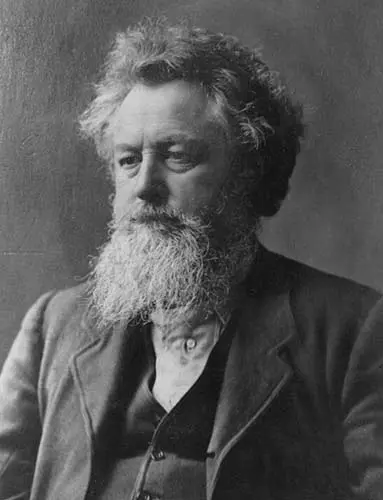
William Morris was born on March 24, 1834, in Walthamstow, Essex, then a rural village on the northeastern edge of London. His father was a wealthy bill broker, and the family lived in comfortable middle-class prosperity. Young Morris grew up riding ponies through Epping Forest and reading the novels of Walter Scott, whose medieval romances implanted a lifelong longing for the pre-industrial past. He entered Exeter College, Oxford, in 1852, intending to take holy orders. At Oxford, he met Edward Burne-Jones, a fellow student with similar artistic inclinations. The two abandoned their religious ambitions and devoted themselves to art, literature, and the dream of reforming Victorian society through beauty. Morris was deeply disturbed by the ugliness of industrial England—the smog-choked cities, the soulless factories, the cheap and shoddy goods produced for the working poor. He began writing poetry, publishing his first collection, The Defence of Guenevere, in 1858, though it sold poorly.
The Founding of the Firm
In 1861, Morris founded Morris, Marshall, Faulkner & Co., a decorative arts firm dedicated to producing handmade furniture, wallpaper, textiles, stained glass, and other household goods. The partners included Burne-Jones, the painter Dante Gabriel Rossetti, and the architect Philip Webb. They rejected machine production and Victorian over-ornamentation, instead reviving traditional craftsmanship and medieval design principles. Morris insisted that every object in a home, from the wallpaper to the rug to the bookcase, should be beautiful and honestly made. He designed hundreds of wallpaper and fabric patterns, many still in production today. His famous motto was: “Have nothing in your house that you do not know to be useful or believe to be beautiful.” The firm’s success allowed Morris to devote himself to his many passions: poetry, translation, dyeing, weaving, calligraphy, and political activism. Yet one form of art continued to trouble him: the printed book.
The Kelmscott Press: A Book Arts Revolution
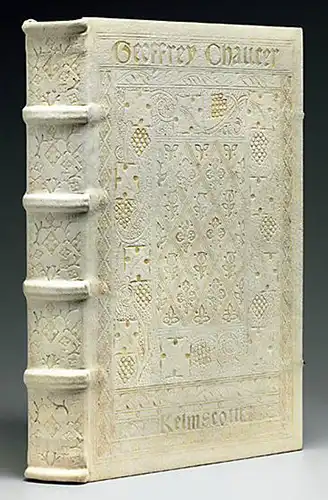
In 1888, Morris delivered a lecture titled “The Ideal Book,” in which he condemned the state of commercial printing. Victorian books were, in his view, typographic horrors: weak fonts, crowded pages, machine-made paper, and cloth bindings that fell apart. Morris resolved to do better. In January 1891, at the age of fifty-six, he founded the Kelmscott Press at a small cottage near his country home, Kelmscott Manor in Oxfordshire. He named the press after the manor, his beloved retreat. Morris personally designed two typefaces based on fifteenth-century Venetian and German models: the Roman-inspired “Golden Type” and the Gothic-inspired “Troy Type.” He also designed elaborate floral borders, initial letters, and title pages, drawing from medieval manuscripts and early printed books. He chose hand-made paper from a specialist mill in Hampshire, and he insisted on hand-binding in vellum or heavy boards. Every aspect of production was controlled by his aesthetic vision.
The first book from the Kelmscott Press was The Story of the Glittering Plain (1891), a prose romance written by Morris himself. Over the next seven years, the press produced fifty-two books, plus a few ephemeral items. The crown of the enterprise was the Kelmscott Chaucer (1896), a magnificent edition of The Works of Geoffrey Chaucer illustrated by Edward Burne-Jones. The book contained eighty-seven woodcut illustrations, elaborate borders, and a title page of breathtaking complexity. It took two years to print, required multiple presses running simultaneously, and cost a fortune. Only 425 copies were produced, each selling for twenty guineas—roughly a year’s wages for a working-class family. Today, the Kelmscott Chaucer is considered one of the most beautiful books ever printed, a landmark of fine press printing that inspired the private press movement across Europe and America.
The Socialist and the Craftsman
Morris did not see Kelmscott as a retreat from politics. He had joined the Social Democratic Federation in 1883 and later founded the Socialist League, believing that industrial capitalism was the enemy of good art. The Kelmscott Press was not a commercial enterprise but a demonstration. Morris wanted to prove that beautiful books could be made by hand, and that the work of making them could bring joy to the craftsman. He wrote his utopian novel News from Nowhere (1890) while planning the press, imagining a future where such handcraft was the norm rather than the exception. He was realistic about the press’s limitations: it could never reach the masses. But it could inspire a revival. He was right.
Influence and Legacy
William Morris died on October 3, 1896, in London, just months after the Kelmscott Chaucer was completed. He was sixty-two years old. The press closed shortly after his death. Its influence, however, spread across the Atlantic and the Channel. The American private press movement, including the Ashendene, Doves, and Golden Cockerel presses, all traced their lineage to Kelmscott. Later fine printers such as Bruce Rogers, Frederic Goudy, and the partners at the Officina Bodoni acknowledged Morris as their inspiration. Beyond printing, Morris’s broader vision—that art should be integrated into daily life, that beauty is a moral necessity, that the worker deserves joy in labor—influenced the Arts and Crafts Movement, the Bauhaus, and modern design education. And his fantasy prose romances laid the groundwork for J. R. R. Tolkien and the entire genre of high fantasy. William Morris was a poet, a painter, a weaver, a socialist, a dreamer, and above all, a printer who believed that a book could be a work of art.
The Kelmscott Press – Published books: 1891-1898
Bibliography of books published by the Kelmscott Press during its existence. Does not include his unpublished works produced after his death.
| Year | Title | Author | Descriptions |
|---|---|---|---|
| 1891 | The Story of the Glittering Plain | William Morris | Small 4to. Stiff vellum with wash leather ties. Stamped in gold on spine. Two issues:
|
| 1892 | Poems by the Way | William Morris | Small 4to. Stiff vellum with silk ties. Stamped in gold on spine. Two issues:
|
| 1892 | The Love-Lyrics and Songs of Proteus | Wilfrid Scawen Blunt | Small 4to. Stiff vellum with silk ties. Stamped in gold on spine. 300 paper copies (2 gns.) Issued 27 February 1892. |
| 1892 | The Nature of Gothic | John Ruskin | Small 4to. Stiffvellum with silk ties. Stamped in gold on spine. 500 paper copies (30s.) Issued 22 March 1892. |
| 1892 | The Defence oj Guenevere, and Other Poems | William Morris | Small 4to. Limp vellum with silk ties. Gothic calligraphic lettering in black ink on spine. Two issues:
|
| 1892 | A Dream of John Ball and A King's Lesson | William Morris | Small 4to. Limp vellum with silk ties. Stamped in gold on spine. Issued 24 September 1892. Two issues:
|
| 1892 | The Golden Legend | Jacobus de Voragine | 3 vols. Large 4to. Quarter holland (blue paper on boards). Printed in black on paper labels on spines. 500 paper copies (5 gns.) Issued 3 November 1892. Note: Two wood engravings by Burne-Jones |
| 1892 | The Recuyell of the Histories of Troye | Raoul Lefevre | 2 vols. Large 4to. Limp vellum with silk ties. Stamped in gold on spine. Two issues:
|
| 1892 | Biblia Innocentium | J. W. Mackail | 8vo. Stiff vellum with silk ties. Stamped in gold on spine. 200 paper copies (1 gn.) Issued 9 December 1892. |
| 1893 | The History of Reynard the Foxe | William Caxton | Large 4to. Limp vellum with silk ties. Stamped in gold on spine. Two issues:
|
| 1893 | The Poems of William Shakespeare | William Shakespeare | 8vo. Limp vellum with silk ties. Stamped in gold on spine. Two issues:
|
| 1893 | News from Nowhere | William Morris | 8vo. Limp vellum with silk ties. Stamped in gold on spine. Two issues:
|
| 1893 | The Order of Chivalry, and L’Or dene de Chevalerie | Ramon Lul | Small 4to. Limp vellum with silk ties. Stamped in gold on spine. Two issues:
|
| 1893 | The Life of Cardinal Wolsey | George Cavendish | 8vo. Limp vellum with silk ties. Stamped in gold on spine. Two issues:
|
| 1893 | The History of Godefrey of Boloyne | [GuileImus, Archbishop of Tyre] | Large 4to. Limp vellum with silk ties. Stamped in gold on spine. Two issues:
|
| 1893 | Utopia | Sir Thomas More | 8vo. Limp vellum with silk ties. Stamped in gold on spine. Two issues:
|
| 1893 | Maud | Alfred Lord Tennyson | 8vo. Limp vellum with silk ties. Stamped in gold on spine. Two issues:
|
| 1893 | Gothic Architecture | William Morris | 16mo. Quarter holland (blue paper on boards). Text of title-page printed in black on front cover. Two issues:
|
| 1893 | Sidonia the Sorceress | William Meinhold | Large 4to. Limp vellum with silk ties. Stamped in gold on spine. Two issues:
|
| 1893 | Ballads and Narrative Poems | Dante Gabriel Rossetti | 8vo. Limp vellum with silk ties. Stamped in gold on spine.Two issues: (A) 6 vellum copies (10 gns.). (B) 310 paper copies (2 gns.) Issued November 1893. |
| 1894 | Sonnets and Lyrical Poems | Dante Gabriel Rossetti | 8vo. Limp vellum with silk ties. Stamped in gold on spine.Two issues:
|
| 1894 | The Tale of King Florus and the Fair Jehane | William Morris | 16mo. Quarter holland binding (blue paper on boards). Text of title-page printed in black on front cover. Two issues:
|
| 1894 | The Story of the Glittering Plain | William Morris | 4to. Limp vellum with silk ties. Stamped in gold on spine. Two issues:
|
| 1894 | Of the Friendship ofAmis and Amile | William Morris | 8vom. Quarter holland (blue paper on boards). Text of title-page printed in black on front cover. Two issues:
|
| 1894 | The Poems oj John Keats | John Keats | 8vo. Limp vellum with silk ties. Stamped in gold on spine. Two issues:
|
| 1894 | Atalanta in Calydon | Algernon C. Swinburne | Large 4to. Limp vellum with silk ties. Stamped in gold on spine. Two issues:
|
| 1894 | The Tale of the Emperor Coustans and of Over Sea | William Morris (trans.) | 16mo. Quarter holland (blue paper on boards). Text of title-page printed in black on front cover. Two issues:
|
| 1894 | The Wood beyond the World | William Morris | 8vo. Limp vellum with silk ties. Stamped in gold on spine. Two issues: 8 vellum copies (10 gns.). (B) 350 papers copies (2 gns.) Issued 16 October 1894. Note: wood engraving frontispiece designed by Burne-Jones. |
| 1894 | The Book of Wisdom and Lies | Oliver Wardrop (trans.) | 8vo. Limp vellum with silk ties. Stamped in gold on spine.250 paper copies (2 gns.) Issued 29 October 1894. |
| 1894 | The Poetical Works of Percy Bysshe Shelley | Percy Bysshe Shelley | 3 vols. Limp vellum. Stamped in gold on spines. Two issues:
|
| 1894 | Psalmi Penitentiales | 8vo. Quarter holland (blue paper on boards). Text of title-page printed in black on front cover. Two issues:
| |
| 1894 | Epistola de Contemptu Mundi | Girolamo Savonarola | 8vo. Quarter holland (blue paper on boards). No title on front cover.Two issues:
|
| 1895 | The Tale oj Beowulf | William Morris and A. J. Wyatt (trans.) | 4to. Limp vellum with silk ties. Stamped in gold on spine. Two issues:
|
| 1895 | Syr Perecyvelle of Gales | 8vo. Quarter holland (blue paper on boards). Printed in black on front cover. Two issues:
| |
| 1895 | The Life and Death ofJason | William Morris | Large 4to. Limp vellum with silk ties. Stamped in gold on spine. Two issues:
|
| 1895 | Child Christopher and Goldilitid the Fair | William Morris | 2 vols. 8vom. Quarter holland (blue paper on boards). Printed in black on paper labels on spines. Two issues:
|
| 1895 | Hand and Soul | Dante Gabriel Rossetti | 8vo. Stiff vellum. Stamped in gold on spine. Two issues:
|
| 1896 | Poems Chosen out of the Works of Robert Herrick | Robert Herrick | 8vo. Limp vellum with silk ties. Stamped in gold on spine. Two issues:
|
| 1896 | Poems Chosen out of the Works of Samuel Taylor Coleridge | Samuel Taylor Coleridge | 8vo. Limp vellum with silk ties. Stamped in gold on spine. Two issues:
|
| 1896 | The Well at the World's End | William Morris | Large 4to. Limp vellum with silk ties. Stamped in gold on spine. Two issues:
|
| 1896 | The Works of Geoffrey Chaucer | Geoffrey Chaucer | Folio. Quarter holland (blue paper on boards). Printed in black. (48 copies were bound in white pigskin at the Doves Bindery from a design by Morris. Of these, three were vellum copies). Two issues:
|
| 1896 | The Earthly Paradise | William Morris | 8 vols. Medium 4to. Limp vellum with silk ties. Stamped in gold on spines. Two issues:
|
| 1896 | Laudes Beatce Marice Virginis | Large 4to. Quarter holland (blue paper on boards). Text of title-page printed in black on front cover. Two issues:
| |
| 1896 | The Floure and the Leafe and The Boke of Cupide | Sir Thomas Clanvowe | Medium 4to. Quarter holland (blue paper on boards). Text of title-page printed in black on front cover. Two issues:
|
| 1896 | The Shepheardes Calender | Edmund Spenser | Medium 4to. Quarter holland (blue paper on boards). Text of title-page printed in black on front cover. Two issues:
|
| 1897 | The Water of the Wondrous Isles | William Morris | Large 4to. Limp vellum with silk ties. Stamped in gold on spine. Two issues:
|
| 1897 | Froissart’s Chronicles (specimen pages) | Two vellum sheets. Not bound. Folio (424mm x 283mm). 160 vellum copies (1 gn.). Issued 7 October 1897. | |
| 1897 | Sire Degrevaunt | F. S. Ellis (editor) | 8vo. Quarter holland (blue paper on boards). Printed in black on front cover. Two issues:
|
| 1897 | Syr Isambrace | F. S. Ellis (editor) | 8vo. Quarter holland (blue paper on boards). Printed in black on front cover. Two issues:
|
| 1898 | Some German Wood cuts of the Fifteenth Century | Sydney C. Cockerell (ed.) | Large 4to. Quarter holland (blue paper on boards). Printed in black on front cover. Two issues:
|
| 1898 | The Story of Sigurd the Volsung | William Morris | Small folio. Limp vellum with silk ties. Stamped in gold on spine. Two issues:
|
| 1898 | The Sundering Flood | William Morris | 8vo. Quarter holland (blue paper on boards). Printed in black on paper label on spine. Two issues:
|
| 1898 | Love is Enough | William Morris | Large 4to. Limp vellum with silk ties. Stamped in gold on spine. Two issues:
|
| 1898 | A Note by William Morris on His Aims in Founding the Kelmscott Press | 8vo. Quarter holland (blue paper on boards). Text of title-page printed in black on front cover. Two issues:
|
Gallery of William Morris & The Kelmscott Press Works
Samples of books and designs published by the Kelmscott Press.


Reference:
- A Bibliography of the Kelmscott Press by William S. Peterson, 1985