The Locus Award: The Readers’ Choice in Science Fiction and Fantasy
The Locus Award is one of the most significant honors in science fiction and fantasy literature, unique among major awards for its dual nature: it is determined by the readers of Locus, the magazine of record for the speculative fiction field. Presented annually since 1971, the award reflects the preferences of the dedicated, knowledgeable readership that forms the core of the science fiction community.
Locus magazine was founded in 1968 by Charles N. Brown, a former NASA engineer who recognized the need for a publication that would cover the growing field of speculative fiction with serious attention. The magazine quickly became the central source of news, reviews, and critical discussion in the field, and its readership—authors, editors, publishers, librarians, and devoted fans—represents the most engaged segment of the science fiction community.
The Locus Award emerged from this readership. Each year, subscribers vote on the best works published in the previous year across a range of categories: science fiction novel, fantasy novel, first novel, young adult novel, novella, novelette, short story, anthology, collection, magazine, publisher, editor, and artist. The results are announced at the annual Locus Awards Weekend and published in the magazine.
The award has gained a distinctive place in the ecology of science fiction honors. Unlike the Hugo, voted by Worldcon attendees, or the Nebula, voted by professional writers, the Locus Award represents the judgment of the field’s most passionate and knowledgeable readers. It often anticipates the Hugo and Nebula winners, providing a reliable indicator of consensus within the community.
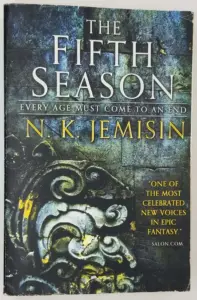
Over its fifty-year history, the Locus Award has honored the full range of speculative fiction. Ursula K. Le Guin, Connie Willis, Neil Gaiman, and N.K. Jemisin are among the authors who have received multiple awards. The list of winners functions as a canon of late-twentieth and early-twenty-first-century speculative fiction—a record of what the community, at its most engaged, has deemed worth celebrating.
The Locus Award is more than a popularity contest; it is a reflection of the deep reading that sustains science fiction and fantasy as literary forms. For authors, a Locus Award signals that their work has resonated with the people who care most about the field—a validation that comes not from a small jury or a temporary convention but from the sustained attention of a community. It remains, half a century after its founding, a cornerstone of speculative fiction’s system of recognition.vels reflects the evolving themes and styles of contemporary science fiction, from space opera and military sci-fi to social and political explorations. The award serves as an important guide for readers seeking the most compelling and thought-provoking science fiction of the year.
Locus Award for Best Science Fiction Novel Winners
| Year | Title | Author | Publisher |
|---|---|---|---|
| 1978 | Gateway | Frederik Pohl | St. Martin's Press |
| 1980 | Titan | John Varley | Berkley Books |
| 1981 | The Snow Queen | Joan D. Vinge | Dial Press |
| 1982 | The Many Coloured Land | Julian May | Houghton Mifflin |
| 1983 | Foundation's Edge | Isaac Asimov | Doubleday |
| 1984 | Startide Rising | David Brin | Bantam Books |
| 1985 | The Integral Trees | Larry Niven | Del Rey Books |
| 1986 | The Postman | David Brin | Bantam Books |
| 1987 | Speaker for the Dead | Orson Scott Card | Tor Books |
| 1988 | The Uplift War | David Brin | Bantam Spectra |
| 1989 | Cyteen | C. J. Cherryh | Warner Books |
| 1990 | Hyperion | Dan Simmons | Doubleday |
| 1991 | The Fall of Hyperion | Dan Simmons | Doubleday |
| 1992 | Barrayar | Lois McMaster Bujold | Baen Books |
| 1993 | Doomsday Book | Connie Willis | Bantam Spectra |
| 1994 | Green Mars | Kim Stanley Robinson | Spectra/Bantam Dell/Random House |
| 1995 | Mirror Dance | Lois McMaster Bujold | Baen Books |
| 1996 | The Diamond Age | Neal Stephenson | Bantam Spectra |
| 1997 | Blue Mars | Kim Stanley Robinson | Spectra/Bantam Dell/Random House |
| 1998 | The Rise of Endymion | Dan Simmons | Bantam Books |
| 1999 | To Say Nothing of the Dog | Connie Willis | Bantam Spectra |
| 2000 | Cryptonomicon | Neal Stephenson | Avon |
| 2001 | The Telling | Ursula K. Le Guin | Harcourt |
| 2002 | Passage | Connie Willis | Bantam Books |
| 2003 | The Years of Rice and Salt | Kim Stanley Robinson | Bantam Books (US) Harper Collins (UK) |
| 2004 | Ilium | Dan Simmons | Harper Collins |
| 2005 | The Baroque Cycle (i.e. Quicksilver; The Confusion; The System of the World) | Neal Stephenson | William Morrow |
| 2006 | Accelerando | Charles Stross | Orbit (UK), Ace (US) |
| 2007 | Rainbows End | Vernor Vinge | Tor Books |
| 2008 | The Yiddish Policemen's Union | Michael Chabon | Harper Collins |
| 2009 | Anathem | Neal Stephenson | William Morrow |
| 2010 | Boneshaker | Cherie Priest | Tor Books |
| 2011 | Blackout/All Clear | Connie Willis | Spectra |
| 2012 | Embassytown | China Miéville | Pan Macmillan |
| 2013 | Redshirts | John Scalzi | Tor Books |
| 2014 | Abaddon's Gate | James S. A. Corey | Orbit Books |
| 2015 | Ancillary Sword | Ann Leckie | Orbit Books |
| 2016 | Ancillary Mercy | Ann Leckie | Orbit Books |
| 2017 | Death's End | Liu Cixin | |
| 2018 | The Collapsing Empire | John Scalzi | Tor Books |
| 2019 | The Calculating Stars | Mary Robinette Kowal[1] | Tor Books |
| 2020 | The City in the Middle of the Night | Charlie Jane Anders | Tor Books |
| 2021 | Network Effect | Martha Wells | Tor Books |
| 2022 | A Desolation Called Peace | Arkady Martine | Tor Books |
| 2023 | The Kaiju Preservation Society | John Scalzi | Tor Books |
| 2024 | System Collapse | Martha Wells | Tor Books |
| 2025 | The Man Who Saw Seconds | Alexander Boldizar | Clash |