Ursula K. Le Guin: : The Collector’s Guide to First Editions, Rare and Collectible Books
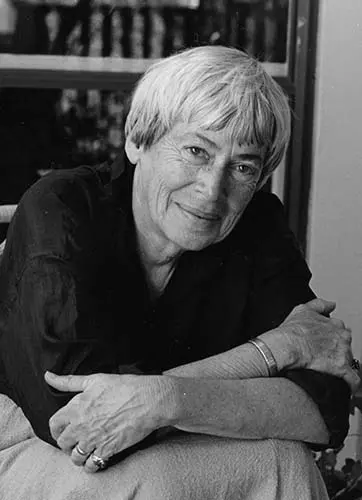
Foundations of a World-Builder (1929-1960s)
Ursula Kroeber Le Guin (1929-2018)was born in 1929 in Berkeley, California, into an intellectual environment that would profoundly shape her work. Her father, Alfred L. Kroeber, was a renowned anthropologist, and her mother, Theodora, was a psychologist and writer. This household, filled with stories of diverse cultures and academic inquiry, instilled in her a deep understanding of cultural relativism and the power of myth. She earned a master’s degree in Romance literature and was a Fulbright Fellow in France, where she began writing. After marrying historian Charles Le Guin, she spent the 1950s and early 1960s writing poetry and realistic novels that were repeatedly rejected. It was by turning to the metaphorical freedom of science fiction and fantasy that she found her unique voice, though her early submissions were often deemed “too radical” for the pulp magazines of the day.
Her professional career began with the publication of short stories in the 1960s, but her breakthrough came with the novels that would form the early part of her Hainish Cycle. Rocannon’s World (1966), Planet of Exile (1966), and City of Illusions (1967) established her anthropological approach to science fiction. Unlike the technology-driven stories of her contemporaries, Le Guin’s work was concerned with sociology, psychology, and the intricate ways societies function. She explored themes of communication, alienation, and cultural contact, laying the groundwork for her landmark novels.
A Crescendo of Mastery: Redefining Science Fiction (1968-1974)
In an astonishingly short period, Le Guin produced a series of works that fundamentally altered the landscape of speculative fiction and garnered major literary awards. Each novel was a profound thought experiment that challenged the conventions of its genre.
- A Wizard of Earthsea (1968): This novel, the first of her Earthsea cycle, won immediate critical acclaim. It introduced a fantasy world unlike any other—an archipelago of islands inhabited by people with red-brown skin, where magic is governed by a Taoist-like balance and the power of true names. It was a finalist for the National Book Award and established her as a master of fantasy.
- The Left Hand of Darkness (1969): This landmark novel won both the Hugo and Nebula Awards. Sent to the planet Gethen, a human envoy must navigate a society of ambisexual beings. The book’s radical exploration of gender and culture became a touchstone for feminist science fiction and demonstrated the genre’s capacity for the deepest philosophical inquiry.
- The Dispossessed (1974): Subtitled “An Ambiguous Utopia,” this novel won the Hugo, Nebula, and Locus awards. By contrasting a wealthy, capitalist planet with its austere anarchist moon, Le Guin created one of the most sophisticated political novels in the English language, exploring the tensions between individual freedom and social responsibility.
Deepening the Legacy: Earthsea Revisited and Critical Acclaim (1975-2000)
Le Guin continued to write acclaimed science fiction, but her work in the latter part of the 20th century showed a deepening of her themes and a expansion into other forms. She returned to Earthsea after a long hiatus with Tehanu (1990), which critically examined the patriarchal structures of the world she had created decades earlier. Winning the Nebula Award, it showcased her ability to re-evaluate her own work with a mature, feminist perspective.
This period also saw her receive the highest honors in the field. In 1979, her novel The Beginning Place won the American Book Award. The Science Fiction and Fantasy Writers of America named her its 20th Grand Master in 2003. Beyond genre fiction, she was recognized by the mainstream literary establishment, being named a Living Legend by the Library of Congress in 2000. She also became a prolific and powerful essayist, with collections like The Language of the Night (1979), and a respected translator, notably of the Tao Te Ching. Her work increasingly argued against the “genre ghetto,” insisting on the literary value and moral seriousness of speculative fiction.
The Enduring Voice: Influence, Awards, and Legacy
Ursula K. Le Guin’s influence is immeasurable. She is the primary architect of the anthropological strand of science fiction, proving that the genre could be a powerful tool for examining culture, sociology, and psychology. She paved the way for a generation of writers, from Margaret Atwood (who acknowledged her impact) to David Mitchell and Kim Stanley Robinson, who explore complex social ideas through speculative lenses.
Her awards shelf is a testament to her impact across multiple domains:
- Hugo Awards: 5 wins, including for The Left Hand of Darkness and The Dispossessed.
- Nebula Awards: 6 wins, including for the same novels and for Tehanu.
- Locus Awards: 21 wins from 57 nominations, a record demonstrating her sustained popularity.
- National Book Award: Received the Medal for Distinguished Contribution to American Letters in 2014.
- Other Honors: The PEN/Malamud Award for Short Fiction, the National Book Foundation’s Medal for Distinguished Contribution to American Letters, and multiple lifetime achievement awards.
Her most profound legacy, however, lies in her ideas. The concept of a “psychologically plausible utopia,” the non-European foundation of Earthsea, and the serious treatment of gender and anarchy are now integral to modern fantasy and science fiction. She used imaginary worlds not to escape reality, but to hold up a mirror to it, challenging readers to imagine better, more just ways of living. For her intellectual rigor, moral clarity, and unparalleled prose, Ursula K. Le Guin is celebrated not merely as a master of her genres, but as one of the most important American writers of the 20th century. She passed away in 2018, leaving a body of work that continues to inspire, challenge, and illuminate.mes like gender, anarchy, ecology, and the power of language, and for demonstrating that genre fiction could be both popular and profound, Ursula K. Le Guin is remembered not just as a great writer of science fiction, but as one of the great American writers of the 20th century. She passed away in 2018, leaving a body of work that continues to challenge, comfort, and inspire.
Ursula K. Le Guin – First Editions Identification Guide
A Bibliography of Ursula K. Le Guin: Novels, Rare Books & First Editions
Note: This list only includes works published prior to 1977.
| Year | Title | Publisher | First edition/Printing Identification Points |
|---|---|---|---|
| 1967 | CITY OF ILLUSIONS | New York: Ace Books, Inc., [1967] | Wrappers. No statement of printing on © page. Ace Book G-626 (50¢). ALSO: London: Victor Gollancz, 1971. Boards. No statement of printing on © page. First hardcover edition. |
| 1974 | THE DISPOSSESSED | New York Evanston San Francisco London: Harper & Row, Pub., [1974] | Boards with cloth shelf back. First edition so stated on © page. |
| 1977 | EARTHSEA | London: Victor Gollancz Ltd, 1977 | Boards. No statement of printing on © page. Reprint. Collects A WIZARD OF EARTHSEA, THE TOMBS OF ATUAN, and THE FARTHEST SHORE. |
| 1971 | THE LATHE OF HEAVEN | New York: Charles Scribner's Sons, [1971] | Boards with cloth shelf back. Code 4-J0.77 (C) on © page. |
| 1976 | ORSINIAN TALES | New York, Hagerstown, San Francisco, London: Harper & Row, Pub., [1976] | Boards with cloth shelf back. First edition so stated on © page. |
| 1976 | VERY FAR AWAY FROM ANYWHERE ELSE | New York: Atheneum, 1976 | First edition so stated on © page. Note: Published in Great Britain as A VERY LONG WAY FROM ANYWHERE ELSE. This title is taken directly from a line in the novel and is preferred by the author. |
| 1975 | THE WIND'S TWELVE QUARTERS | New York, Evanston San Francisco, London: Harper & Row, Pub., [1975] | Boards with cloth shelf back. First edition so stated on © page. |
| 1976 | THE WORD FOR WORLD IS FOREST | New York: Published by Berkley Publishing Corp, [1976] | No statement of printing on © page. Note: First separate edition in English. Originally appeared in Again, Dangerous Visions, edited by Harlan Ellison. ALSO: London: Victor Gollancz Ltd, 1977. Boards. No statement of printing on © page. Adds "Author's Introduction." |
| 1972 | THE FARTHEST SHORE | New York: Atheneum, 1972 | Two bindings, priority as listed:
|
| 1969 | THE LEFT HAND OF DARKNESS | New York: An Ace Book, [1969] | Wrappers. No statement of printing on © page. An Ace Science Fiction Special 47800 (95¢). Note: First printing does not mention Hugo and Nebula awards won by Le Guin. Second printing bearing same stock number and price carries notices of Hugo and Nebula awards. ALSO: New York: Walker and Company, [1969]. Boards. Published in the United States of America in 1969 ... on © page. First hardcover edition. ALSO: New York: Ace Books, [1976]. Wrappers. Twelve-line printing history on © page with line twelve reading: Twelfth Ace printing: July, 1976. Ace 47805 ($1.95). New introduction by Le Guin. |
| 1966 | PLANET OF EXILE | New York: Ace Books, Inc., [1966] | Wrappers. No statement of printing on © page. Ace Double G-597 (50¢). Bound with MANKIND UNDER THE LEASH by Thomas M. Disch. ALSO: [New York & London: Garland Publishing, Inc., 1975.] No statement of printing on © page. First hardcover edition. Notes: (1) Photo-reproduction of the 1972 Tandem edition. (2) Not issued in dust jacket. |
| 1966 | ROCANNON'S WORLD | New York: Ace Books, Inc., [1966] | Wrappers. No statement of printing on © page. Ace Double G-574 (50¢). Bound with THE KARCHEE REIGN by Avram Davidson. ALSO: [New York & London: Garland Publishing, Inc., 1975.] No statement of printing on © page. First hardcover edition. Notes: (1) Photo-reproduction of the 1966 Ace Books edition. (2) Not issued in dust jacket. ALSO: New York, Hagerstown, San Francisco, London: Harper & Row, Pub., [1977]. Boards with cloth shelf back. First printing has code 77 78 79 80 81 10 9 8 7 6 5 4 3 2 1 on © page. Note: Photo-offset of the second Ace Books printing with new introduction and a few textual corrections by Le Guin. |
| 1971 | THE TOMBS OF ATUAN | New York: Atheneum, 1971 | First edition so stated on © page. Two states of copyright notice:
|
| 1976 | THE WATER IS WIDE | Portland: Pendragon Press, [1976] | 1000 copies printed. Three issues, no priority:
|
| 1968 | A WIZARD OF EARTHSEA | Berkeley: Parnassus Press, [1968] | No statement of printing on © page. Three printings, priority as listed:
|
Ursula K. Le Guin – First Printing Dust Jackets Identification Guide
Gallery of First state Dust Jackets of Le Guin’s works. Only includes the first appearance in book form. Either the UK or US edition and does not include later printings.


Reference:
- L. W. Currey, Science Fiction and Fantasy Authors: A Bibliography of First Printings of Their Fiction and Selected Nonfiction.