Yoshihiro Togashi: The Uncompromising Architect of Modern Shonen
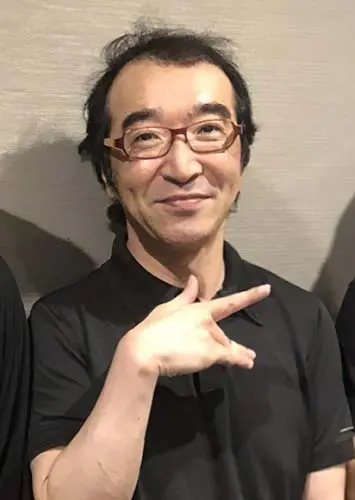
Yoshihiro Togashi, born on April 27, 1966, in Yamagata Prefecture, Japan, is a manga artist of unparalleled influence and enigmatic reputation, a creator whose genius and struggles have become inextricably woven into the fabric of the medium. His career is a testament to both spectacular creative triumph and profound personal challenge, making him one of the most discussed and revered figures in modern shonen manga. Togashi’s journey began with early success, winning an award for his debut one-shot in 1986, but it was the 1990 publication of Yu Yu Hakusho that catapulted him to superstardom. This supernatural battle series, born from his love of occult topics and Buddhist mythology, was a defining hit of Weekly Shonen Jump in the early 1990s. Its sophisticated character writing, morally complex protagonists, and perfectly paced Dark Tournament arc showcased Togashi’s innate understanding of battle manga mechanics, earning the series a classic anime adaptation and a permanent place in the anime canon. However, at the height of its popularity, Togashi, overwhelmed by the relentless schedule, concluded the series on his own terms—an early sign of the fierce creative independence that would define his career.
This independence reached its zenith with his next and most monumental work, Hunter x Hunter, which began serialization in 1998. Here, Togashi evolved from a master craftsman into a deconstructive genius. Hunter x Hunter stands as a profound meta-commentary on the shonen genre itself, systematically analyzing, subverting, and re-engineering its core tropes. He replaced simple power escalation with the Nen system, a complex, rule-based power structure that operates like a magical science, turning battles into psychological and strategic contests. This intricate system has had a seismic influence, serving as a direct blueprint for the complex cursed techniques of Gege Akutami’s Jujutsu Kaisen and the nen-inspired abilities in Yu-Gen’s. Narratively, Togashi pushed boundaries further than perhaps any mainstream shonen artist before him, crafting the Chimera Ant Arc—a sprawling, philosophical, and devastatingly dark saga that explores the nature of humanity, evolution, and sacrifice with a novelistic depth unheard of in the genre. This willingness to challenge his audience’s expectations and his publisher’s conventions, to follow a story into morally grey and psychologically complex territory, liberated a generation of creators to pursue more ambitious and nuanced narratives within the shonen framework.

Togashi’s influence is amplified by his unique and publicly visible relationship with his audience and his industry. His frequent and often lengthy hiatuses due to chronic back pain and other health issues have become infamous, yet they have fostered a culture of intense patience and deep reverence among his fans. These breaks, while a source of personal struggle, have inadvertently underscored the value of creative well-being over unsustainable production schedules, a conversation now increasingly relevant in manga publishing. Furthermore, his marriage to fellow manga superstar Naoko Takeuchi, the creator of Sailor Moon, forms one of the industry’s most powerful creative partnerships. This union symbolizes a bridge between two pillars of 1990s anime culture and highlights a shared understanding of the immense pressures of serialized creation.
Visually, Togashi’s style is distinct and expressive, known for its detailed character expressions and ability to shift from simplistic, almost sketch-like comedy to breathtakingly detailed and gruesome action panels. His storytelling is fearless, willing to spend chapters on intricate exposition or quiet character moments, trusting his readers’ intelligence. This narrative confidence has empowered successors like Chainsaw Man’s Tatsuki Fujimoto to embrace tonal whiplash and unconventional pacing. In essence, Yoshihiro Togashi is the architect who rebuilt the shonen house from the inside out. Through Yu Yu Hakusho, he perfected its classic form; with Hunter x Hunter, he deconstructed it, revealing infinite new possibilities. His legacy is not merely in the pages of his own legendary works, but in the DNA of nearly every ambitious battle manga that has followed. He is a paradoxical icon: a bestselling mangaki whose work critiques the very system that made him famous, a beloved creator whose presence is often defined by his absence, and an uncompromising artist whose painstaking dedication to his craft has forever raised the bar for what shonen manga can be.
Yoshihiro Togashi – Bibliography
- Buttobi!! CPU (1985–1986)
- Publisher: Shueisha, Weekly Shōnen Jump
- An early comedy manga about computers and school life, showcasing Togashi’s sense of humor in his formative years.
- Ten de Shōwaru Cupid (1986–1987)
- Publisher: Shueisha, Weekly Shōnen Jump
- A romantic comedy about mischievous Cupid-like characters interfering in school relationships. Early work exploring humor and romance.
- Tonde Burin (1988)
- Publisher: Shueisha, Weekly Shōnen Jump
- A gag manga about a girl who transforms into a superhero pig, blending comedy with light adventure.
- Yu Yu Hakusho (Yu Yu Hakusho: Ghost Files) (1990–1994)
- Publisher: Shueisha, Weekly Shōnen Jump
- A supernatural action series following Yusuke Urameshi, a teenage delinquent who becomes a Spirit Detective. Known for its inventive fights, humor, and emotional depth. Collected in 19 volumes.
- Level E (1995–1997)
- Publisher: Shueisha, Weekly Shōnen Jump
- A sci-fi comedy about an alien prince causing chaos on Earth. Shorter, episodic series with clever plots and absurd humor. Collected in 3 volumes.
- Hunter × Hunter (1998–present (hiatuses))
- Publisher: Shueisha, Weekly Shōnen Jump
- A fantasy adventure about Gon Freecss, a boy seeking his father and facing dangerous challenges in a world of Hunters. Known for strategic battles, dark themes, and deep characterization. Currently collected in 37+ volumes (ongoing, with frequent hiatuses).
- Notable Early One-Shots
- Ookami Nanka Kowakunai! (1989)
- Sensē wa Toshishita!! (1989)
- Daiku no Makenbo (1989)
These works appeared in Weekly Shōnen Jump and show Togashi’s early experimentation with comedy, supernatural elements, and action.