Antoine de Saint-Exupéry: The Aviator Who Wrote the Stars
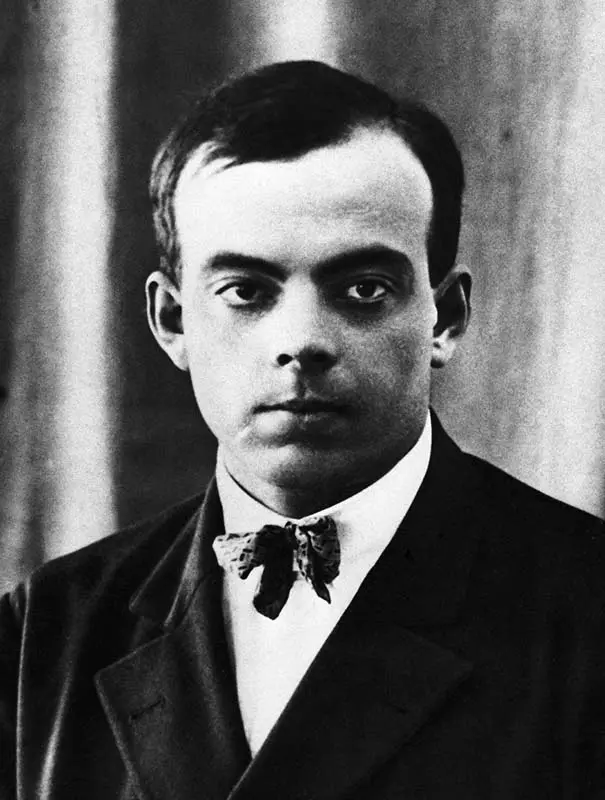
He was a pilot who wrote poetry, a aristocrat who loved mechanics, a man who spent his life flying above the clouds and then descended to write one of the most beloved children’s books in history. Antoine de Saint-Exupéry lived a life of extraordinary contradiction: reckless yet disciplined, adventurous yet deeply lonely, famous yet perpetually restless. When he disappeared somewhere over the Mediterranean in 1944, he left behind a legend, a mystery, and a small golden-haired prince who has since traveled farther than any aviator ever did.
Saint-Exupéry was born in 1900 in Lyon, France, into an old aristocratic family. His father died when he was four, and he was raised by his mother in a château surrounded by siblings, gardens, and a childhood that he would spend the rest of his life trying to recapture. He was not a good student—restless, easily bored, more interested in engines and machinery than in Latin conjugations. But he found his calling in 1921 when he began military service and learned to fly. The sky, he later wrote, is the only place where a man can truly breathe.
In the 1920s and 1930s, Saint-Exupéry helped pioneer commercial aviation, flying mail routes across the Sahara Desert, the Atlas Mountains, and the wild expanses of South America. These were dangerous years. Pilots flew without radar, without reliable weather forecasts, without radio contact for hours on end. They crashed. They died. Saint-Exupéry crashed multiple times himself, surviving a fiery wreck in the Libyan desert and spending days walking through the sand, hallucinating from thirst, before being rescued by a Bedouin traveler. These experiences became the raw material for his early novels: Southern Mail, Night Flight, and Wind, Sand and Stars. He wrote about flying not as a technical activity but as a spiritual one—a confrontation with the elements, with fear, and with oneself.
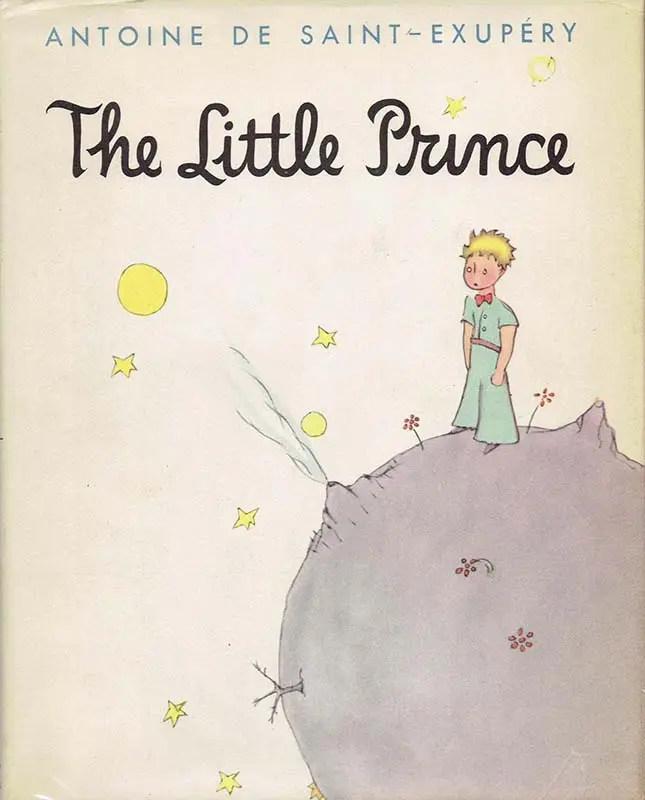
In 1935, on a train journey to Moscow, Saint-Exupéry found himself seated opposite a sleeping child. He later described the round face, the golden curls, the mysterious, unapproachable innocence of the sleeping boy. That image stayed with him. A few years later, as France fell to the Nazis and Saint-Exupéry fled to New York, homesick and unable to fly, he began to write a story for children—or perhaps a story for the child hidden inside every adult. The Little Prince was published in 1943, a slim volume illustrated by the author’s own charmingly naive watercolors. It was the story of a pilot who crashes in the desert and meets a small prince from a tiny asteroid. The prince asks questions, tends his rose, and teaches the pilot—and millions of readers—that what is essential is invisible to the eye.
The Little Prince became an international sensation, but Saint-Exupéry was not there to enjoy its success. He had rejoined the Free French Air Force, flying reconnaissance missions over occupied France despite being far too old and too injured for combat. On July 31, 1944, he took off from Corsica in his Lockheed P-38 Lightning and never returned. His plane was found decades later on the seabed off Marseille. The cause of his death remains uncertain—enemy fighter, mechanical failure, or perhaps, as some have speculated, a deliberate flight into the sea by a man who had given all he had to give.
Antoine de Saint-Exupéry wrote that the most beautiful things in the world cannot be seen or touched. They must be felt with the heart. He lived those words, flew them across deserts and oceans, and finally vanished into the same vast sky he had loved since boyhood. He never came back. But every night, somewhere in the world, a child reads about a little prince and a rose. And for a moment, Saint-Exupéry is not lost at all. He is home.
P.D.S.
Source: Children’s Books and their Creators, Anita Silvey.
Antoine de Saint-Exupéry Works
- L’Aviateur (1926) (The Aviator, in the anthology A Sense of Life)
- Courrier sud (1929) (Southern Mail) – made as a movie in French
- Vol de nuit (1931) (Night Flight) – winner of the full prix Femina and made twice as a movie and a TV film, both in English
- The Wild Garden (1938) – Limited to one thousand copies privately printed for the friends of the author and his publishers as a New Year’s Greeting. The story is taken from the forthcoming book, Wind, Sand and the Stars, to be published in the spring of 1939.
- Terre des hommes (1939) – winner of the Grand Prix du roman de l’Académie française
- Wind, Sand and Stars (simultaneous distinct English version) winner of the U.S. National Book Award
- Pilote de guerre (1942) (titled in English as: Flight to Arras) – winner of the Grand Prix Littéraire de l’Aéro-Club de France
- Le petit prince (1943) (The Little Prince), posthumous in France – translated into more than 250 languages and dialects and among the top four selling books in the world; made as both movies and TV films in a number of languages, and adapted to numerous other media in many languages
- Lettre à un otage (1944) (Letter to a Hostage, posthumous in English)