E. M. Forster: The Collector’s Guide to First Editions, Rare and Collectible Books
Early Life and Formative Years
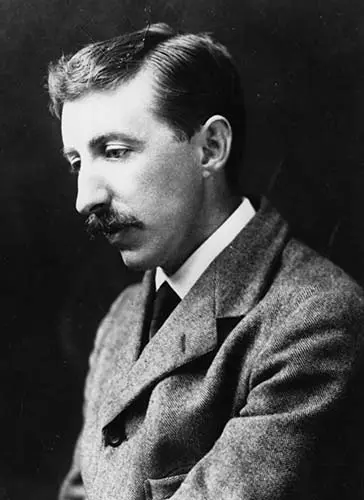
Edward Morgan Forster was born on January 1, 1879, in London, England, into an upper-middle-class family. His father, an architect, died when Forster was just a year old, leaving him to be raised by his mother, Lily, and a circle of influential female relatives. This upbringing in a predominantly feminine, intellectually nurturing environment deeply shaped his sensitivity to social and emotional relationships—a recurring theme in his novels.
Forster attended Tonbridge School, where he felt stifled by the rigid conformity of British public school life, an experience that later fueled his critiques of English class structure. In 1897, he enrolled at King’s College, Cambridge, where he found intellectual liberation. The university’s liberal atmosphere introduced him to the writings of G. E. Moore, whose philosophy of personal relationships and aesthetic appreciation influenced Forster’s humanist outlook. He also became part of the Bloomsbury Group, associating with figures like Virginia Woolf and Lytton Strachey, though he remained somewhat peripheral to its inner circle.
Early Literary Career and the Edwardian Novels
Forster’s first novel, Where Angels Fear to Tread (1905), introduced his signature themes: the clash between English restraint and Mediterranean passion, the hypocrisy of social conventions, and the search for authentic human connection. This was followed by The Longest Journey (1907), his most autobiographical work, which explored themes of truth, art, and the constraints of societal expectations.
Howards End (1910) cemented his reputation as a major novelist. The novel’s famous epigraph, “Only connect…”, encapsulated Forster’s belief in the necessity of emotional and intellectual empathy across class divides. Through the intertwined fates of the Schlegel sisters, the Wilcox family, and Leonard Bast, Forster examined the tensions between idealism and materialism, culture and commerce, in Edwardian England.
A Passage to India and Colonial Critique
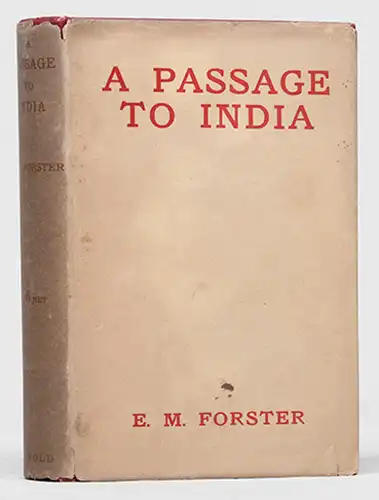
Forster’s masterpiece, A Passage to India (1924), emerged from his experiences in India during two extended visits (1912–13 and 1921–22). The novel, set during the British Raj, explores the fraught relationship between colonizers and the colonized through the failed friendship between Dr. Aziz, an Indian Muslim, and Cyril Fielding, a British schoolmaster. The book’s famous courtroom scene and the enigmatic incident in the Marabar Caves expose the racial and cultural fissures that made genuine connection nearly impossible under imperialism.
The novel was groundbreaking for its time, offering a nuanced critique of colonialism while avoiding simplistic moralizing. Its ambiguous ending—where Fielding and Aziz part ways, recognizing that true friendship cannot flourish under British rule—reflects Forster’s disillusionment with political systems that divide humanity.
Forster’s Homosexuality and Posthumous Works
Though Forster wrote prolifically in his early career, he published no more novels after A Passage to India. One reason was his struggle with his sexuality in an era when homosexuality was criminalized in Britain. He wrote Maurice, a novel about a same-sex love affair, in 1913–14 but kept it private, knowing it could not be published in his lifetime. It finally appeared posthumously in 1971, becoming a landmark in gay literature.
Forster’s other unpublished work, Arctic Summer (unfinished), also dealt with themes of repressed desire. His short stories, collected in The Life to Come (1972), further explored queer themes with a blend of tenderness and melancholy.
Later Years: Essays, Broadcasting, and Legacy
In his later years, Forster turned to essays, criticism, and radio broadcasts. His Aspects of the Novel (1927), based on lectures at Cambridge, became a classic of literary criticism, emphasizing storytelling’s emotional and psychological dimensions over rigid structural rules. He also became a prominent public intellectual, advocating for civil liberties, free speech, and tolerance.
During World War II, he gained new popularity through his BBC radio talks, offering moral reassurance to listeners during the Blitz. His humanist message—emphasizing kindness, individualism, and resistance to authoritarianism—resonated deeply in a world ravaged by war and ideological extremism.
Forster died on June 7, 1970, at the age of 91, in Coventry, England. His ashes were scattered in the rose garden of his beloved Howards End, the country house that had inspired his novel.
Influence and Modern Relevance
Forster’s novels remain widely read and adapted, with Howards End and A Passage to India becoming acclaimed films and TV series. His humanist philosophy—emphasizing empathy, individualism, and resistance to oppressive systems—feels strikingly relevant in today’s polarized world.
While he never achieved the experimental daring of Virginia Woolf or James Joyce, his ability to capture the inner lives of ordinary people with humor, compassion, and moral depth ensures his enduring appeal. As he once wrote:
“The people I respect most behave as if they were immortal and society eternal.”
E. M. Forster’s work continues to remind us of the enduring power of human connection in an often-divided world.
E. M. Forster – First Editions Identification Guide
Complete Bibliography of E. M. Forster: Novels, Rare Books & First Editions
| Year | Title | Publisher | First edition/printing identification points |
|---|---|---|---|
| 1905 | Where Angels Fear to Tread | William Blackwood & Sons, London, MCMV | Slate-blue cloth boards; lettered in gold on spine. Dust jacket (6s). 1050 copies printed. Publisher’s advertisements, inserted at the end. There are three states of advertisements, probable priority:
|
| 1907 | The Longest Journey | William Blackwood & Sons, London, MCMVII | Dark green cloth boards; lettered in gold on spine. Dark green cloth boards; lettered in gold on spine. Powder-blue dustjacket printed in pale navy-blue (6s) 1587 copies printed. Notes: There was a second impression of 525 copies in June 1907. ALSO: New York: Alfred A. Knopf, 1922. First American edition. Orange cloth boards; lettered in black on spine. Dust jacket ($2.50). 2100 copies printed. "Published, March, 1922" stated on © page. |
| 1908 | A Room with a View | London: Edward Arnold & Co., 1908 | Dark red cloth boards; lettered in gold on spine. Dark rose-pink dust-jacket, printed in black (6s). 2000 copies printed. Notes: There was a second impression of 500 copies in January 1909 and probably a third in 1911. ALSO: G. P. Putnam's Sons, New York, 1911. First American edition. Brown-pink cloth boards; lettered in gold on spine. Dust jacket ($1.35). 2027 copies printed. |
| 1910 | Howards End | London: Edward Arnold & Co., 1910 | Dull red cloth boards; lettered in gold on spine. Dust jacket (6s). 2500 copies printed. Two issues, priority as listed:
|
| 1911 | The Celestial Omnibus | London: Sidgwick & Jackson Ltd., 1911 | Pale brown cloth boards; lettered in gold on spine (3s/6d).. 1000 copies printed. Notes: There was a second impression of 500 copies in February 1912; lettered in black on spine and on upper cover |
| 1920 | The Story of the Siren | The Hogarth Press, 1920 | White thin paper wrappers marbled either in bright blue or in green, pale grey and orange with edges turned under (2s/6d). 500 copies printed. Three states, priority as listed:
|
| 1922 | Alexandria | Alexandria: Whitehead Morris, 1922 | Buff paper boards; printed in pale navy-blue up the spine (7s/6d). Notes: In some copies the plan facing p. 144 is incorrectly placed to face p. 44. |
| 1924 | A Passage to India | London: Edward Arnold & Co., 1924 | Two issues, no priority:
Notes: There were further printings in 1924 of 2625 copies in August, 2500 and 3000 in September, 3000 and 4275 in October, 5000 in November, 3000, 2000 and 5325 in December, in 1925 of 2500 and 5000 in February and 2000 in July. |
| 1928 | The Eternal Moment | London: Sidgwick & Jackson Ltd., 1928 | Maroon cloth boards; lettered in gold on spine. Pale grey dust-jacket printed in black (5s). 3720 copies printed. "First Impression of this Collection, March 1928" stated on © page. ALSO: New York: Harcourt, Brace and Co., [1928]. First American edition. Oxford-blue cloth boards; dull yellow printed label on spine. Dust jacket (2.50). 2,000 copies printed. "copyright, 1928, by | Harcourt, Brace and Company, Inc." stated on © page. Notes: There was a further printing of 1000 copies in July 1928. |
E. M. Forster – First Edition Dust Jackets Identification Guide
Gallery of First state Dust Jackets.


Reference:
- B. J. Kirkpatrick: A Bibliography of E. M. Forster