A Floral Fairyland: Ida Rentoul Outhwaite’s A Bunch of Wild Flowers
In the realm of fairy illustration, few artists have captured the delicate enchantment of the natural world quite like Ida Rentoul Outhwaite. Her 1933 volume, A Bunch of Wild Flowers, represents a beautiful departure in her artistic journey—a book that finds Australia’s most beloved fairy artist turning her attention to the small, exquisite wonders of the garden, creating a work of quiet charm that stands apart from her more elaborate fairyland fantasies .
Published by Angus & Robertson in Sydney, A Bunch of Wild Flowers emerged during a period of artistic evolution for Outhwaite . Known primarily for her elaborate fairy scenes in books like Elves and Fairies and Fairyland, here she adopted a more delicate, intimate approach. The book follows in the tradition of English illustrators like Margaret Tarrant and Cicely Mary Barker, whose “Flower Fairy” books had popularized the concept of tiny, botanical sprites . Yet Outhwaite’s interpretation is distinctly her own—infused with the soft, dreamlike quality that made her work so beloved.
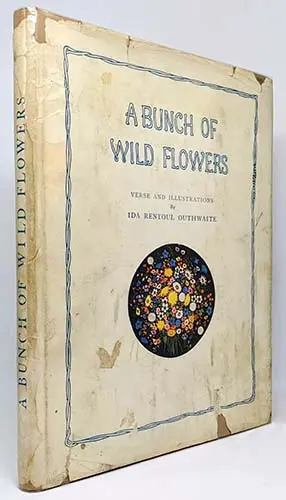
The book is a collection of verse and illustration, entirely the work of Outhwaite’s hand . Its physical production reflects the care bestowed upon it: a small quarto volume, approximately 25 centimeters in height, bound in decorative papered boards with blue lettering and a circular floral motif on the cover . Inside, readers discover six tipped-in color plates—each a small jewel of watercolor artistry—alongside fifteen full-page monotone illustrations and numerous smaller marginal drawings that dance throughout the text . The tipped-in plates, mounted on heavier paper and often protected by tissue guards, were a hallmark of fine book production in the era, and their survival in good condition is a key factor in the book’s collectibility today.
What makes A Bunch of Wild Flowers so special is its focus. Unlike Outhwaite’s earlier works, which often depicted grand fairy processions or elaborate narrative scenes, this volume celebrates the small and the simple. Each flower—whether native Australian bloom or familiar garden favorite—receives its own verse and illustration, personified with the gentle anthropomorphism that characterized Outhwaite’s fairy work . Her fairies here are smaller, more delicate, almost merging with the petals and leaves they inhabit. The illustrations possess an intimate, almost meditative quality, as if the artist herself had spent quiet hours in contemplation of the natural world.
The palette is softer than her earlier work—gentle pinks, pale yellows, muted greens, and touches of lavender that evoke the fragility of the flowers she depicts. The monotone illustrations, rendered in delicate pen-and-ink, display the extraordinary draftsmanship for which Outhwaite was known, each line contributing to a sense of ethereal grace .
The book was issued in several editions and printings, with the first edition of 1933 being the most desirable for collectors. Later printings appeared in 1940, 1942, and 1948, often on the thinner, wartime paper that has since browned with age . Original dust jackets—fragile and often missing—are rare and add significantly to a copy’s value . Today, first editions in fine condition with clean plates and intact bindings are increasingly scarce and command prices ranging from several hundred to over a thousand dollars at auction .
A Bunch of Wild Flowers holds a special place in Outhwaite’s bibliography. It is a book that captures her at a moment of stylistic shift—moving from the grand fairy tableaux of her early career to the more delicate, personal work of her later years. In its pages, the flowers of field and garden become portals to an enchanted world, each bloom housing its own tiny spirit. For collectors and lovers of fairy art, it remains a treasure—a gentle reminder that sometimes the most magical things come in the smallest packages.s and lovers of fairy art, it remains a treasure—a gentle reminder that sometimes the most magical things come in the smallest packages.
Recommended for Collectors
- Elves and Fairies (1916) – Outhwaite’s breakthrough fairy collection
- Flower Fairies of the Spring by Cicely Mary Barker (1923) – Comparable British flower fairy illustrations
- Snugglepot and Cuddlepie by May Gibbs (1918) – Australian nature fantasy classic
Art Gallery: Ida Rentoul Outhwaite – RA Bunch of Wild Flowers 1933
![Ida Rentoul Outhwaite - A Bunch of Wild Flowers [outhwaite-flowers01] (art, illustrations)](https://www.nocloo.com/wp-content/plugins/justified-image-grid/timthumb.php?src=https%3A%2F%2Fwww.nocloo.com%2Fart%2Fouthwaite-flowers%2Fouthwaite-flowers01.jpg&h=280&q=90&f=.jpg "Ida Rentoul Outhwaite - Illustrations for a Bunch of Wild Flowers 1933")
![Ida Rentoul Outhwaite - A Bunch of Wild Flowers [outhwaite-flowers02] (art, illustrations)](https://www.nocloo.com/wp-content/plugins/justified-image-grid/timthumb.php?src=https%3A%2F%2Fwww.nocloo.com%2Fart%2Fouthwaite-flowers%2Fouthwaite-flowers02.jpg&h=280&q=90&f=.jpg "Ida Rentoul Outhwaite - Illustrations for a Bunch of Wild Flowers 1933")
![Ida Rentoul Outhwaite - A Bunch of Wild Flowers [outhwaite-flowers03] (art, illustrations)](https://www.nocloo.com/wp-content/plugins/justified-image-grid/timthumb.php?src=https%3A%2F%2Fwww.nocloo.com%2Fart%2Fouthwaite-flowers%2Fouthwaite-flowers03.jpg&h=280&q=90&f=.jpg "Ida Rentoul Outhwaite - Illustrations for a Bunch of Wild Flowers 1933")
![Ida Rentoul Outhwaite - A Bunch of Wild Flowers [outhwaite-flowers04] (art, illustrations)](https://www.nocloo.com/wp-content/plugins/justified-image-grid/timthumb.php?src=https%3A%2F%2Fwww.nocloo.com%2Fart%2Fouthwaite-flowers%2Fouthwaite-flowers04.jpg&h=280&q=90&f=.jpg "Ida Rentoul Outhwaite - Illustrations for a Bunch of Wild Flowers 1933")
![Ida Rentoul Outhwaite - A Bunch of Wild Flowers [outhwaite-flowers05] (art, illustrations)](https://www.nocloo.com/wp-content/plugins/justified-image-grid/timthumb.php?src=https%3A%2F%2Fwww.nocloo.com%2Fart%2Fouthwaite-flowers%2Fouthwaite-flowers05.jpg&h=280&q=90&f=.jpg "Ida Rentoul Outhwaite - Illustrations for a Bunch of Wild Flowers 1933")
![Ida Rentoul Outhwaite - A Bunch of Wild Flowers [outhwaite-flowers06] (art, illustrations)](https://www.nocloo.com/wp-content/plugins/justified-image-grid/timthumb.php?src=https%3A%2F%2Fwww.nocloo.com%2Fart%2Fouthwaite-flowers%2Fouthwaite-flowers06.jpg&h=280&q=90&f=.jpg "Ida Rentoul Outhwaite - Illustrations for a Bunch of Wild Flowers 1933")
![Ida Rentoul Outhwaite - A Bunch of Wild Flowers [outhwaite-flowers07] (art, illustrations)](https://www.nocloo.com/wp-content/plugins/justified-image-grid/timthumb.php?src=https%3A%2F%2Fwww.nocloo.com%2Fart%2Fouthwaite-flowers%2Fouthwaite-flowers07.jpg&h=280&q=90&f=.jpg "Ida Rentoul Outhwaite - Illustrations for a Bunch of Wild Flowers 1933")
![Ida Rentoul Outhwaite - A Bunch of Wild Flowers [outhwaite-flowers08] (art, illustrations)](https://www.nocloo.com/wp-content/plugins/justified-image-grid/timthumb.php?src=https%3A%2F%2Fwww.nocloo.com%2Fart%2Fouthwaite-flowers%2Fouthwaite-flowers08.jpg&h=280&q=90&f=.jpg "Ida Rentoul Outhwaite - Illustrations for a Bunch of Wild Flowers 1933")
![Ida Rentoul Outhwaite - A Bunch of Wild Flowers [outhwaite-flowers09] (art, illustrations)](https://www.nocloo.com/wp-content/plugins/justified-image-grid/timthumb.php?src=https%3A%2F%2Fwww.nocloo.com%2Fart%2Fouthwaite-flowers%2Fouthwaite-flowers09.jpg&h=280&q=90&f=.jpg "Ida Rentoul Outhwaite - Illustrations for a Bunch of Wild Flowers 1933")
![Ida Rentoul Outhwaite - A Bunch of Wild Flowers [outhwaite-flowers10] (art, illustrations)](https://www.nocloo.com/wp-content/plugins/justified-image-grid/timthumb.php?src=https%3A%2F%2Fwww.nocloo.com%2Fart%2Fouthwaite-flowers%2Fouthwaite-flowers10.jpg&h=280&q=90&f=.jpg "Ida Rentoul Outhwaite - Illustrations for a Bunch of Wild Flowers 1933")
![Ida Rentoul Outhwaite - A Bunch of Wild Flowers [outhwaite-flowers11] (art, illustrations)](https://www.nocloo.com/wp-content/plugins/justified-image-grid/timthumb.php?src=https%3A%2F%2Fwww.nocloo.com%2Fart%2Fouthwaite-flowers%2Fouthwaite-flowers11.jpg&h=280&q=90&f=.jpg "Ida Rentoul Outhwaite - Illustrations for a Bunch of Wild Flowers 1933")
![Ida Rentoul Outhwaite - A Bunch of Wild Flowers [outhwaite-flowers12] (art, illustrations)](https://www.nocloo.com/wp-content/plugins/justified-image-grid/timthumb.php?src=https%3A%2F%2Fwww.nocloo.com%2Fart%2Fouthwaite-flowers%2Fouthwaite-flowers12.jpg&h=280&q=90&f=.jpg "Ida Rentoul Outhwaite - Illustrations for a Bunch of Wild Flowers 1933")
![Ida Rentoul Outhwaite - A Bunch of Wild Flowers [outhwaite-flowers13] (art, illustrations)](https://www.nocloo.com/wp-content/plugins/justified-image-grid/timthumb.php?src=https%3A%2F%2Fwww.nocloo.com%2Fart%2Fouthwaite-flowers%2Fouthwaite-flowers13.jpg&h=280&q=90&f=.jpg "Ida Rentoul Outhwaite - Illustrations for a Bunch of Wild Flowers 1933")
![Ida Rentoul Outhwaite - A Bunch of Wild Flowers [outhwaite-flowers14] (art, illustrations)](https://www.nocloo.com/wp-content/plugins/justified-image-grid/timthumb.php?src=https%3A%2F%2Fwww.nocloo.com%2Fart%2Fouthwaite-flowers%2Fouthwaite-flowers14.jpg&h=280&q=90&f=.jpg "Ida Rentoul Outhwaite - Illustrations for a Bunch of Wild Flowers 1933")
![Ida Rentoul Outhwaite - A Bunch of Wild Flowers [outhwaite-flowers15] (art, illustrations)](https://www.nocloo.com/wp-content/plugins/justified-image-grid/timthumb.php?src=https%3A%2F%2Fwww.nocloo.com%2Fart%2Fouthwaite-flowers%2Fouthwaite-flowers15.jpg&h=280&q=90&f=.jpg "Ida Rentoul Outhwaite - Illustrations for a Bunch of Wild Flowers 1933")
![Ida Rentoul Outhwaite - A Bunch of Wild Flowers [outhwaite-flowers16] (art, illustrations)](https://www.nocloo.com/wp-content/plugins/justified-image-grid/timthumb.php?src=https%3A%2F%2Fwww.nocloo.com%2Fart%2Fouthwaite-flowers%2Fouthwaite-flowers16.jpg&h=280&q=90&f=.jpg "Ida Rentoul Outhwaite - Illustrations for a Bunch of Wild Flowers 1933")
![Ida Rentoul Outhwaite - A Bunch of Wild Flowers [outhwaite-flowers17] (art, illustrations)](https://www.nocloo.com/wp-content/plugins/justified-image-grid/timthumb.php?src=https%3A%2F%2Fwww.nocloo.com%2Fart%2Fouthwaite-flowers%2Fouthwaite-flowers17.jpg&h=280&q=90&f=.jpg "Ida Rentoul Outhwaite - Illustrations for a Bunch of Wild Flowers 1933")
![Ida Rentoul Outhwaite - A Bunch of Wild Flowers [outhwaite-flowers18] (art, illustrations)](https://www.nocloo.com/wp-content/plugins/justified-image-grid/timthumb.php?src=https%3A%2F%2Fwww.nocloo.com%2Fart%2Fouthwaite-flowers%2Fouthwaite-flowers18.jpg&h=280&q=90&f=.jpg "Ida Rentoul Outhwaite - Illustrations for a Bunch of Wild Flowers 1933")
![Ida Rentoul Outhwaite - A Bunch of Wild Flowers [outhwaite-flowers19] (art, illustrations)](https://www.nocloo.com/wp-content/plugins/justified-image-grid/timthumb.php?src=https%3A%2F%2Fwww.nocloo.com%2Fart%2Fouthwaite-flowers%2Fouthwaite-flowers19.jpg&h=280&q=90&f=.jpg "Ida Rentoul Outhwaite - Illustrations for a Bunch of Wild Flowers 1933")
![Ida Rentoul Outhwaite - A Bunch of Wild Flowers [outhwaite-flowers20] (art, illustrations)](https://www.nocloo.com/wp-content/plugins/justified-image-grid/timthumb.php?src=https%3A%2F%2Fwww.nocloo.com%2Fart%2Fouthwaite-flowers%2Fouthwaite-flowers20.jpg&h=280&q=90&f=.jpg "Ida Rentoul Outhwaite - Illustrations for a Bunch of Wild Flowers 1933")
![Ida Rentoul Outhwaite - A Bunch of Wild Flowers [outhwaite-flowers21] (art, illustrations)](https://www.nocloo.com/wp-content/plugins/justified-image-grid/timthumb.php?src=https%3A%2F%2Fwww.nocloo.com%2Fart%2Fouthwaite-flowers%2Fouthwaite-flowers21.jpg&h=280&q=90&f=.jpg "Ida Rentoul Outhwaite - Illustrations for a Bunch of Wild Flowers 1933")