A Fairy Kingdom Rediscovered: Ida Rentoul Outhwaite’s The Enchanted Forest
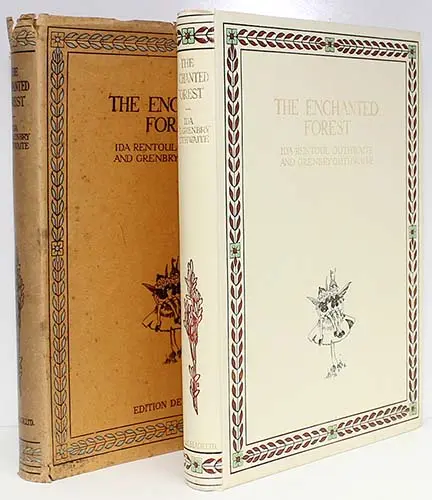
There are books that transport us; there are books that enchant us. And then there is Ida Rentoul Outhwaite’s The Enchanted Forest—a volume that does both so exquisitely that it has become, for those fortunate enough to possess a copy, a most treasured possession, the book one would save from a fire.
Published in London by A & C Black in 1921, The Enchanted Forest represents the culmination of an artist’s singular vision . Ida Rentoul Outhwaite (1888–1960) was an Australian illustrator whose work, alongside that of her husband Grenbry, defined fairy-tale art in the early twentieth century. Her illustrations, described as “gossamer-light yet finely and sharply edged,” possess a distinctive quality that sets her apart from her European contemporaries . Where Arthur Rackham conjured gnarled forests and Kay Nielsen evoked Nordic grandeur, Outhwaite created something altogether more delicate—a world of waif-like fairies, tender attention to detail, and joy in the natural world .
The Enchanted Forest is widely considered the third most important book by Outhwaite, following Elves and Fairies and Fairyland. It tells the story of Anne, a young girl who, thrown from her horse, awakens in a forest populated by elves, goblins, fairies, and dancing bears . She is guided through this enchanted realm by her tame rabbit, Potty, who is himself a fairy creature . It is a narrative of pure childhood fancy, evoking “what it would feel like to have fairy wings and eat magic pies and ride a butterfly chariot” .
The book itself was produced as a lavish object befitting its magical contents. The first edition featured a striking binding: quarter cloth over paper boards, with an illustrated title label affixed to the upper cover . Inside, readers discovered a wealth of visual treasures: sixteen full-colour plates, each tipped in by hand and protected by captioned tissue guards, alongside fifteen additional illustrations in monochrome . The total of thirty-one plates represented a substantial artistic undertaking, and the quality of reproduction ensured that Outhwaite’s delicate watercolours retained their ethereal luminosity.
So highly anticipated was this work that it was issued in a deluxe limited edition of just five hundred copies, each signed by the artist . These signed copies, printed on superior paper and often bound in cream cloth, represented the pinnacle of fine book production. Today, surviving copies—especially those with the signature intact and the plates in clean condition—command extraordinary prices from collectors, with some examples valued in the thousands of dollars .
The book’s critical reception at the time of publication was enthusiastic, and its reputation has only grown in the century since. Contemporary reviewers praised Outhwaite’s “wonderful & charming coloured & black & white plates of fairies, the little people & Goblins” . Her fairies, with their translucent wings and ethereal presence, became the definitive images of fairy-kind for generations of readers—so much so that even today, one reviewer notes, “even if you do not know her by name or read her books, I guarantee you have seen her work on a card” .
What makes The Enchanted Forest endure is not merely the beauty of its illustrations, but the world they create. Outhwaite’s forest is not a place of danger or moral trial, but a realm of wonder, where the natural world and the fairy realm exist in harmonious coexistence. Her fairies are not the formidable figures of folklore but gentle, curious creatures, as much a part of the landscape as the flowers and trees among which they dwell.
Today, first editions of The Enchanted Forest are scarce and highly prized . The book’s delicate binding, the tipped-in plates, and the inherent fragility of paper over a century old mean that copies in fine condition are increasingly rare. Yet for collectors and lovers of fairy art, the pursuit is worthwhile—for to hold The Enchanted Forest is to hold a piece of vanished magic, a book that captures, in its pages, the very essence of childhood wonder.
As one reader wrote of her childhood copy, inscribed by her parents “to our own fairy princess,” it is the book she would save if her house ever caught fire. In the world of illustrated books, that may be the highest praise of all.
For admirers of this edition, these kindred works may enchant:
• Elves and Fairies (1916) by Outhwaite – her earlier bushland fantasy
• The Little Green Road to Fairyland (1922) by Annie Rentoul – collaboration with her sister
• Snugglepot and Cuddlepie (1918) by May Gibbs – contrasting Australian bush fantasy
Art Gallery: Ida Rentoul Outhwaite – The Enchanted Forest 1921
![Ida Rentoul Outhwaite - Enchanted Forest [outhwaite-enchanted01] (art, illustrations)](https://www.nocloo.com/wp-content/plugins/justified-image-grid/timthumb.php?src=https%3A%2F%2Fwww.nocloo.com%2Fart%2Fouthwaite-enchanted%2Fouthwaite-enchanted01.jpg&h=280&q=90&f=.jpg)
![Ida Rentoul Outhwaite - Enchanted Forest [outhwaite-enchanted02] (art, illustrations)](https://www.nocloo.com/wp-content/plugins/justified-image-grid/timthumb.php?src=https%3A%2F%2Fwww.nocloo.com%2Fart%2Fouthwaite-enchanted%2Fouthwaite-enchanted02.jpg&h=280&q=90&f=.jpg)
![Ida Rentoul Outhwaite - Enchanted Forest [outhwaite-enchanted03] (art, illustrations)](https://www.nocloo.com/wp-content/plugins/justified-image-grid/timthumb.php?src=https%3A%2F%2Fwww.nocloo.com%2Fart%2Fouthwaite-enchanted%2Fouthwaite-enchanted03.jpg&h=280&q=90&f=.jpg)
![Ida Rentoul Outhwaite - Enchanted Forest [outhwaite-enchanted04] (art, illustrations)](https://www.nocloo.com/wp-content/plugins/justified-image-grid/timthumb.php?src=https%3A%2F%2Fwww.nocloo.com%2Fart%2Fouthwaite-enchanted%2Fouthwaite-enchanted04.jpg&h=280&q=90&f=.jpg)
![Ida Rentoul Outhwaite - Enchanted Forest [outhwaite-enchanted05] (art, illustrations)](https://www.nocloo.com/wp-content/plugins/justified-image-grid/timthumb.php?src=https%3A%2F%2Fwww.nocloo.com%2Fart%2Fouthwaite-enchanted%2Fouthwaite-enchanted05.jpg&h=280&q=90&f=.jpg)
![Ida Rentoul Outhwaite - Enchanted Forest [outhwaite-enchanted06] (art, illustrations)](https://www.nocloo.com/wp-content/plugins/justified-image-grid/timthumb.php?src=https%3A%2F%2Fwww.nocloo.com%2Fart%2Fouthwaite-enchanted%2Fouthwaite-enchanted06.jpg&h=280&q=90&f=.jpg)
![Ida Rentoul Outhwaite - Enchanted Forest [outhwaite-enchanted07] (art, illustrations)](https://www.nocloo.com/wp-content/plugins/justified-image-grid/timthumb.php?src=https%3A%2F%2Fwww.nocloo.com%2Fart%2Fouthwaite-enchanted%2Fouthwaite-enchanted07.jpg&h=280&q=90&f=.jpg)
![Ida Rentoul Outhwaite - Enchanted Forest [outhwaite-enchanted08] (art, illustrations)](https://www.nocloo.com/wp-content/plugins/justified-image-grid/timthumb.php?src=https%3A%2F%2Fwww.nocloo.com%2Fart%2Fouthwaite-enchanted%2Fouthwaite-enchanted08.jpg&h=280&q=90&f=.jpg)
![Ida Rentoul Outhwaite - Enchanted Forest [outhwaite-enchanted09] (art, illustrations)](https://www.nocloo.com/wp-content/plugins/justified-image-grid/timthumb.php?src=https%3A%2F%2Fwww.nocloo.com%2Fart%2Fouthwaite-enchanted%2Fouthwaite-enchanted09.jpg&h=280&q=90&f=.jpg)
![Ida Rentoul Outhwaite - Enchanted Forest [outhwaite-enchanted10] (art, illustrations)](https://www.nocloo.com/wp-content/plugins/justified-image-grid/timthumb.php?src=https%3A%2F%2Fwww.nocloo.com%2Fart%2Fouthwaite-enchanted%2Fouthwaite-enchanted10.jpg&h=280&q=90&f=.jpg)
![Ida Rentoul Outhwaite - Enchanted Forest [outhwaite-enchanted11] (art, illustrations)](https://www.nocloo.com/wp-content/plugins/justified-image-grid/timthumb.php?src=https%3A%2F%2Fwww.nocloo.com%2Fart%2Fouthwaite-enchanted%2Fouthwaite-enchanted11.jpg&h=280&q=90&f=.jpg)
![Ida Rentoul Outhwaite - Enchanted Forest [outhwaite-enchanted12] (art, illustrations)](https://www.nocloo.com/wp-content/plugins/justified-image-grid/timthumb.php?src=https%3A%2F%2Fwww.nocloo.com%2Fart%2Fouthwaite-enchanted%2Fouthwaite-enchanted12.jpg&h=280&q=90&f=.jpg)
![Ida Rentoul Outhwaite - Enchanted Forest [outhwaite-enchanted13] (art, illustrations)](https://www.nocloo.com/wp-content/plugins/justified-image-grid/timthumb.php?src=https%3A%2F%2Fwww.nocloo.com%2Fart%2Fouthwaite-enchanted%2Fouthwaite-enchanted13.jpg&h=280&q=90&f=.jpg)
![Ida Rentoul Outhwaite - Enchanted Forest [outhwaite-enchanted14] (art, illustrations)](https://www.nocloo.com/wp-content/plugins/justified-image-grid/timthumb.php?src=https%3A%2F%2Fwww.nocloo.com%2Fart%2Fouthwaite-enchanted%2Fouthwaite-enchanted14.jpg&h=280&q=90&f=.jpg)

![Ida Rentoul Outhwaite - Enchanted Forest [outhwaite-enchanted16] (art, illustrations)](https://www.nocloo.com/wp-content/plugins/justified-image-grid/timthumb.php?src=https%3A%2F%2Fwww.nocloo.com%2Fart%2Fouthwaite-enchanted%2Fouthwaite-enchanted16.jpg&h=280&q=90&f=.jpg)
![Ida Rentoul Outhwaite - Enchanted Forest [outhwaite-enchanted17] (art, illustrations)](https://www.nocloo.com/wp-content/plugins/justified-image-grid/timthumb.php?src=https%3A%2F%2Fwww.nocloo.com%2Fart%2Fouthwaite-enchanted%2Fouthwaite-enchanted17.jpg&h=280&q=90&f=.jpg)

![Ida Rentoul Outhwaite - Enchanted Forest [outhwaite-enchanted19] (art, illustrations)](https://www.nocloo.com/wp-content/plugins/justified-image-grid/timthumb.php?src=https%3A%2F%2Fwww.nocloo.com%2Fart%2Fouthwaite-enchanted%2Fouthwaite-enchanted19.jpg&h=280&q=90&f=.jpg)
![Ida Rentoul Outhwaite - Enchanted Forest [outhwaite-enchanted20] (art, illustrations)](https://www.nocloo.com/wp-content/plugins/justified-image-grid/timthumb.php?src=https%3A%2F%2Fwww.nocloo.com%2Fart%2Fouthwaite-enchanted%2Fouthwaite-enchanted20.jpg&h=280&q=90&f=.jpg)

![Ida Rentoul Outhwaite - Enchanted Forest [outhwaite-enchanted22] (art, illustrations)](https://www.nocloo.com/wp-content/plugins/justified-image-grid/timthumb.php?src=https%3A%2F%2Fwww.nocloo.com%2Fart%2Fouthwaite-enchanted%2Fouthwaite-enchanted22.jpg&h=280&q=90&f=.jpg)
![Ida Rentoul Outhwaite - Enchanted Forest [outhwaite-enchanted23] (art, illustrations)](https://www.nocloo.com/wp-content/plugins/justified-image-grid/timthumb.php?src=https%3A%2F%2Fwww.nocloo.com%2Fart%2Fouthwaite-enchanted%2Fouthwaite-enchanted23.jpg&h=280&q=90&f=.jpg)
![Ida Rentoul Outhwaite - Enchanted Forest [outhwaite-enchanted24] (art, illustrations)](https://www.nocloo.com/wp-content/plugins/justified-image-grid/timthumb.php?src=https%3A%2F%2Fwww.nocloo.com%2Fart%2Fouthwaite-enchanted%2Fouthwaite-enchanted24.jpg&h=280&q=90&f=.jpg)
![Ida Rentoul Outhwaite - Enchanted Forest [outhwaite-enchanted25] (art, illustrations)](https://www.nocloo.com/wp-content/plugins/justified-image-grid/timthumb.php?src=https%3A%2F%2Fwww.nocloo.com%2Fart%2Fouthwaite-enchanted%2Fouthwaite-enchanted25.jpg&h=280&q=90&f=.jpg)
![Ida Rentoul Outhwaite - Enchanted Forest [outhwaite-enchanted26] (art, illustrations)](https://www.nocloo.com/wp-content/plugins/justified-image-grid/timthumb.php?src=https%3A%2F%2Fwww.nocloo.com%2Fart%2Fouthwaite-enchanted%2Fouthwaite-enchanted26.jpg&h=280&q=90&f=.jpg)
![Ida Rentoul Outhwaite - Enchanted Forest [outhwaite-enchanted27] (art, illustrations)](https://www.nocloo.com/wp-content/plugins/justified-image-grid/timthumb.php?src=https%3A%2F%2Fwww.nocloo.com%2Fart%2Fouthwaite-enchanted%2Fouthwaite-enchanted27.jpg&h=280&q=90&f=.jpg)
![Ida Rentoul Outhwaite - Enchanted Forest [outhwaite-enchanted28] (art, illustrations)](https://www.nocloo.com/wp-content/plugins/justified-image-grid/timthumb.php?src=https%3A%2F%2Fwww.nocloo.com%2Fart%2Fouthwaite-enchanted%2Fouthwaite-enchanted28.jpg&h=280&q=90&f=.jpg)
![Ida Rentoul Outhwaite - Enchanted Forest [outhwaite-enchanted29] (art, illustrations)](https://www.nocloo.com/wp-content/plugins/justified-image-grid/timthumb.php?src=https%3A%2F%2Fwww.nocloo.com%2Fart%2Fouthwaite-enchanted%2Fouthwaite-enchanted29.jpg&h=280&q=90&f=.jpg)
![Ida Rentoul Outhwaite - Enchanted Forest [outhwaite-enchanted30] (art, illustrations)](https://www.nocloo.com/wp-content/plugins/justified-image-grid/timthumb.php?src=https%3A%2F%2Fwww.nocloo.com%2Fart%2Fouthwaite-enchanted%2Fouthwaite-enchanted30.jpg&h=280&q=90&f=.jpg)
![Ida Rentoul Outhwaite - Enchanted Forest [outhwaite-enchanted31] (art, illustrations)](https://www.nocloo.com/wp-content/plugins/justified-image-grid/timthumb.php?src=https%3A%2F%2Fwww.nocloo.com%2Fart%2Fouthwaite-enchanted%2Fouthwaite-enchanted31.jpg&h=280&q=90&f=.jpg)