Jack London: The Collector’s Guide to First Editions, Rare and Collectible Books

Early Life and the School of Hard Knocks
Jack London was born John Griffith Chaney on January 12, 1876, in San Francisco, California. His mother, Flora Wellman, was a spiritualist and music teacher, and his father, William Chaney, was an astrologer who abandoned the family before London’s birth. Flora later married John London, a disabled Civil War veteran, and young Jack took his stepfather’s surname. The family lived in poverty, moving constantly across the Oakland area. London went to work at an early age, selling newspapers, setting pins in bowling alleys, and working in a cannery. He found his escape in the local public library, reading voraciously. At fifteen, he bought a sloop and became an oyster pirate in San Francisco Bay, a dangerous and illegal occupation that gave him a taste for adventure and rebellion.
He then signed onto a sealing schooner and sailed to Japan and the Bering Sea, an experience that fed his growing fascination with the sea and with brutal, unforgiving environments. When he returned, he took odd jobs as a factory worker, a jute mill hand, and a hobo, riding the rails across the United States and Canada. He was arrested for vagrancy and spent a month in jail, an experience that radicalized him politically. Determined to escape the cycle of poverty, he educated himself ferociously, attending Oakland High School at nineteen and later spending one semester at the University of California, Berkeley. Financial pressures forced him to drop out, but he had already decided on his path: he would become a writer, and he would write faster, harder, and more vividly than anyone else.
The Klondike and the Making of a Literary Star
In July 1897, London joined the Klondike Gold Rush, sailing to Alaska with his brother-in-law. He did not find gold, but he found something more valuable for a writer: material. He endured a harsh winter near Dawson City, living on the edge of starvation, observing the men around him and absorbing the landscape of ice, snow, and primal struggle. When he returned to Oakland in 1898, he was determined to turn his experiences into stories. He wrote constantly, submitting manuscripts to magazines and receiving a steady stream of rejections. Finally, The Overland Monthly accepted his story “To the Man on Trail” and paid him five dollars. Within two years, London became one of the most successful writers in America. His Klondike stories, collected in The Son of the Wolf (1900) and other volumes, created a new kind of adventure fiction, blending naturalistic brutality with a near-mystical reverence for the wild.
His first novel, A Daughter of the Snows (1902), was modestly successful, but it was The Call of the Wild (1903) that made him a legend. The novel, told from the perspective of a dog named Buck who is stolen from a California ranch and sold into the brutal life of an Alaskan sled dog, was unlike anything published before. It was a work of radical empathy, imagining the inner life of an animal with such intensity that readers felt Buck’s suffering and triumph as their own. The book was an instant bestseller, and London was suddenly wealthy and famous. He followed it with The Sea-Wolf (1904), a philosophical thriller about a shipwrecked literary critic and a brutal, Nietzschean sea captain, and White Fang (1906), a companion to The Call of the Wild that traced a wolf-dog’s journey from wildness to domestication.
Socialism, Adventure, and Decline
London was a committed socialist, and his political beliefs infused much of his work. The Iron Heel (1908), a dystopian novel predicting the rise of a brutal oligarchy in the United States, is considered a precursor to George Orwell’s Nineteen Eighty-Four and to the entire genre of dystopian fiction. He lectured widely on socialism, ran unsuccessfully for mayor of Oakland as the Socialist Party candidate, and used his writing income to support radical causes. But London was also a man of enormous contradictions. He was a socialist who lived extravagantly, building a grand mansion called Wolf House on a vast estate in Glen Ellen, California. He was an advocate for racial and class equality who also held troubling views about Anglo-Saxon supremacy.
He was a disciplined writer who produced thousands of words daily, yet he drank heavily and suffered from numerous health problems, including kidney disease and alcoholism. He traveled constantly, reporting on the Russo-Japanese War for Hearst newspapers, sailing the South Pacific on his self-designed yacht the Snark, and covering the Mexican Revolution. His later work suffered from his haste and his declining health. He published over fifty books in seventeen years—novels, stories, essays, and journalism—but the quality was uneven. Wolf House burned to the ground in 1913, a financial and emotional blow from which he never fully recovered. On November 22, 1916, at the age of forty, Jack London died at his ranch. The official cause was uremia, but he had been taking morphine for pain, and many biographers believe his death was a suicide. He was cremated, and his ashes were buried under a red boulder on his property, now the Jack London State Historic Park.
Influence and Legacy
Jack London’s influence on American literature is immense, though it is often underappreciated by literary critics who dismissed him as a mere adventure writer. In fact, he was a pioneering figure in literary naturalism, the movement that applied scientific determinism to fiction. Ernest Hemingway read London as a boy and cited The Call of the Wild as an early inspiration. Hemingway’s own spare prose, his fascination with masculinity under pressure, and his understanding of violence as a cleansing force all bear London’s imprint. George Orwell was a devoted reader. Orwell’s essay on London praised his ability to write from inside the experience of poverty, and the dystopian vision of The Iron Heel directly influenced Nineteen Eighty-Four. John Steinbeck inherited London’s interest in the struggle between human beings and an indifferent natural world, as well as his political commitment to the working class. In the realm of animal fiction, London created a new genre.
Before The Call of the Wild, animals in literature were either cartoonishly anthropomorphic or merely symbolic. London gave Buck an interiority that was neither human nor simple instinct, a hybrid consciousness that changed how writers imagined non-human experience. Richard Adams, author of Watership Down, and K.A. Applegate, author of the Animorphs series, have both acknowledged London’s influence. London also transformed the literature of the American West. Unlike the romantic cowboys and frontiersmen of earlier fiction, London’s characters are driven by economics, biology, and environment. His work anticipated the revisionist Westerns of Cormac McCarthy and the ecological fiction of Edward Abbey. Outside literature, London’s name became synonymous with adventure, grit, and the lure of the wild. He is one of the most translated American authors in history, particularly popular in Russia and Japan. His Klondike stories fixed the image of the frozen North in the global imagination, and The Call of the Wild remains a staple of school curricula worldwide. For all his contradictions—the socialist millionaire, the advocate of primitive life who never abandoned his typewriter—Jack London wrote with a raw power that few authors have matched. He lived fast, burned bright, and left behind a body of work that continues to call readers back to the wild.
After barely surviving the 1897 Klondike Gold Rush (where he contracted scurvy), London turned failure into literary gold. While living in an Oakland shack, he devoured Marx, Nietzsche, and Darwin, blending socialism, individualism, and survivalism into a unique worldview. His first major story, “To the Man on Trail” (1899), captured the Yukon’s brutal beauty, but it was The Call of the Wild (1903) that made him famous. The tale of Buck, a domesticated dog reverting to wolfish instincts, became an allegory for humanity’s primal core, selling over a million copies in his lifetime.
Key Works
- The Call of the Wild (1903)
- White Fang (1906)
- The Iron Heel (1908)
- Martin Eden (1909)
Famous Lines
- “The proper function of man is to live, not to exist.”
- “I shall not waste my days in trying to prolong them.”
London’s life burned as fiercely as his fiction—a testament to the beauty and brutality of unfettered existence.
Jack London – First Editions Identification Guide
A Complete Bibliography of Jack London: Novels, Rare Books & First Editions
| Year | Title | Publisher | First edition/printing identification points |
|---|---|---|---|
| 1900 | Son of the Wolf | Boston & New York: Houghton, Mifflin & Co, 1900 | First American edition. "COPYRIGHT, 1900, BY JACK LONDON" stated on © page. Slate gray cloth stamped in silver on cover and spine. Frontis. with tissue guard. Four states, no priority:
|
| 1901 | Chris Farrington, Able Seaman | New York: McClure, Phillips & Co, Mcmi | First American edition. "Copyright, 1901, by McCLURE, PHILLIPS & CO." stated on © page. Dark blue cloth with gilt design and lettering on front cover and spine. |
| 1902 | The Cruise of the Dazzler | New York: The Century Co., MCMII | First American edition. "Published October, 1902" stated on © page. Cream cloth, "St. Nicholas Books" in black on spine and front cover, balance of lettering red. Decorations on spine and front cover green, orange, and black. Dust jacket cream color, green letering. The design is repeated from the binding. |
| 1902 | A Daughter of the Snows | Philadelphia: J. B. Lippincott Co., MCMII | First American edition. "Published October, 1902" stated on © page. Red cloth with white, green, and gilt decorations. Lettering on front cover and spine white. Frontis. in color with tissue guard. Two pages of publisher's advertisements at back. |
| 1902 | Children of the Frost | New York: The Macmillan Co., 1902 | First American edition. "Set up and electrotyped September, 1902." stated on © page. Green cloth decorated in red, black, and white. Lettering on front cover and spine white. Frontis. Three pages of publisher's advertisements at back. |
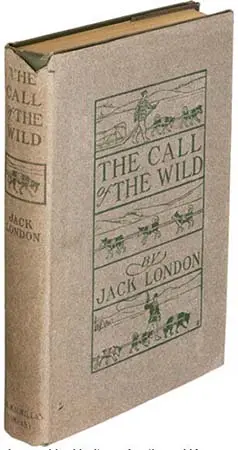
| 1903 | The Call of the Wild | New York: The Macmillan Co., 1903 | First American edition. "Set up, electrotyped, and published July, 1903." stated on © page. Bound in vertically ribbed green cloth decorated in white, dark orange, and dark green. Lettering on front cover and spine gilt. Top edges gilt. Frontis. in color with tissue guard, included in pagination. Two pages of publisher's advertisements at back. Dust jacket stiff gray paper printed in green, with design repeated from the binding. ALSO: Second edition binding horizontally ribbed green cloth, third edition standard grade cloth with design embossed. ALSO: Toronto, George N. Morang & Company Limited, [1903]. First Canadian edition. Binding appears to be slightly lighter colored vertically ribbed green cloth decorated in white, blue, and dark green. Top edge gilt. |
| 1903 | The Kempton-Wace Letters | New York: The Macmillan Co., 1903 | First American edition. "Set up and electrotyped May, 1903." stated on © page. No author's name on title page. Green decorated cloth stamped in black. Top edges gilt. Lettering on spine gilt. Lettering on front cover white. Three pages of publisher's advertisements at back. ALSO: Reprint, September, 1903. Same binding, copyright as above, WITH author's name "JACK LONDON" on the title page. |
| 1903 | The People of the Abyss | New York: The Macmillan Co., 1903 | First American edition. "Set up, electrotyped and published October, 1903." stated on © page. Dark blue cloth decorated in gilt and black. Top edges gilt, all other edges uncut. Lettering on spine gilt. Lettering on front cover black outlined in gilt. Frontis. Three pages of publisher's advertisements at back. |
| 1904 | The Sea-Wolf | New York: The Macmillan Co., 1904 | First American edition. "Published October, 1904." stated on © page. Light blue cloth decorated in white, orange, and dark blue. Top edges gilt. Lettering on spine gilt. Lettering on front cover white. Frontis. with tissue guard. Three pages of publisher's advertisements at back. Note: Spine may be lettered either in gilt or white. Merle Johnson's American first editions says "former probably first." Many collectors ascribe no priority to either. |
| 1904 | The Faith of Men and Other Stories | New York: The Macmillan Co., 1904 | First American edition. "Set up, electrotyped, and published April, 1904." stated on © page. Light blue cloth decorated in white, green, and black. Top edges gilt, all other edges uncut. Lettering on spine gilt. Lettering on front cover black. Two pages of publisher's advertisements at back. |
| 1905 | The Game | New York: The Macmillan Co., 1905 | First American edition. "Published June, 1905." stated on © page. Green cloth decorated in white and brown. Top edges gilt. Lettering on spine gilt. Lettering on front cover red. Frontis. in color with tissue guard, included in pagination. Six pages of publisher's advertisements at back. Dust jacket is of stiff powder-blue paper lettered in deep red. The binding and wrapper are identical in type; the latter does not have the white and brown decoration of the cover of the binding. Note: The second issue is rubber stamped on the copyright page; Copyright 1905, | By the Metropolitan Magazine Co. |
| 1905 | War of the Classes | New York: The Macmillan Co., 1905 | First American edition. "Published April, 1905." stated on © page. Dark red cloth. Lettering on spine gilt. Three pages of publisher's advertisements at back. Also noted in gray paper wrappers, lettered in black on front cover. |
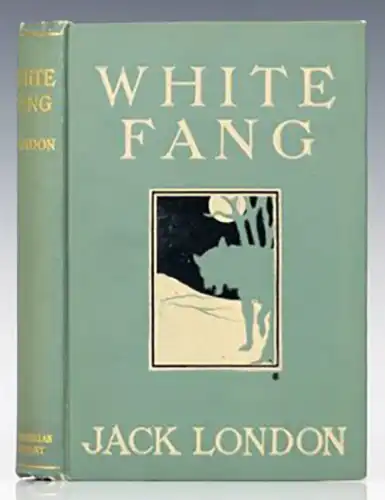
| 1906 | White Fang | New York: The Macmillan Co., 1906 | First American edition. "Published October, 1906." stated on © page. Gray cloth decorated in white and black. Lettering on spine gilt. Lettering on front cover white. Frontis. in color with tissue guard. Four pages of publisher's advertisements at back. Note: The first issue does not have a tipped-in title-page; copies are fairly uncommon with the title-page as a part of the signature. |
| 1906 | Tales of the Fish Patrol | New York: The Macmillan Co., 1905 | First American edition. "Published September, 1905." stated on © page. Dark blue cloth decorated in yellow, green, and blue. Lettering on spine gilt. Lettering on front cover pale green. Top edge gilt. Frontis. Three pages of publisher's advertisements at back. Note: Merle Johnson's American First Editions states, "Two states of binding; no established priority." |
| 1906 | Moon-Face and Other Stories | New York: The Macmillan Co., 1906 | First American edition. "Published September, 1906." stated on © page. Dark blue cloth decorated in gilt and green. Top edges gilt, other edges uncut. Spine and front cover lettered in light green. Four pages of publisher's advertisements at back. Note: Merle Johnson's American First Editions states, "An advance copy at the Library of Congress has no month of publication on the copyright page." |
| 1906 | Scorn of Women in Three Acts | New York: The Macmillan Co., 1906 | First American edition. "Published November, 1906." stated on © page. Red cloth with white spine. Top edges gilt. Lettering on spine black. Lettering on front cover white. Three pages of publisher's advertisements at back. |
| 1907 | Before Adam | New York: The Macmillan Co., 1907 | First American edition. "Published February, 1907." stated on © page. Tan pebble-grain cloth. Red lettering outlined in white on cover and spine. Six animal footprints in brown diagonally across binding, from lower spine to upper right comer of front cover. Frontis. in colors. Four pages of publisher's advertisements at back. Pages uncut. Dust jacket is of the same design, printed in dark red. Note: The George H. Tweney Collection contains two copies of the first edition. One of these is described above; the other has the title on the spine, also the publisher's name, both printed in red, and not outlined in white. |
| 1907 | Love of Life and Other Stories | New York: The Macmillan Co., 1907 | First American edition. "Published September, 1907." stated on © page. Blue cloth stamped in gilt on front cover and spine. Front cover enclosed in narrow white border. Four pages of publisher's advertisements at back. |
| 1907 | The Road | New York: The Macmillan Co., 1907 | First American edition. "Published November, 1907." stated on © page. Gray cloth stamped in black, and lettered in gilt on front cover and spine. Top edges gilt. Frontis. Four pages of publisher's advertisements at back. |
| 1908 | The Iron Heel | New York: The Macmillan Co., 1908 | First American edition. "Published February, 1908." stated on © page. Dark blue cloth stamped in gilt and light blue. Four pages of publisher's advertisements at back. Note: A number of copies were issued by Appeal to Reason, Girard, Kansas. These constitute a later issue. |
| 1909 | Martin Eden | New York: The Macmillan Co., 1909 | First American edition. "Published September, 1909." stated on © page. Dark blue cloth stamped in light green. Lettering on spine and front cover gilt. Frontis. in sepia tone. Ten pages of publisher's advertisements at back. |
| 1910 | Burning Daylight | New York: The Macmillan Co., 1910 | First American edition. "Published October, 1910." stated on © page. Light blue cloth stamped in light blue and yellow. Lettering on spine and front cover white. Frontis. Eleven pages of publisher's advertisements at back. Note: Merle Johnson's American First Editions states, "Two states of binding are noted; (a) with MacMillan at foot of spine; (b) with The MacMillan Company. Earliest known presentation copies are of the latter state." |
| 1910 | Lost Face | New York: The Macmillan Co., 1910 | First American edition. "Published March, 1910." stated on © page. Dark blue cloth decorated in orange, white, and green. Lettering on spine and front cover white. Frontis. Four pages of publisher's advertisements at back. |
| 1910 | Revolution and Other Essays | New York: The Macmillan Co., 1910 | First American edition. "Published March, 1910" stated on © page. Dark red cloth stamped in gilt. Title "Revolution" only appears on front cover and spine. Four pages of publisher's advertisements at back. |
| 1910 | Theft: A Play in Four Acts | New York: The Macmillan Co., 1910 | First American edition. "Published November, 1910" stated on © page. Red cloth with white spine. Top edge gilt. Lettering on spine black. Lettering on front cover white. Note: Often title-pages have been removed from poor copies of the first edition and inserted in later printings. Textual differences may be noted by the split letters "a" and "t" in "that", page 47, line 1, and in the mutilation of the "d" in "perplexed" page 65, line 1. |
| 1911 | Adventure | New York: The Macmillan Co., 1911 | First American edition. "Published March, 1911." stated on © page. Two bindings, no priority:
|
| 1911 | The Cruise of the Snark | New York: The Macmillan Co., 1911 | First American edition. "Published June, 1911." stated on © page, Light blue cloth lettered in gilt on spine and front cover. Colored print of the Snark inlaid on front cover, identical with frontispiece. Top edges gilt. Frontis. print of the Snark in color. Four pages of publisher's advertisements at back. Title page tipped-in. |
| 1911 | South Sea Tales | New York: The Macmillan Co., 1911 | First American edition. "Published October, 1911." stated on © page. Light blue cloth lettered in gilt on spine and front cover. Colored print of the Snark inlaid on front cover, identical with frontispiece. Top edges gilt. Frontis. print of the Snark in color. Four pages of publisher's advertisements at back. |
| 1911 | When God Laughs and Other Stories | New York: The Macmillan Co., 1911 | First American edition. "Published January, 1911." stated on © page. Dark olive green cloth decorated in red and light green. Lettering on spine and front cover gilt. Frontis. Four pages of publisher's advertisements at back. |
| 1912 | A Son of the Sun | Garden City, New York: Doubleday, Page & Co., 1912 | First American edition. "COPYRIGHT, 1912, BY DOUBLEDAY, PAGE & COMPANY" stated on © page. Light blue cloth with embossed ship decoration on front cover in gray, white, and orange. Lettering on front cover and spine gray. Frontis. |
| 1912 | The House of Pride & Other Tales of Hawaii | New York: The Macmillan Co., 1912 | First American edition. "Published March, 1912." stated on © page. Light green cloth decorated in blue, black, and white. Lettering on front cover and spine white. Six pages of publisher's advertisements at back. |
| 1912 | Smoke Bellew | New York: The Century Co., 1912 | First American edition. "Published October, 1912" stated on © page. Blue-gray cloth, decorated in cream, white, and black. Lettering in black. Frontis. |
| 1913 | The Abysmal Brute | New York: The Century Co., 1913 | First American edition. "Published, May, 1913" stated on © page. Olive cloth stamped in yellow and black on cover and spine. Frontis. with tissue guard. One page of publisher's advertisements at back. Dust jacket dark brown paper, overprinted in black and light green on the front with design of a man carrying a buck deer over his shoulders and a gun in his right hand. Inside front flap a publisher's "plug" for the book, and inside rear flap excerpts from reviewers' praises of Jack London as an author. Notes: The second binding is similar, but with the design on front cover in green and black. A third issue is 16.5 x 11 cm. It is in cheap light green cloth with the conventional oak-leaf and com decoration in dark green and black respectively. |
| 1913 | John Barleycorn | New York: The Century Co., 1913 | First American edition. "Published, August, 1913" stated on © page. Deep green cloth stamped in gold on cover and spine. Frontis. |
| 1913 | The Valley of the Moon | New York: The Macmillan Co., 1913 | First American edition. "Published October, 1913" stated on © page. Orange cloth decorated in yellow and light and dark blue. Lettering on spine gilt. Lettering on front cover white. Four pages of publisher's advertisements at back. |
| 1913 | The Night Born | New York: The Century Co., 1913 | First American edition. "Published, February, 1913" stated on © page. Blue -gray cloth, decorated in black. Lettering in gilt on front cover and spine. Frontis. in colors with tissue guard. One page of publisher's advertisements at back. |
| 1914 | The Mutiny of the Elsinore | New York: The Macmillan Co., 1914 | First American edition. "Published September, 1914" stated on © page. Yellow cloth decorated in gray and blue. Lettering on spine gilt. Title on front cover white, author's name in gilt. Frontis. in color. Six pages of publisher's advertisements at back. Dust jacket white calendared paper, printed in black, with a color reproduction of the frontispiece on the front, flaps and back are blank. |
| 1914 | The Strength of the Strong | New York: The Macmillan Co., 1914 | First American edition. "Published May, 1914." stated on © page. Light blue cloth decorated in black and gold. Lettering on spine and front cover white. Frontis. Six pages of publisher's advertisements at back. Dust jacket white, calendared paper, very fragile and brittle, lettered in blue on the front and spine, and flaps and back are blank. Twelve lines of text on front of dust wrapper extolling Jack London's ability to tell a good story |
| 1915 | The Scarlet Plague | New York: The Macmillan Co., 1915 | First American edition. "Published May, 1915." stated on © page. Dark red cloth decorated in yellow and light red. Lettering on spine gilt. Lettering on front cover light red. Frontis. included in pagination. Four pages of publisher's advertisements at back. |
| 1915 | The Star Rover | New York: The Macmillan Co., 1915 | First American edition. "Published October, 1915" stated on © page. Light blue cloth decorated in light blue, dark blue, and white. Lettering on spine and front cover gilt. Frontis. in color. Eight pages of publisher's advertisements at back. |
| 1916 | The Acorn-Planter | New York: The Macmillan Co., 1916 | First American edition. "Published February, 1916." stated on © page. Red cloth with white spine. Top edges gilt. Lettering on spine black. Lettering on front cover white. Four pages of publisher's advertisements at back. |
| 1916 | The Little Lady of the Big House | New York: The Macmillan Co., 1916 | First American edition. "Published April, 1916" stated on © page. Blue cloth decorated in dark blue, orange, and white. Spine lettered in gilt. Lettering on front cover white. Frontis. in color. Four pages of publisher's advertisements at back. |
| 1916 | The Turtles of Tasman | New York: The Macmillan Co., 1916 | First American edition. "Published, September, 1916." stated on © page. Chocolate brown cloth decorated in blue and orange. Lettering on spine gilt. Lettering on front cover cream. Five pages of publisher's advertisements at back. |
| 1917 | Jerry of the Islands | New York: The Macmillan Co., 1917 | First American edition. "Published, April, 1917." stated on © page. Red cloth decorated in black. Spine lettered in gilt. Title on front cover gilt, author's name in black. Frontis. in color. Six pages of publisher's advertisements at back. |
| 1917 | Michael, Brother of Jerry | New York: The Macmillan Co., 1917 | First American edition. "Published, November, 1917." stated on © page. Red cloth decorated in black. Spine lettered in gilt. Title on front cover gilt, author's name in black. Frontis. in color. Eight pages of publisher's advertisements at back. |
| 1918 | The Red One | New York: The Macmillan Co., 1918 | First American edition. "Published, October, 1918" stated on © page. Brown paper over boards decorated in blue, orange, and black. Lettering on spine black. Lettering on front cover black except for "Red One" which is in orange outlined in black. Frontis. portrait of author. Four pages of publisher's advertisements at back. Dust jacket white calendared paper, printed in black, reproduction of the frontispiece portrait of London on the front, lettered THE | RED ONE at the top, and JACK LONDON below. Inside front flap an advertisement for the book, back flap and back of wrapper are blank. |
| 1919 | On the Makaloa Mat | New York: The Macmillan Co., 1919 | First American edition. "Published, September, 1919" stated on © page. Light blue cloth decorated in yellow and dark blue. Spine and front cover lettered in yellow. |
| 1920 | Hearts of Three | Mills & Boon, Ltd, London, [1918] | First English edition. Foreword dated "Waikiki, Hawaii, March 23, 1916,". Blue cloth. Black lettering on spine only. This edition has no date, but according to the catalog of the British Museum it was published in England in 1918. Checked by Colin Clair against the copy in the British Museum. ALSO: New York: The Macmillan Co., 1920. First American edition. "Published, September, 1920" stated on © page. Red cloth. Spine lettered in gilt. |
| 1922 | Dutch Courage and Other Stories | New York: The Macmillan Co., 1920 | First American edition. "Published September, 1922." stated on © page. Red cloth decorated in black. Lettering on spine gilt. Lettering on front cover black. Frontis. portrait of author. |
Jack London – First Printing Dust Jackets Identification Guide
Gallery of First state Dust Jackets.


Reference:
- Hensley C. Woodbridge, John London, George J. Tweney – Jack London, A Bibliography