James Joyce: A Guide to First Editions and Valued Collectibles
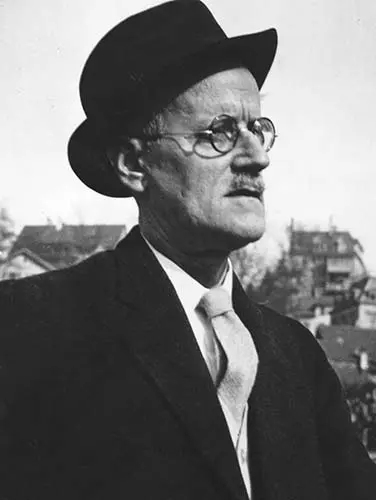
James Augustine Aloysius Joyce (1882-1941) stands as a colossus of 20th-century literature, a writer whose radical experiments with language, form, and consciousness permanently altered the landscape of the novel. From the scrupulous realism of his early work to the boundless linguistic innovation of his final masterpiece, Joyce’s career represents a relentless pursuit of new modes of expression. His influence is so profound that modern and postmodern literature can largely be divided into pre- and post-Joycean epochs.
The Exile as Artist: A Life in Voluntary Exile
Joyce was born in Dublin into a middle-class family whose gradual descent into poverty provided him with a keen sense of social decline and the complexities of Irish life. He excelled academically at Jesuit schools and University College Dublin, but from an early stage, he defined himself in opposition to the twin forces he saw as paralyzing Ireland: Nationalism and the Catholic Church. In 1904, he left Ireland with Nora Barnacle, the woman who would become his lifelong partner, embarking on a life of voluntary exile on the European continent. This self-imposed distance—living in Trieste, Zurich, and Paris—was crucial to his art. As he famously stated, in order to write about Dublin, he had to first escape it. From the continent, he could reconstruct the city of his youth with a microscopic, unforgetting, and yet liberated precision. This life of exile, often marked by financial struggle and near-blindness, was dedicated with single-minded obsession to his literary projects.
From Realism to Revolution: The Trajectory of a Radical Oeuvre
Joyce’s work charts a clear and audacious path of increasing technical ambition. His first major publication, Dubliners (1914), is a collection of short stories that seems, on the surface, to be a model of realism. However, its stated goal was to write a “chapter of the moral history of my country,” and its technique of the “epiphany”—a sudden moment of profound spiritual revelation for a character—elevated the stories beyond mere observation. The final story, “The Dead,” is a masterpiece of emotional depth and symbolic resonance.
His first novel, A Portrait of the Artist as a Young Man (1916), is a semi-autobiographical Künstlerroman (artist’s novel) that traces the development of its hero, Stephen Dedalus, from infancy to young adulthood. Its revolutionary technique is the evolving narrative voice, which begins in the sensory, fragmented language of a child and gradually matures into the sophisticated, philosophical prose of the aspiring artist, mirroring the hero’s own consciousness.
With Ulysses (1922), Joyce achieved a work of such encyclopedic scope and technical innovation that it forever changed the possibilities of the novel. Structurally, it parallels Homer’s Odyssey, mapping the epic journey of the Greek hero onto a single day—June 16, 1904 (Bloomsday)—in the life of a Dublin advertisement canvasser, Leopold Bloom. The novel’s true revolution, however, is its exhaustive use of “stream of consciousness,” plunging the reader directly into the unedited, associative flow of its characters’ thoughts, memories, and sensations. Each of its 18 episodes is written in a unique style, ranging from newspaper headlines to a parody of English literary evolution and a scientific catechism.
Joyce’s final work, Finnegans Wake (1939), represents the ultimate frontier of his linguistic experimentation. Abandoning conventional plot and character, the book is a cyclical dream-narrative written in a complex polyglot language of puns, portmanteau words, and multilingual allusions. It is perhaps the most challenging work in the English language, a book that seeks to encapsulate the entire history of humanity through the unconscious mind of a Dublin publican, HCE.
A Universe of Influence: The Joycean Legacy
Joyce’s influence on subsequent literature is immeasurable and multifaceted.
- The Liberation of Language and Form: Before Joyce, the novel was largely bound by conventions of linear plot and coherent syntax. Ulysses and Finnegans Wake exploded these constraints, giving license to generations of writers to fracture narrative, play with language, and prioritize the internal world of consciousness over external action. The high modernism of Virginia Woolf and William Faulkner is unthinkable without Joyce’s precedent; Faulkner’s dense, long sentences in The Sound and the Fury are a direct descendant of Joyce’s stream of consciousness.
- The Mythic Method: T.S. Eliot, in his review of Ulysses, identified Joyce’s “mythic method” as the single most important development for modern literature. By superimposing the ancient structure of the Odyssey onto contemporary Dublin, Joyce provided a way of “controlling, of ordering, of giving a shape and a significance to the immense panorama of futility and anarchy which is contemporary history.” This technique became a cornerstone of High Modernism, seen in Eliot’s own The Waste Land and later in works like John Updike’s Rabbit series.
- The Global and the Postmodern: Joyce’s linguistic playfulness, his encyclopedic range of reference, and his self-consciousness about the act of writing made him a direct forefather of postmodernism. Writers like Samuel Beckett (his sometime secretary), Salman Rushdie (whose Midnight’s Children employs a Joycean exuberance and historical scope), and Thomas Pynchon all work in a tradition inaugurated by Joyce. His ability to weave a vast tapestry of world mythology, history, and popular culture from the microcosm of a single city inspired countless authors to find the universal in the local.
- The Demands and Rewards of Reading: Joyce created a new kind of reader. His work demands active participation, rereading, and scholarly engagement. The entire industry of academic literary criticism was, in part, shaped by the need to decipher and interpret his complex texts. He transformed reading from a passive entertainment into an intense, collaborative act of creation.
Legacy: The Uncreated Conscience of a Race
James Joyce fulfilled the ambition of his fictional avatar, Stephen Dedalus: to “forge in the smithy of my soul the uncreated conscience of my race.” In doing so, he also forged new tools for the novel itself. While his later work remains daunting, his central project—to capture the full, messy, and magnificent complexity of human experience in all its banality and profundity—is the defining ambition of modern literature. More than any writer since Shakespeare, Joyce expanded the expressive capacity of language, and his shadow falls long over every novelist who has dared to experiment since.
James Joyce – First Editions Identification Guide
A Complete Bibliography of James Joyce: Novels, Rare Books & First Editions
| Year | Title | Publisher | First edition/printing identification points |
|---|---|---|---|
| 1907 | Chamber Music | Elkim Matthews, London, 1907 | Light green cloth. Three bindings, distinguished by the type of end papers used, priority as listed:
Notes: This unauthorized first American edition of Chamber Music was printed for Alfred Bartlett of the Cornhill Company. ALSO: B. W. Huebsch, New York, MCMXVIII. First authorized American edition. "Copyright, 1918, by B. W. Huebsch" stated on © page. |
| 1914 | Dubliners | London , Grant Richard Ltd., [1914]. | Dark red cloth. "Printed by the Riverside Press Limited. Edinburgh, Scotland ,1914" stated on © page. ALSO: New York: B. W. Huebsch, 1916. Blue-green cloth. Issued in a cream-colored dust wrapper, printed in black. Price at $1.50. Note: Printed from imported English sheet. ALSO: New York: B. W. Huebsch, 1917. Blue-green cloth. "Second printing, April, 1917" stated on © page. The dust wrapper is also the same as that of the New York 1916 edition, except Second Printing is printed in red at the top of the front cover. |
| 1916 | A Portrait of the Artist as a Young Man | New York | B. W. Huebsch, MCMXVI | Blue cloth. "Copyright, 1916, by B. W. Huebsch" stated on © page. Issued in a cream-colored dust wrapper, printed in black. Price at $1.50. Note: The American edition preceed the English Edition. ALSO: The Egoist Ltd., London, Oakley House, Bloomsbury Street [1917]. Dark green cloth. First English edition, printed from American sheets. "Copyright, 1916, by B. W. Huebsch" stated on the © page. Price of 6s. ALSO: The Egoist Ltd., 23 Adelphi Terrace House, W.C,London, [1918]. Dark green cloth. First English edition, English sheet.. "Second edition, 1917." stated on the © page. Price of 4s 6d. |
| 1918 | Exiles | London, Grant Richards Ltd., 1918 | Green boards. 1918 date on title page. No date on © page. Price of 3s 6d. ALSO: New York, B. W. Huebsch, MCMXVIII. Green twill cloth, tan boards. First American edition."Copyright, 1918, by B. W. Huebsch" stated on © page. Issued in a pale yellow dust wrapper printed in black. Price of $1. |
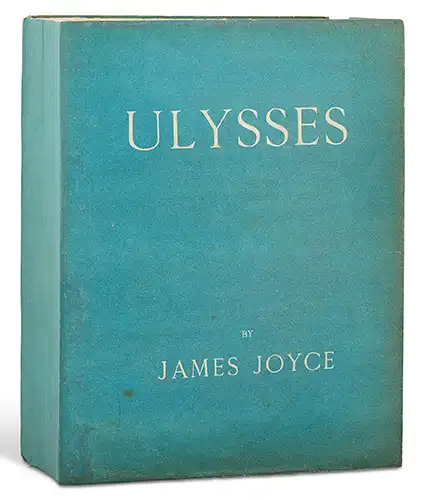
| 1922 | Ulysses | Shakespeare and Co., Paris, 1922 | Blue wrappers. Limited to 1000 of which: 100 copies signed on Dutch handmade paper numbered from 1-100; 150 copies on vergé, numbered from 101-250; 750 copies from handmade paper, numbered from 251-1000. Ulysses was printed for Shakespeare and Company eleven times. ALSO: Egoist Press, London, by John Rodker, Paris, 1922. First English Edition (printed in France). Limited to 2000 copies on handmade paper numbered from 1-2000. "First published by Shakespeare and Company, Paris: February 1922. | Published by the Egoist Press, London: October 1922." stated on the © page. 500 copies were sent to America, reported seized and burned by the government authorities. NOTES: This edition was printed from the plates of the original edition. Eight pages of “Errata,” unopened, listing over two hundred newly discovered typographical errors were laid in. ALSO: Shakespeare and Company, Paris, 1927. First American edition (unauthorized/pirated edition). Blue wrappers. The wrappers do not have folding flaps as in the legitimated edition. Printed from the 9th edition but with variations in type and punctuation; p.[viii], blank; p.[1], fly title (misplaced; reversed with divisional numeral: I); p.[2], list of books By the Same Writer, giving a publisher of these books incorrectly as “Jonathan Cape” instead of “Jonathan Cape”; pp.[ 31-50, text of Part 1; p.[51 ], divisional numeral: II ; p.[52], blank; pp.[53]-570, text of Part II; p.[571 ], divisional numeral: in ; p. [572], blank; pp. [573]—735, text of Part III p.[736], blank. ALSO: The Odyssey Press, Hamburg, Paris, Bologna, [1932]. Two volumes, issued in plain cardboard box. Stiff grey wrappers, printed in reddish brown. "First issued by The Odyssey Press: December 1932." stated on © page. ALSO: Random House, NY, 1934. Cream cloth. First American edition. "First American edition, published by Random | House, New York, 1934." stated on © page. 100 copies (due to copyright), a second printing of 10,300 copies followed . ALSO: The Limited Edition Club, NY, 1933. Brown Bancroft buckram. Limited to 1500 copies of which 250 copies are signed by Joyce, with illustrations by Henri Matisse. Note: The text of this edition is based on that of the Odyssey Press, 2nd impression, and is therefore the most accurate text of Ulysses that has been published in the United States. ALSO: John Lane the Bodly Head, London, [1936]. First English edition (printed in England). Green linen buckram. Limited to 1000 copies of which: 100 copies bound in calf vellum and signed by the author; 900 copies printed on Japanese vellum. |
| 1927 | Pomes Penyeach | Shakespeare and Co., Paris, 1927 | Pale green boards. "Copyright by James Joyce 1927" stated on © page. An errata slip of three lines has been tipped in facing the colophon on page 22. ALSO: Sylvia Beach, 1931. Gray wrappers. First authorized American edition. "Copyright 1931 by Sylvia Beach" stated on © page. 50 copies. Notes: These copies were printed by the Princeton University Press, Princeton, New Jersey, for Sylvia Beach of Paris solely to copyright the work in the United States. ALSO: Privately Printed, Cleveland, 1931. Unauthorized American edition. Dark brown cloth. "Copyright by James Joyce 1927" stated on © page. Limited to 100 numbered copies, printed by hand on Georgian. 103 copies were printed, of which 100 were numbered. Note: Most copies were given away due to threats from Sylvia Beach for copyright. ALSO: The Obelisk Press, Paris, 1932. Portfolio of green watered silk over boards. First English edition (printed in France). Limited to 25 numbered copies, signed by Joyce. An unspecified number of hors de commerce copies were also printed. ALSO: London: Faber & Faber, [1933]. White stiff wrapper. First English edition (printed in England). "First issued in this edition, March mcmxxxiii , by Faber and Faber Limited" stated on © page. |
| 1928 | Anna Livia Plurabelle | New York: Crosby Gaige: 1928 | Brown cloth. Limited to 800 numbered copies, signed by Joyce on the limitation page. "Copyright: 1928 : Crosby Gaige" stated on © page. Notes: 50 copies of special issue were also printed, unnumbered and not signed by Joyce. Black cloth instead of brown. Issued in quater green leather slip case. ALSO: London: Faber & Faber, [1930]. Two binding, no priority: Brown cloth. First English edition, preceded by the Limited American edition. "This edition first published in MCXXX by Faber and Faber Limited" stated on © page. |
| 1929 | Tales Told of Shem and Shawn | The Black Sun Press, Paris, MCMXXIX | White wrappers with transparent glassine cover. "Copyrighted by James Joyce, 1929." stated on © page. Limited to 650 copies of which: 100 copies on Japanese vellum signed by the author; 500 copies on Holland Van Gelder and 50 copies Hors Commerce. Issued in slip case cover with green suede paper and gilt slip case. ALSO: London: Faber & Faber, [1932]. Pale green boards, orange Dust Jacket printed in blue. (2s6d). "First published in December MCMXXXll" stated on © page. |
| 1930 | James Clarence Mangan | Ulysses Bookshop, London, [1930] | Black cloth, purple boards. Limited to 40 numbered copies for private circulation. Not for sale. |
| 1930 | Isben's New Drama | Ulysses Bookshop, London, [1930] | Black cloth, purple boards. Limited to 40 numbered copies for private circulation. Not for sale. |
| 1930 | Haveth Childers Everywhere | Fountain Press, NY 1930 | White wrappers. "Copyright by Henry Babou and Jack Kahane, France 1930" stated on © page. Limited to 685 copies of which: 100 copies numbered 1-100 on imperial hand-made iridescent Japan, signed by the writer; 500 copies on handmade pure linen Vidalon Royal, numbered 101-600; 10 copies called writer's copies on imperial handmade iridescent Japan, numbered I to X; 75 copies called writer's copies on pure linen hand-made Vidalon Royal, numbered XI to LXXXV. ALSO: Faber & Faber, London, [1931]. Two issued, priority as listed:
|
| 1934 | The Mime of Mick Nick and the Maggies | The Sevivre Press, The Hague, MCMXXXIV | Cream write wrappers. "Copyright 1933 by N. V. Servire, The Hague (Holland)" stated on © page. Two issues, no priority:
|
| 1937 | Collected Poems | The Black Sun Press, 1936 | Two issues, no priority:
|
| 1936 | Storiella As She Is Syung | Corvinus Press, 1937 | Orange vellum, on Arnold hand-made paper, plain gray-green slip case. Limited to 176 copies of which:
|
| 1939 | Finnegans Wake | London: Faber & Faber, 1939 | Two issues, no priority:
|
James Joyce – First Printing Dust Jackets Identification Guide
Gallery of First state Dust Jackets of ‘s works.


Reference:
- John J. Slocum & Herbert Cahoon: A Bibliography of James Joyce