A Nursery Treasure: Millicent Sowerby’s The Wise Book of 1906
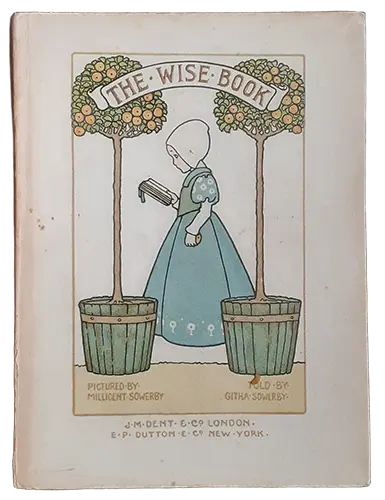
In the golden age of illustrated children’s books, certain volumes possess a particular warmth—a sense that they were created not merely to instruct or entertain, but to be loved. Millicent Sowerby’s The Wise Book, published in 1906, is such a treasure. This charming collection of nursery rhymes and simple lessons, brought to life by one of the most beloved illustrators of the Edwardian era, represents the very best of what a children’s book could be: beautiful, gentle, and filled with quiet wisdom.
Millicent Sowerby (1878–1967) was part of a remarkable artistic family. She was one of the four Sowerby sisters—Amy, Millicent, Githa, and Katherine—who together created some of the most endearing children’s books of the early twentieth century. The sisters often collaborated, with Amy writing or selecting texts while Millicent provided the illustrations. Their work was characterized by a distinctive style: soft watercolors, rounded figures, and an atmosphere of cozy domesticity that made their books feel like a warm embrace.
The Wise Book, published by J. M. Dent & Co. in London, was part of a series that included The Happy Book, The Good Book, and The Playful Book. Each volume was conceived as a collection of verses, rhymes, and simple moral tales designed to delight young children while gently guiding them toward good behavior and kindness. The books were small, meant for small hands, with illustrated covers and endpapers that invited children to open them again and again.
What makes Sowerby’s illustrations in The Wise Book so distinctive is their combination of delicacy and accessibility. Her children are drawn with a gentle realism—plump cheeks, earnest expressions, clothes that look soft and comfortable. They are recognizably Edwardian, with their pinafores and sailor suits, yet they possess a timeless quality that allows them to speak to children across generations. Sowerby understood that children respond to faces, to expressions, to the small details that make a picture feel alive, and she gave these elements her full attention.
The color palette of The Wise Book is warm and inviting. Sowerby favored soft pinks, gentle blues, warm yellows, and touches of earthy green—colors that evoke the comfort of a well-loved nursery. Her watercolor technique was fluid yet controlled, creating images that feel spontaneous without ever seeming careless. The illustrations are often framed by decorative borders, sometimes floral, sometimes geometric, that echo the Arts and Crafts sensibility of the period.
The content of The Wise Book reflects the educational philosophy of its time. The verses and stories emphasize kindness, honesty, obedience, and the simple pleasures of family life. There are rhymes about sharing, about helping others, about being grateful for what one has. Yet the moralizing is never heavy-handed. Sowerby’s illustrations soften the lessons, transforming them into something gentle and encouraging rather than preachy. A child who might resist a lecture about generosity could hardly resist the image of a small girl sharing her tea with a teddy bear.
The physical production of the book matched the charm of its content. The binding was typically in pictorial boards, with a color illustration on the front cover that promised the visual delights within. The endpapers were illustrated as well, creating a cohesive experience from the moment the book was opened. It was a book designed not for the collector’s shelf but for the nursery—a book meant to be read, to be held, to be treasured.
Today, Millicent Sowerby’s The Wise Book is a cherished collectible. First editions in good condition are increasingly scarce, as the book’s intended use—in the hands of children—meant that many copies were loved to pieces. Surviving copies, with their color plates intact and their bindings sound, are prized by collectors of Edwardian children’s books and by those who remember these gentle volumes from their own childhoods.
What endures in The Wise Book is not merely its beauty but its spirit. In a world that often rushes children toward adulthood, Sowerby’s illustrations offer a space of quiet, of warmth, of simple pleasures. They remind us that wisdom, for the very young, is not about facts or figures but about kindness, about wonder, about learning to see the world with gentle eyes. More than a century after its publication, The Wise Book remains a wise book indeed.
Recommended for Collectors
- The Child’s Garden of Verses (1908) illustrated by Millicent Sowerby
- The Wind in the Willows (1908) by Kenneth Grahame for comparable Edwardian charm
- Flower Fairies series by Cicely Mary Barker for similar delicate botanical illustrations
Art Gallery: Millicent Sowerby – The Wise Book 1906
![Millicent Sowerby - The Wise Book [sowerby-wisebook01] (art, illustrations)](https://www.nocloo.com/wp-content/plugins/justified-image-grid/timthumb.php?src=https%3A%2F%2Fwww.nocloo.com%2Fart%2Fsowerby-wisebook%2Fsowerby-wisebook01.jpg&h=280&q=90&f=.jpg "Millicent Sowerby - Illustrations for The Wise Book 1906")
![Millicent Sowerby - The Wise Book [sowerby-wisebook02] (art, illustrations)](https://www.nocloo.com/wp-content/plugins/justified-image-grid/timthumb.php?src=https%3A%2F%2Fwww.nocloo.com%2Fart%2Fsowerby-wisebook%2Fsowerby-wisebook02.jpg&h=280&q=90&f=.jpg "Millicent Sowerby - Illustrations for The Wise Book 1906")
![Millicent Sowerby - The Wise Book [sowerby-wisebook03] (art, illustrations)](https://www.nocloo.com/wp-content/plugins/justified-image-grid/timthumb.php?src=https%3A%2F%2Fwww.nocloo.com%2Fart%2Fsowerby-wisebook%2Fsowerby-wisebook03.jpg&h=280&q=90&f=.jpg "Millicent Sowerby - Illustrations for The Wise Book 1906")
![Millicent Sowerby - The Wise Book [sowerby-wisebook04] (art, illustrations)](https://www.nocloo.com/wp-content/plugins/justified-image-grid/timthumb.php?src=https%3A%2F%2Fwww.nocloo.com%2Fart%2Fsowerby-wisebook%2Fsowerby-wisebook04.jpg&h=280&q=90&f=.jpg "Millicent Sowerby - Illustrations for The Wise Book 1906")
![Millicent Sowerby - The Wise Book [sowerby-wisebook05] (art, illustrations)](https://www.nocloo.com/wp-content/plugins/justified-image-grid/timthumb.php?src=https%3A%2F%2Fwww.nocloo.com%2Fart%2Fsowerby-wisebook%2Fsowerby-wisebook05.jpg&h=280&q=90&f=.jpg "Millicent Sowerby - Illustrations for The Wise Book 1906")
![Millicent Sowerby - The Wise Book [sowerby-wisebook06] (art, illustrations)](https://www.nocloo.com/wp-content/plugins/justified-image-grid/timthumb.php?src=https%3A%2F%2Fwww.nocloo.com%2Fart%2Fsowerby-wisebook%2Fsowerby-wisebook06.jpg&h=280&q=90&f=.jpg "Millicent Sowerby - Illustrations for The Wise Book 1906")
![Millicent Sowerby - The Wise Book [sowerby-wisebook07] (art, illustrations)](https://www.nocloo.com/wp-content/plugins/justified-image-grid/timthumb.php?src=https%3A%2F%2Fwww.nocloo.com%2Fart%2Fsowerby-wisebook%2Fsowerby-wisebook07.jpg&h=280&q=90&f=.jpg "Millicent Sowerby - Illustrations for The Wise Book 1906")
![Millicent Sowerby - The Wise Book [sowerby-wisebook08] (art, illustrations)](https://www.nocloo.com/wp-content/plugins/justified-image-grid/timthumb.php?src=https%3A%2F%2Fwww.nocloo.com%2Fart%2Fsowerby-wisebook%2Fsowerby-wisebook08.jpg&h=280&q=90&f=.jpg "Millicent Sowerby - Illustrations for The Wise Book 1906")
![Millicent Sowerby - The Wise Book [sowerby-wisebook09] (art, illustrations)](https://www.nocloo.com/wp-content/plugins/justified-image-grid/timthumb.php?src=https%3A%2F%2Fwww.nocloo.com%2Fart%2Fsowerby-wisebook%2Fsowerby-wisebook09.jpg&h=280&q=90&f=.jpg "Millicent Sowerby - Illustrations for The Wise Book 1906")
![Millicent Sowerby - The Wise Book [sowerby-wisebook10] (art, illustrations)](https://www.nocloo.com/wp-content/plugins/justified-image-grid/timthumb.php?src=https%3A%2F%2Fwww.nocloo.com%2Fart%2Fsowerby-wisebook%2Fsowerby-wisebook10.jpg&h=280&q=90&f=.jpg "Millicent Sowerby - Illustrations for The Wise Book 1906")
![Millicent Sowerby - The Wise Book [sowerby-wisebook11] (art, illustrations)](https://www.nocloo.com/wp-content/plugins/justified-image-grid/timthumb.php?src=https%3A%2F%2Fwww.nocloo.com%2Fart%2Fsowerby-wisebook%2Fsowerby-wisebook11.jpg&h=280&q=90&f=.jpg "Millicent Sowerby - Illustrations for The Wise Book 1906")
![Millicent Sowerby - The Wise Book [sowerby-wisebook12] (art, illustrations)](https://www.nocloo.com/wp-content/plugins/justified-image-grid/timthumb.php?src=https%3A%2F%2Fwww.nocloo.com%2Fart%2Fsowerby-wisebook%2Fsowerby-wisebook12.jpg&h=280&q=90&f=.jpg "Millicent Sowerby - Illustrations for The Wise Book 1906")