Osamu Tezuka: The God of Manga and the Father of Modern Anime
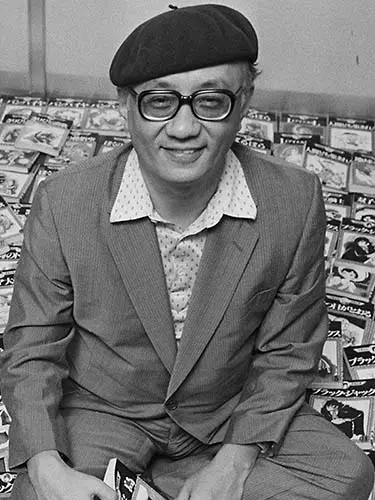
Born on November 3, 1928, in Toyonaka City, Osaka, Osamu Tezuka’s destiny as a storyteller was forged in the fires of both wonder and horror. His childhood was steeped in the whimsy of Walt Disney cartoons and the cinematic language of early Hollywood, influences that would forever shape his artistic vision. However, the profound trauma of World War II, where he witnessed the devastation of air raids as a teenager, instilled in him a deep and enduring humanism, a philosophical core that would pulse through all his subsequent work. This unique fusion of playful, big-eyed character design and serious, often existential narrative became the bedrock of modern Japanese popular culture.
Tezuka’s medical degree—he was a licensed physician—was never his primary profession, but it informed his work with a scientist’s precision and a doctor’s reverence for life. His first major hit, the 1947 manga New Treasure Island, revolutionized the form itself. Rejecting static, theatrical paneling, he employed cinematic techniques like close-ups, rapid cuts, and dynamic angles, transforming manga from illustrated prose into a fluid, emotive visual narrative. This “cinematic manga” style established the foundational grammar for the entire industry.
His output was nothing short of volcanic, earning him the title “Manga no Kamisama” (God of Manga). He created over 700 manga series spanning an unimaginable range: from the charming children’s comedy Astro Boy, about a powerful robot boy yearning for peace, to the epic, mature historical drama Phoenix, a multi-volume exploration of life, death, and reincarnation across time and space. Works like Black Jack, following an unlicensed but brilliant surgeon, and Buddha, a deeply personal retelling of the founder of Buddhism’s life, showcased his ability to weave complex ethical questions into gripping entertainment. He refused to be pigeonholed, proving manga could be a medium for any genre and any age group.
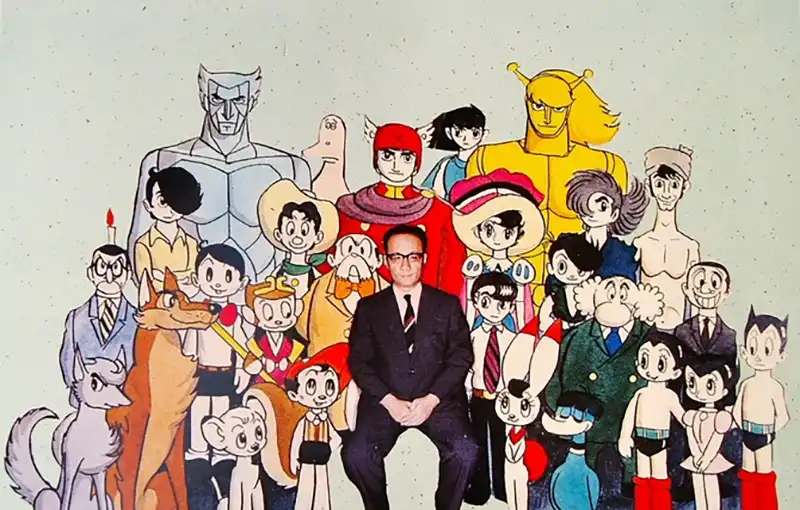
Tezuka’s influence on subsequent mangaka is so total that it is akin to a creative DNA shared by the entire industry. He is the direct artistic ancestor of nearly every major creator. He established the large, expressive “star eyes” that became a hallmark of character design, most famously seen in the works of Naoko Takeuchi (Sailor Moon) and the entire shōjo genre he helped pioneer with Princess Knight. The cinematic pacing, complex plotting, and moral seriousness of Leiji Matsumoto (Space Battleship Yamato) and Shotaro Ishinomori (Kamen Rider, Cyborg 009) are direct inheritances from Tezuka’s narrative playbook. Perhaps most significantly, he was a mentor and inspiration to a young Hayao Miyazaki and Isao Takahata, who would go on to found Studio Ghibli; the environmentalism and nuanced character psychology of films like Nausicaä of the Valley of the Wind and Princess Mononoke are deeply Tezuka-esque in spirit.
Beyond individual creators, Tezuka’s structural influence is omnipresent. He pioneered the model of producing a popular manga and then adapting it into an animated television series, founding his own studio, Mushi Production, to produce the Astro Boy anime in 1963. This created the entire economic ecosystem of the modern manga-anime industry. His willingness to tackle serious, adult themes in graphic novels like MW or Ode to Kirihito paved the way for the gekiga (dramatic pictures) movement and later avant-garde creators, proving manga could be a vehicle for any story. His character designs—simplified, iconic, and immensely expressive—set the standard for visual communication in the medium.
Osamu Tezuka passed away on February 9, 1989, but his spirit animates every page of manga and every frame of anime that followed. He transformed a marginalized form of children’s entertainment into a sophisticated and versatile artistic language capable of exploring the cosmos, the operating room, and the human soul with equal gravity. To draw manga after Tezuka is to walk a path he carved. He provided the alphabet, the grammar, and the narrative lexicon for an entire nation’s storytelling. His legacy is not a single character or series, but the very idea that comics could be a profound, life-affirming, and boundless art form—an idea he drew into reality with relentless energy and unwavering hope for humanity.
Osamu Tezuka – Bibliography
- New Treasure Island (Shin Takarajima) (1947)
- Often cited as the starting point of modern manga. An adventure story that introduced cinematic storytelling techniques to Japanese comics.
- Astro Boy (Tetsuwan Atom) (1952–1968)
- One of Tezuka’s most famous creations, following a robot boy with human emotions. A cornerstone of both manga and anime history. 23 volumes (various editions).
- Kimba the White Lion (Jungle Taitei) (1950–1954)
- A pioneering jungle adventure series with strong environmental themes. Influential in early television anime.
- Princess Knight (Ribon no Kishi) (1953–1956)
- A landmark shōjo manga combining fairy-tale fantasy with gender identity themes. One of the first long-form comics aimed at girls.
- Phoenix (Hi no Tori) (1954–1988 (incomplete))
- Tezuka’s life work, an epic cycle of stories exploring reincarnation, immortality, and the meaning of life across time. 12 volumes (standard editions).
- Black Jack (1973–1983)
- A dark medical drama about an unlicensed genius surgeon. Known for moral complexity and episodic storytelling. 25 volumes.
- Buddha (1972–1983)
- A historical-philosophical retelling of the life of Siddhārtha Gautama. One of Tezuka’s most critically acclaimed series. 14 volumes.
- Dororo (1967–1969)
- A samurai fantasy about a cursed child reclaiming stolen body parts from demons. Noted for its dark tone and folklore influences.
- Adolf (Adorufu ni Tsugu) (1983–1985)
- A political thriller spanning Japan, Germany, and the Middle East during World War II, examining identity and moral responsibility.
- MW (1976–1978)
- A controversial psychological thriller exploring corruption, trauma, and moral decay.