Raymond Chandler: The Collector’s Guide to First Editions, Rare and Collectible Books
The Unlikely Beginning: From Oil Executive to Pulp Writer
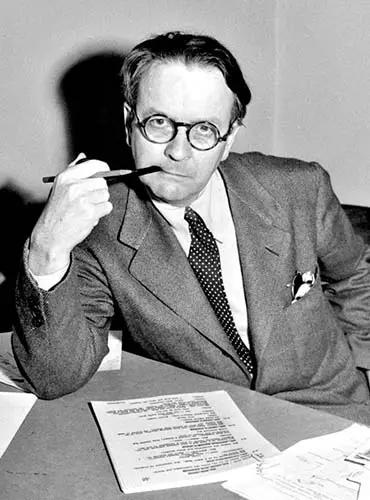
Raymond Thornton Chandler was born on July 23, 1888, in Chicago, Illinois, to an Irish-born father and an Anglo-Irish mother. His father, an alcoholic civil engineer, abandoned the family when Chandler was seven years old. His mother, Florence, took young Raymond and returned to her native England, where they lived with her mother and aunt in a respectable but impoverished household. Chandler was raised as an English gentleman despite having no money. He attended Dulwich College, a prestigious London school, where he received a classical education in Latin, Greek, and literature. He did not attend university. Instead, he passed the civil service exam and worked briefly as a clerk in the Admiralty before quitting to pursue a literary career. His early attempts at writing poetry and essays failed, and in 1912, he borrowed money from an uncle and moved back to the United States. He settled in California, where he worked a series of odd jobs—stringing tennis rackets, picking fruit, keeping books for a creamery—before enrolling in a correspondence course in accounting. He discovered an aptitude for the work and eventually became a successful accountant and later an executive with several oil companies. By the early 1930s, Chandler was a wealthy man, married to Cissy Pascal, a woman eighteen years his senior. But the Great Depression cost him his job, and his drinking, which had been a problem for years, worsened. In 1933, at the age of forty-five, with no literary reputation and no steady income, Chandler decided to try pulp fiction. He taught himself to write detective stories by studying the masters of the form, particularly Dashiell Hammett, and began selling stories to Black Mask magazine.
The Creation of Philip Marlowe
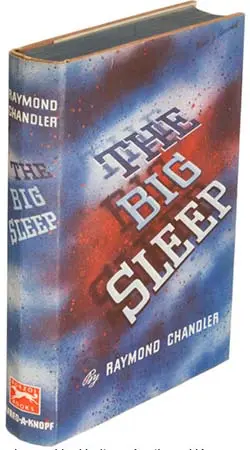
Chandler’s first published story, “Blackmailers Don’t Shoot,” appeared in Black Mask in 1933. He wrote quickly, producing a series of stories featuring various detectives before settling on the character who would define his career: Philip Marlowe. Marlowe first appeared in the novel The Big Sleep (1939), a book that announced a new voice in American literature. Marlowe was not Hammett’s Continental Op—a tough, faceless operative. He was a knight errant, a man of honor living in a corrupt world. He was literate, cynical, and lonely, with a code of personal integrity that had nothing to do with the law. “Down these mean streets a man must go who is not himself mean,” Chandler famously wrote. He described Marlowe as a man who “is neither tarnished nor afraid.” The Big Sleep was followed by a remarkable string of novels: Farewell, My Lovely (1940), The High Window (1942), The Lady in the Lake (1943), and The Little Sister (1949). Each novel deepened the Marlowe character and expanded Chandler’s vision of Los Angeles. In Chandler’s hands, the city became a character itself: a sprawling, sun-drenched wasteland of corrupt cops, crooked politicians, gambling dens, and glamorous women hiding dark secrets. His prose was unlike anything in crime fiction before it. He wrote sentences that were sharp, poetic, and endlessly quotable: “The French have a phrase for it. The bastards have a phrase for everything.” His metaphors were legendary: “He had a face like a collapsed lung.” He could describe a cheap hotel room or a silent telephone with the same dark beauty.
Hollywood, Decline, and The Final Years
In 1943, Chandler moved to Hollywood to work as a screenwriter. He co-wrote the screenplay for Double Indemnity with Billy Wilder, based on James M. Cain’s novel, and later adapted his own The Blue Dahlia for the screen. He was nominated for Academy Awards for both films. He hated Hollywood but needed the money, and the work brought him a new kind of fame. Yet the 1940s were also a decade of personal tragedy. His wife Cissy died in 1954 after a long illness. Chandler, already a heavy drinker, descended into alcoholism. He attempted suicide, suffered from severe depression, and watched his literary powers decline. His final Marlowe novel, Playback (1958), was weak, and his unfinished novel Poodle Springs was published posthumously. He moved restlessly between England and the United States, making erratic public appearances and embarrassing himself with drunken speeches. He died of pneumonia on March 26, 1959, in La Jolla, California, at the age of seventy. He was buried at Mount Hope Cemetery in San Diego.
Influence and Legacy
Raymond Chandler’s influence on literature is vast and enduring. He took the hard-boiled detective story that Hammett invented and transformed it into a vehicle for high literary art. His prose style—the sharp metaphors, the cynical wit, the lyrical descriptions of urban decay—has been imitated by generations of writers but never duplicated. In crime fiction, his heirs are legion. Ross Macdonald took Chandler’s psychological depth and applied it to family drama, creating the Lew Archer novels. Robert B. Parker wrote forty novels featuring Spenser, a detective explicitly modeled on Philip Marlowe. Parker also completed Chandler’s unfinished Poodle Springs. James Ellroy, author of L.A. Confidential, has called Chandler the poet of Los Angeles, and his own hyper-intense, fractured style owes a clear debt to Chandler’s vision of the city as a moral sewer. Walter Mosley, creator of the Easy Rawlins mysteries, has acknowledged Chandler’s influence on his own exploration of race and crime in Los Angeles. But Chandler’s influence extends far beyond genre fiction. Margaret Atwood has praised his prose, and Joan Didion, the great chronicler of California alienation, wrote her master’s thesis on Chandler. Paul Auster’s The New York Trilogy deconstructs the detective genre using Chandlerian tropes. Haruki Murakami has translated Chandler into Japanese and cited him as a major influence on his own atmospheric, lonely fiction. In film, Chandler’s impact is equally profound. The film noir movement of the 1940s and 1950s was shaped by his novels and screenplays. The Big Sleep, starring Humphrey Bogart and Lauren Bacall, is considered one of the greatest Hollywood films. Directors as diverse as Robert Altman (The Long Goodbye), Roman Polanski (Chinatown), and the Coen brothers (The Big Lebowski, a loose adaptation of The Big Sleep) have worked in Chandler’s shadow. Beyond his literary and cinematic legacy, Chandler gave the English language dozens of phrases and attitudes. He invented the modern archetype of the private eye: the lonely, honorable man who walks mean streets. He showed that popular fiction could be as beautifully written as any literary novel. He remains, more than sixty years after his death, the undisputed master of the hard-boiled style—a poet of the dark city, a knight of the typewriter, and a voice that still sounds like no one else.
Raymond Chandler – First Editions Identification Guide
A Complete Bibliography of Raymond Chandler: Novels, Rare Books & First Editions
| Year | Title | Publisher | First edition/Printing Identification Points |
|---|---|---|---|
| 1939 | The Big Sleep | Alfred A. Knopf, New York, 1939 | First edition. "First edition" stated on © page. Brownish orange cloth, dark grey blue lttering. Top edge stained dark blue. 5000 copies printed. Dust jacket: Cream, front and spine on blue background. Rear Borzoi Mysteries, six titles. Price $2.00. ALSO: London: Hamish Hamilton. First UK edition. "First published 1939" stated on © page. Black cloth, reddish-orange lettering. Dust jacket: Cream, front and spine on red background. Yellow & white lettering. Rear "Selected Thrillers..." Three titles. Back flap blank. |
| 1940 | Farewell, My Lovely | Alfred A. Knopf, New York , 1940 | First edition. "First edition" stated on © page. Medium reddish-orange cloth, deep blue lettering. Top edge stained dark blue. 7500 copies printed. Dust jacket: White, front and spine on reddish-brown background. Rear "Borzoi Books", four titles. Price $2.00. ALSO: London: Hamish Hamilton, 1940. First UK edition. "First published in Great Britain 1940" stated on © page. Yellow cloth, red lettering. Dust jacket: Cream, front and spine on red background. Rear "Autumn Fiction" ads, 6 titles. Price 7/6s. |
| 1942 | The High Window | Alfred A. Knopf, New York, 1942 | First edition. "First edition" stated on © page. Light grayish-brown cloth, dark purplish-red lettering. 6500 copies printed. Dust jacket: Cream, front and spine on blue backgroud. Rear Chandler photo and message about War Bonds. Price $2.00. ALSO: London: Hamish Hamilton, 1943. First UK edition. Reddish-orange cloth, gold lettering. Dust jacket: Cream, front yellow, spine red background. Rear "Hamish Halmilton" ads, ten titles. Price 8s. |
| 1943 | The Lady in the Lake | Alfred A. Knopf, New York, 1943 | First edition. "First edition" stated on © page. Medium yellowish-green cloth, dark green lettering. Dust jacket: Cream, front and spine on black background. Rear Chandler's photo and message about War Bonds. Price $2.00. ALSO: London: Hamish Hamilton. First UK edition. "First published in Great Britain 1944" stated on © page. Orange-yellow cloth, reddish-orange lettering. Dust jacket: Cream, front and spine on black background, pink lettering. Rear "Latest fiction" ads, 6 titles. Price 8s/6d. |
| 1944 | Five Murders | Avon Book Co., New York 1944 | First edition. Pictorial gray olive-green wrappers, white lettering. Avon Murder Mystery #19. Price $0.25c. |
| 1947 | Five Sinister Characters | Avon Book Co., New York [1945] | First edition. Pictorial wrappers. Avon Murder Mystery #28. Price $0.25c. |
| 1945 | Finger Man and other Stories | Avon Book Co., New York [1946] | First edition. Pictorial wrappers. Avon Murder Mystery #43. Price $0.25c. |
| 1949 | The Little Sister | Hamish Hamilton, London, [1949] | First edition.The UK edition was published prior to the American edition. Red cloth, gold lettering on spine. "First published in Great Britain, 1949" stated on © page. Dust jacket: Pictorial, white lettering. Rear: reviews for Little Sister. Rear flap: ads for Chandler's books, four titles. Price 8s 6d. ALSO: Houghton Mifflin Co., , 1949. "Copyright 1949, BY, RANDMOND CHANDLER" stated on © page. Reddish orange or yellow cloth. Blue lettering. Dust jacket: Pictorial, white lettering. Rear: Raymond Chandler's photo with excerpt from the book. Price $2.50. |
| 1953 | The Long Good-bye | Hamish Hamilton, London, [1953] | First edition.The UK edition was published prior to the American edition. Dark red cloth, silver lettering on spine. "First published in Great Britain, 1953" stated on © page. Dust jacket: Pictorial, yellow & white lettering. Rear: ads for three Chandler's books ending with The Littler Sister. Rear flap: ads for Chandler's books, four titles. Price 10s 6d. ALSO: Houghton Mifflin Co., , 1954. "First published 1954" stated on © page. Half blue & green cloth. Black lettering. Dust jacket: Pictorial, yellow & white lettering. Rear: "There a blondes" and excerpt from the book. Price $3.00. |
| 1958 | Playback | Hamish Hamilton, London, [1958] | First edition.The UK edition was published prior to the American edition. Reddish orange cloth, white or yellow lettering on spine. "First published in Great Britain, 1958" stated on © page. Dust jacket: black, orange & white lettering. Rear: photo of Chandler. Rear flap: ads for Chandler's books, seven titles. Price 12s 6d. ALSO: Houghton Mifflin Co., , 1958. "First printing" stated on © page. Orange cloht, brown lettering. Dust jacket: Pictorial, white lettering. Rear: Chandler's bio. Price $3.00. |
Raymond Chandler – First Printing Dust Jackets Identification Guide
Gallery of First state Dust Jackets of Raymond Chandler’s works.


Reference: