Ian Fleming: The Collector’s Guide to First Editions, Rare and Collectible Books
Early Life and Formative Experiences
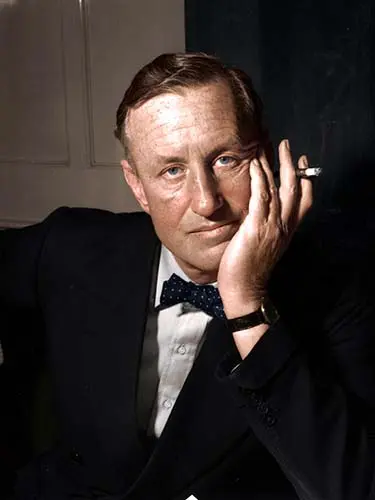
Ian Lancaster Fleming (1908-1964) was more than just an author; he was a complex amalgam of journalist, naval intelligence officer, and bon vivant who channeled his own experiences and the anxieties of the Cold War into creating one of the most enduring figures in popular culture: James Bond. The character of Bond, code-named 007, emerged not from pure fantasy but from the raw material of Fleming’s adventurous life, becoming a global phenomenon that has shaped the espionage genre, cinema, and modern notions of style for over half a century.
Born into a prominent British family on May 28, 1908, Fleming’s early life was marked by privilege shadowed by tragedy. His father, Valentine Fleming, a Member of Parliament, was killed in World War I, creating an absent heroic figure Ian felt compelled to emulate. Educated at Eton and Sandhurst, Fleming followed a somewhat aimless path until his natural talents for languages and observation found a focus in journalism with Reuters. This training honed his concise, descriptive writing style. However, it was the outbreak of World War II that provided the crucible for his future creation. Serving as the personal assistant to Admiral John Godfrey, the Director of Naval Intelligence, Fleming was not a field agent but a key planner and coordinator at the heart of British espionage. This role exposed him to the world of covert operations, secret gadgets, and the psychology of men who lived by their wits—the direct inspiration for the bureaucratic yet lethal secret agent he would later imagine.
The Creation of James Bond and the Literary Formula
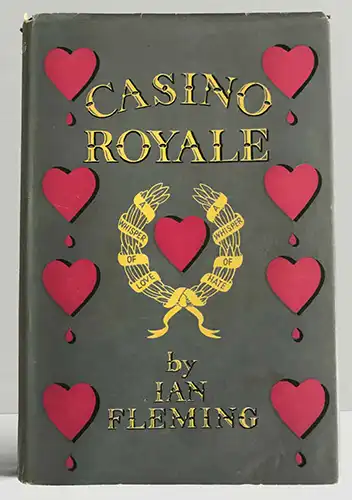
In January 1952, at his Jamaican estate, Goldeneye, and anxious about his impending marriage, Fleming began writing his first novel, Casino Royale. He stated he wanted to write “the spy story to end all spy stories.” James Bond was born—a character who combined the cold professionalism of Fleming’s wartime colleagues with his own aspirational tastes for fast cars, fine food, and sophisticated travel. Fleming’s genius lay in his meticulous, almost journalistic, detail. He didn’t just describe a car; it was a specific Bentley or Aston Martin. He didn’t just mention a meal; he detailed the vintage of the champagne and the brand of the cigarette. This grounding in tangible reality made the escapism of Bond’s world believable and irresistibly attractive to a post-war Britain yearning for glamour and excitement. Over the next twelve years, Fleming produced twelve novels and nine short stories, establishing a formula—the megalomaniacal villain, the exotic locales, the “Bond girl,” the gadget-laden plots—that would define the genre.
Influence on the Espionage Genre and Popular Culture
Fleming’s impact on literature was immediate and profound. He effectively modernized the spy thriller, moving it away from the gentlemanly puzzle-solvers of John Buchan and towards a grittier, more visceral world. Bond was a government employee, a civil servant who killed for a living, a concept that felt startlingly contemporary. This blueprint spawned a legion of imitators and innovators. Authors like John le Carré emerged partly in reaction to Fleming, offering a grittier, more morally ambiguous vision of espionage that stood in direct contrast to Bond’s glamour. Thus, Fleming’s influence is twofold: he created a dominant model that others followed, and his very success provoked a counter-movement that enriched the genre.
The Cinematic Legacy and Global Phenomenon
The most significant amplification of Fleming’s influence began two years before his death with the release of Dr. No in 1962. The Eon Productions film series transformed James Bond from a literary success into a global cultural icon. The films magnified the core elements of Fleming’s formula, emphasizing action, humour, and technological spectacle. The franchise has become the longest-running and one of the most successful in cinema history. Each actor who has portrayed Bond—from Sean Connery’s rugged cool to Daniel Craig’s brooding vulnerability—has reflected the changing ideals of their era, proving the character’s remarkable adaptability. The Bond films have profoundly influenced movie-making, from their signature title sequences and theme songs to their structure of action set-pieces, setting the standard for the modern blockbuster.
Critical Re-evaluation and Enduring Legacy
Fleming’s work has not been immune to criticism. As products of the 1950s and early 1960s, the original novels contain depictions of women and certain ethnic groups that are widely seen as dated and problematic by contemporary standards. The character’s relationships with women, in particular, have been a focus of critique. Yet, the enduring vitality of the Bond franchise lies in its ability to evolve, gradually adapting the character to more modern sensibilities while retaining the core appeal Fleming established. Ian Fleming died in 1964, but the world he created has thrived for decades beyond him. His true legacy is the creation of a modern myth—a framework for adventure, style, and escapism that continues to captivate audiences around the world, proving that every generation needs its own secret agent, licensed to thrill.
Ian Fleming – First Editions Identification Guide
A Complete Bibliography of Ian Fleming: Novels, Rare Books & First Editions
| Year | Title | Publisher | First edition/printing identification points |
|---|---|---|---|
| 1953 | Casino Royale | Jonathan Cape, London, 1953 | First UK edition. "First Published 1953" stated on © page. Black cloth, bottom edge untrimmed. 4278 copies printed. Dust jacket (10s. 6d.), no Times review. Two states dust jacket, priority as listed:
ALSO: Pan Books, 1955. First Paperback edition. "This edition published 1955" stated on © page. Three variants, no priority:
|
| 1954 | Live and Let Die | Jonathan Cape, London, 1954 | First UK edition. "First Printed 1954" stated on © page. Black cloth. 7500 copies printed. Dust jacket (10s. 6d.). Three states Dust jacket, priority as listed:
ALSO: Pan Books, 1957. First Paperback edition. GP83 code on the spine. Two variants, no priority:
|
| 1955 | Moonraker | Jonathan Cape, London, 1955 |
ALSO: Pan Books, 1956. First Paperback edition. "This edition published 1956" stated on © page with no additional printings. Note: Although Moonraker was the 3rd Bond novel series, it was released in paperback before Live and Let Die (1957). |
| 1956 | Diamonds Are Forever | Jonathan Cape, London, 1956 | First UK edition. "First Published 1956" stated on © page. Black cloth. 12,500 copies printed. Dust jacket (12s. 6d.). ALSO: MacMillan Co., NY, 1953. First American edition. "First Printing" stated on © page. DJ ($2.75). ALSO: Pan Books, 1958. First Paperback edition. G101 code on the spine. Two variants, no priority:
|
| 1957 | From Russia, with Love | Jonathan Cape, London, 1957 | First UK edition. "First Published 1957" stated on © page. Black cloth. Dust jacket (12s. 6d.). ALSO: MacMillan Co., NY, 1957. First American edition. "First Printing" stated on © page. DJ ($3.50). ALSO: Pan Books, 1959. First Paperback edition. Code G229 on spine. Two variants, no priority:
|
| 1957 | The Diamond Smugglers | Jonathan Cape, London, 1957 | First UK edition. "First Published 1957" stated on © page. Black cloth. Dust jacket (12s. 6d.). Two variants, no priority:
|
| 1958 | Dr. No | Jonathan Cape, London, 1958 | First UK edition. "First Published 1958" stated on © page. Black cloth. Two variants, no priority:
ALSO: Pan Books, 1960. First Paperback edition. Code G335 on spine. Two variants, no priority:
|
| 1959 | Goldfinger | Jonathan Cape, London, 1959 | First UK edition. "First Published 1959" stated on © page. Black cloth. Dust jacket (15s.). ALSO: MacMillan Co., NY, 1959. First American edition. "First Printing" stated on © page. DJ ($2.95). ALSO: Pan Books, 1961. First Paperback edition. Code G455 on spine. Three variants, no priority: 2'6 price on cover; unpriced and 2'6 sticker on cover. |
| 1960 | For Your Eyes Only | Jonathan Cape, London, 1960 | First UK edition. "First Published 1960" stated on © page. Black cloth. Dust jacket (15s.). ALSO: MacMillan Co., NY, 1960. First American edition. "First Printing" stated on © page. DJ ($3.50). ALSO: Pan Books, 1962. First Paperback edition. Code G551 on spine. Four variants, no priority: 2'6 price on cover; unpriced; 2/6 sticker on cover and 4' Australian on cover. |
| 1961 | Thunderball | Jonathan Cape, London, 1961 | First UK edition. "First Published 1961" stated on © page. Black cloth. Dust jacket (15s.). ALSO: MacMillan Co., NY, 1961. First American edition. "First Printing" stated on © page. DJ ($3.95). ALSO: Pan Books, 1963. First Paperback edition. Code X201 to front cover and spine. Three variants, no priority: 3'6 price on cover; Unpriced (Australia) and 3'6 sticker label on front cover. |
| 1962 | The Spy Who Loved Me | Jonathan Cape, London, 1962 | First UK edition. "First Published 1962" stated on © page. Black cloth. Two variants, no priority:
ALSO: Pan Books, 1967. Two variants, no priority:
|
| 1963 | On Her Majesty's Secret Service | Jonathan Cape, London, 1963 | First UK edition. "First Published 1963" stated on © page. Black cloth. Two issues, no priority:
ALSO: Pan Books, 1964. First Paperback edition. Code X350 to front cover. Three variants, no priority:
|
| 1963 | Thrilling Cities | Jonathan Cape, London, 1963 | First UK edition. "© 1963 by Glidrose Productions Ltd." stated on © page. Brown boards, white spine. Dust jacket (30s.). Note: Later copies has an Erratum slip inserted at pg. 223. ALSO: Pan Books, 1964. First Paperback edition. Code X332 to spine. Two variants, no priority: Price 3'6 printed to the front; Unpriced. |
| 1964 | You Only Live Twice | Jonathan Cape, London, 1964 | First UK edition. "First Published 1964" stated on © page. Black cloth. Dust jacket (16s.). Two variants Dust jacket, no priority:
ALSO: Pan Books, 1965. First Paperback edition. Code X434 to spine and front cover. Three variants, no priority:
|
| 1964 | Chitty-Chitty-Bang-Bang | Jonathan Cape, London, 1964 | Three volumes (published between 1964-1965). First UK edition. "First Published by Jonathan Cape Ltd 1964" stated on © page. Pictorial boards. Dust jacket (10'6d.) ALSO: Pan Books, 1968. First Paperback edition. Code R to the spine (code for 8/6 price). "Fabulous Film Coming" to ads on front cover. |
| 1965 | The Man with the Golden Gun | Jonathan Cape, London, 1965 | First UK edition. "First Published 1965" stated on © page. Black cloth. Three variants, no priority: (A) Front board has an embossed golden gun. (1% of the books published). Extremely rare. (B) Blank front board, blank endpapers (10% of the books published), uncommon. (C) Same as (B) with green marbled endpapers. Note: Some copies exported to Canada has the half-title page reset "THE MAN" | " with the GOLDEN GUN" is printed on two lines. Less common than (C) ALSO: New American Library, 1965. First American edition. "First Printing" stated on © page. DJ ($4.50). ALSO: Pan Books, 1966. First Paperback edition. Code X527 to spine and front cover. Two variants, no priority: (A) Unpriced. (B) 60c printed on front cover (printed in Canada), |
| 1966 | Octopussy and The Living Daylights | Jonathan Cape, London, 1966 | First UK edition. "First Published 1966" stated on © page. Two variants, no priority: (A) Black cloth, less common. (B) Brown cloth. Dust jacket (10s. 6d.), repriced over the years with stickers pasted on top of the price. ALSO: New American Library, 1966. First American edition. "First Printing" stated on © page. DJ ($4.50). ALSO: Pan Books, 1967. First Paperback edition. Code X668 to spine and front cover. Two variants, no priority: (A) Price to rear, printed in the UK. (B) 60c printed on top of front cover. Printed in Canada. |
Ian Fleming – First Printing Dust Jackets Identification Guide
Gallery of First Edition Dust Jackets. Only includes the first appearance in book form. Either the UK or US edition and does not include later printings.