Roger Zelazny: The Collector’s Guide to First Editions, Rare and Collectible Books
Early Life and Academic Foundations
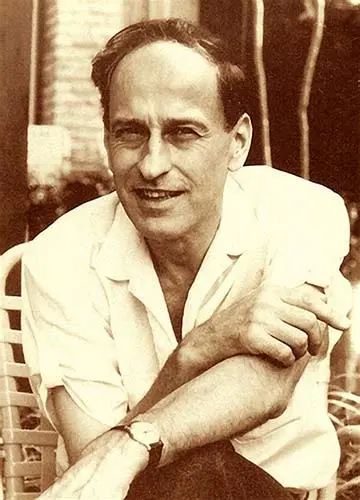
Roger Joseph Zelazny was born on May 13, 1937, in Euclid, Ohio, a suburb of Cleveland. He was the only child of Polish immigrant parents, Joseph and Josephine Zelazny, who instilled in him a love of storytelling and wordplay. Growing up during the Great Depression and World War II, he found refuge in pulp magazines, comic books, and the radio dramas of the era. He attended Western Reserve University (now Case Western Reserve University), earning a bachelor’s degree in English in 1959. He then moved to New York City, where he completed a master’s degree in Elizabethan and Jacobean drama at Columbia University in 1962. His academic training in classical literature, mythology, and Renaissance drama would later distinguish his science fiction and fantasy writing. Unlike many genre authors of his generation, Zelazny brought a poet’s ear and a scholar’s depth to every sentence. After graduate school, he worked for the Social Security Administration in Cleveland and later for the Equitable Life Assurance Society, writing fiction in his spare time while climbing the corporate ladder.
The Sudden Star
Zelazny’s literary career began with an extraordinary burst of creativity. He sold his first short story, “Passion Play,” in 1962, but it was the publication of “A Rose for Ecclesiastes” in 1963 that announced a major new talent. The story follows a Martian poet who translates Earth’s great literature for an alien civilization, blending Buddhist philosophy, biblical allusion, and hard science fiction. It was nominated for the Nebula Award and remains one of the most anthologized science fiction stories of all time. Over the next several years, Zelazny produced a staggering run of masterpieces: “The Doors of His Face, the Lamps of His Mouth” (1965), “He Who Shapes” (1965, later expanded into the novel The Dream Master), and the apocalyptic novella This Immortal (1965). His prose was dense, lyrical, and unapologetically literary. He drew freely from Hindu mythology, Greek tragedy, Egyptian funerary texts, and T. S. Eliot. Editors called his work “too rich” for the pulps, but readers devoured it.
The Amber Chronicles and Mythological Reinvention
Zelazny’s most famous creation is the Amber series, a ten-book fantasy cycle that began with Nine Princes in Amber (1970). The series follows Corwin, a prince of Amber—the one true reality of which all other worlds, including Earth, are merely shadows. Corwin awakens in a hospital with amnesia, then gradually rediscovers his identity as an immortal scion of a dysfunctional, murderous royal family who can walk through dimensions by sheer force of will. Zelazny stripped fantasy of its medieval trappings. Amber had no wizards, no elves, no quests for magic rings. Instead, it offered psychological realism, political intrigue, and a cynical, witty first-person narrator. The series blended the family sagas of Greek myth with the hard-boiled voice of Raymond Chandler. It became a cult sensation and remains in print decades later.
The Mythopoeic Influence
Zelazny’s influence on speculative fiction is profound and enduring. He won the Hugo Award for Best Novel six times across ten nominations—though controversially, he never won for a single novel; his Hugos were for shorter works or through later retrospective awards. He won the Nebula Award three times. More importantly, he helped break down the wall between genre fiction and mainstream literature. His use of mythological structures, influenced by Joseph Campbell and James Frazer, anticipated the mythopoeic turn in fantasy that would later produce works such as Neil Gaiman’s The Sandman. His narrative voice—ironic, erudite, wounded—influenced generations of writers, including Gaiman, George R. R. Martin, and John M. Ford. Martin called him “the best writer ever to work in American science fiction.”
Later Life and Legacy
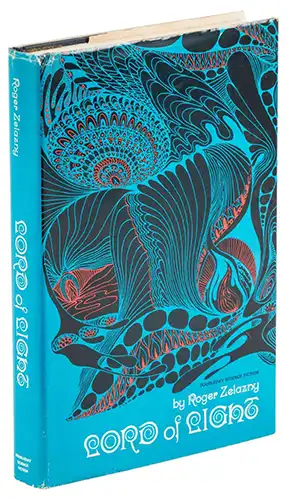
Zelazny continued writing prolifically throughout the 1970s and 1980s, producing novels such as Lord of Light (1967), in which a crew of human colonists use advanced technology to pose as Hindu gods, and Creatures of Light and Darkness (1969), a nearly unclassifiable prose poem of Egyptian mythology. He collaborated with Philip K. Dick on Deus Irae (1976) and wrote the award-winning novella Home Is the Hangman (1975). He died of colorectal cancer on June 14, 1995, in Santa Fe, New Mexico, at the age of 58. Roger Zelazny is remembered as a poet of the impossible, a mythmaker for the space age, and a writer who proved that science fiction could be as beautiful and complex as any literature ever written.
Roger Zelazny – First Editions Identification Guide
A Bibliography of Roger Zelazny: Novels, Rare Books & First Editions
Note: This list only includes works published prior to 1977.
| Year | Title | Publisher | First edition/printing identification points |
|---|---|---|---|
| 1976 | BRIDGE OF ASHES | [New York]: New American Library, [1976] | Wrappers. First Signet Printing, July, 1976/1 2 3 4 5 6 7 8 9 on copyright page. Signet Y7080 ($1.25). |
| 1969 | CREATURES OF LIGHT AND DARKNESS | Garden City: Doubleday & Company, Inc., 1969 | First edition so stated on copyright page. |
| 1969 | DAMNATION ALLEY | New York: G. P. Putnam's Sons, [1969] | Boards. No statement of printing on copyright page. |
| 1971 | THE DOORS OF HIS FACE, THE LAMPS OF HIS MOUTH | Garden City: Doubleday & Company, Inc., 1971 | First edition so stated on copyright page. |
| 1976 | DOORWAYS IN THE SAND | New York Hagerstown San Francisco London: Harper & Row, Publishers, [1976] | Boards with cloth shelf back. First edition so stated on copyright page. |
| 1972 | THE GUNS OF AVALON | Garden City: Doubleday & Company, Inc., 1972 | First edition so stated on copyright page. |
| 1976 | THEHAND OF OBERON | Garden City: Doubleday & Company, Inc., 1976 | Boards. First edition so stated on copyright page. |
| 1971 | JACK OF SHADOWS | New York: Walker and Company, [1971] | Boards. First published in the United States of America in 1971 on copyright page. |
| 1967 | LORD OF LIGHT | Garden City: Doubleday & Company, Inc., 1967 | First edition so stated on copyright page. |
| 1976 | MY NAME IS LEGION | New York: Ballantine Books, [1976] | Wrappers. First edition: April, 1976 on copyright page. Ballantine Books SF 24867 ($1.50). |
| 1970 | NINE PRINCES IN AMBER | Garden City: Doubleday & Company, Inc., 1970 | First edition so stated on copyright page. |
| 1969 | A ROSEFOR ECCLESIASTES | London: Rupert Hart-Davis, 1969 | Boards. First published in Great Britain 1969 on copyright page. Issued earlier in the U.S. as FOUR FOR TOMORROW. |
| 1975 | SIGN OF THE UNICORN | Garden City: Doubleday & Company, Inc., 1975 | Boards. First edition so stated on copyright page. |
| 1973 | TO DIE IN ITALBAR | Garden City: Doubleday & Company, Inc., 1973 | First edition so stated on copyright page. |
| 1976 | DEUS IRAE | Garden City: Doubleday & Company, Inc., 1976 | Boards. First edition so stated on copyright page. With PHILIP K. DICK. |
| 1966 | THE DREAM MASTER | New York: Ace Books, Inc:, [1966] | Wrappers. No statement of printing on copyright page. Ace Book F-403 (40¢). ALSO: London: Rupert Hart-Davis, 1968. Boards. First published in Great Britain 1968 on copyright page. First hardcover edition. |
| 1967 | FOUR FOR TOMORROW | New York: Ace Books, Inc., [1967] | Wrappers. No statement of printing on copyright page. Ace Book M-155 (45¢). Issued later in Great Britain as A ROSE FOR ECCLESIASTES. ALSO: [New York & London: Garland Publishing, Inc., 1975.] First U.S. hardcover edition. Notes: (1) Photo-offset from 1973 Ace Books second printing. (2) Not issued in dust jacket. |
| 1969 | ISLE OF THE DEAD | New York: Ace Books, Inc., [1969] | Wrappers. No statement of printing on copyright page. An Ace Science Fiction Special 37465 (60¢). ALSO: [London]: A Rapp and Whiting Book, Andre Deutsch, [1970]. Boards. First published 1970 on copyright page. First hardcover edition. |
| 1966 | THIS IMMORTAL | New York: Ace Books, Inc., [1966] | Wrappers. No statement of printing on copyright page. Ace Book F-393 (40¢). ALSO: London: Rupert Hart-Davis, 1967. Boards. First published in Great Britain 1967 on copyright page. First hardcover edition. |
| 1973 | TODAY WE CHOOSE FACES | [New York]: New American Library, [1973] | Wrappers. First printing, April, 1973 on copyright page. Below the statement/All rights reserved appears First Printing [through] Tenth Printing set on ten lines. Signet 451-Q5435 (95¢). ALSO: [London]: Millington, [1974]. Boards. First published 1974 ... on copyright page. First hardcover edition. |
Roger Zelazny – First Printing Dust Jackets Identification Guide
Gallery of First state Dust Jackets of Zelazny’s works.


Reference:
- L. W. Currey, Science Fiction and Fantasy Authors: A Bibliography of First Printings of Their Fiction and Selected Nonfiction.