Art Deco Enchantment: Umberto Brunelleschi’s Contes du Temps Jadis
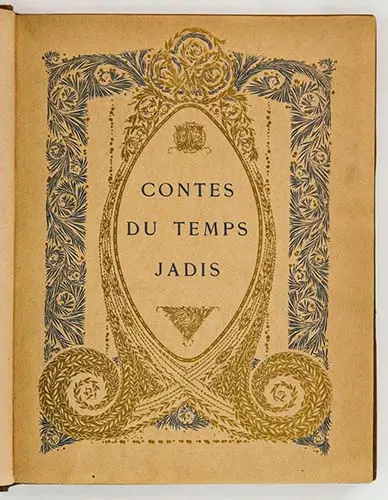
In the glittering world of 1920s Paris, where Art Deco elegance reigned supreme, few artists captured the spirit of the age with such sophistication as Umberto Brunelleschi. His 1912 edition of Contes du Temps Jadis (Tales of Long Ago) stands as a testament to his genius—a volume that transforms the classic fairy tales of Charles Perrault into visions of Deco glamour, blending the timeless magic of the stories with the chic, stylized aesthetic of the Jazz Age.
Umberto Brunelleschi (1879–1949) was an Italian-born artist who made his name in Paris as a fashion illustrator, stage designer, and book artist. A central figure in the world of haute couture, he contributed to the most prestigious fashion publications of the era, including La Gazette du Bon Ton and Vogue. His style was characterized by elegant, elongated figures, bold geometric patterns, and a palette of jewel tones that captured the luxury and sophistication of 1920s Paris. When he turned his talents to book illustration, the results were extraordinary.
Contes du Temps Jadis brought together the classic fairy tales of Charles Perrault—the stories that had laid the foundation for the fairy-tale tradition in France. Here were “Cinderella,” “Sleeping Beauty,” “Little Red Riding Hood,” “Bluebeard,” “Puss in Boots,” and others, presented in a format that honored their French heritage while infusing them with the modern sensibility of the Art Deco movement.
The 1912 edition, published by Éditions d’Art H. Piazza in Paris, was a lavish production befitting its subject. The volume was issued in a limited edition, printed on fine paper, and bound in elegant wrappers or boards with decorative designs by Brunelleschi. Inside, readers discovered a series of color plates—typically twelve to sixteen—each mounted on heavy paper and protected by captioned tissue guards. The illustrations were reproduced using pochoir, the hand-stenciled technique favored by fashion publishers, which gave the colors a richness and depth that ordinary printing could not achieve.
What distinguishes Brunelleschi’s approach to Perrault is his transformation of the fairy-tale world into a stage for Deco elegance. His Cinderella is not a ragged servant but a chic young woman in a gown that might have graced a Paris fashion house; her prince is a dashing figure in evening wear; the ballroom is a vision of geometric patterns and sleek modernity. Sleeping Beauty’s castle becomes a fantasy of Deco architecture; Little Red Riding Hood wears a cape that could have been designed by Chanel.
Yet beneath the surface glamour, Brunelleschi retained the essence of Perrault’s tales. His illustrations capture the danger of Bluebeard’s forbidden chamber, the menace of the wolf in Grandmother’s bed, the justice of Cinderella’s triumph. There is a theatricality to his compositions—a sense of staging and performance—that reflects his experience as a stage designer. Each image feels like a scene from an opera or ballet, frozen in a moment of high drama.
The pochoir technique was particularly well suited to Brunelleschi’s style. The hand-application of color allowed for subtle gradations and rich, saturated hues that ordinary printing could not replicate. His palette in this volume ranges from the soft pastels of Sleeping Beauty’s awakening to the deep crimsons and blacks of Bluebeard’s chamber, creating a visual experience that is both luxurious and emotionally resonant.
Brunelleschi’s Contes du Temps Jadis appeared during the height of the Art Deco period, when the illustrated book was being reimagined as an object of modern art. It followed his celebrated editions of The Arabian Nights and other classics, cementing his reputation as one of the premier book artists of his generation. The volume was praised for its sophistication, its technical mastery, and its ability to honor the French fairy-tale tradition while making it utterly contemporary.
Today, first editions of Brunelleschi’s Contes du Temps Jadis are prized by collectors of Art Deco and fashion illustration. The limited print run, the fragile pochoir plates, and the delicate bindings mean that surviving copies in fine condition are increasingly scarce. For those fortunate enough to own one, the book offers a double pleasure: the timeless charm of Perrault’s tales and the sophisticated glamour of 1910s Paris, united in a volume of extraordinary beauty.
In the pages of this book, Cinderella still finds her prince, but she does so in a gown of Deco elegance; Sleeping Beauty still awakens, but her castle is a fantasy of modern design. Umberto Brunelleschi gave the fairy tales of old France a new wardrobe—one that captured the spirit of an age that believed in beauty, luxury, and the transformative power of style. It is a vision that continues to enchant, more than a century later.
For the Collector’s Library:
- Contes d’Andersen (1931) – Also illustrated by Brunelleschi, matching this edition’s opulent style.
- Les Fleurs Animées (1867) – J.J. Grandville’s surreal flower fairy tales, a precursor to Brunelleschi’s whimsy.
- Sleeping Beauty and Other Fairy Tales (1910) – Edmund Dulac’s contemporary take on Perrault’s stories.
- Contes des Mille et Une Nuits (1926), illustrated by Léon Carré – A French Arabian Nights with stunning decorative imagery.
- Les Fables de La Fontaine (1922), illustrated by Benjamin Rabier – A playful and colorfully illustrated edition of France’s most beloved fables.
Art Gallery: Umberto Brunelleschi – Contes du Temps Jadis 1912