The Rare Books of Willa Cather: A Guide to First Editions and Valued Collectibles
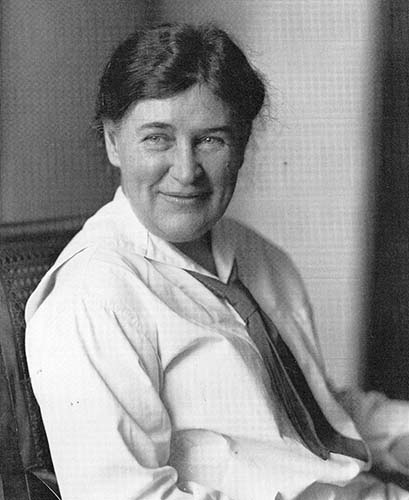
Early Life and Roots in the Prairie (1873–1896)
Willa Sibert Cather was born on December 7, 1873, in Back Creek Valley, Virginia, the eldest of seven children in a farming family. In 1883, her parents relocated to the Nebraska frontier, settling near Red Cloud—a move that would define her literary imagination. The vast, untamed prairie and its immigrant communities (Scandinavian, Bohemian, and German) became the bedrock of her fiction.
As a child, Cather roamed the plains on horseback, befriending pioneer women and immigrant farmers whose stories later filled her novels. She devoured classics in Red Cloud’s small library and published early essays in local papers. In 1890, she enrolled at the University of Nebraska, initially aspiring to become a doctor but switching to literature after a professor submitted her essay on Thomas Carlyle to a journal.
Journalism and Artistic Awakening (1896–1912)
After graduation, Cather moved to Pittsburgh, working as a journalist and teacher while writing short stories. Her breakthrough came in 1905 with the publication of The Troll Garden, a story collection exploring artistic ambition and Midwestern isolation.
In 1906, she joined McClure’s Magazine in New York, eventually becoming its managing editor. Though successful, she chafed at editorial work, later calling it “the ruin of eight good writing years.” A 1912 trip to the Southwest reignited her creative spark, inspiring her to quit journalism and write full-time.
The Prairie Trilogy: Immigrant Epics (1913–1923)
Cather’s Nebraska novels immortalized the pioneer experience with lyrical precision:
- O Pioneers! (1913): Her first major novel, following Swedish immigrant Alexandra Bergson as she transforms the wild land into a thriving farm. The elegiac prose (“The land belongs to the future… that’s the way it seems to me”) announced a new voice in American literature.
- The Song of the Lark (1915): A semi-autobiographical account of an artist’s rise, inspired by opera singer Olive Fremstad.
- My Ántonia (1918): Her masterpiece, narrated by Jim Burden, who reminisces about his childhood friendship with Ántonia Shimerda, a Bohemian immigrant embodying the prairie’s resilience.
These works rejected Victorian melodrama for stark realism and mythic grandeur, earning comparisons to Virgil’s Georgics.
Experimentation and Historical Fiction (1925–1940)

Shifting from prairie life, Cather explored religion, history, and the Southwest:
- Death Comes for the Archbishop (1927): A luminous account of French missionaries in 19th-century New Mexico, structured like a medieval hagiography.
- Shadows on the Rock (1931): A quiet novel about French settlers in Quebec, emphasizing cultural preservation.
Her style grew spare and symbolic, reflecting her belief that “the higher processes of art are all processes of simplification.”
Later Years and Legacy (1940–1947)
Cather retreated from public life after 1940, wary of modernity’s “cheapness.” She died on April 24, 1947, in New York, and was buried in New Hampshire. Her will banned adaptations of her work, insisting words alone preserve her vision.
Themes and Influence
Willa Cather’s enduring influence lies in her mastery of portraying the American spirit through a profound sense of place. She transformed the pioneer narrative by moving beyond mere hardship to explore the inner, often quiet, dramas of her characters against vast landscapes like the Nebraska plains. Her “unfurnished” prose style—powerful in its clarity and restraint—has served as a model for generations of writers seeking emotional depth without sentimentality. This legacy is clearly seen in the works of authors like Wallace Stegner and Marilynne Robinson, who similarly explore the complex relationship between character, community, and the land, cementing Cather’s place as a foundational voice in American literary realism.
- The Land as Character: Cather’s prairies and deserts shape destinies.
- Immigrant Voices: She elevated marginalized stories, from Czech farmers to Navajo priests.
- Art vs. Commerce: Her novels critique materialism (A Lost Lady, 1923) and celebrate artistic integrity (Lucy Gayheart, 1935).
Key Works
- My Ántonia (1918)
- Death Comes for the Archbishop (1927)
- O Pioneers! (1913)
- The Professor’s House (1925)
Famous Quotes
- “The history of every country begins in the heart of a man or a woman.” (O Pioneers!)
- “Where there was great love, there were always miracles.” (Death Comes for the Archbishop)
Cather’s work endures as a testament to America’s complex soul—at once expansive and intimate, pioneering and rooted. As she wrote: “The end is nothing; the road is all.”
Willa Cather – First Editions Identification Guide
A Complete Bibliography of Willa Cather: Novels, Rare Books & First Editions
| Year | Title | Publisher | First edition/printing identification points |
|---|---|---|---|
| 1903 | April Twilights | Richard G. Badger: Boston, 1903 | First edition. No statement of printing on the © page. Olive boards, paste-on label. Issued without Dust jacket. |
| 1905 | The Troll Garden | McClure & Philips & Co, NY, 1905 | First edition. "Published March, 1905" stated on © page, with "McClure Philips" at foot of spine. |
| 1909 | The Life of Mary Baker G. Eddy and the History of Christian Science | Doubleday Page, NY, 1909 | First edition. "Published, November, 1909" stated on © page. First serialized in McClure's Magazine 1906-1907 under the name Georgine Milmine. |
| 1912 | Alexander's Bridge | Houghton & Mifflin, NY, 1912 | First edition. "Published April 1912" stated on © page, with "Willa S. Cather" on the spine. Dust jacket: Gray with blue lettering, price $1.00 on the spine. |
| 1913 | O Pioneers! | Houghton & Mifflin, NY, 1913 | First edition. "Published June 1913" stated on © page with "Willa S. Cather" on the spine. Three variants, no priority: A) Light yellow-brown cloth, the period in CO. touching the O on the spine. B) Pale yellow-cream cloth with the same lettering. C) Light yellow-brown cloth, with a space between the period and the O (CO .) |
| 1915 | The Song of the Lark | Houghton & Mifflin, NY, 1915 | First edition. "Published October 1915" stated on © page. Blue cloth, gilt lettering. Lists three Cather titles on the © page. "Moment" for "moments" on page eight, lines 33-34. |
| 1918 | My Antonia | Houghton & Mifflin, NYh, 1918 | First edition. "Published October 1918" on © page. Gray cloth, gilt lettering. Two states, priority as listed: A) Illustrations are printed on glossy/coated paper. 2500 copies printed. B) Illustrations are printed on regular text paper. 1000 copies printed. Dust jacket: Yellow with black lettering. Prince $1.60 on the spine. |
| 1920 | Youth and the Bright Medusa | Alfred A. Knopf, NY, 1920 | First edition. Two issues, no priority: A) Limited edition of 35 numbered copies, signed by the author. B) Trade edition. No statement of printing on © page. Green cloth, black lettering. |
| 1922 | One of Ours | Alfred A. Knopf, NY, 1922 | First edition. Three issues, no priority: A) Limited edition of 35 signed numbered copies on Japan vellum. Issued with glassine dustwrapper. B) Limited edition of 310 signed numbered copies on Perusia Italian paper in slipcase. C) First trade edition. "First printing, September, 1922" and "Second [sic] Printing, September, 1922" stated on © page. Gray cloth, yellow and orange lettering. Dust jacket: Three variants, no priority: Dark orange, yellow and blue. Price $2.50 on bottom of front flap. No mention of printing on the spine. |
| 1923 | April Twilights and Other Poems | Alfred A. Knopf, NY, 1923 | First edition. Two issues, no priority: A) Limited edition of 450 signed numbered copies in slipcase. B) Trade edition. "Published April, 1923" stated on © page. Decorative boards. |
| 1923 | A Lost Lady | Alfred A. Knopf, NY, 1923 | First edition. Three issues, no priority: A) Limited edition of 20 lettred copies, signed by the author in slipcase. B) Limited edition of 200 numbered copies, signed by the author in slipcase. C) First trade edition. "Published September, 1923" stated on © page. Green cloth. Dust jacket: patterned green, black lettering. |
| 1925 | The Professor's House | Alfred A. Knopf, NY, 1925 | First edition. Three issues, no priority: A) Limited edition of 40 signed numbered copies on Imperial Japan Vellum, in slipcase. B) Limited edition of 185 signed numbered copies. C) First trade edition. "Copyright 1925, by Willa Cather" stated on © page with no statement of printing. Orange boards. Dust jacket: Decorative cream, blue and orange lettering. |
| 1926 | My Mortal Enemy | Alfred A. Knopf, NY, 1926 | First edition. Two issues, no priority: A) Limited edition of 220 signed numbered copies in slipcase. B) First trade edition. "Copyright 1926" stated on © page, no statement of printing. Cream boards, green lettering. Dust jacket: Light green, black lettering, yellow decorative borders. |
| 1927 | Death Comes for the Archbishop | Alfred A. Knopf, NY, 1927 | First edition. Three issues, no priority: A) Limited edition of 50 signed numbered copies, in box. B) Limited edition of 175 signed numbered copies, in slipcase. C) First trade edition. "Copyright 1926, 1927 by Willa Cather" stated on © page, no statement of printing. Green cloth, paste-on label. Dust jacket: Indian yellow, black and burgundy lettering. "Price $2.50" on top of ads on rear panel. |
| 1931 | Shadows on the Rock | Alfred A. Knopf, NY, 1931 | First edition. Three issues, no priority: A) Limited edition of 99 signed numbered copies, in slipcase B) Limited edition of 619 signed numbered copies, in dustwrapper and slipcase. C} First trade edition. "First edition" stated on © page. Dust jacket: Light green, red lettering. |
| 1932 | Obscure Destinies | Alfred A. Knopf, NY, 1932 | First edition. Two issues, no priority: A) Limited edition of 260 signed numbered copies, in dustwrapper and slipcase. B) First trade edition. "First edition" stated on © page. Dust jacket: Two variants, no priority: Yellow with green border on the bottom and pale cream-yellow with red border at the bottom. |
| 1935 | Lucy Gayheart | Alfred A. Knopf, NY, 1935 | First edition. Two issues, no priority: A) Limited edition of 749 signed numbered copies, in dustwrapper and slipcase. B) First trade edition. "First edition" stated on © page. Green cloth, paste-on label. Dust jacket: Blue and cream, white and black lettering. Price $2.00 on front flap. |
| 1936 | Not Under Fourty | Alfred A. Knopf, NY, 1936 | First edition. Two issues, no priority: A) Limited edition of 333 signed numbered copies, in dustwrapper and slipcase. B) First trade edition. "First edition" stated on © page. Green cloth. Dust jacket: White decorative, red and blue lettering. Price $2.00 on front flap. |
| 1940 | Sapphira and the Slave Girl | Alfred A. Knopf, NY, 1940 | First edition. Two issues, no priority: A) Limited edition of 520 signed numbered copies in dustwrapper and slipcase. B) First trade edition. "First edition" stated on © page. Green cloth, paste-on label. Dust jacket: Green with red lettering. |
| 1948 | The Old Beauty and Others | Alfred A. Knopf, NY, 1948 | First edition. "First edition" stated on © page. Indian red cloth. Dust jacket: Decorative white, black and blue lettering. Price $2.50 on front flap. |
Willa Cather – First Printing Dust Jackets Identification Guide
Gallery of Willa Cather’s First state Dust Jackets.


Reference: